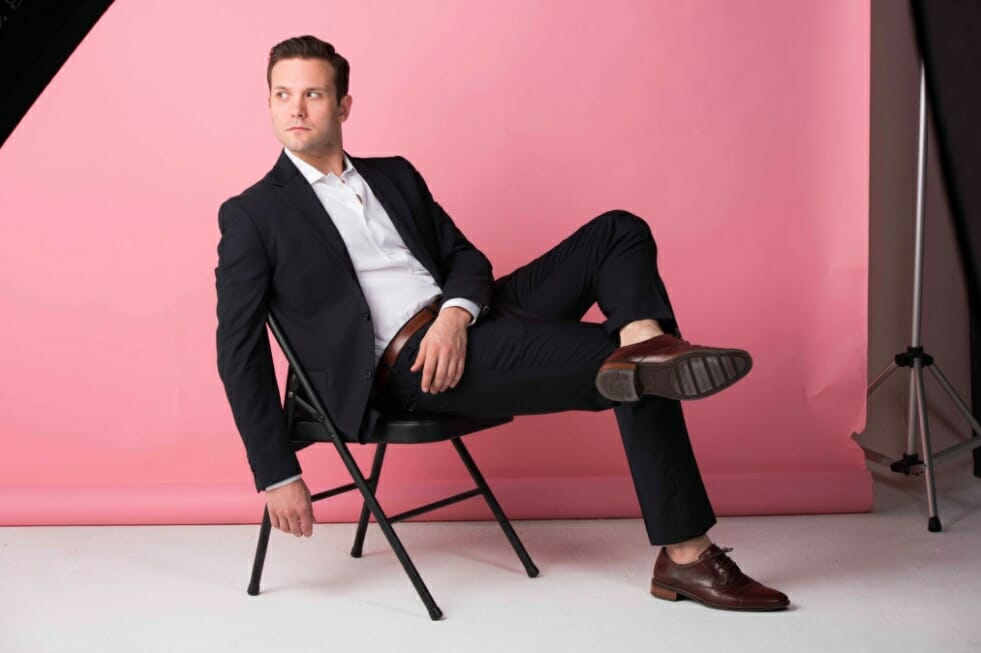
Baritone Joseph Lattanzi comes home for The Atlanta Opera’s “Barber of Seville”
Mableton native Joseph Lattanzi returns to The Atlanta Opera in style this month as the wily barber Figaro, the title character in Rossini’s rollicking comedy The Barber of Seville. The performances will be March 5-13 at the Cobb Energy Performing Arts Centre.
In a competitive market that is flooded with lyric baritones, Lattanzi is carving out an impressive career that has taken him to stages all over the country in a repertory ranging from Mozart and Rossini to some of the most challenging works in contemporary opera.
Lattanzi studied his craft at the Oberlin Conservatory, and at Cincinnati College-Conservatory of Music. In 2016 he won great critical acclaim in the world premiere of Gregory Spears’ Fellow Travelers as Hawkins Fuller, a portrayal he repeated for his debut with Lyric Opera of Chicago and on CD.
In the 2018–19 season he joined the roster of the Metropolitan Opera. ArtsATL recently chatted with Lattanzi to discuss his new leading role in Atlanta.
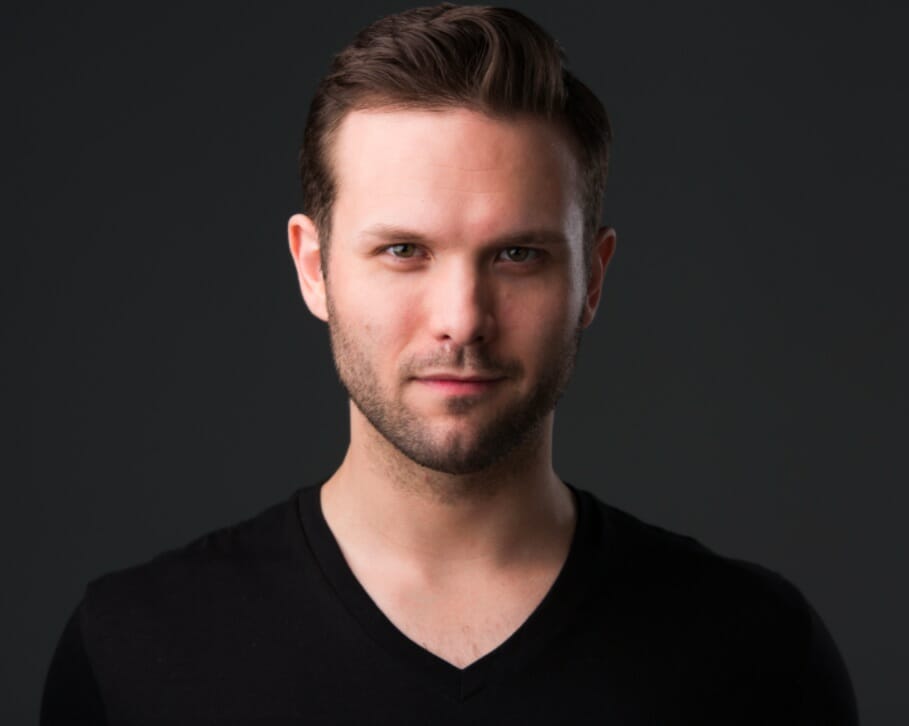
ArtsATL: How does it feel to be coming back to The Atlanta Opera in a title role?
Joseph Lattanzi: It’s great. This is my first complete Barber. Everyone else on the stage has done the opera before except me. That’s a little intimidating, but it also makes me work harder. I’ve done smaller things with The Atlanta Opera in the past. I did Yamadori in Madama Butterfly, and Anthony in Sweeney Todd, and more recently Silvio in Pagliacci. But this time is a very different experience, to be coming in at this level. I feel some pressure to do well, but it all feels very supportive. My grandfather is so excited, he has written everyone he knows. So, this feels like a really big thing for me.
ArtsATL: Mableton has produced a number of athletes, but one doesn’t think of it as a breeding ground for opera. How does a boy from Mableton become a successful opera singer?
Lattanzi: The twist of fate there is that Pebblebrook High School is in Mableton. Pebblebrook is the magnet school in Cobb County, and the center for performing arts excellence in the school system. I lucked out because I grew up near there. My grandfather was also the principal there for a while, so we got free tickets to all the shows. That was my early exposure to the arts. I ended up attending Pebblebrook for high school, and it was a great training ground. I did ballet and musicals and all kinds of stuff. It was there I realized that classical music, and opera specifically, was something I was interested in. I think it was also a way to differentiate myself from the crowd. But I always loved it. The Pebblebrook program was a great program for musical theater. They have produced a lot of people who have gone on to careers in New York and across the country. My way of being different was doing opera.
ArtsATL: How were you exposed to opera initially?
Lattanzi: My family is Italian by name and pasta consumption only. But I think that was my first little hook; I knew that Italian opera and my Italian background were connected somehow. Then, I was gifted a CD by one of my aunts for Christmas. It was Renée Fleming’s self-titled recital CD. I thought soprano high notes were just the coolest thing in the world, I would listen to hours and hours of Natalie Dessay singing high F’s.
Then my listening filtered down into things that were possible for me to sing. I took piano and voice lessons, and the classical repertory felt truer to me than musicals did. I am really glad I had that training, though, because it was a huge advantage once I got to college. A lot of opera singers don’t get stage experience early on, so I was lucky that I had been able to learn my way around a stage and feel comfortable performing. But it was just so crazy to hear people do these incredible things with their voices. When I was in high school, I burned a CD of Cecilia Bartoli singing “Agìtata da due venti,” this crazy hard coloratura Vivaldi aria. I would drive around Mableton with the windows down singing along with her. So, I like to joke that Cecilia Bartoli taught me to sing coloratura.
When it came time for college, I was either going to go to Manhattan School of Music or Oberlin. They couldn’t be more different — the middle of New York City or the middle of a cornfield in Ohio. I am super glad I chose my cornfield. It was sort of a big fish, small pond situation. I got a lot of attention and I had a great teacher there.
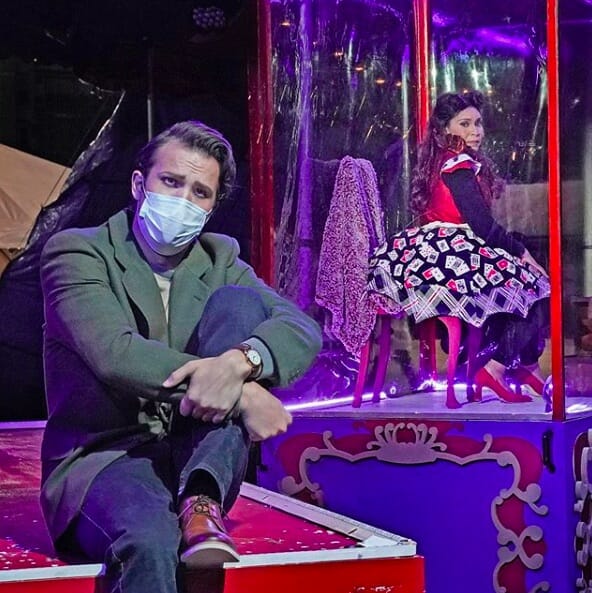
ArtsATL: Did you have any particular vocal role models?
Lattanzi: I have always been a little nervous to listen too closely to famous contemporary baritones, because I didn’t want to imitate. But I am a big music nerd and skip several generations back to the older Italian baritones like Bastianini and Giuseppe Valdengo. It’s so interesting because these older recordings were before people were in studios messing with levels; they are a little more primal, and you get a better sense of the energy that is required.
ArtsATL: Let’s talk about your leading role in The Barber of Seville. What is most challenging about playing Figaro?
Lattanzi: The main challenge is you hit the ground running. There is no warmup; first thing out of the gate, you are singing the most famous tune in the show (Lattanzi refers to the rapid-fire aria “Largo al factotum,” known to millions from Bugs Bunny cartoons). It’s fun and exciting and an adrenaline rush, but the pacing of the first act is also daunting, because you have this big aria that everybody knows, then you have a long duet with the tenor, and then another long, fun duet with the soprano. Once Figaro is on, his first forty minutes are a long, tough sprint.
Also, the thing I did right before this was very different; I was covering Eurydice at the Met (Matthew Aucoin’s fiendishly difficult contemporary American opera, for which Lattanzi covered the baritone lead, finished its run at the Metropolitan Opera this past December). The hard thing is having to re-tool your body from a contemporary English language piece to a classic Italian comedy. Usually for newer American things, we are talking about extremes. There is a lot of “high” and a lot of “low.”
And of course, I speak English. I have studied Italian and could ask where the bathroom is in Italy, but the language feels very different in my mouth. In Barber there is a lot of fast, Italian patter. You need to have a specific muscle memory to get around it. When singing in my own native language in contemporary opera, I can be a bit more unguarded, while for Italian opera you are working to accomplish a technical feat that requires a bit more forethought and body reliance. It’s a tricky adjustment.
ArtsATL: Is there anything that you would especially like Atlanta’s audience to know about you?
Lattanzi: This is a larger conversation, but I want to be part of making opera accessible for people again. I think we have gotten away from that. Stereotypes exist for a reason, and people feel intimidated. But there are points of connection to opera with interesting things that are already there in people’s lives.
I would like to show them that there are stories in opera that they would see themselves reflected in. Opera was the pop culture of its time; at one point, opera was Netflix. Some friends and I have started a project called OSSIA. We talk about “op culture” as a play on pop culture. It is a visual media-based place to interact with opera in different ways. Opera is really the grandfather of everything we know as pop culture today.
It’s always a great experience to sing in Atlanta. My family is here, and I saw my first opera here. I have an established group of people here that I grew up with. And I am based out of here now, so I’m sleeping in my own bed, using my own kitchen. I feel like part of the community. It’s really nice.
::
Mark Thomas Ketterson is a Chicago-based arts critic and writer. He is the Chicago correspondent for Opera News magazine, and has also written for Playbill, the Chicago Tribune and other publications.
STAY UP TO DATE ON ALL THINGS ArtsATL
Subscribe to our free weekly e-newsletter.

PLEASE SUPPORT ARTSATL
Your Gift Sustains the Coverage You Count On!
Related Posts