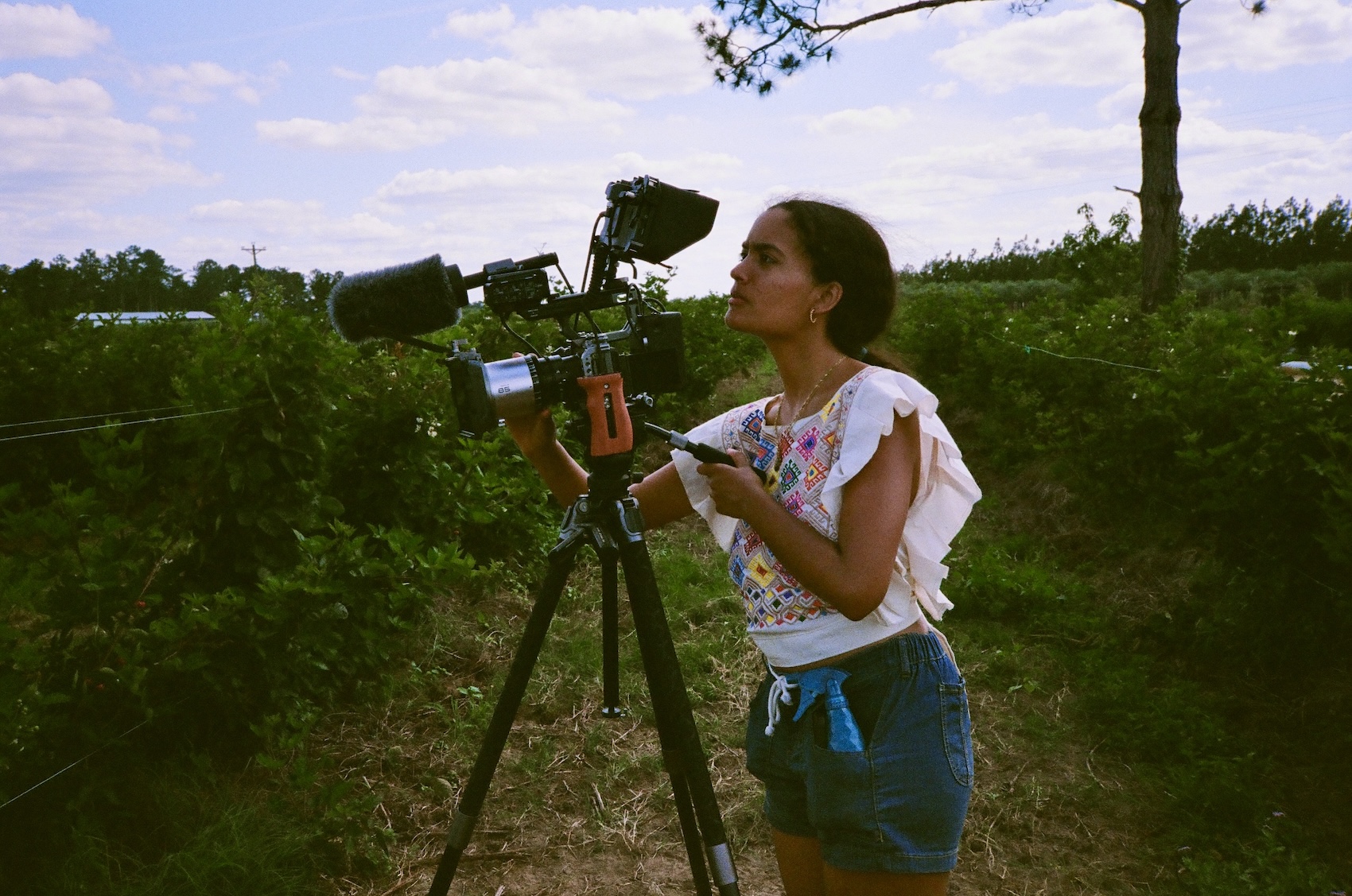
Resisting Narratives of Erasure showcases untold stories from eight young filmmakers
Spelman documentary filmmaker Kennedy Dunning imagines what it was like growing up as a sharecropper’s daughter in rural Georgia in the 1940s.
::
Kennedy Dunning came out of high school looking for an opportunity to find her voice and forge her identity. She says she found it at Spelman College.
Today, as a 2023 graduate with a major in documentary filmmaking and a minor in women’s studies, Powder Springs-based Dunning notes of her university education: “I was working under the mentorship of icons … and I wanted to develop work that exposed the emotional lives of Black women, the complexity that you don’t normally see in mainstream media.”
She continues: “I had a horrible high school experience, which was very racist, very sexist in my small suburban high school. So Spelman was like a 180, and I really wanted to develop my voice as a filmmaker with a Black feminist gaze.”
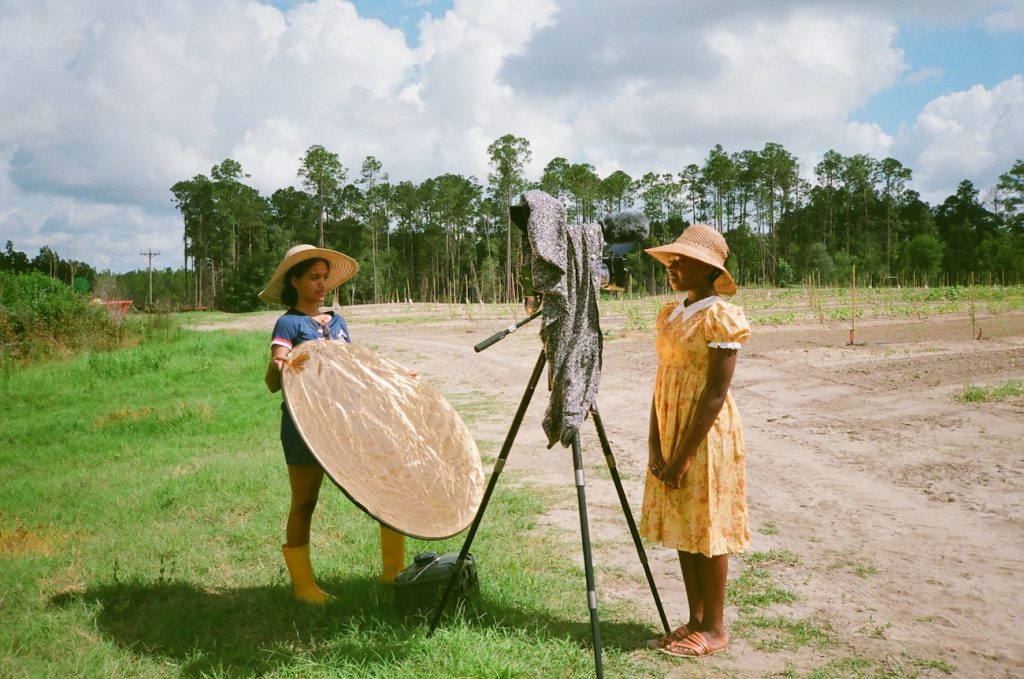
Once out into the indie film world, Dunning again found opportunity and an embrace from the local Black film community. Another young filmmaker she followed on social media passed along an announcement of a potential fellowship with Atlanta-based Visionary Justice StoryLab and its Resisting Narratives of Erasure Short Film Showcase, geared toward emerging Southeastern filmmakers.
“I was really drawn to the title of the fellowship, Resisting Narratives of Erasure, and what that means to me,” she says. “I feel like that is attached to my ‘why’ as a filmmaker.”
Cinema, Dunning finds, is an exceptional way to illustrate new ways of thinking — visually — and to change the perception of stereotypes and the control that she finds is oftentimes attached to the Black body and, overwhelmingly, to Black women.
Dunning attained the short film showcase fellowship by meeting the following criteria: demographic (creators who are women, non-binary/gender-conforming or QTBIPOC); geographic (Southeastern U.S.-based); age (early-to-mid career emerging filmmakers); and experience level (completion of at least two prior film projects). In addition, each film must feature an intersectional storytelling thrust.
Those accepted for 2026 fellowships — eight filmmakers in all — received mentorship, stipends and production support toward the creation of their original film shorts. Dunning’s peer fellows include filmmakers Ciara Franklin, Robin Garcia, Latoria Hicks, Rock Jacquet, Sha-Shonna Rogers, Tevin Scott and Nicole Viloria. (A promo reel with film titles appears here, spanning the showcase’s genres of narrative, comedy, experimental and documentary.)
In the process of crafting their films, the group of fellows became collaborators on one another’s filmmaking journeys, Dunning says.
“I came in with editing and directing skills. Other people had more cinematography and writing. So anytime anyone would be like, ‘I don’t know how this works,’ people would send us links and meet one-on-one with us on Zoom,” she notes. “I met with one of the fellows to develop her script, and she offered notes on my pitch deck.”
Visionary Justice StoryLab’s Lara Davis, in charge of operations and impact, reports that Dunning and her fellows’ short films will be shown on August 20 at its Resisting Narratives of Erasure Short Film Showcase event from 6:30 p.m. to 9:30 p.m. at Tara Theatre. The screening of films begins at 7 p.m., followed by a filmmaker talkback session.
For Dunning, the evening will be all the more special because of the close-to-home subject matter of her short film, Claybourne — a project she started in January of this year and worked on up to August, wearing the hats of writer, director, editor and producer.
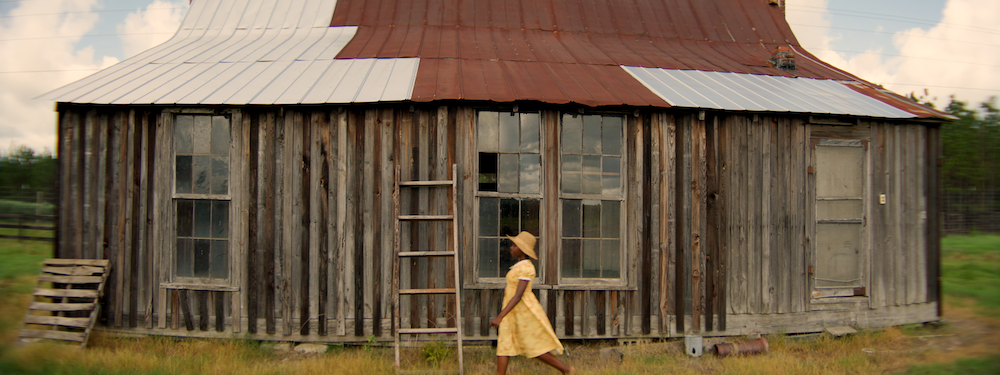

“I also had a DP (director of photography), Janelle Hernandez, and a sound editor, Ciara Bess, and then a fellow graduate of Spelman, Hayes Wilson, who composed all of the music. So, a tiny crew,” she notes.
The film allowed her to step inside her grandmother’s shoes and to craft a story that imagines what it would be like growing up in rural Georgia in the 1940s, the daughter of a sharecropper — and also to deal with subject matter rarely depicted onscreen: geophagy — the eating of the earth and soil-like substances.
“[Growing up], I was with my grandmother one day on the porch, and she was like, ‘Someone used to sell clay over there [to eat],’ and I ran to my mom, and I’m like, ‘What? People used to eat clay, Nana said.’”
Dunning remembers, “And my mom says, ‘Yeah, in the 1970s we used to walk down there.’ So it started with this amazement and beauty. And I wanted to talk about it more.”
So she began interviewing people, including those who study geophagy and pica, an underlying behavioral condition arising around eating non-food substances. “I [began] understanding how clay eating was very attached to Black traditions,” she notes.
“It’s important to re-examine those things, especially as we go through oppression and as we go through hard times,” she continues. “Sometimes the healing is in turning [to look back], because so many of our ancestors worked so hard for us to find ways to grow after enslavement, when we first had the opportunity to develop our own land and to really build our own families.”
Then Dunning thoughtfully poses the question, “What does it mean to be one with the land?”
Tickets to Resisting Narratives of Erasure Short Film Showcase, where Dunning’s Claybourne will screen, are available here.
::
Carol Badaracco Padgett is an Atlanta-based freelance writer who focuses on film and television, the automotive industry, architectural design and collaborative storytelling projects.
STAY UP TO DATE ON ALL THINGS ArtsATL
Subscribe to our free weekly e-newsletter.

PLEASE SUPPORT ARTSATL
Your Gift Sustains the Coverage You Count On!
Related Posts