
Steve on TV: Ryan Murphy’s latest crime against criminals and a remake with a casting problem

First made into a beloved 1979 film version starring wild-maned Judy Davis and a baby-faced Sam Neill, the protofeminist drama My Brilliant Career has been re-adapted as a six-episode Netflix series and given a thick Bridgerton makeover. You know: contemporary needle drops and ethnically diverse casting. The results are charming, sometimes, and sometimes a little eye-rolly.
Because of Neill’s death in July, I recently rewatched Gillian Armstrong’s film on the Criterion Channel. In the 1980s, it was a mainstay of those old relics of prehistory, repertory cinemas; it always seemed to be screening at one of the late George Lefont’s arthouse theaters. It’s a terrific film, and Armstrong, still with us, should have enjoyed a much fuller career. She also made the 1990s version of Little Women; a tough mother-daughter drama High Tide, starring Davis again; and the family drama The Last Days of Chez Nous. They’re all worth seeking out.
Based on the 1901 novel by Miles Franklin (actual first name: Stella), Netflix’s Career retells the semi-autobiographical story of Sybylla Melvyn (Philippa Northeast). Born to a well-bred mother whose marriage to a drunk has sunk the family into debt, Sybylla is thrown a lifeline by her rich, stuffy grandmother Winifred (Anna Chancellor, humanizing the character). She’s conveyed to granny’s mansion and put on display for various eligible bachelors.
On this front, the story has the flavor of Down Under Jane Austen. Sybylla’s economically fallen state is calculated into considerations of which suitor, and his level of wealth and status, would be most desirable for all involved. The only real desire Sybylla has is to write her way into a career as a successful novelist. This single-mindedness and her disdain for social norms prove obstacles as significant as her penury.
Still, she’s pitched toward two men in particular. There’s orphan Harry (Christopher Chung), living in a nearby mansion with his liberal aunt Augusta (Kate Mulvany, auditioning too hard for a reboot of Auntie Mame). Then there’s Frank (Jake Dunn), an English visitor staying with Sybylla’s grandmother. In this updating of the material, Harry is half-Chinese, a change that doesn’t lead to much payoff. The focus on two aboriginal sisters who work for Winifred, and their exploitation by the white settlers, has more resonance.
As for the central semi-romance, this Career has a casting problem. Handsome/ugly of face but a chiseled Adonis below the neck, Chung’s Harry is the man we’re supposed to want Sybylla to choose, but there’s not much chemistry there. Chung’s performance suggests he knows he already got the job. By contrast, Dunn sparks more engagingly with Northeast, and you root for Frank against the predetermined plot. It doesn’t matter in the end, because Career’s whole point is that men shouldn’t matter. Northeast delivers a giggly, charismatic heroine who suggests a turn-of-the-century boss girl in the making. Weirdly enough, that very you-go-girl attitude makes this remake sometimes feel as dated as its period crinolines.
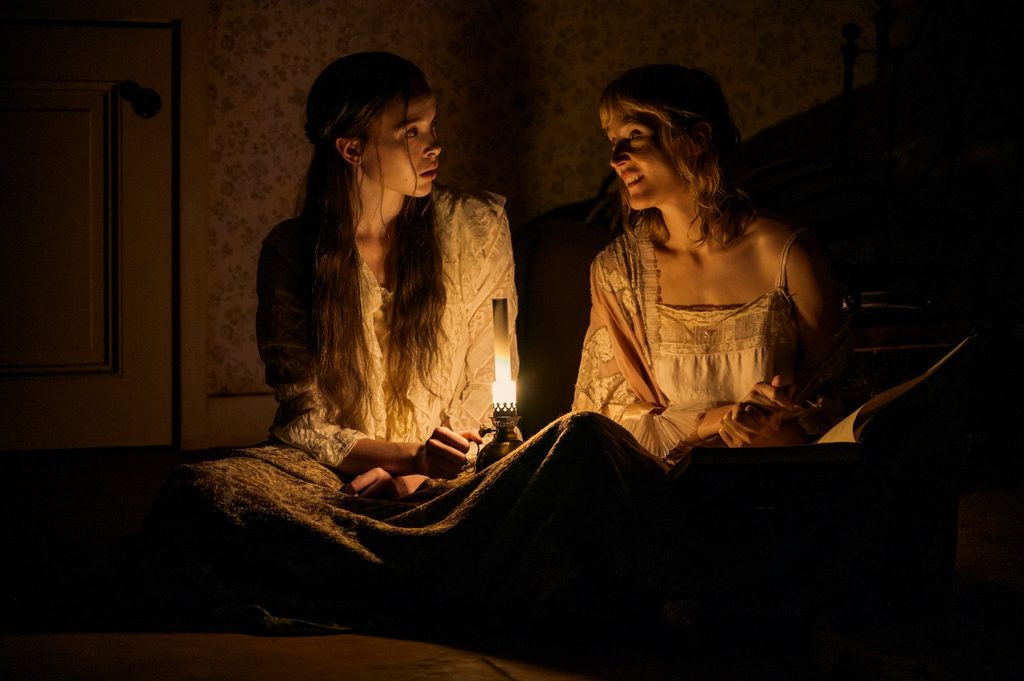
And speaking of periods, Ian Brennan and the inescapable Ryan Murphy, the guys behind Monster: The Lizzie Borden Story, seem obsessed with the menstrual gushings of our axe-wielding heroine. (She’s played by nepo baby Ella Beatty, as pretty as her parents but, as an actor, pretty bland.)
In episode one (of eight!), a visit from Lizzie’s metaphorical Aunt Flo ruins the prized sofa cushions of her evil stepmom (Rebecca Hall, way too good to be stuck in this trough). But the new housemaid Bridget (Vicky Krieps, also too good for this) cleans up the bloody couch in no time flat before becoming Lizzie’s lezzie bestie. (Look, if you expect me to write with sensitivity about this show, forget it.) I’d advise you to follow my lead. After watching the first episode’s long digression into the history of virgin-slaughtering Elizabeth Báthory — (Why? more girl blood, of course) — I remembered the hours wasted watching previous Monster installments, pulp fictionalizing Ed Gein and Jeffrey Dahmer. Rest in peace, freaks. No matter your crimes, you didn’t deserve to be Murphy-ed, postmortem.
If you’re in the mood for a long-form mystery that doesn’t insult your taste and intelligence — and you’re OK with subtitles — the five-part Swedish drama Blood Sacrifice yields decent returns for time invested.
Thomas (Jakob Oftebro, photogenic but bland) is a top Stockholm homicide detective who’s seen by other officers, maybe justifiably, as a hotshot promoted without paying his dues. His rep gets tested when someone starts ambushing and killing cops, two at a time, every Friday night. The heart of the show is the reluctant bonding between Thomas and his estranged dad Alfred (veteran actor Peter Andersson). A disgraced ex-detective himself, who now spends his days drinking and making model train sets, Alfred brings both insight and conflict to the investigation. The logistics of how the killer surprises and incapacitates his well-trained victims never quite feels plausible, but the show doesn’t overstay its welcome.
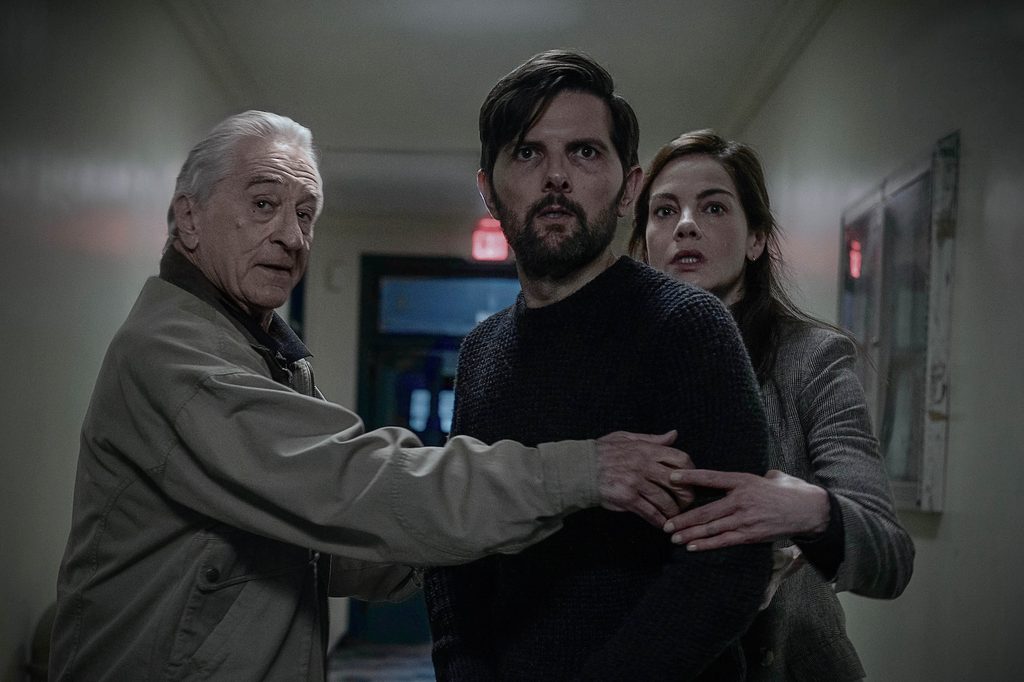
If you like this sort of serial procedural and that cranky father-son dynamic, the Netflix film The Whisper Man looks like a no-brainer. And yeah, it’s definitely in search of a brain.
Adam Scott plays Tom, a man grieving his wife’s death who moves with their troubled son to her old hometown. This place used to be the hunting grounds of a creep known as, yes, the Whisper Man (Michael Keaton), who abducted and murdered kids before being imprisoned. So when Tom’s boy goes missing, retired detective Peter (Robert De Niro), who also happens to be — yes — Tom’s dad, is brought in on the case. When Peter goes to interview the original perp for help ID’ing the copycat offender, the jailhouse setup mimics The Silence of the Lambs. The comparison doesn’t help anyone in the new movie. Neither does a script that doesn’t add up when the credits roll. The film also includes the fine Michelle Monaghan, whose character seems to be there simply to imply that female cops can’t handle dangerous situations without backup.
The best crime dramas are often real-life ones, and there are two you might want to catch. You can always count on Netflix to have a head-scratcher that would be the talk of the water cooler, if we still had water coolers. And offices.
Earlier this summer, the buzzer was A Toxic Love Story. This month, it’s Death of the Pastor’s Wife. It’s the berserk tale of an oversexed Myrtle Beach minister, the young woman he plucked from his junior ministry to make his second wife and the very controlling union that ensued and ended in her death, apparently by suicide. Questioning the husband’s responsibility in the outcome, Michael Gasparro and Julia Willoughby Nason’s three-part documentary doesn’t offer answers, just an escalating narrative of unnerving, stalkerish behavior. Much of it is captured on Ring cameras and the church’s own extensive videos. Then, on:
HBO
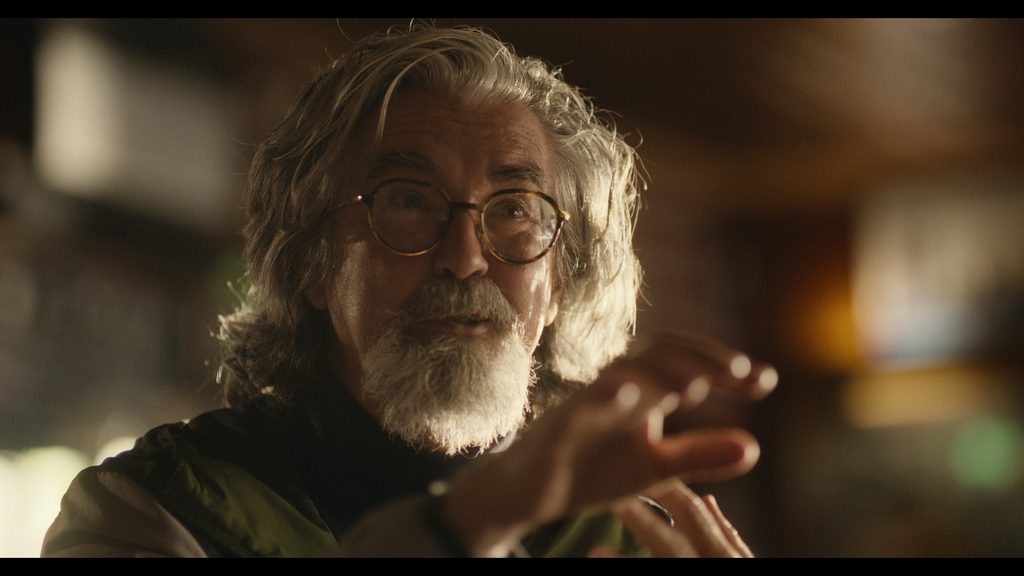
A Killer Story is as much about true-crime obsessives as it is about the crime they’re obsessing over. Wry, foul-mouthed veteran journalist Joe Sexton narrates the tale (through a throw rug’s worth of facial hair) of long-married Kansas couple Eileen and Keen Umbehr, who devote their empty-nester lives to re-examining the case of Dana Chandler, convicted of double homicide in the murder of her ex-husband and his girlfriend.
They’re right that there wasn’t any physical evidence tying her to the deaths when she was initially convicted. After two of the show’s three episodes (the last one airs on Thursday, 9/24), I’m not convinced the state of Kansas didn’t imprison the right person … But Matthew Galkin’s documentary, showing multiple examples of really bad behavior from police and attorneys, sure makes me want to stay on the right side of the law.

PRIME VIDEO
For many years on Netflix, writer-director Mike Flanagan made a career contemporizing existing properties like The Haunting of Hill House, The Turn of the Screw and the tales of Edgar Allan Poe. His series’ share a couple of traits. They can be tremendously scary, but then he ultimately dilutes them with a simplistic, warm-hug humanism that betrays the original writers’ intentions.
Flanagan has now been lured from Netflix to Prime Video. His first project there is the gazzilionth remake of Stephen King’s Carrie. Reviews are embargoed until the start of October, so you’ll have to wait until next month’s column for my thoughts. I can tell you this much. It’s really, really good … until it really, really isn’t.
::
Steve Murray is an award-winning journalist and playwright who has covered the arts as a reporter and critic for many years. Catch up to Steve’s previous columns here.
STAY UP TO DATE ON ALL THINGS ArtsATL
Subscribe to our free weekly e-newsletter.

PLEASE SUPPORT ARTSATL
Your Gift Sustains the Coverage You Count On!
Related Posts