Poet Amy Pence’s lyrical novel ‘Yellow’ explores Jungian ideas through a Southern lens
During Hurricane Irma in 2017, a 90-foot oak tree split and fell into the middle of Amy Pence’s cottage in the old fishing village of Pine Lake, Georgia. A beam came down and hit her in the back, knocking her unconscious. She kept hearing a voice telling her to get up. As she came to and saw the devastation, her mind went to unexpected, revelatory places. She recalls that she thought two things: “This is how people die,” and then, smiling, “I might die, and could death possibly be amazing? I almost laughed.”
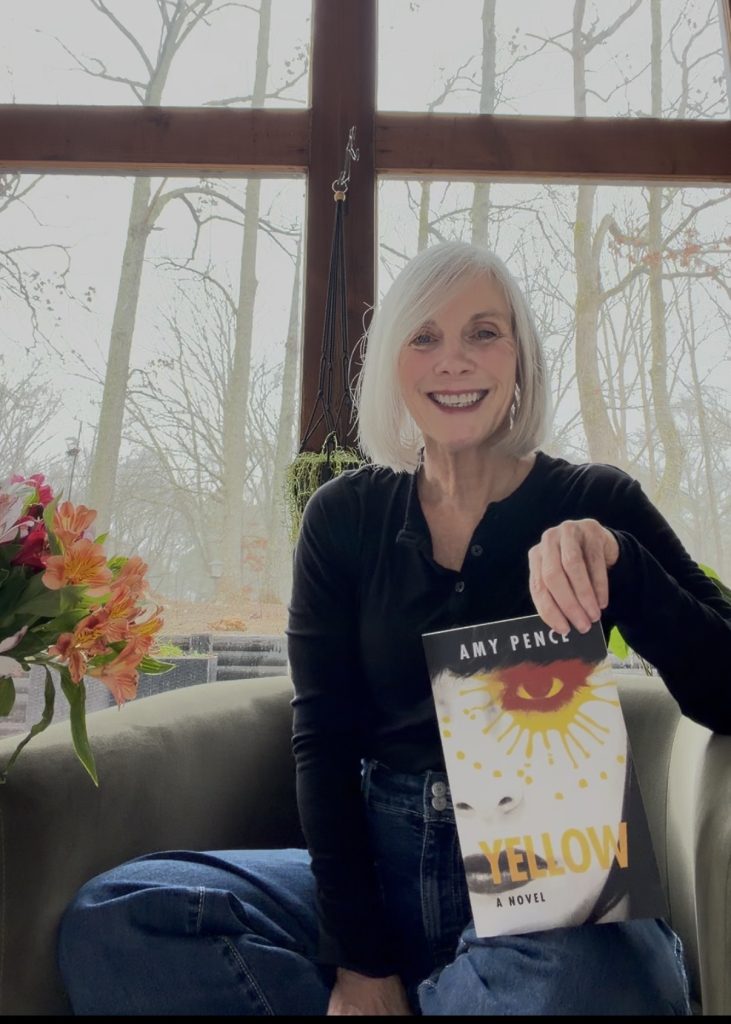
In other words, the near-death trauma forced Pence to ask some big questions, so she grabbed her composition book and started scribbling longhand about what might happen when we die. She quickly wrote 10 chapters in the first sitting and knew she had to keep going. The result is Yellow, a slim novel of richly metaphorical and speculative fiction that covers a variety of ontological themes.
“I call it speculative feminist fiction because I explore female autonomy, sexuality and gender issues — much like Margaret Atwood, only my book is not a dystopia,” Pence says. “I believe women’s speculative fiction and romantasy channel Jung’s collective unconscious — reviving feminine power through mythic, boundary-breaking narratives that make the once-improbable newly resonant.”
The story is narrated by a 12-year-old girl known as Z., who comes of age with the help of a living slime mold she names “Yellow.” The mold’s creeping resilience and eerie knowingness inspire her and function as a touchstone in a bewilderingly changing world.
“I read a New York Times article about a living slime mold discovered in a Texas backyard in 1973, so that gave me the idea,” Pence says.
This lovingly rendered organism grows to symbolize consciousness. “I hate the cliché of it, but it also represents the oneness of experience. I think many young people have experiences of oneness, and then, as you grow up, those feelings tend to go away. I wanted this character to experience the unity of the universe.”
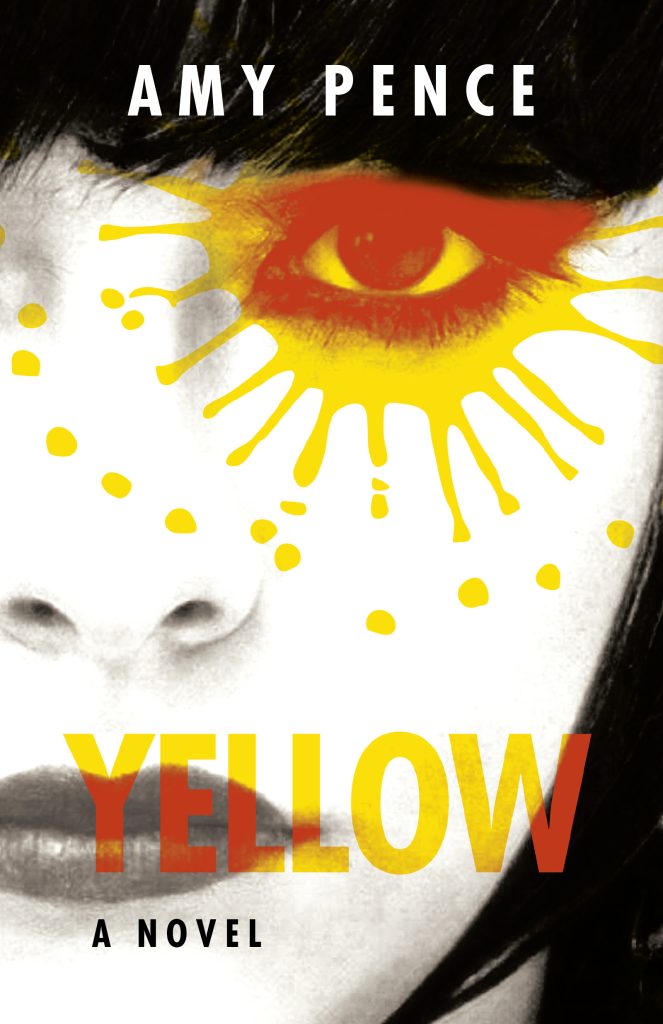
Z. also survives sexual trauma at the hands of a predator and gets buffeted by an array of events in the news. The novel spans half a century, moving from the Vietnam War and Watergate to Hurricane Katrina and the Covid-19 pandemic. It moves from Z.’s backyard in Louisiana to the vastness of Skylab’s outer space. Amid all the physics and the high-flown Jungian tropes is a hint of the Southern Gothic in the moody atmosphere Pence conjures. The chapters and the sentences tend to be short and elliptical, landing like a trace of perfume on a scarf: light and evocative.
One chapter is merely three sentences. She writes: “… maybe I’m just beginning to become a woman. Become multiplicity, Yellow’s thought says. I don’t know what that means. But I do know, without having the language for it, that Yellow’s breathing billows the steam of this temporary world.”
Pence’s background as a poet shows in her impressionistic, jewel-like imagery. The author is 65, and Yellow is her debut novel. She has won various awards for three poetry collections and two chapbooks, including We Travel Towards It, which ponders climate change’s losses, both collective and personal, and the acclaimed prose/poetry hybrid Incandescent. Her work has appeared in more than 100 literary journals.
Pence was born in Ohio, but her stepfather was a jazz musician who moved the family to the French Quarter of New Orleans, where she spent part of her childhood. “That left such a huge impact on me; it was so magical,” she says. Then it was on to Las Vegas, following the music. She did her undergrad work at Denison University and earned an MFA in poetry from the University of Arizona. She came to Atlanta 40 years ago and has taught at DeVry University, as well as Emory University.
Pence continues to write longhand in composition notebooks. “I got paranoid that something might happen to my notebooks, so I photographed all the pages,” she says.
After all, freak things can happen. “I could not have written this novel if I had not been hit in the head by a tree,” she says.
::

Candice Dyer’s work has appeared in magazines such as Atlanta, Garden & Gun, Men’s Journal and Country Living. She is the author of Street Singers, Soul Shakers, Rebels with a Cause: Music from Macon.
STAY UP TO DATE ON ALL THINGS ArtsATL
Subscribe to our free weekly e-newsletter.

PLEASE SUPPORT ARTSATL
Your Gift Sustains the Coverage You Count On!
Related Posts