Atlanta metro graduate programs inspire global writers to pen Southern literature
After completing the first draft of her debut novel, Sleight, as a dissertation project at the University of Georgia, novelist and Ph.D. graduate Kirsten Kaschock won the 2025 Juniper Literary Prize for her second novel, An Impossibility of Crows. Neither of the two novels is about Georgia specifically, but in both books, the author — who found her way south after earning her MFA from the University of Iowa Writers’ Workshop — draws deeply on what she’s learned from a Southern landscape.
“Being in the South taught me to embrace both the natural world and the cultural world as characters in the work I’m writing, and I love that,” she says. “I haven’t written about Georgia yet, but it’s coming.”
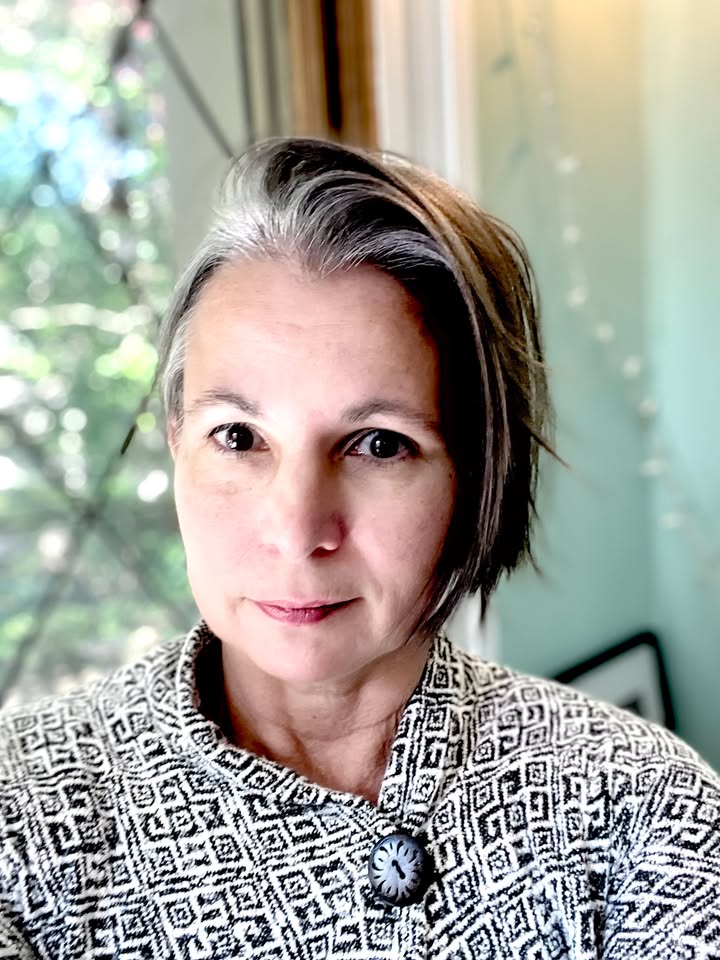
In An Impossibility of Crows, Kaschock delves into the mysteries of death and science with a twist of magical realism, following chemist Agnes Krahn as she journeys from Philadelphia to the small Pennsylvania town where her family has lived for generations. Grieving the death of her father and dreaming of escape from her dark family legacy, Agnes engages in a backyard experiment to breed a giant crow as big as a horse.
The idea of death as a creative, generative force is something Kaschock learned in Georgia.
“I did not read Faulkner until I was at UGA,” she admits. “I didn’t understand humidity; I didn’t understand growth as a part of decay — which was a revelation to me because in the Northeast, where I was raised, when things died, they simply fell apart and deteriorated. It was just death!”
Marcela Fuentes, author of Malas — which was shortlisted for the 2025 Mark Twain Award — received an MFA from the Iowa Writers’ Workshop and was already a mother before she moved to Georgia for her Ph.D. at Georgia State. With regard to what contributed to the success of Malas, she says, “The [Georgia State] Ph.D. was much more grounded in theory, craft and different narrative techniques, and that helped me when I was looking at my book later to revise it.”
This mastery of form enables Fuentes to tell a multigenerational tale as two intertwined stories. One is that of Pilar Aguirre, a young 1950s mother living in the small town of La Cienega, Texas, who is accused of stealing an old woman’s husband, resulting in the old woman cursing Pilar and her family. The other follows Lulu Muñoz, a character in the 1990s who becomes fascinated with a mysterious stranger as she juggles family difficulties, a secret life as the lead singer of a punk rock band and preparations for her quinceañera.
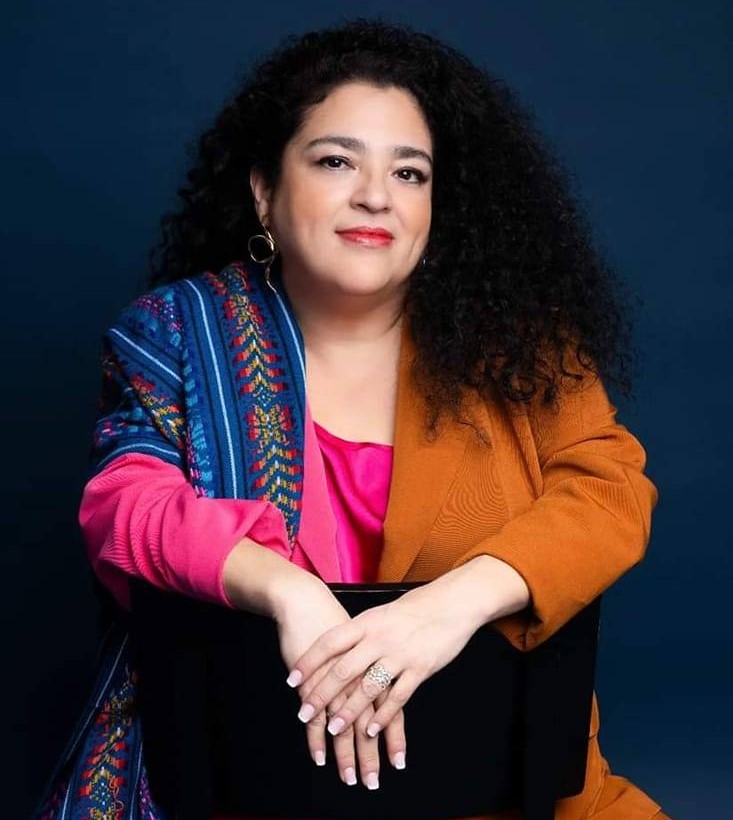
The lives of Pilar and Lulu unfold against a richly textured backdrop and Tejano culture, and both women find strength and a sense of their own identities in their communities. For Fuentes, who grew up along the border herself, the opportunity to build a similar network of support was part of what drew her to Atlanta.
“It’s in the middle of the city, and even though I might have been the only mom in my cohort, there were other ‘non-traditional’ students,” she explains. “Just being a grad student is hard, but I had a good community. I still have friends in that community.”
Fuentes and Kaschock were not unusual in having MFAs and young children when they entered their respective Ph.D. programs at Georgia State and UGA. According to Aruni Kashyap, associate professor and director of the creative writing program at UGA, most matriculating students already have advanced degrees, as well as some degree of personal and professional experience.
“They are not wearing rose-colored glasses,” Kashyap says. “They understand the vagaries and realities and hardships of the publishing world, intellectual life and academia.”

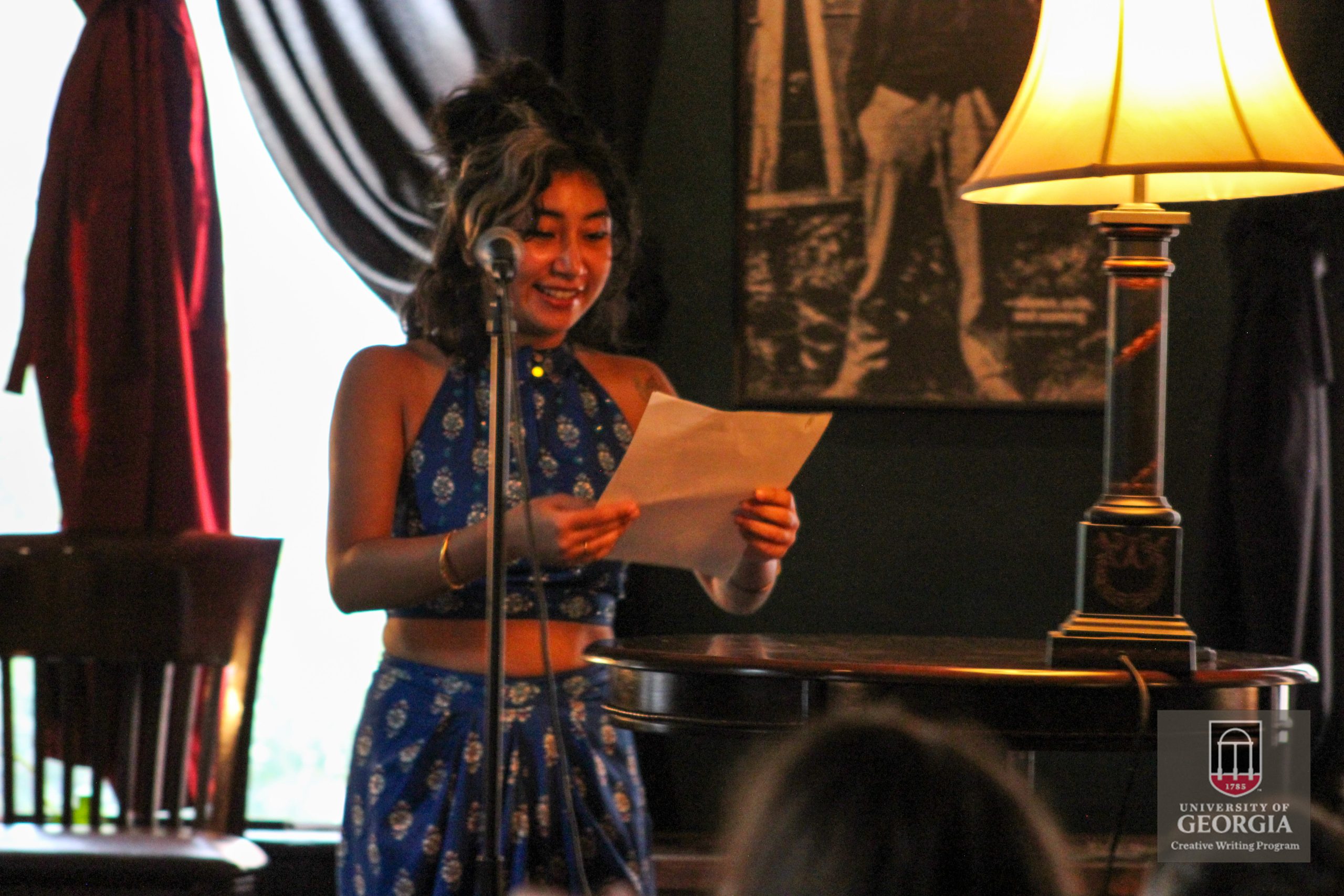
Priyadarshini Oshin Gogoi, a second-year Ph.D. student at UGA, was a successful children’s writer and editor at Pratham Books in Bangalore, one of the largest publishers of children’s picture books in India, before she entered graduate school. During the height of pandemic lockdowns — which extended for much longer in India — she decided to apply to MFA programs.
“I was living alone, locked in for six months at a time, writing and working prolifically and I saw an ad or website for an American MFA program,” Gogoi recalls. “It’s difficult to put into words how incredulous I was that a university would provide institutional support for a writer to learn and develop your own work. I didn’t think I could pass something like that up.”
For some writers, graduate program support is more economic than literary. Rahad Abir’s debut novel, Bengal Hound, won the 2024 Georgia Author of the Year Award for literary fiction and grapples with the history of Bangladesh, Abir’s country of origin, telling the story of Shelley Majumder, a university student swept up in love, revolution and religious conflict in 1960s Dhaka.
Yet Abir says that Bengal Hound was largely finished when he started the program at UGA, and he is blunt about why he may not complete his Ph.D. “The MFA and Ph.D. programs — they gave me some money, and I made some good friends, but they didn’t make me a better writer,” he shares.
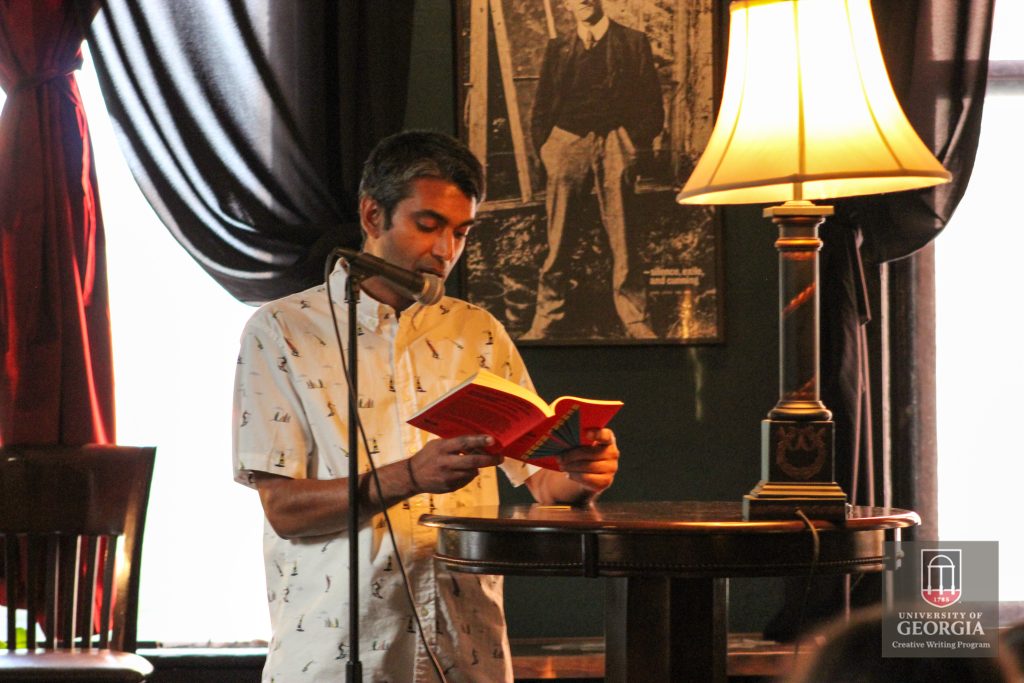
However, for students like Gogoi, graduate school can be transformative. Gogoi applied to UGA after meeting Kashyap at the annual Association of Writers and Writing Programs Conference while she was completing her MFA at Miami University of Ohio. Like Gogoi, Kashyap is Assamese, and Gogoi was interested to meet a fellow Assamese writer — especially one who wrote in English and made the leap into the national literary scene in India.
While Gogoi is still regularly publishing children’s literature in Assamese while in graduate school, her dissertation project, directed by Kashyap, is a novel in English. “Being a Ph.D. student is hectic, and I am, of course, incredibly grateful for the space to focus on my own art with others that are academically fueled to do the same,” she says.
“At the same time, I am also thinking about how I and my work are connected to the rest of the world,” she adds. “I want to feel more of what it’s like to be a Southern writer — in the local and global sense — and in community or communion with a place and its people.”
::

Robin Wharton holds a bachelor of arts in English from Tulane University as well as a law degree and a Ph.D. in English, both from the University of Georgia. As an undergraduate at Tulane, she was a member of the Newcomb Dance Company and studied dance at the School of American Ballet and the Pacific Northwest Ballet School. She is a frequent contributor to the dance and books sections of ArtsATL.
STAY UP TO DATE ON ALL THINGS ArtsATL
Subscribe to our free weekly e-newsletter.

PLEASE SUPPORT ARTSATL
Your Gift Sustains the Coverage You Count On!
Related Posts