At Spalding Nix Fine Art, Déjà Vu presents the ephemeral through four artists’ eyes
Four shows are currently on view at Spalding Nix as part of Déjà Vu: Susan Hable’s Tending the Wild Quiet; Esteban Patino’s Shapeshifter; Stacie U. Rose’s Physical Invisible; and Michael Porten’s Enjoy Yourself. The artists are connected by their color-forward work in abstraction and thematic explorations of movement, memory and the intangible.
“The reason we titled it Déjà Vu was because we also felt like each of the artists were trying to visualize these very intangible or invisible things together,” said Gallery Director Jamie Bourgeois. “And we also felt like it was a good title because it sort of harkens back to the idea of being here before — they’re all very universal motions or feelings that people go through.”
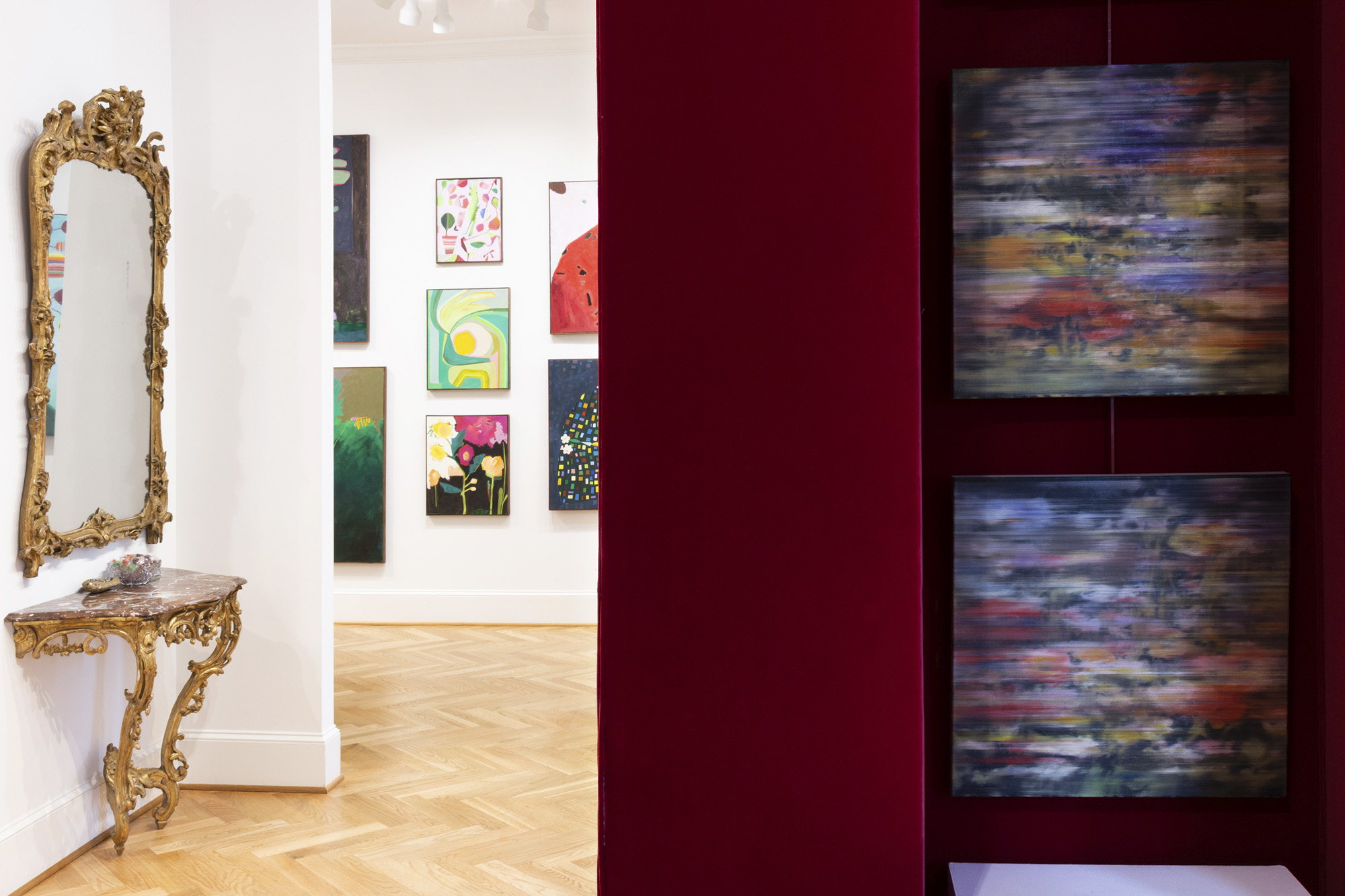
Each artist’s gallery space complements their work. In the square gallery, Rose’s work sits among books, records and art tools, creating a dialogue with their surroundings. Porten’s work is tucked into the gallery’s jewel room, making for a reflective corner. Patino’s Shapeshifter lines a tighter hallway that brings the viewer up close with the work.
Inside the main gallery, Hable’s garden bursts with life through cheery pastels that carry an intense quality. Tending the Wild Quiet is inspired by the flowers and environment around her and her travels. The plants in the paintings seem to bounce; their minimalist lines stand out against soft and diffused backgrounds. Walking through the space is reminiscent of meeting a varied cast of characters and personalities.
One quiet corner gathers together some smaller flower works. In Lotus at the Market, blooms appear suspended against a plain tan background that evokes a certain stillness. In some works, hints of people are interwoven around the green. Recently, Hable has begun to add figures to her work, a deepening of tending to her internal garden.
“I would feel like a person needed to be in there, like in this way there’s a woman kind of creeping behind one of the bonsai. It’s like there’s a new side of me that’s being born — probably because I’m at a certain age. And what was so exciting is that I could see those things being born in these paintings,” said Hable.
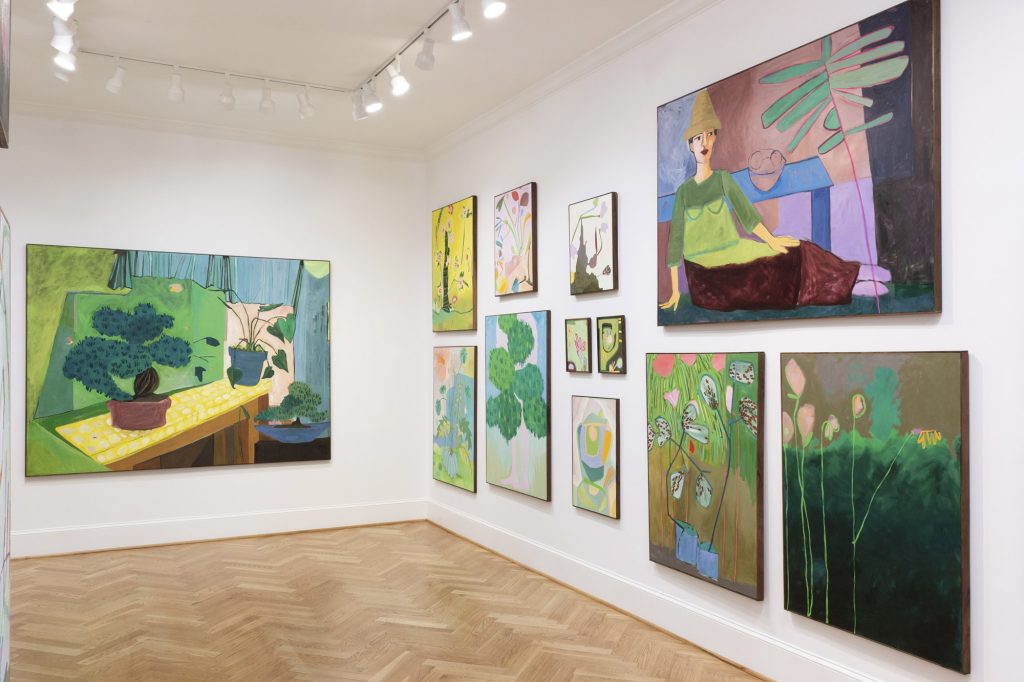
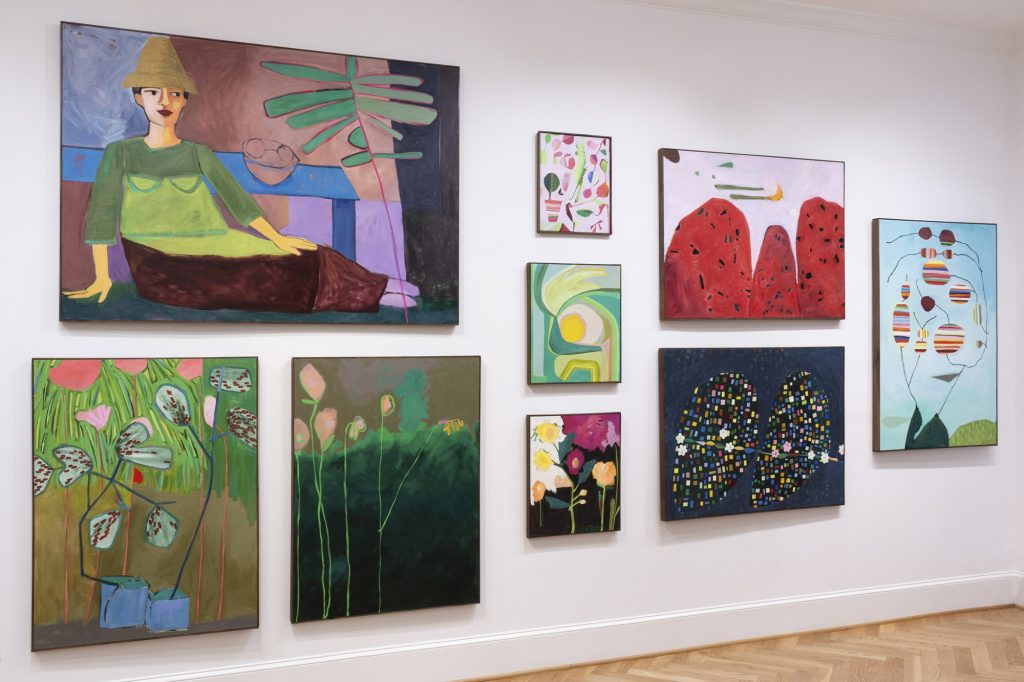
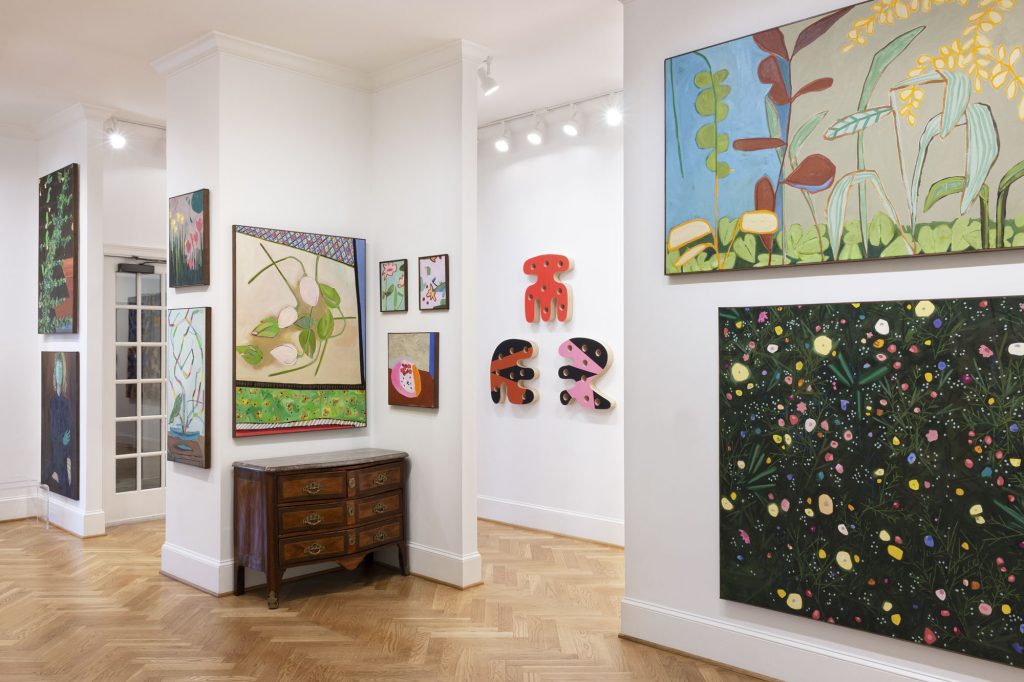
Bonsai 1, which Hable says is a kind of self-portrait, depicts a woman’s feet sticking out behind the tufts of the plant. The feet are pointed in one direction, poised to move, but not quite yet, they are still hidden behind the bonsai. In I Didn’t Know Succulents Could Do That, multicolored segments make up the height of a succulent. Hable says the work stitches together parts from different plants, her imagination and the feeling of being awestruck upon seeing a cobalt-blue succulent. This piece feels especially joyful.
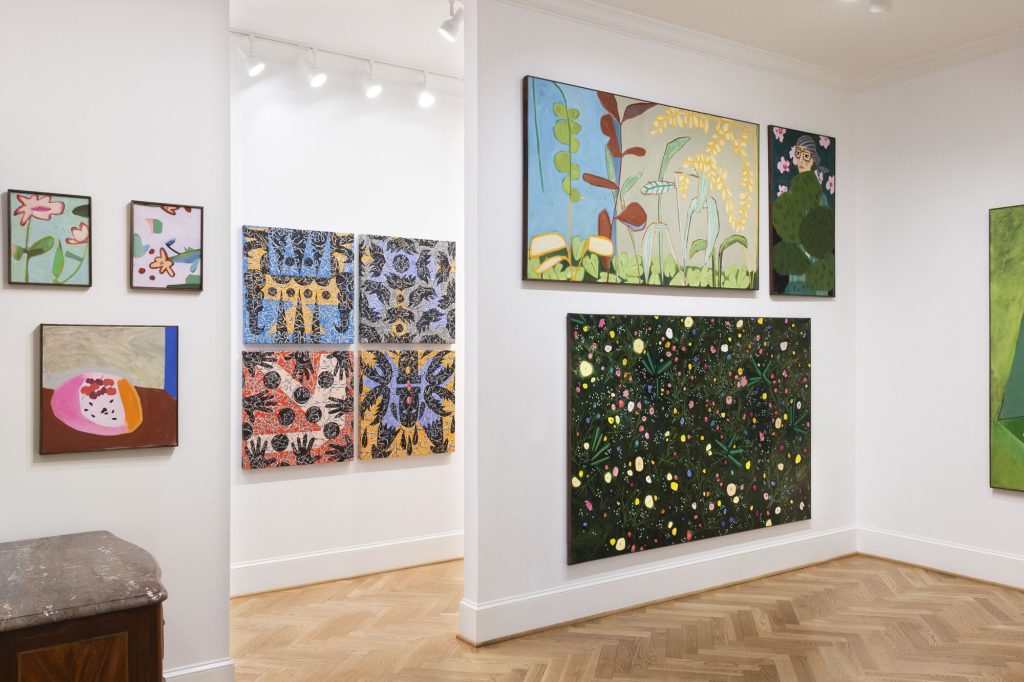
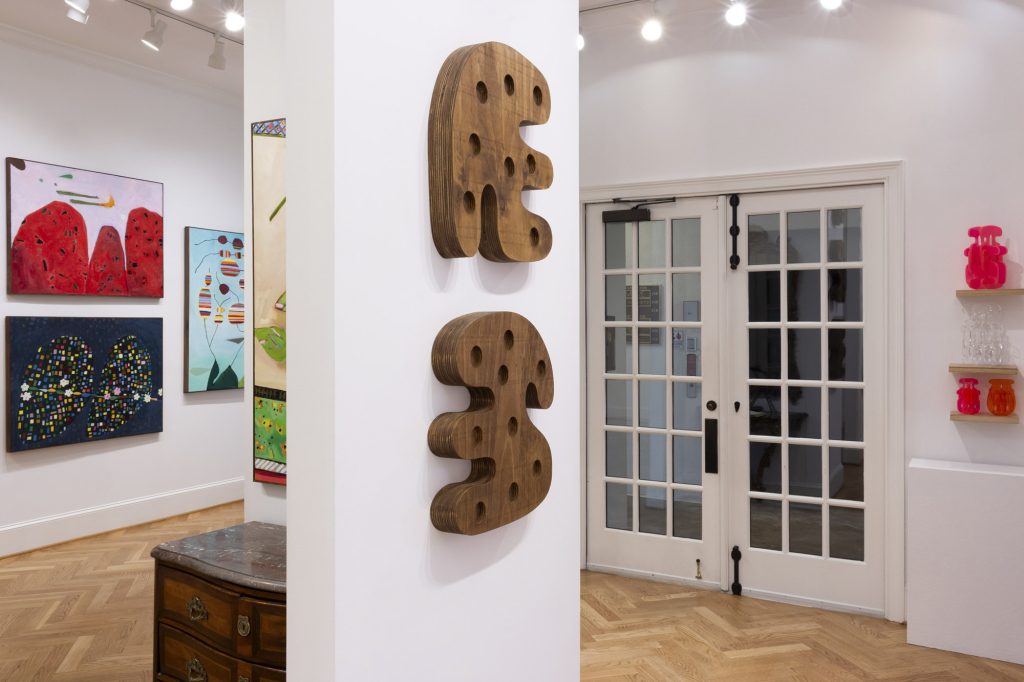
As I looked at Patino’s exhibit, it became a fun game of noticing which colors and symbols stood out to me most. In Shapeshifter, Patino deconstructs meaning and then works to rebuild it through using a set of invented symbols. These six core shapes resemble a language and yet are not meant to be perceived as such. In his abstract paintings, the symbols appear as patterns in the background, at times forming semi-familiar symbols. In his plexiglass and wood sculptural works they are present as 3D pieces that can be taken apart and put back together, like puzzles.
Patino intends for the symbolic vocabulary to be something universal and to communicate across cultures and differences. “With my sculptures and the shapes, I want them to look like they could exist in any other time, to be almost out of time and place,” said Patino. “I want people to see my art and to maybe try to recognize my shapes, or my representation of language as something that is universal and accessible to anybody.”

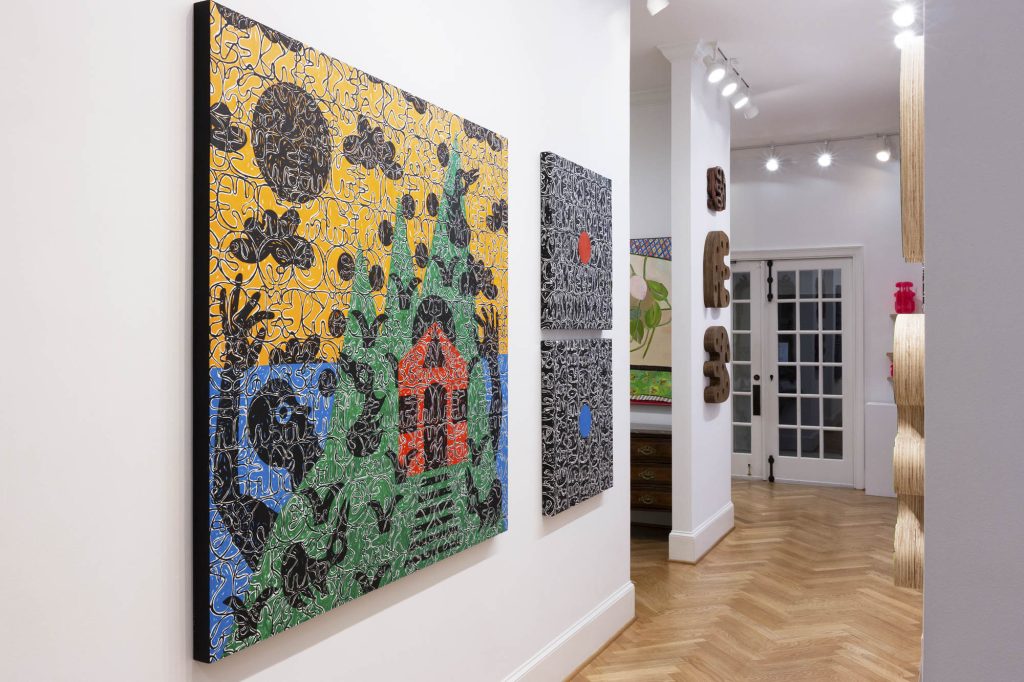

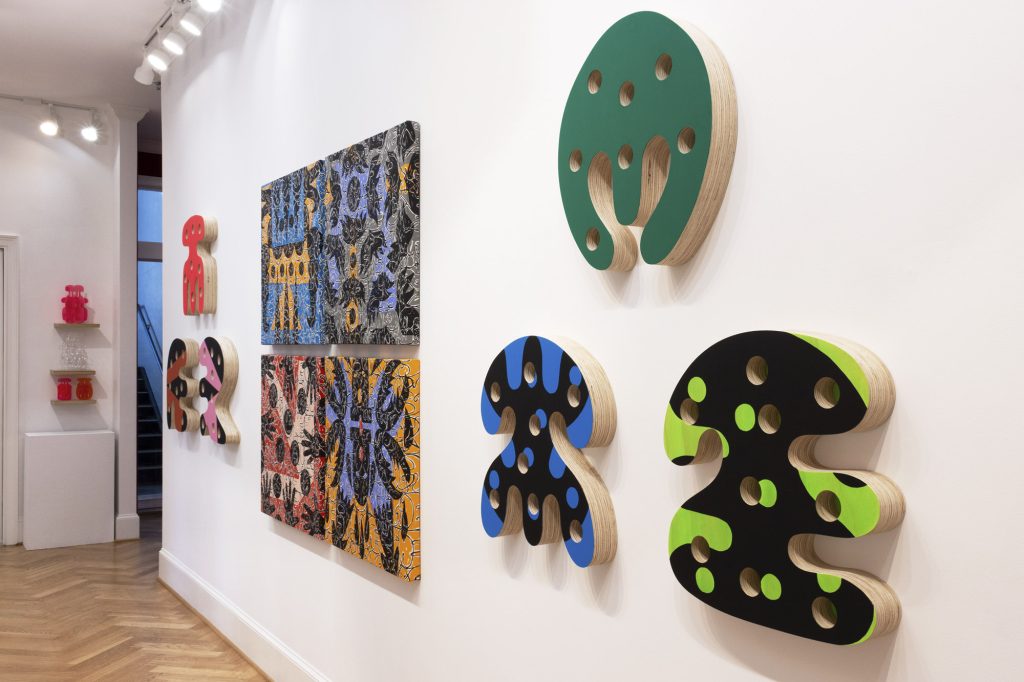
Patino explores the myth of Sisyphus in his work of the same name. Here, the symbols appear as patterns, rolling like the boulder across the canvas. Familiar symbols of hands, rabbits and circles are thoughtfully arranged throughout the composition.
“It’s kind of like the artist’s role — when you’re trying to find the right image to express your thoughts or your desires. It’s a good representation of something that is endless, and art is something that never gets completely conquered,” Patino said.
Meanwhile, Rose’s mixed-media series Physical Invisible uses painting, collage and printmaking to create both seen and unseen landscapes. The works contain unique markings of space, partitions and patterns that were partly influenced by abstract architectural photography. Rose begins each work with a broad gesture, making a mark on the canvas as a jumping off point to launch the creative process. Then, through layers, she conveys invisible sensations.
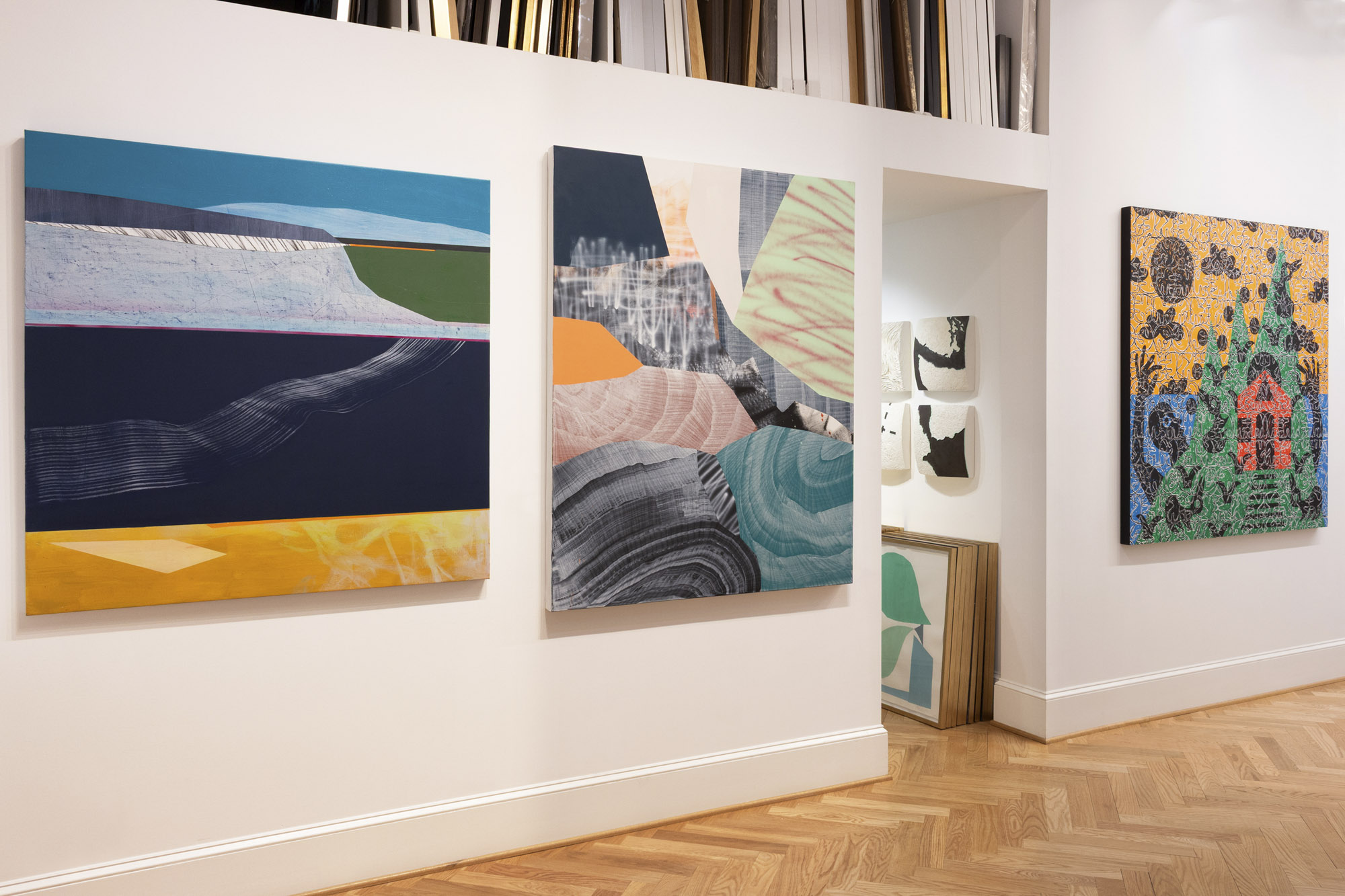
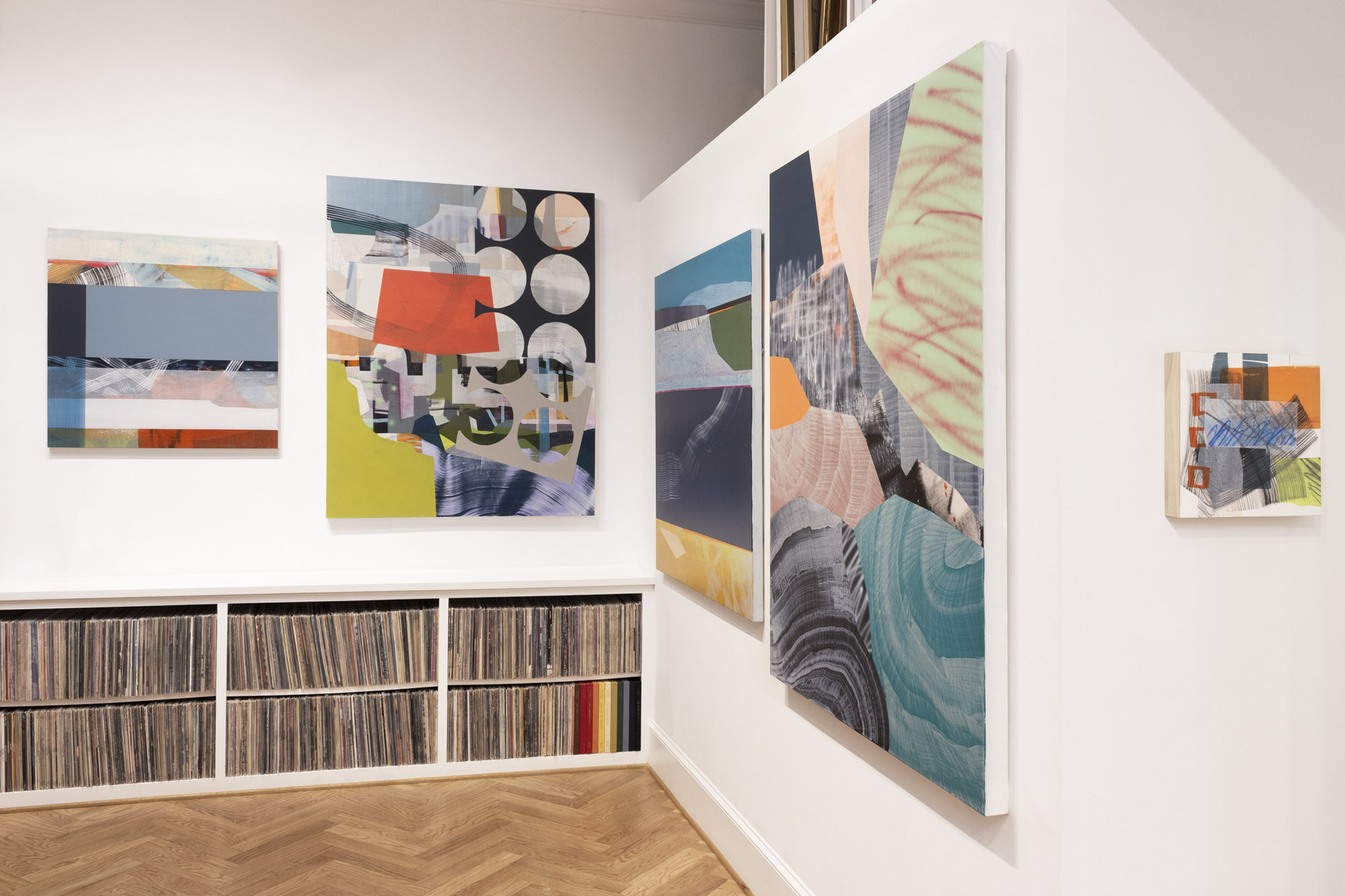
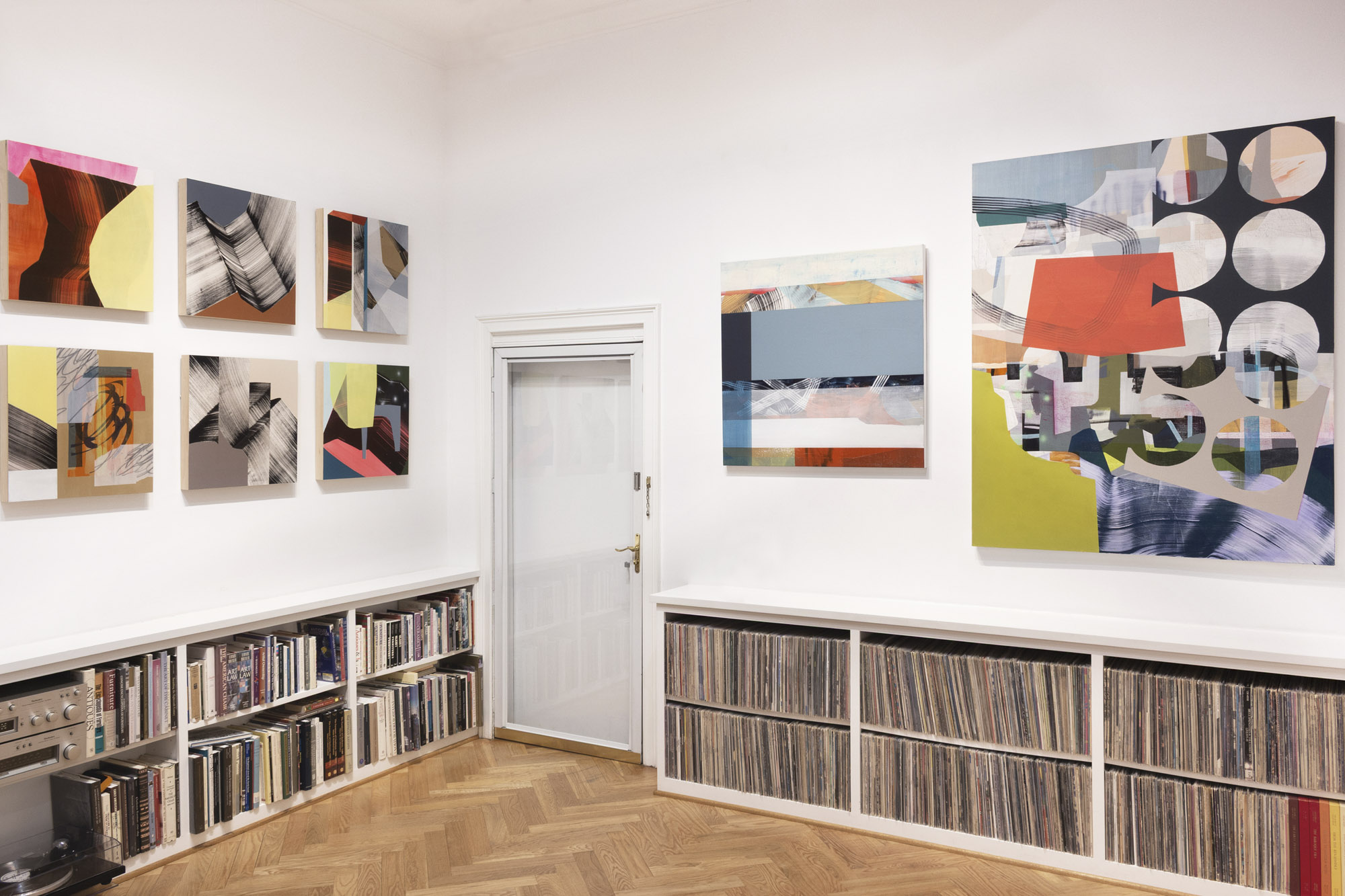
“It’s the invisible part of our lives — the thoughts, the memories, the wind, the currents, radio waves, all the things that really are harder to describe using a visual language unless it’s abstract. I feel like abstraction sort of embraces these invisible qualities of our world,” Rose said.
She finds that her layers create an experience of time, suggesting that when looking through the layers, the painting appears to be in motion — as if you’re watching it happen — whereas more opaque layers create a sense of stillness, like a moment frozen in time.
“It’s almost like that feeling of sitting in a train and watching things flash by. You can, in some instances, see the history. In the works, you can sometimes see the very first mark, all the way to the very last mark if they’re all translucent colors. But the pieces that are opaque have more of a stopping point for your eye. Those sections have a lot of texture underneath them, which is showing you the history of the piece in a less obvious way,” said Rose.
In Porten’s Enjoy Yourself, flashes of flower petals flicker through a blurred, lens-like effect. The series of oil paintings were first painted realistically and then swept over with a large brush. To achieve the straight striations in his blurring technique, Porten uses a brush he built that runs along a rolling track, allowing for precise, guided strokes.
The result is a piece that feels metaphorically layered, even though it is, in fact, a single layer. Porten painted the composition in the alla prima style, placing each color exactly where it belongs from the start and capturing the lighter tones first, rather than building up from midtones. He began these paintings after he and his wife became parents.
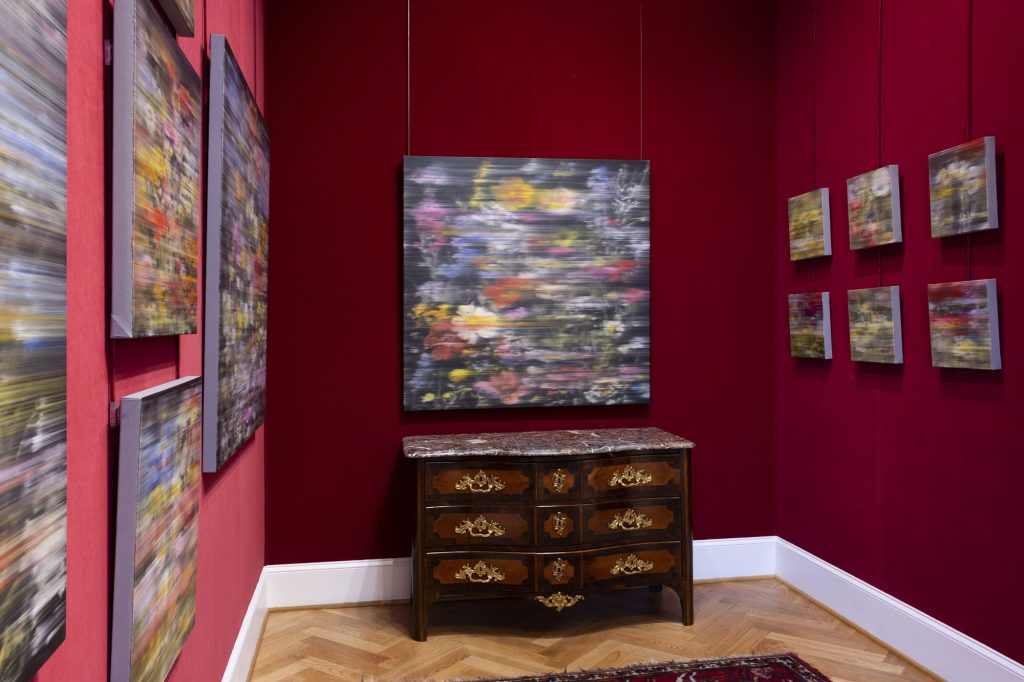
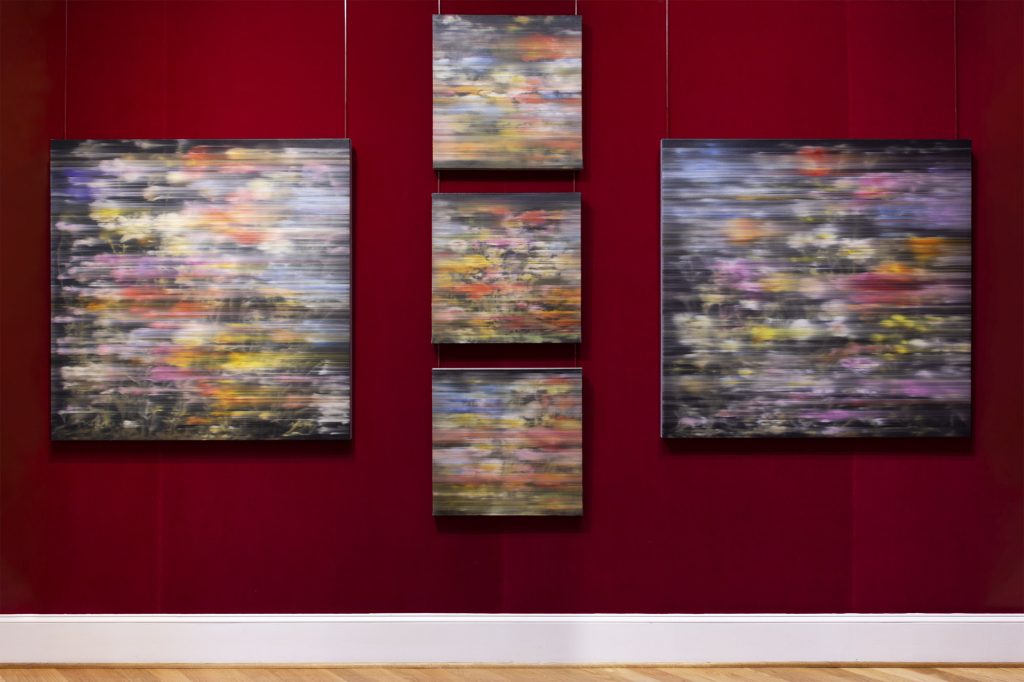
“The desire to make a blurry image was less about, you know, the formal aspect, and more about actually conveying what it felt like during that period of time. It’s an interesting part of life that people don’t really talk about,” Porten said.
The flowers in his paintings were inspired by those at their home, where planting and tending to a garden became a shared way for his wife to reconnect with herself and created a beautiful space for their son.
“I was trying to make something that would be beautiful and hard to recognize at the same time,” said Porten. “Something that touches on the fleeting aspect of being alive, hopefully gets some folks to recognize that maybe they should take a minute and enjoy themselves.”
The four exhibitions bring together a vivid range of color and material, revealing processes rooted in intuition. Each artist embraces their process without full knowledge of what will emerge, which allows for symbols and forms to surface over time. This is reflected back at the viewer: The sensation of déjà vu becomes a way of filtering these works through your vision. In this exhibit are images we recognize but can’t always name.
Through Hable’s interpretation of garden life, Patino’s familiar yet deconstructed symbols, Rose’s sensory layers that gesture toward the subliminal and Porten’s quiet yet pointed insistence on the present moment, the exhibition draws the viewer to reflect on elusive sensations like memory and motion.
Déjà Vu will remain on view at Spalding Nix Fine Art through May 22.
::

Mitali Singh is a writer whose work has appeared in ArtsATL, The AJC, The Creek, and The Emory Wheel. She is passionate about storytelling, the outdoors and exploring the intersections between the arts and culture. She received a B.A. in English and creative writing and environmental science from Emory University.
STAY UP TO DATE ON ALL THINGS ArtsATL
Subscribe to our free weekly e-newsletter.

PLEASE SUPPORT ARTSATL
Your Gift Sustains the Coverage You Count On!
Related Posts