Memento Gallery and Alday Hunken Gallery team up for new partnership
Two local galleries, Memento Gallery and Alday Hunken Gallery, are entering into a partnership to share both a physical space and curatorial vision.
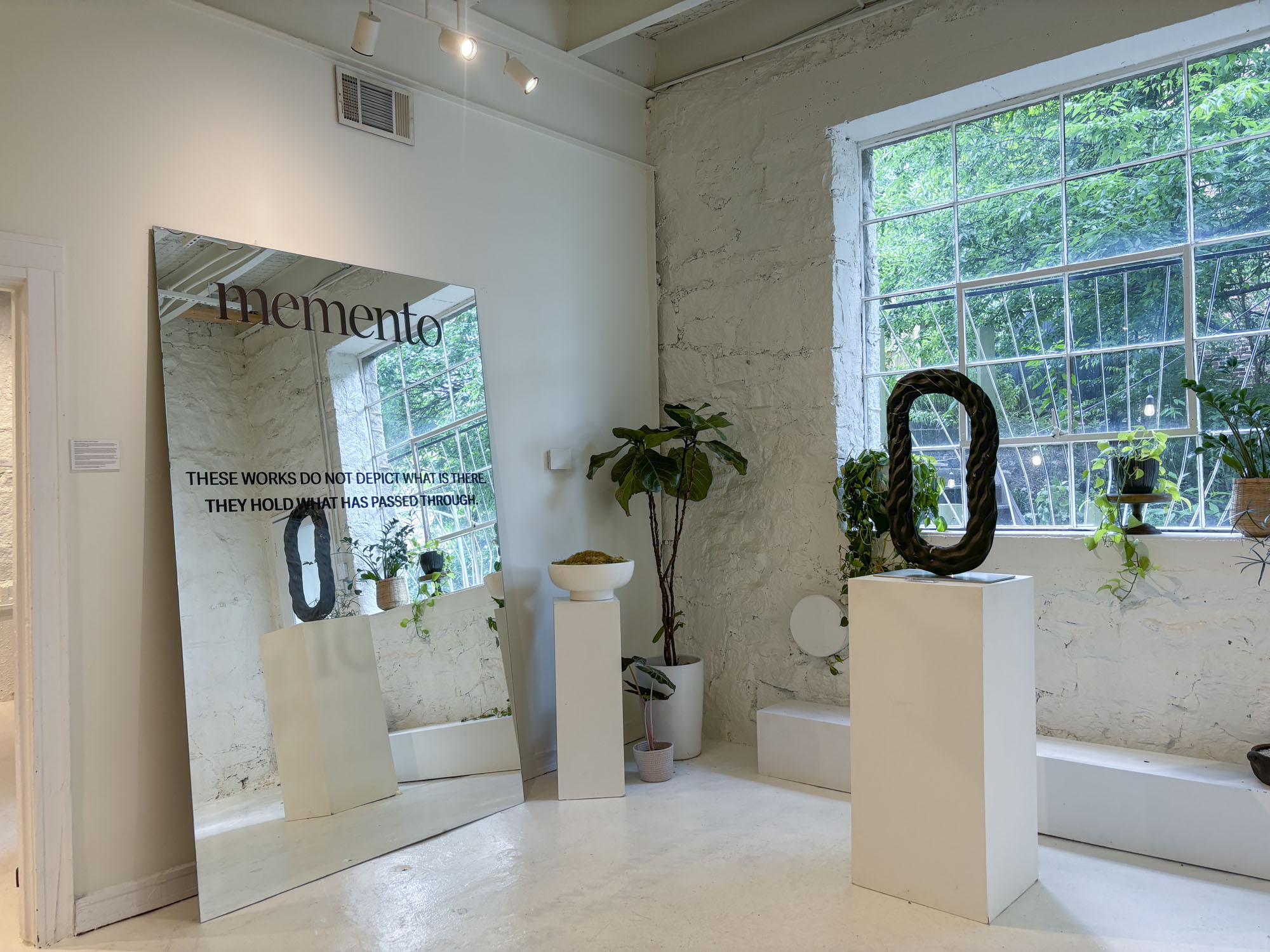
Originally from Atlanta, Madison Dailey spent her formative years exploring the arts in New York City — first attending art school and pursuing artist management, then launching a company that hosted creative art events — before returning to Atlanta during the onset of the pandemic. Energized by the city’s art community, she opened Memento Gallery in 2023 in the Poncey-Highland area neighboring Liberty Tattoo and Hotel Clermont.
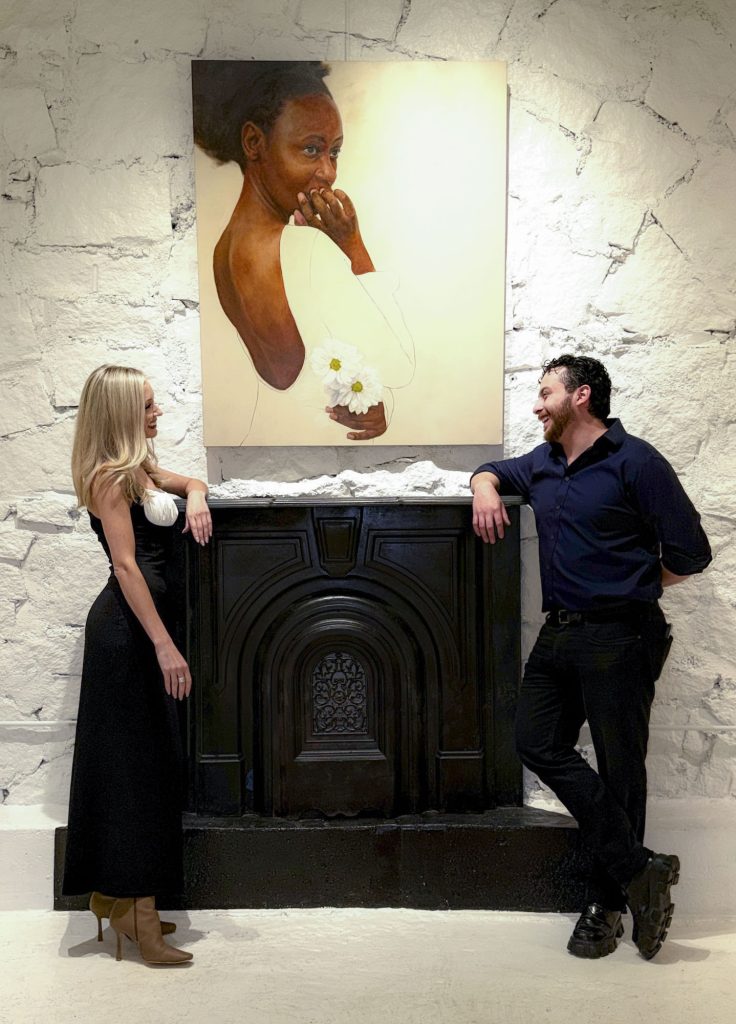
Founder and co-director of Atlanta and Mexico-based Alday Hunken Gallery, Alfonso Alday Vergara said that the gallery aims to foster cross-cultural dialogue between the two cities and highlight underrepresented artists pushing boundaries in their work.
Discovery of the gallerists’ shared vision for expanding Atlanta’s contemporary art landscape, paired with years of informal collaboration, led to an emerging partnership. The two previously worked together on exhibitions and supported each other’s projects at art fairs. Eventually, Dailey and Vergara recognized the potential of combining their networks and curatorial perspectives to uplift Atlanta’s artists and bring in even more international art.
“Atlanta and Mexico City are both such strong players in the art world right now, from a cultural perspective, and [are] sometimes overlooked. I feel like they’re really having their moment right now, and they’re forces to be reckoned with,” Dailey said.
She emphasized that the pandemic forced small galleries to adapt to new models with increased collaboration and sharing resources to remain sustainable. Compared to larger, more established galleries, Atlanta’s smaller galleries operate with fewer resources while facing many of the same expectations. While they aim to attend art fairs, participation costs can place them at a disadvantage, and the rising costs of affording permanent physical space in the city is a persistent challenge.
Dailey and Vergara found inspiration in alternative models that resisted this challenge, such as New York City’s U-Haul Gallery. The space was created in May 2024 as a response to the financial costs of presenting shows in the city. There, the gallery space occupies the interior of a moving van.
“They’re saying, ‘We’re going to be relentless. We’re going to rent these U-Hauls and make this little tiny space look like a perfectly curated gallery. We’re just going to line the streets of New York City, and we’re not even going to ask for permission, but we’re going to do it.’ I just love that energy behind it, and I feel like Alfonso and I have that energy,” Dailey said.
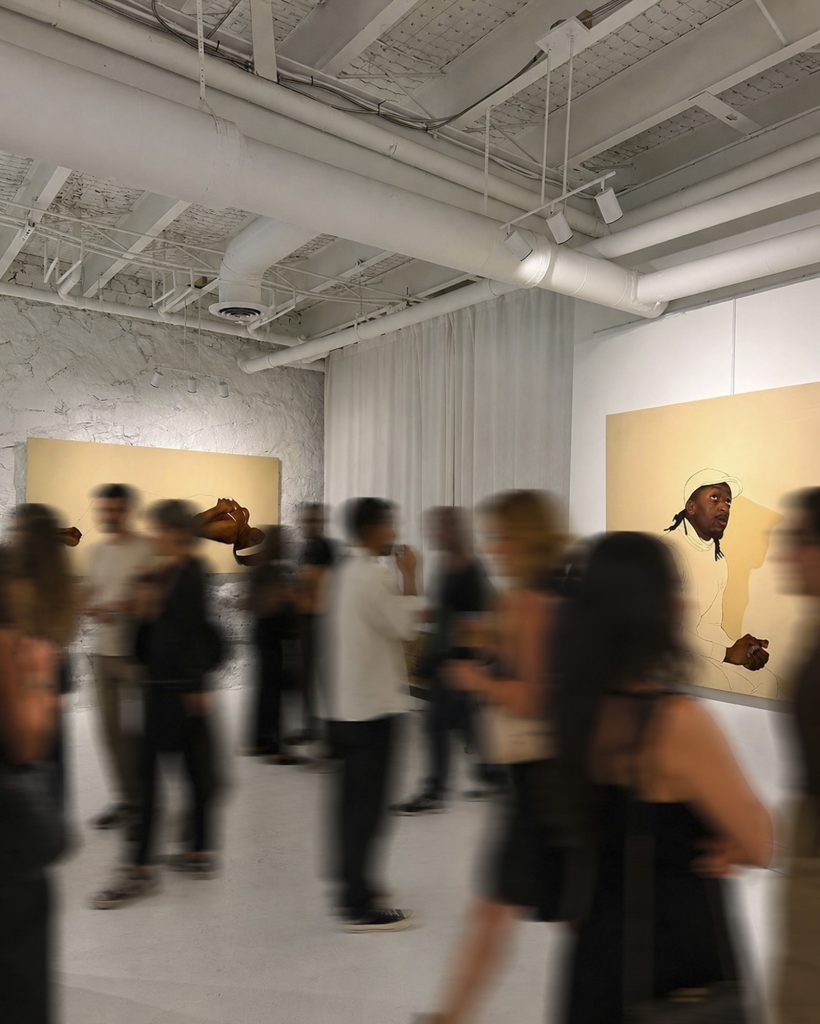
The first show to come out of the partnership is Held Traces — a two-artist exhibition on view at Memento Gallery through June 22 — featuring the paintings of African American artist Gabriel Choto and stone sculptures of Mexican artist Paula Cortazar.
Inside the space, distressed off-white walls and minimalistic decor set the scene for the two collections, where Cortazar’s winding, vertical structures are interspersed around Choto’s paintings. Choto’s featured works trace a journey of healing, moving from grief toward renewal and the rediscovery of hope. Two large-scale pieces hang in the center of the gallery that embody these two stages. Both Make me Whole and Discarded Hope feature figures lying down, yet convey opposing moods, creating a visual and thematic balance. In Discarded Faith, the figure faces downward, suggesting resignation, while in Make me Whole the figure is turned upward as if reaching out for and regaining a semblance of hope.
The figures in Choto’s portraits are partially rendered, with some body parts left as outlines and others filled in. The intentional negative space that emerges opens up the work for viewers to fill in what’s missing. For example, in Mwari, I am troubled with ghosts, a set of shadows floating next to the figure — if looked at long enough — can feel like your own shadow on the canvas shifting in the light.
The Silent Admirer, which depicts a man facing away and holding his hands around his back, holds a quiet power. Since the subject is pared back, it could be anyone — even the viewer. Choto also creates space beyond the canvas through color by using sparse but deliberate pops of yellow and red amid a largely neutral color palette.
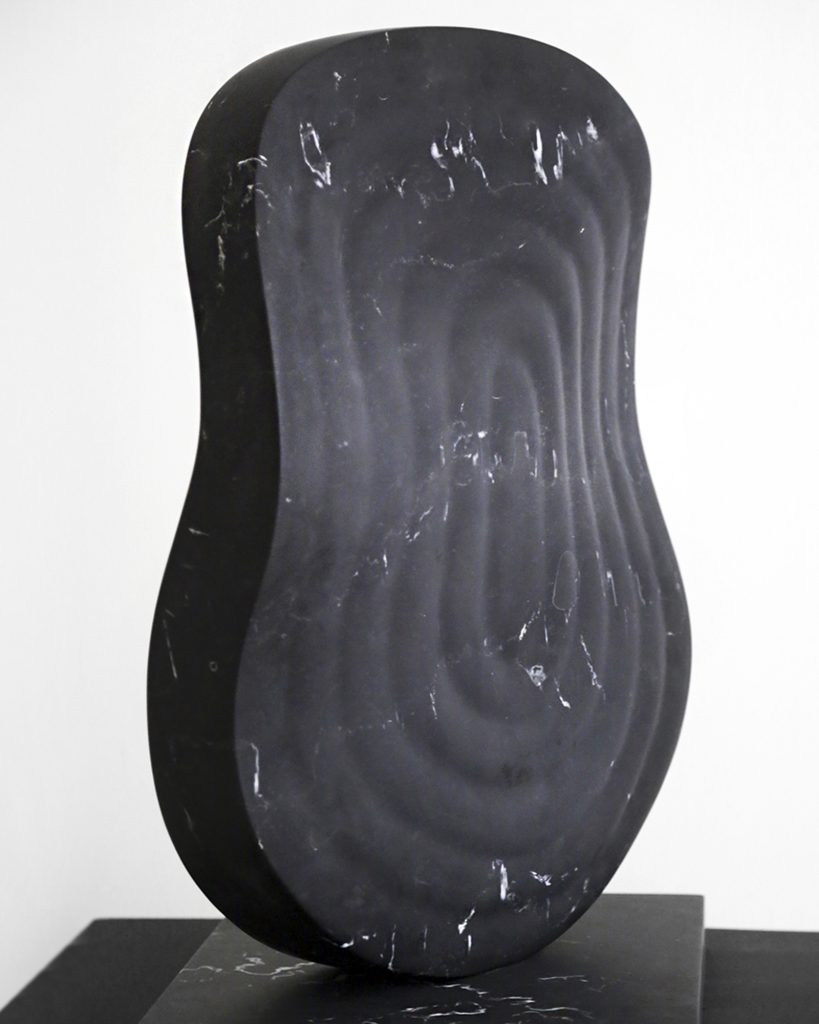
Cortazar’s works take inspiration from her meditations in the natural world, the plant species and ecosystems that surround her. She sources stones from mountains and then sands, carves, molds and shapes them into parts. Each structure is the result of multiple handpicked pieces joined together, reflecting the memory and sensation of a particular scene. In her works, grooves may represent the movement of the water, the wind moving through peaks of mountains and patterns that occur due to natural erosion over time.
In Agua, concentric shapes represent the ripples of water, transforming the hard black marble into fluid. Placed in front of the window, Cortazar’s Umbral forms a frame within a frame, backlit by streams of natural light and textured with plants and vines, both grounding it in this new location while remaining intentionally ambiguous. The twists and folds in the stone resemble currents of something distinctly elemental and alive. In Alabaster, one pole connects the many pieces, forming a winding and segmented vertical structure that resembles something amorphous and material at the same time.


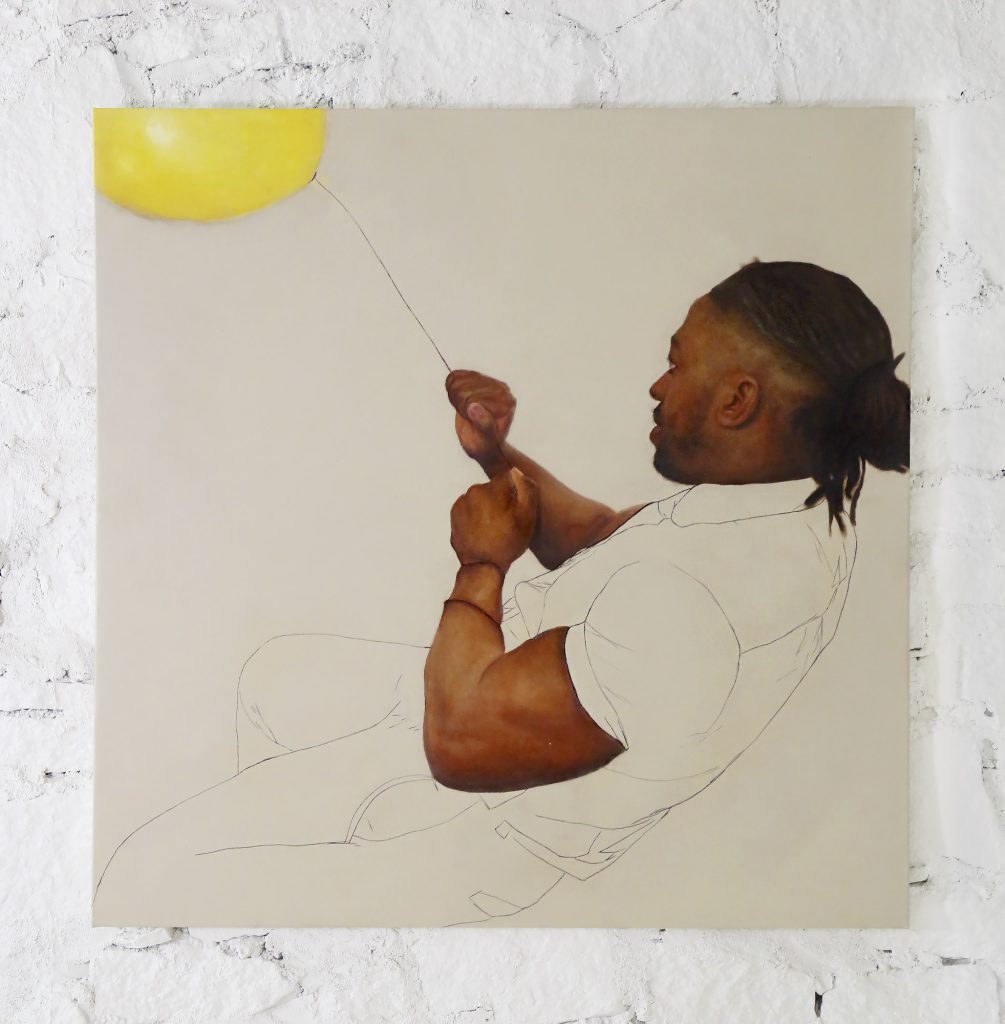
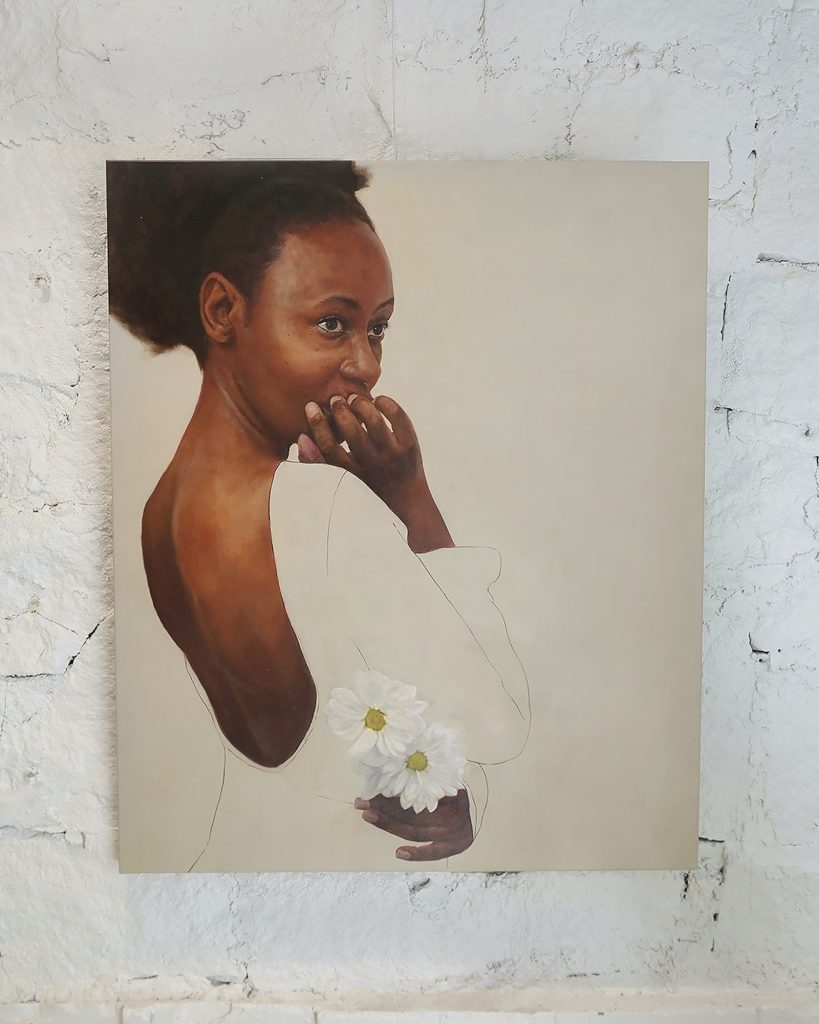
Stories emerge in every corner of the gallery, shaped by the physical frames created throughout the space. From certain angles you may find yourself midway between a Cortazar sculpture and Choto figure. Through the open frame of a hallway, Cortazar’s sculpture seems to mimic one of Choto’s subjects: a turned back and a contemplative gaze, both with faces — one human and one rock.
Brought together under the exhibition’s central phrase: “These works do not depict what is there. They hold what has passed through.” The artists’ works are connected through a shared engagement with the traces of time. Choto’s paintings interpret “traces” of time through a personal exploration of memory, family and diasporic identity, stamping works with acts of withdrawal and gestures of the unseen. Cortazar’s sculptures explore its physical effects, offering traces of erosion, weathering and other natural forces on the material. These emerge through forms marked by hollow spaces and open centers.
Dailey elaborates on the dialogue between the artists’ works: Chodo’s exploration of diaspora and relocation echoes conversations about migration in Mexico City, while Cortazar’s work engages with place and time.
“For so long, there’s been these gatekeepers of art institutions, and I feel like the art world is really being decentralized . . . Atlanta and Mexico City are some of those major leaders right now and in a broader contextual aspect of migration, movement and re-invention. I think that the timing is so critical, and I’m just so excited to see the art and the artists that we can bring together,” Dailey said.
Held Traces is on view at Memento through June 22.
::

Mitali Singh is a writer whose work has appeared in ArtsATL, The AJC, The Creek and The Emory Wheel. She is passionate about storytelling, the outdoors and exploring the intersections between the arts and culture. She received a B.A. in English and creative writing and environmental science from Emory University.
STAY UP TO DATE ON ALL THINGS ArtsATL
Subscribe to our free weekly e-newsletter.

PLEASE SUPPORT ARTSATL
Your Gift Sustains the Coverage You Count On!
Related Posts