
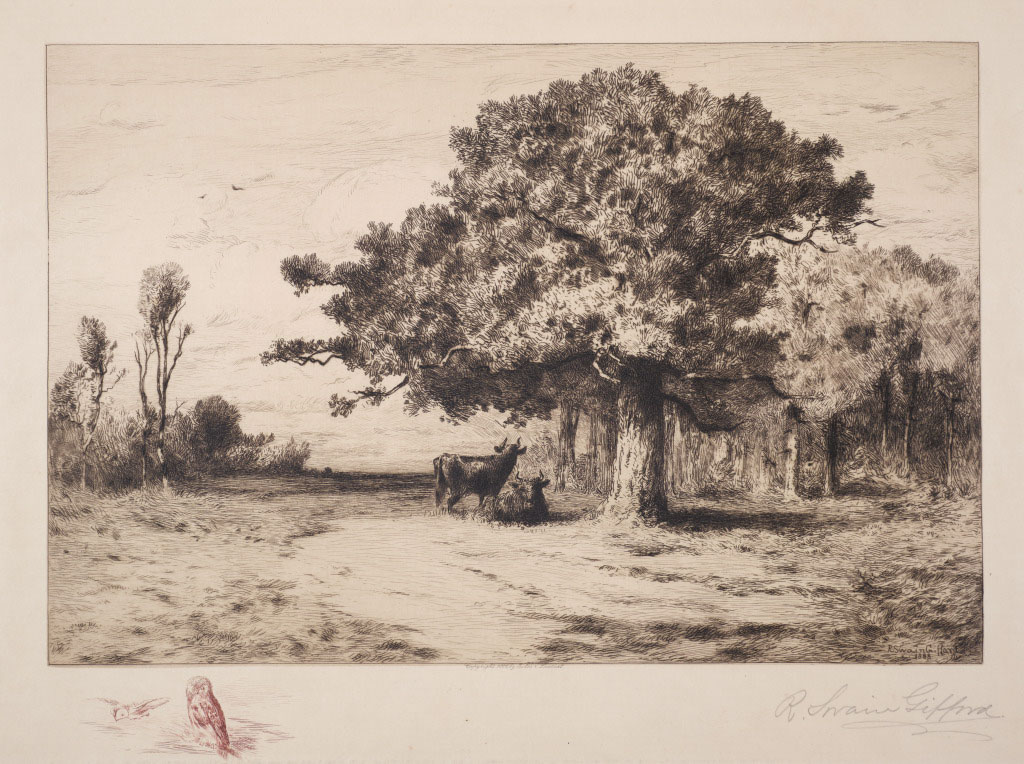
High Museum’s ‘Paper Trees’ reveals the extraordinary behind nature’s ordinary
A tree may be one of the first things a child learns to draw, but it is also one of the most difficult objects to truly represent on paper.
The High Museum of Art’s Paper Trees, which opened Friday and is on view through Feb. 21, 2027, in the High’s Works on Paper Gallery, begins with this deceptively simple tension, introducing 19th-century artist James Duffield Harding’s manual Lessons on Trees to ground the exhibition’s thesis: Capturing nature requires disciplined observation equal to the study of human anatomy. A tree is not simply a trunk and a canopy. It is texture, structure, growth, light, shadow and space in variation from root and trunk to branch and leaf.
That idea gives Paper Trees its quiet power. The exhibition brings together nearly 50 prints, drawings and sculptures from the museum’s collection and loans from the Robert C. Williams Museum of Papermaking and Clark Atlanta University Art Museum. Organized chronologically, the exhibition traces how artists from the 19th century to today have studied, interpreted and transformed trees, not simply as beautiful symbols of nature but as opportunities to develop and demonstrate artistic skill.
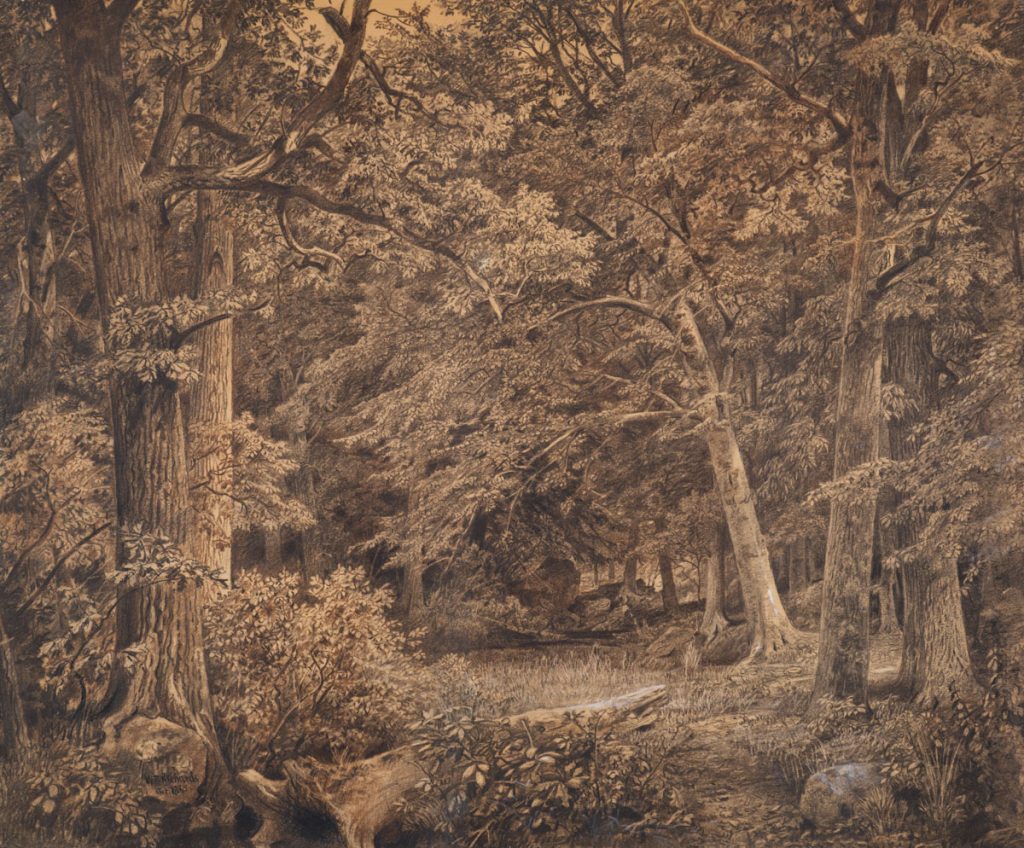
The first gallery establishes the exhibition’s central argument with William Trost Richards’ Woods. The large drawing of a forest scene feels expansive and immersive. Its detail and atmosphere invite the viewer to simply admire its beauty but also demonstrate the extraordinary concentration and mastery required to translate complex trees onto paper.
One of the pleasures of Paper Trees is that it encourages viewers to look beyond the finished image and consider the function its creation served. The drawings were created with many purposes. Some may have prepared artists for larger compositions; others functioned as studies, demonstrations of skill or independent works in their own right. They reveal artists not as mysterious figures receiving inspiration from nature but as craftspeople practicing, observing and refining their abilities.
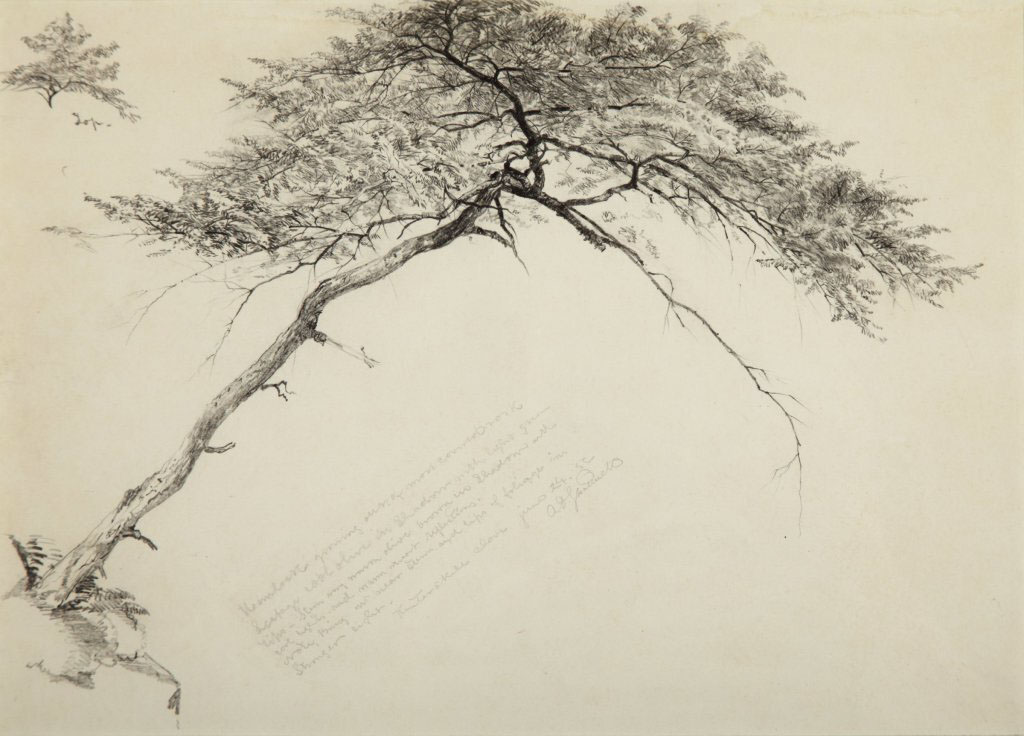
That idea is especially evident in the exhibition’s 19th-century drawings. Works associated with traditions of American landscape art show artists closely examining individual trees, branches and leaves. Aaron Draper Shattuck’s Hemlock at Kauterskill Clove is a particularly elegant example. The tree’s branches stretch across the open space of the composition with a quiet balance that recalls the restraint and sensitivity of Japanese landscape traditions. Yet alongside the poetic image lie practical working notes, instructions detailing leaf tones, shadows and highlights, turning the study into a record of live problem solving.
The exhibition’s later galleries broaden the conversation by showing how artists developed different approaches to representing trees. Joseph Stella’s etching, Untitled (Tree Trunk), depicting an American chestnut, offers an especially intriguing example. Stella is best known for his modernist works, but here he engages with a more observational tradition. The subject itself carries historical resonance: the American chestnut was disappearing because of blight, giving the image an added dimension as both artistic study and record of a changing natural world.
The transition into the 20th century also brings more color and a wider range of artistic approaches. William Thomas Livesay’s Large Oak Tree uses etching, engraving and watercolor to explore how bare branches can define space against an open sky. Alice Ravenel Huger Smith’s The Ashepoo Swamp seems influenced by Japanese aesthetics and captures another way artists have used trees to shape atmosphere and composition. Two works by David Driskell further expand the possibilities, using color and abstraction to explore not simply the appearance of trees but their visual and emotional qualities.
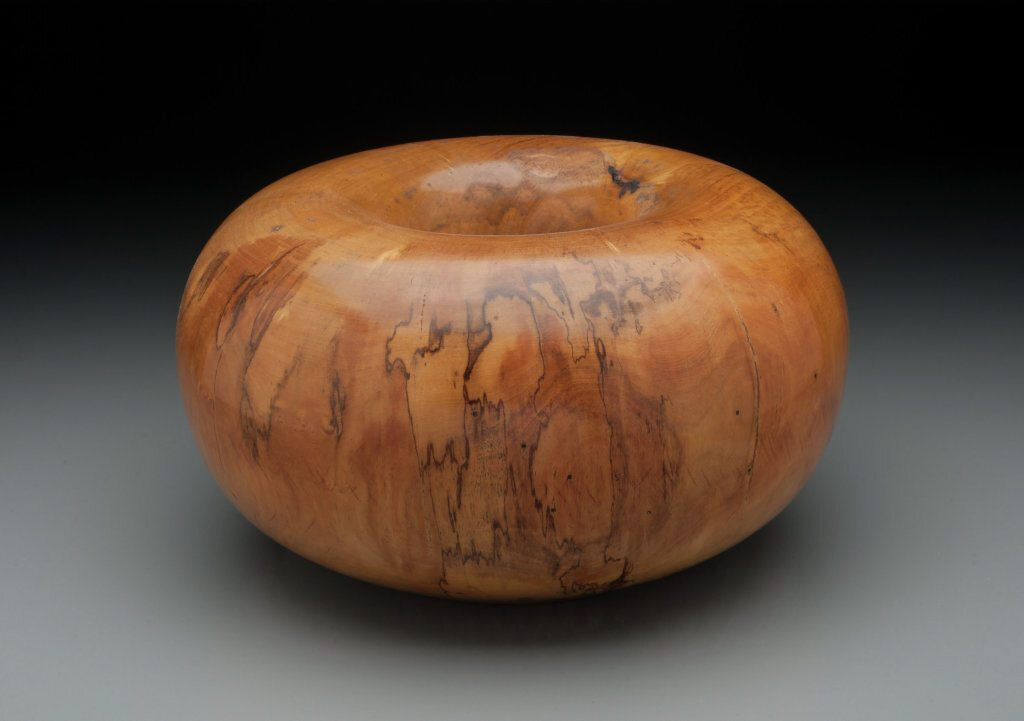
The addition of sculpture and material elements also expand the exhibition’s definition of what a tree study can be. Wooden bowls, a historic wood encyclopedia from the Robert C. Williams Museum of Papermaking and an interactive display of wood and bark samples invite visitors to consider trees not only as images but as physical material. These elements are thoughtful extensions of the exhibition, though the strongest moments remain the quiet galleries devoted to the artists’ careful observation and translation of the natural world through line and mark.
Curated by Anni Pullagura, the High’s Margaret and Terry Stent associate curator of American art, Paper Trees is a modest but assured exhibition. It is not a blockbuster built around a single famous name or an instantly recognizable masterpiece. Its rewards are quieter. The show asks visitors to slow down, pay attention and spend time with works that reveal their complexity gradually.
The exhibition’s simplicity is one of its greatest strengths. Anyone can enter a gallery of tree drawings and understand the basic premise. But the longer one looks, the more questions emerge: How does an artist capture a branch? How does a forest become a composition? How much knowledge and practice are hidden within a seemingly effortless image?
After leaving the gallery, it’s difficult not to look at the trees outside the museum a little differently. Paper Trees does not transform the viewer through spectacle. Instead, it offers something more subtle: a reminder that seeing deeply is a skill and that even the most familiar things can become extraordinary when we learn how to look.

Andrew Alexander is an Atlanta-based writer.
STAY UP TO DATE ON ALL THINGS ArtsATL
Subscribe to our free weekly e-newsletter.

