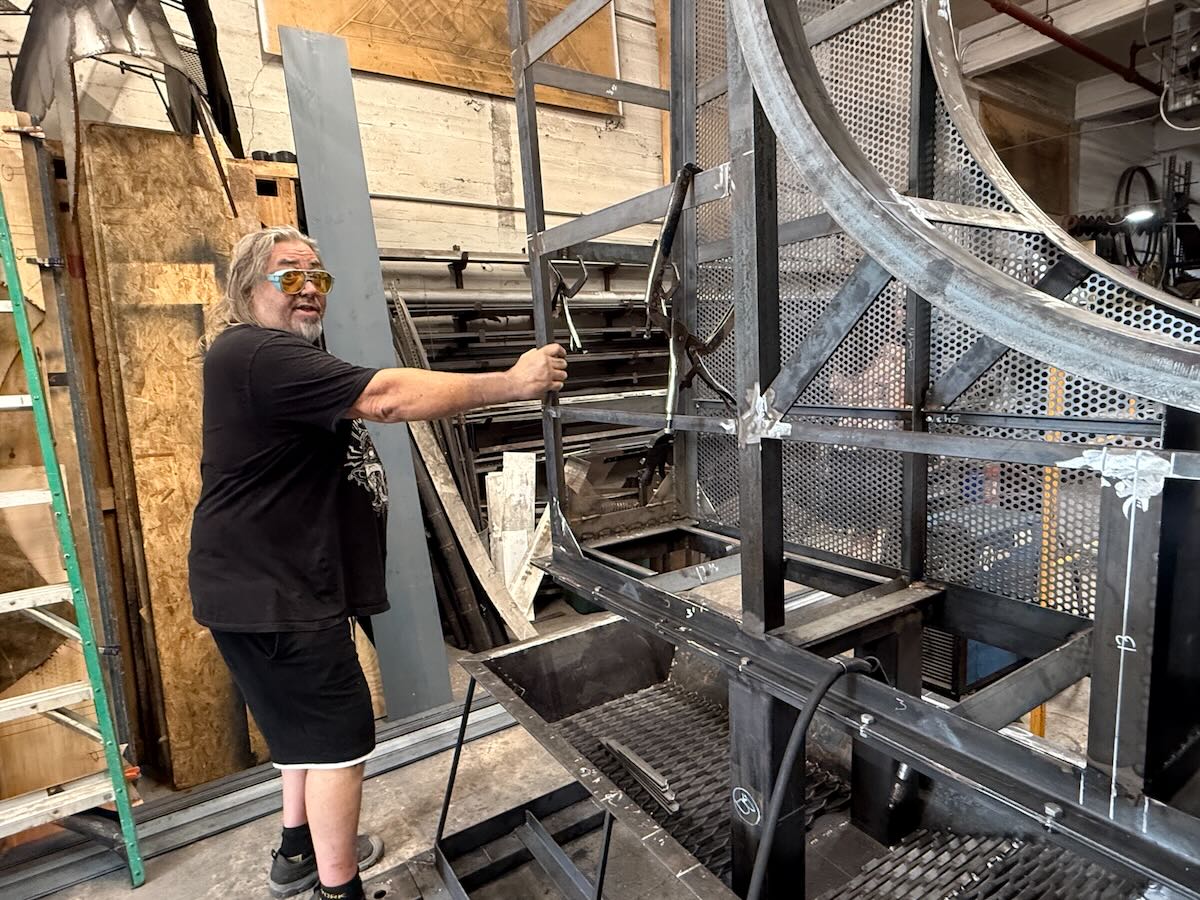
Burning Man artist Charlie ‘Blackcat’ Smith heads to Black Rock City with a colossal memorial
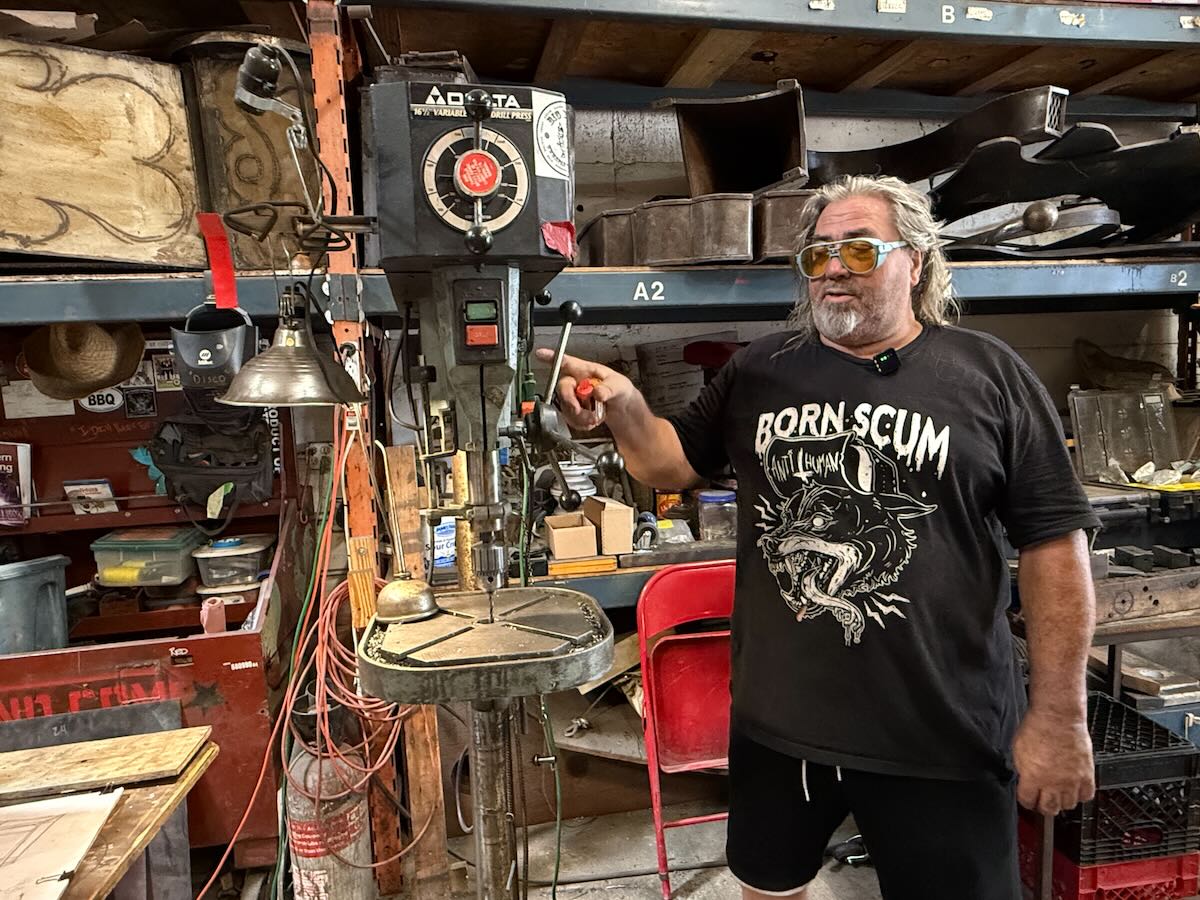
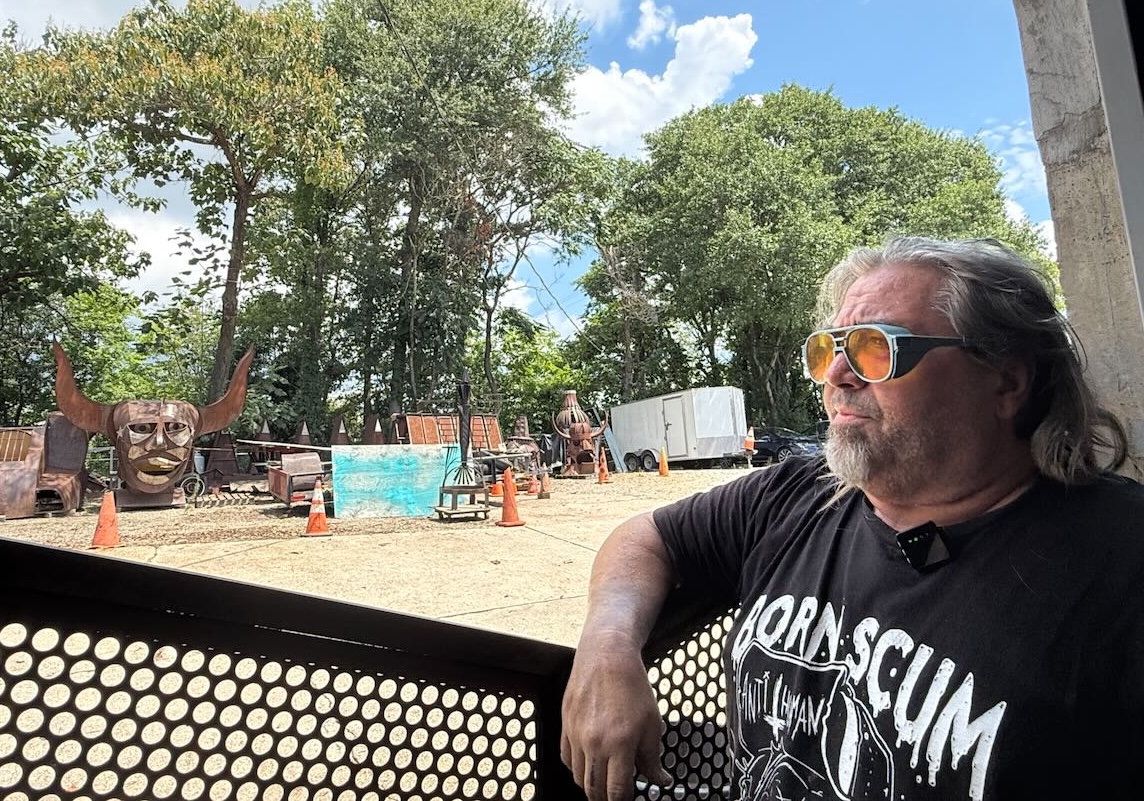
Wearing aviator-style, turquoise-rimmed goggles over his scraggly, silver hair and a worn black T-shirt with the words “Born Scum” scrawled over a rabid wolf, Atlanta artist and self-described “contraptionist” Charlie “Blackcat” Smith guided two journalists through his industrial art studio, Sparseland, earlier this month.
As we breathed in the hot, metallic air and stepped carefully around heavy machinery, slabs of metal, graveyards of found objects and a bus-sized, furry black cat that once rode atop a golf cart as an “art car,” Smith regaled us with stories from his decades attending Burning Man.
He went to his first Burn in 1998 and has gone almost every year since. Sparseland Studios, in fact, is named after the sparse land where Burning Man is held in the Nevada desert each year.
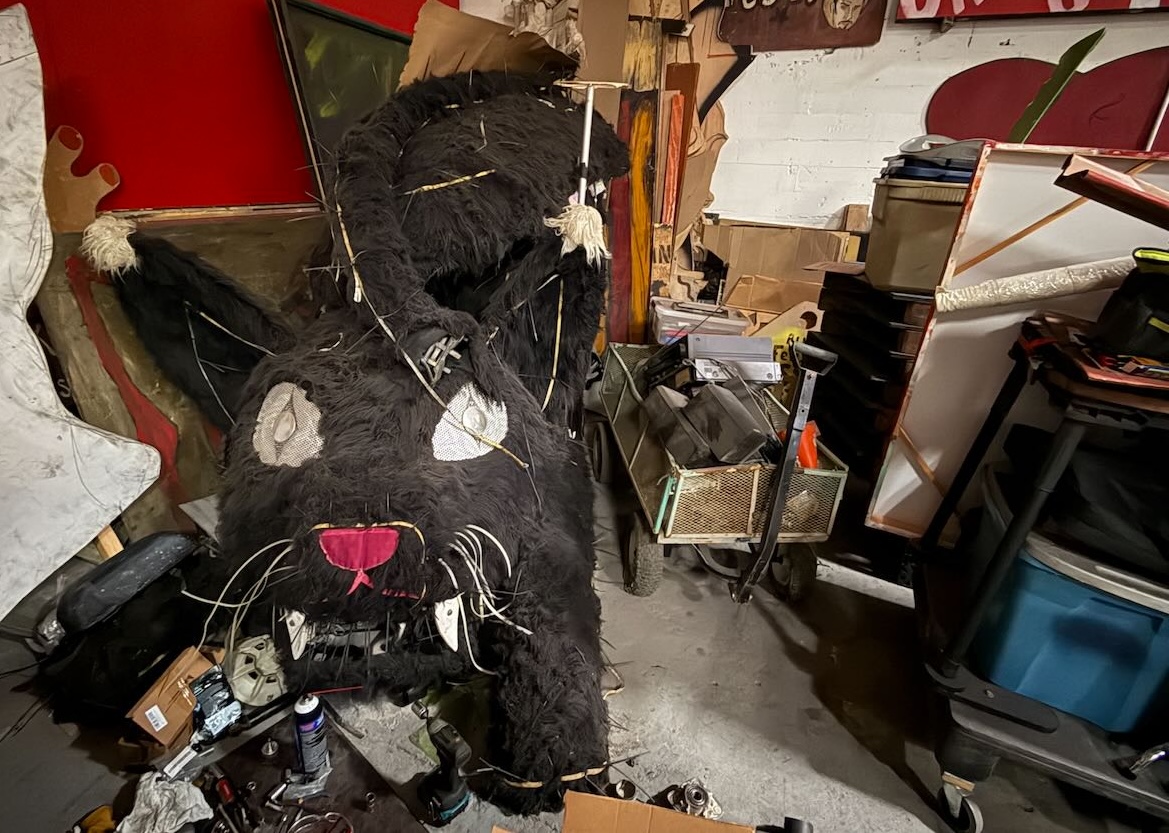
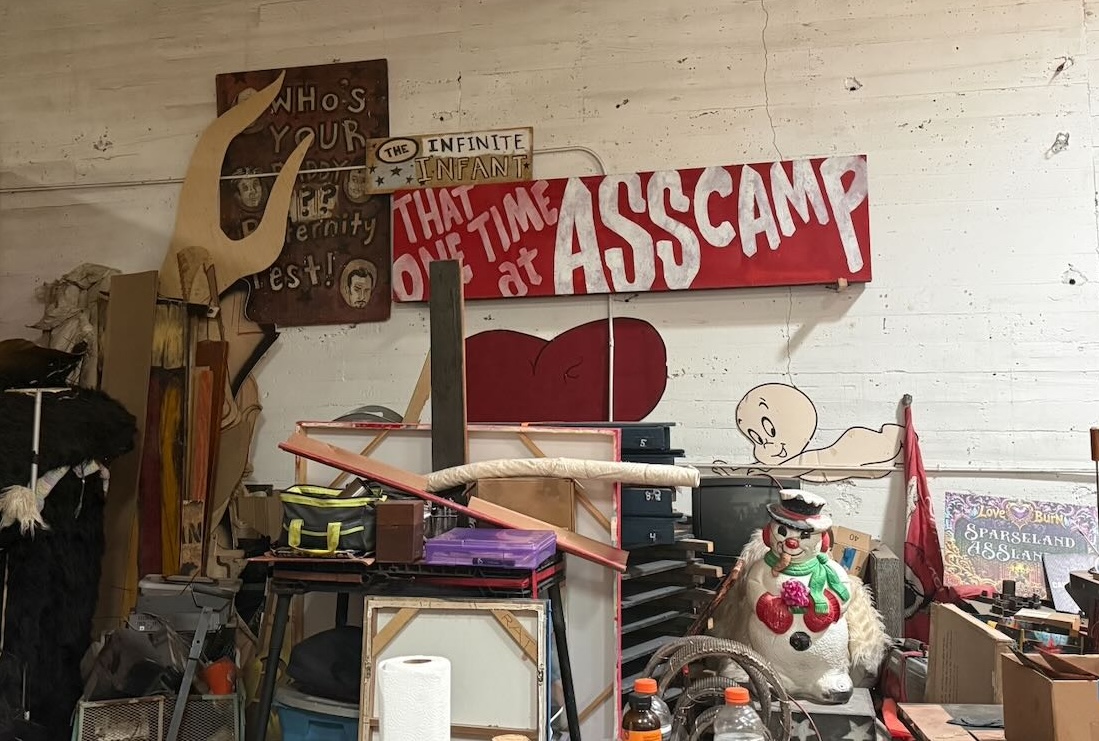
For the unacquainted, Burning Man is a whimsical, anarchistic and otherworldly settlement of sorts. It runs on a gift and trade economy and is erected by artists, musicians, misfits, libertarians, free spirits and fans for about a week every year around Labor Day. Roughly 70,000 people stay there in themed camps — Smith’s is called Asscamp, short for The Art of Such ‘n’ Such. A red camp sign that reads “That One Time at Asscamp” hangs on the wall inside Sparseland, hovering above the aforementioned cat.
Smith is what the culture calls a Burner — the term used to describe diehard Burning Man attendees. His mother Sally, whom he brought to her first Burn in 2005, is a Burner. Many of his friends are Burners. The mother of his children — also a Burner. And at least one of his kids was still in the womb as he tromped around Black Rock City, the name of Burning Man’s temporary utopia.
In the middle of Sparseland Studios, which is located in the MET complex just south of downtown Atlanta, is a lounge where a few stray couches and chairs provide a tiny island of refuge surrounded by creative chaos. A makeshift bar covered in knickknacks sits before a wooden bookshelf.
On the shelf rests one of Smith’s most prized possessions, which he eagerly retrieved to show us: a signed, first edition copy of “This is Burning Man,” written by his friend of 26 years, Brian Doherty.
Doherty was a writer who spent decades chronicling the libertarian movement and its “occasionally zany radicalism” (Doherty wrote). He published Radicals for Capitalism, a 700-page history, and was the longtime editor of Reason magazine. A recent article in The New York Times noted how Doherty was deeply fascinated by “how bands of outsiders on the cultural and intellectual fringes infiltrate the mainstream.”
His This is Burning Man is regarded as the quintessential book about the experimental enclave. It is written in typical Doherty style: meandering, wordy and expressive. The subtitle on the cover is a prime example: “Changing the world through art cars, bone towers, Danger Ranger, smut shacks, fire cannons, Glitter Camp, fighting robots, exploding men, princess warriors, pulsing soundscapes, neon skies, metal dragons and Dr. Megavolt — the rise of a new American Underground.”
Smith’s copy of the book contains a personal inscription written to Smith’s mother: “For Sally,” it reads, “As you can tell by reading this, your boy is one of my heroes.”
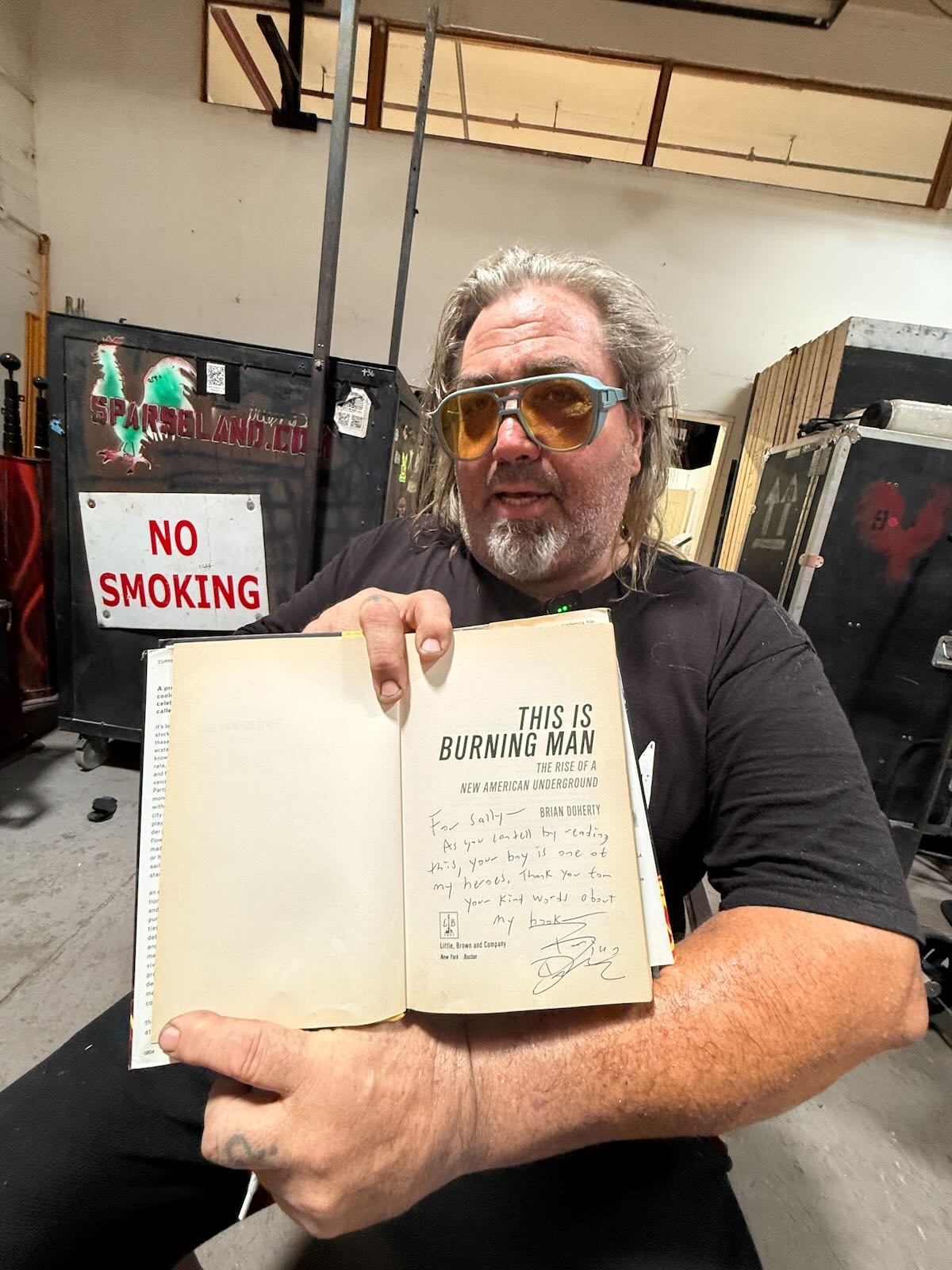
Smith was one of Doherty’s heroes — and vice versa. The two first met decades ago during a chance encounter at Burning Man when they found themselves thrust into a situation where they needed to band together to deter a drunk and unruly man from setting an art structure aflame with a canister of gasoline.
“I detoured the drunken highness right to my camp,” Smith said laughing. “And that was really the selling point of how [Brian and I] connected.”
As time progressed, their friendship became a case of “genius magnetism,” Smith said. “I automatically attract other people that are big thinkers and doers.”
Over the years, Smith and Doherty worked on numerous creative projects together. Smith’s art has taken him all over the globe, building behemoth sculptures and set designs for concert producers such as Live Nation and Insomniac. He’s brought artwork to Dubai and Ireland and helped launch the first unofficial “Africa Burns” gathering in Cape Town. Almost every year, Doherty accompanied Smith’s crew to Bonnaroo, the annual Tennessee music festival.
Most recently, Smith and Doherty were in the middle of co-authoring a book about subcultures.
In March, however, as Smith was driving through Alabama on his way to an art opening, his phone rang with tragic news: Doherty had fallen from a cliff in San Francisco Bay while scouting a site for an art performance. He was 57.
The nature of his death was devastating, and yet, somehow fitting, Smith described.
“Really Brian?” Smith remembers saying. “I was laughing and tearing up at the same time. I was just in shock.”
In the months that followed, Smith knew he wanted to memorialize his friend and provide a way for Burners who knew and loved Doherty to grieve. He envisioned a massive sculpture he now calls “The Burning Book of Brian.” He started a crowdfunding campaign to fund its creation, and it has raised more than $25,000.
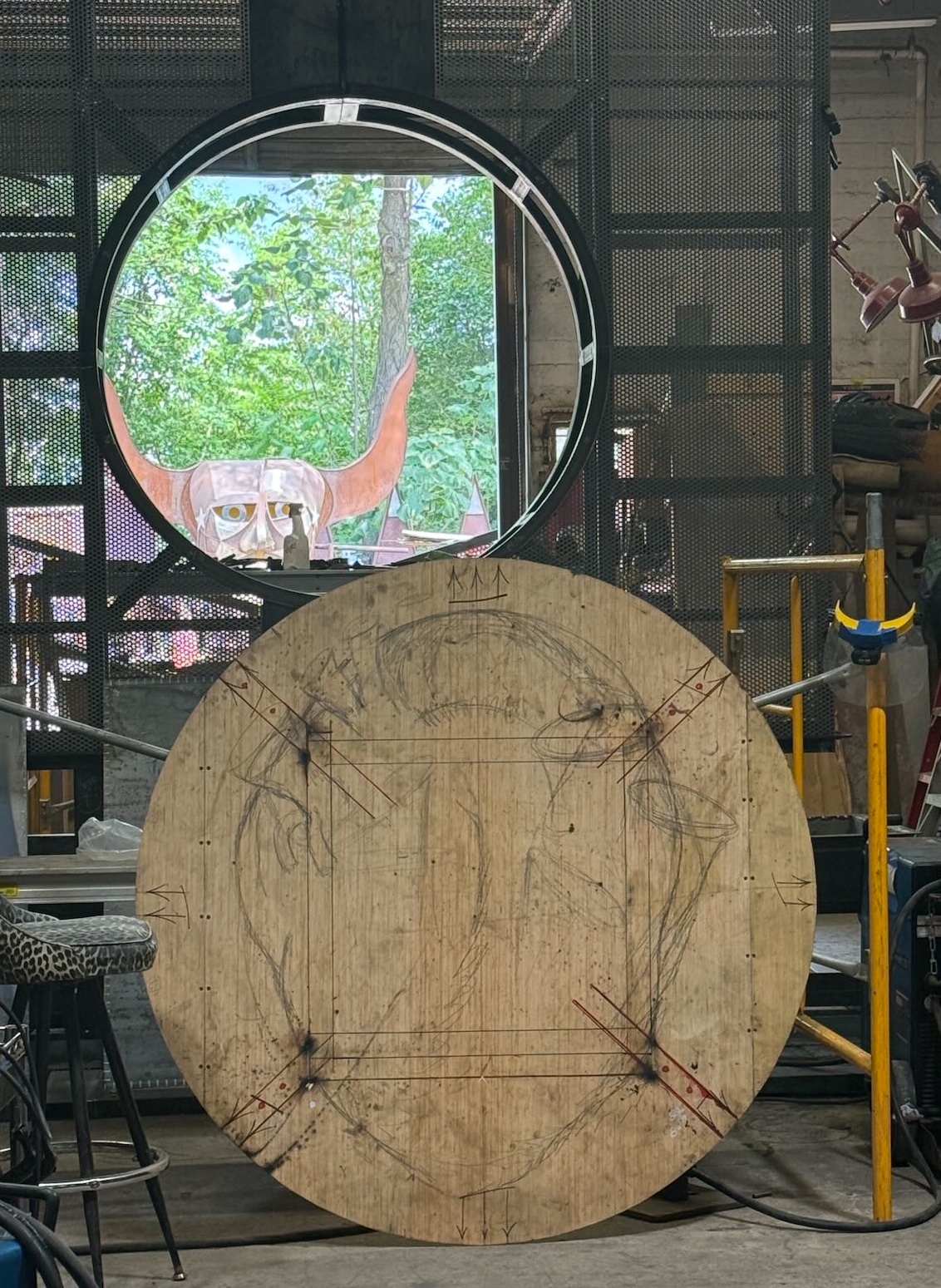
The sculpture, which this week is on its way to Black Rock City, is a two-story-high metal monolith of a book. In the center is a beating heart suspended. The heart is both a nod to the sculpture that Smith and Doherty helped save from the drunken arsonist the first night they met and a larger symbol for the hearts Doherty touched. The book, Smith said, is his way of honoring the book he and his friend will never get to complete as co-authors.
“I decided I would build the book instead,” Smith said.
The book has other layers of meaning, such as the dystopian burning of books that Smith said speaks to the times.
“Libraries are getting raided and books are being tossed out in the streets and literature is being taken away from the youth of America,” he said. His friend Doherty believed in free thought.
On the right and left sides of the sculpture are large hearths where people can toss in items to burn and experience catharsis. While many effigies at Burning Man are traditionally reduced to ash, Smith’s “Burning Book of Brian” will not be. Instead, the heat will change the patina of the metal.
Woven into its steel panels are also short poems about Doherty from roughly 20 of his close friends. Smith’s own is a question: “What the fuck, Brian?”
::

Danielle Charbonneau is ArtsATL’s senior editor of art + design and dance. She joined ArtsATL following her time as an arts reporter for The Atlanta Journal-Constitution. She holds an MA in specialized journalism in the arts from the University of Southern California. She is known for her curiosity, craft and wanderlust.
STAY UP TO DATE ON ALL THINGS ArtsATL
Subscribe to our free weekly e-newsletter.

PLEASE SUPPORT ARTSATL
Your Gift Sustains the Coverage You Count On!
Related Posts