Leia’s Lens: Understanding how three arts organizations grew despite financial precarity. Hint: audacity.
It’s no secret that funding for the arts, from all sources, has dwindled over the last six years. Arts organizations were severely impacted by the onset of the Covid-19 pandemic, with many closing and nearly all those remaining failing to make a complete recovery.
This, coupled with significant inflation, has made staying afloat incredibly difficult, and venues across the country continue to succumb to financial pressure.
Yet, in Atlanta, at least three organizations I found not only sustained but increased their capacities.
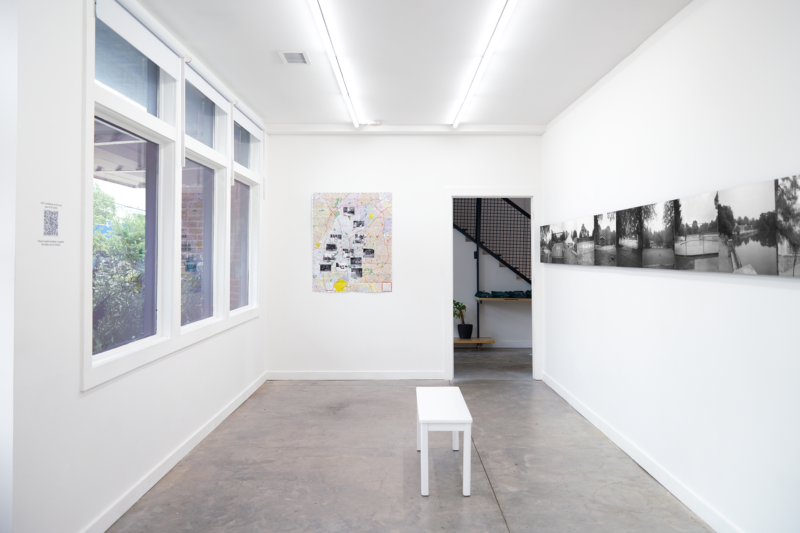
In 2023, Atlanta Center for Photography (ACP) rebranded and moved into its current building on Edgewood Avenue, turning its photography festival into a year-round, exhibition-presenting space. In 2024, it expanded to occupy the entire building. This year, the center hired a permanent digital media lab manager and a fixed-term education manager.
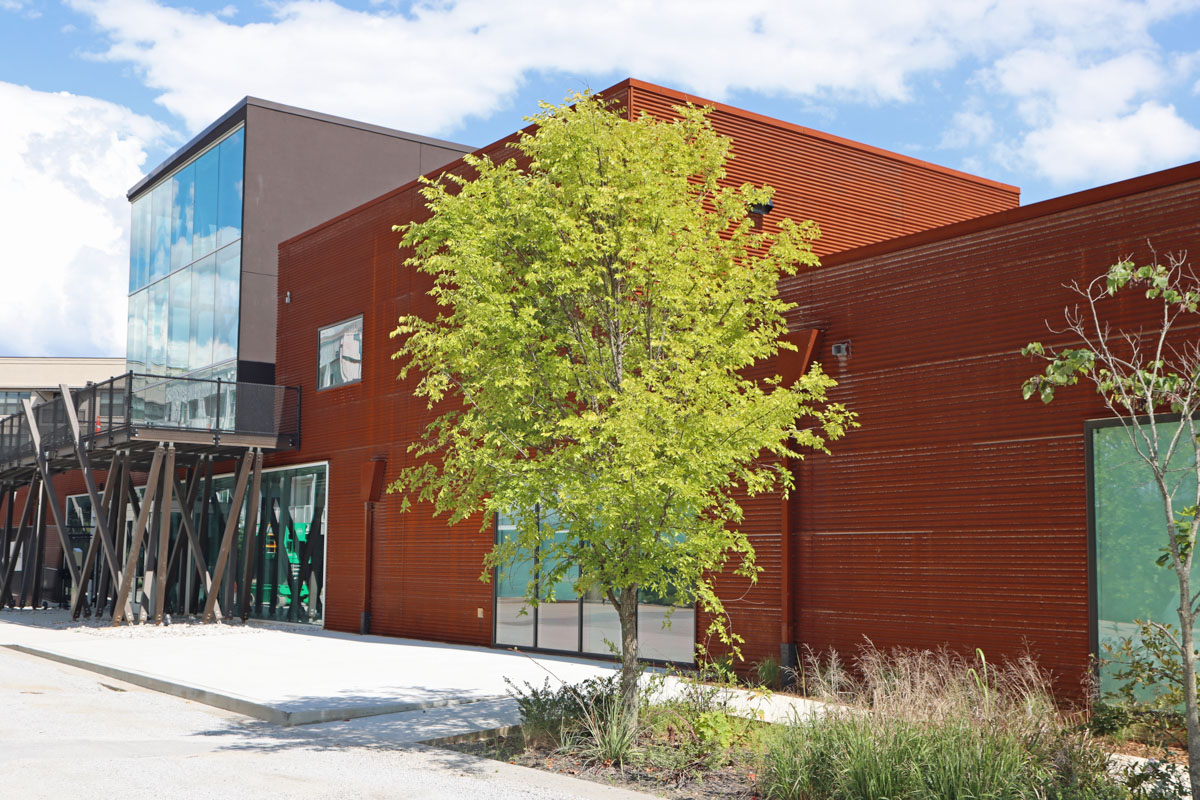
Last month, the Museum of Contemporary Art Georgia (MOCA GA) made headlines as it hosted a ribbon-cutting ceremony for its long-awaited, permanent home — a 26,000-square-foot, $16.4-million facility on the same grounds as the Goat Farm Arts Center.
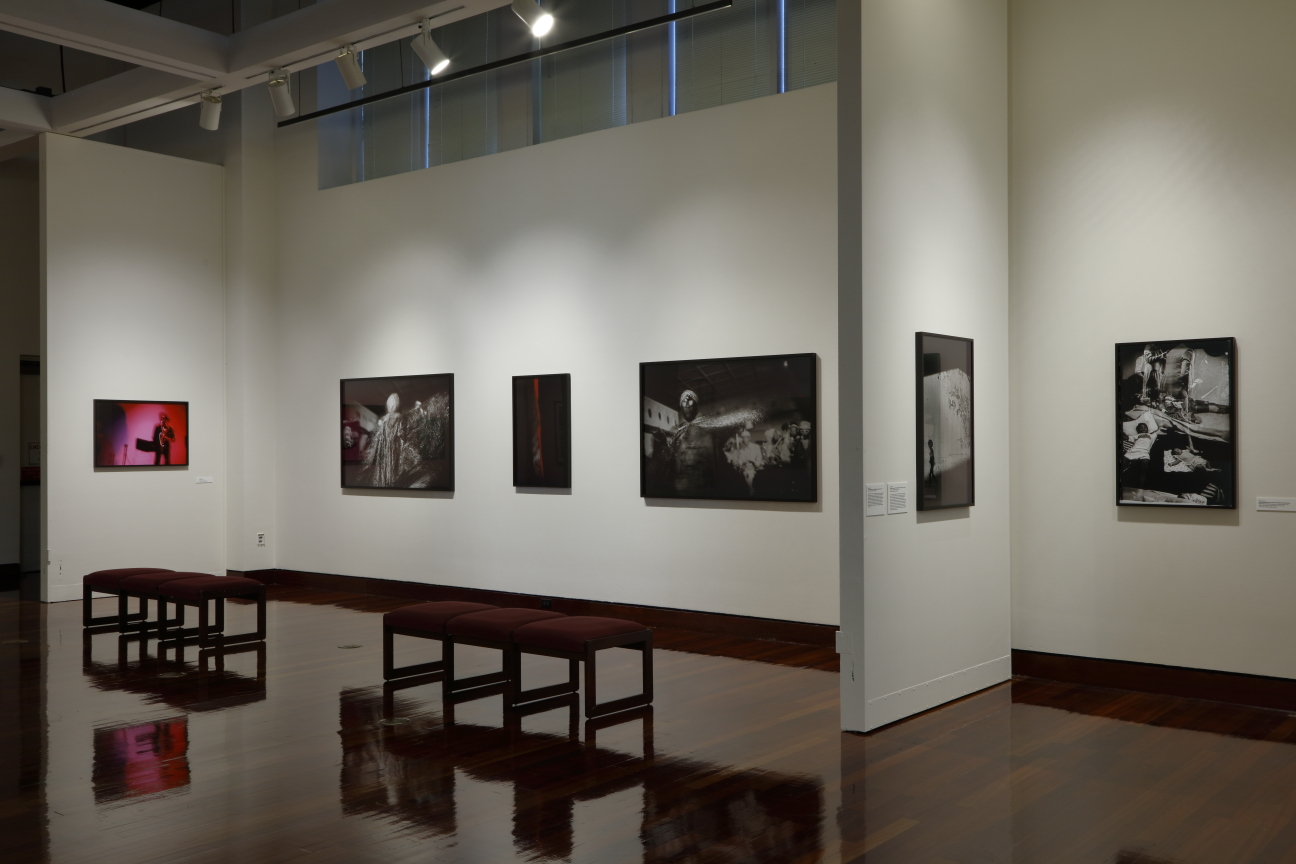
Last year, Spelman College opened the Mary Schmidt Campbell, Ph.D. Center for Innovation & the Arts (CI&A) — an 82,500 square-foot, multidisciplinary academic building, home to the college’s arts programs in dance, documentary filmmaking, photography, theater and music. Within the building is the Bank of America gallery, an exhibition space that serves as an extension of the Spelman College Museum of Fine Art. As the museum expanded into a second building, it also hired a new operations manager.
So how is this possible? I sought to find out.
I spoke with those leading these organizations, who revealed a familiar theme I find simultaneously encouraging and unsettling.
The ACP’s impact reports for 2023 and 2024 showed that the center’s total revenue increased from roughly $144,000 in 2023 to roughly $367,500 in 2024. The reports identified three revenue sources: individual donations, government grants and fundraising events. All three saw a minimum 25% increase, but the largest jump was in individual donations, showing a 223% increase.
When I asked Lindsey O’Connor, the center’s executive director, what caused this spike, she told me that the individual giving data was directly linked to ACP’s 25th anniversary fundraising campaign: Building the Next 25 Years. The campaign, she said, was an opportunity to get patrons excited about the center’s rebrand from Atlanta Celebrates Photography to Atlanta Center for Photography.
“With that transition, we opened our first brick-and-mortar location and expanded our programming from an annual festival to a robust schedule of year-round [activities].”
At MOCA GA, the museum’s 2024 form 990 reported roughly $2.1 million in revenue, consisting of about $8,000 from membership dues, $265,000 from fundraising events, $428,000 from government grants and $1.4 million in “other contributions.” When I asked MOCA GA’s Founding Director, CEO and President Annette Cone-Skelton which revenue stream had been the most impactful, she explained.
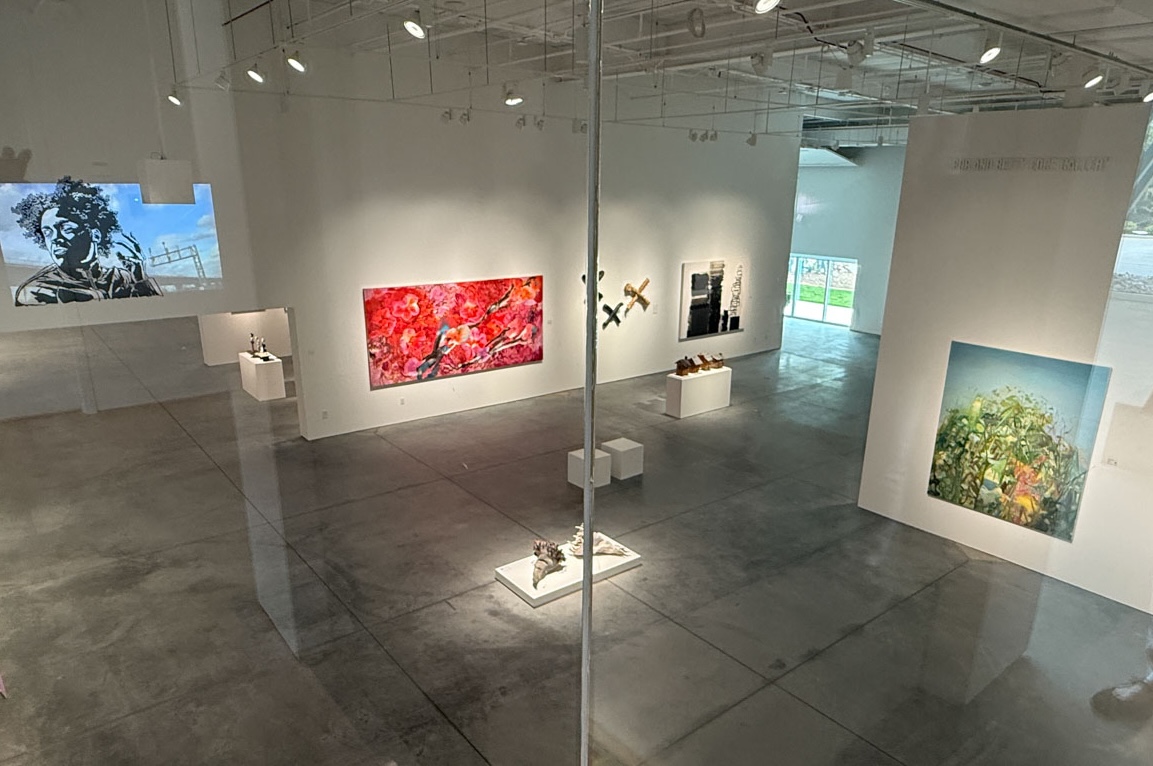
“Our 2024 990 is a snapshot in time that reflects the inflows and outflows of the capital campaign [to build our new home], combined with our general operating fund (which was closer to $900,000 at the time),” she said. “Probably the most impactful stream of funding is from the private foundations. There are many foundations who will not fund operations but focus [only] on capital campaigns … Outside of the capital campaign, much of our success with private foundations is the result of years of dedicated effort to build our network while being rock solid in our mission and vision for over 25 years.”
In its first impact report on the CI&A building, Spelman College shared that the building campaign raised a total of $86.7 million from eight sources. When asked about funds for Spelman Museum exhibitions and other museum programming in the Bank of America Gallery, Director Liz Andrews told me that the funding for the Bank of America Gallery and the college’s founding gallery come from the same sources: the College, private grant funds and gifts.
“We have expanded needs with this expanded [footprint] and are creating new opportunities for fundraising,” she said.
The common thread, it seems, is that all three organizations have been able to expand because they had the audacity to dream big and create grand visions, then ask their communities to support them.
This doesn’t come as much of a surprise. When leaders, especially excellent ones like the three aforementioned women, can clearly articulate an idea and inspire their audiences, people are eager to participate. Funders especially, as Cone-Skelton pointed out, are often exclusively interested in supporting ambitious endeavors, such as major expansions that increase an organization’s capabilities. This, to me, is in part an encouraging observation.
The arts are often championed as catalysts of social change, crucibles of visual culture and proving grounds for new ways of being. It is reassuring to know that funders share similar values and are willing to lend their financial support.

But Cone-Skelton’s answer also points out why this is troubling: “There are many foundations who will not fund operations,” she said. It is operations that pay the electric bills, staff salaries, leases and building repairs — the vital day-to-day activities of an organization. While it is wonderful to know that funders are willing to support major projects, it is impossible for an organization to expand perpetually. When the ribbons have been cut and new staff hired, who will fund their health insurance? This is also not a new problem; it’s one these leaders understand well. Remember Andrews’ statement: “We have expanded needs with this expanded [footprint].”
So while the accomplishments of these organizations are monumental, they show that the fundraising ecosystem still favors the flashy. A truly sustainable environment — one in which the daily and mundane are appreciated and funded alongside the larger projects — is yet to be found. And that flaw can be fatal for the organizations that just need to keep the lights on.
::

Leia Genis is a trans artist and writer currently based in Atlanta. Her writing has been published in Hyperallergic, Frieze, Burnaway, Art Papers and Number: Inc. magazine. Genis is a graduate of the Savannah College of Art and Design and is also an avid cyclist with a competition history at the national level.
STAY UP TO DATE ON ALL THINGS ArtsATL
Subscribe to our free weekly e-newsletter.

PLEASE SUPPORT ARTSATL
Your Gift Sustains the Coverage You Count On!
Related Posts