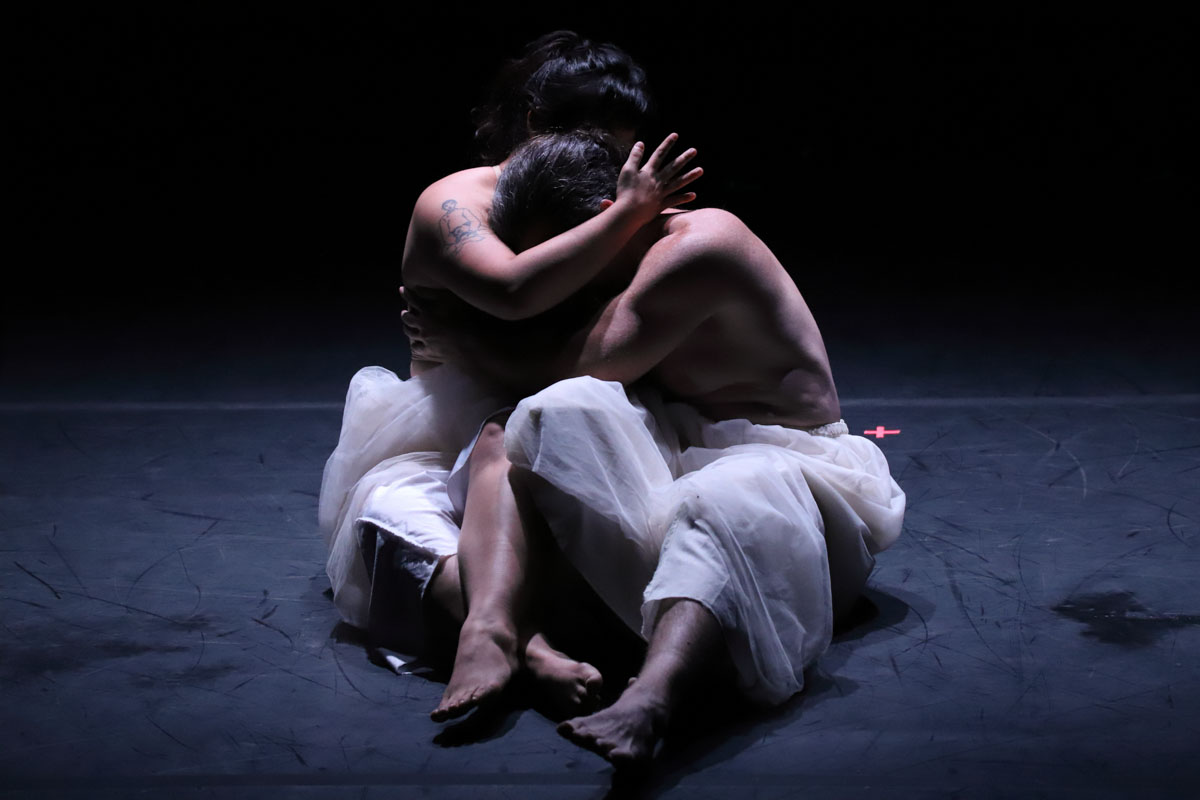
Burning Bones uses Japanese butoh to challenge gender slowly in ‘Beautiful Eunuchs’
Some experiences are impossible to put into words. Vocabulary can only express so much.
Artistic director of Burning Bones Physical Theatre, Frankie Mulinix, is inspired by the futility of words. It is what led to the performance company’s creation in the first place.
“I became fascinated with performance when I asked myself, ‘What are the moments when words fail us?’” Mulinix remembers.
This question not only began Mulinix’s performance career — it also became the architecture that frames each of Burning Bones’ performances.
“We don’t rush to provide [spoken] text,” Mulinix explains. “… We are not triggering the parts of the brain that align with language.”
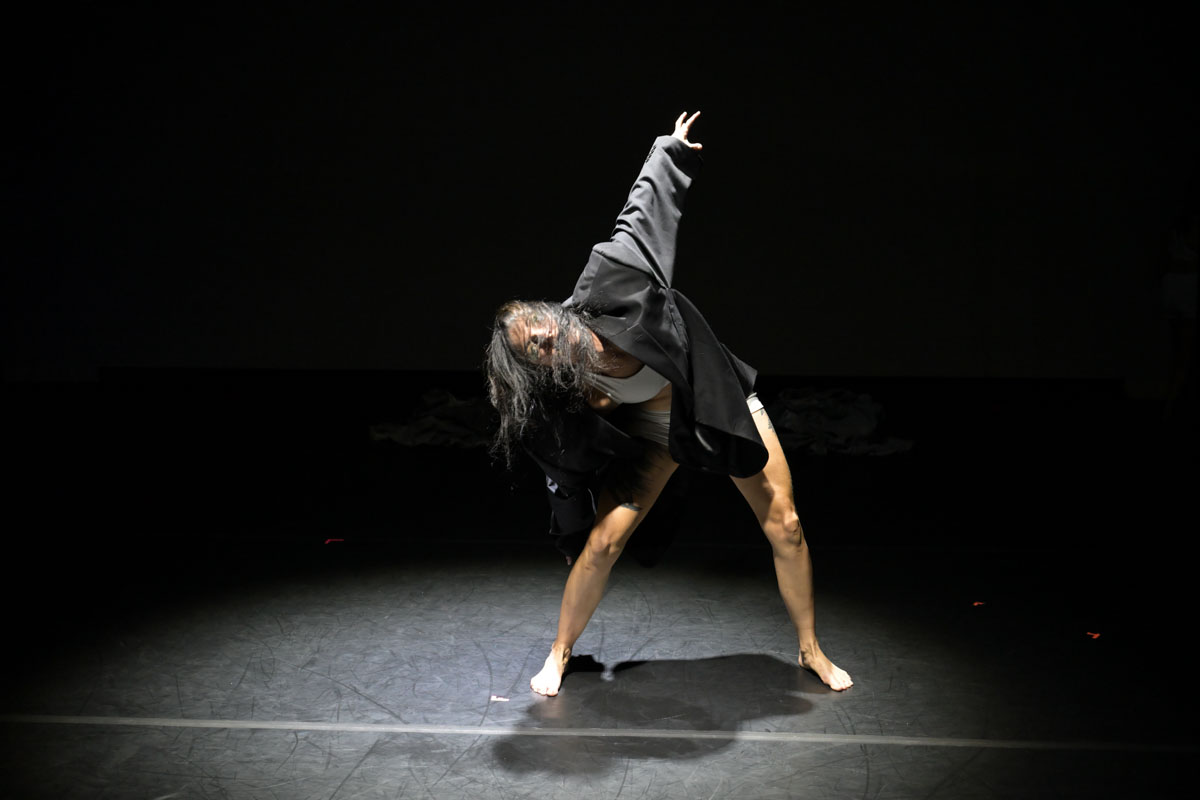
Employing performance as a visual art before any other leads Mulinix and Burning Bones to abandon timing and rhythm (hallmarks of dance) as well as scripts and narrative (hallmarks of theater) in favor of performance that prioritizes imagery and sensation. This kind of hard-to-classify artistry is thus difficult to convey with words. Speaking from experience, the best way to appreciate this medium is to see it in person.
Burning Bones practices a performance style called butoh. Originating in Japan in the late 1950s, butoh was conceived as an intentional departure from existing Japanese styles. With its use of slow, sometimes painful, movements; nudity; grotesque imagery; taboo subject matter; and white body paint, early butoh performances were seen as radical and controversial.
Its originators (frequently cited as Tatsumi Hijikata and Kazuo Ohno), however, intentionally resisted any formal codification of the style. This led to several dialects, some of which align with the early performances and others that do not.
“There are as many styles of butoh as there are butoh practitioners,” Mulinix says.
This inscrutable quality is precisely the reason Burning Bones practices butoh. Mulinix, “[rejects] the need for something to ‘get,’” instead, likening butoh to painting.
“[In a painting] there’s a lot happening,” Mulinix says. “You need to take your time to look at all the corners.”
Choreographing with butoh’s characteristic slowness allows Mulinix to “[add] layers so, while the audience is sitting in the durational work, they have many things to look at. Taking the time to sit and absorb it like a piece of visual art.”
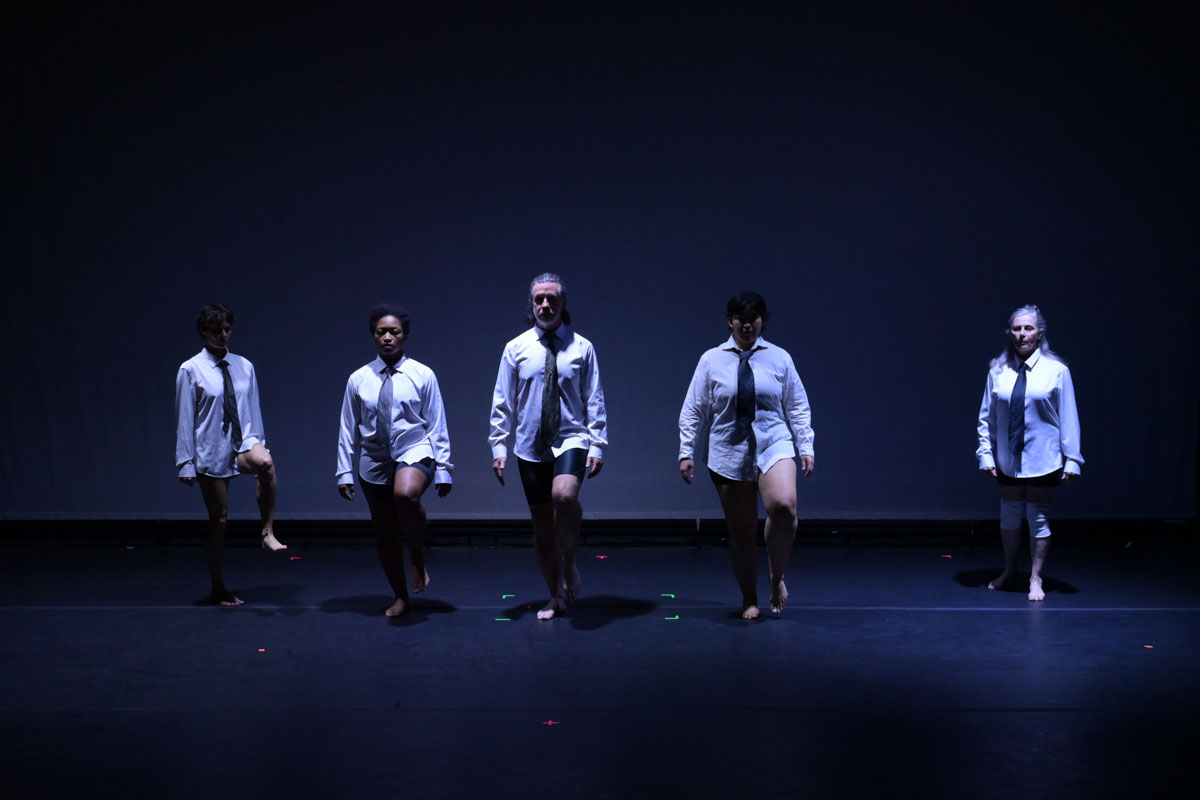
In Beautiful Eunuchs, one of these layers is the deconstruction of gender. The performance features dancers alternating between stereotypical male and female mannerisms across successive dance segments. In one, a dancer seems “manly” — walking with a proud chest, furrowed brow and flared elbows while frequently facing another dancer in a dramatized competition of physical prowess. In another, the dancers seem “womanly” — hunched shoulders, timid expressions and an air of seduction. Cycling in this way, the performance has a sort of yin-yang structure.
The dance segments are separated by spoken and recorded recitations relaying personal stories about gender from company members and unidentified others. Yin and yang are central to one recitation. The concept is further represented in the costumes: The dancers almost always wear entirely black or entirely white.
Funnily, the rather serious performance started as a joke, with company members posing a series of questions such as: “Is it gay to wipe your butt?” “Is it gay to have a nice haircut?”
These humorous questions arose after the company members observed the emergence of “looksmaxxing” — a popular culture term describing men who make a concerted effort to maximize their aesthetic appeal. The often-perverse ways men pursue this beauty often mirrors the rituals performed by women who likewise attempt to achieve feminine perfection.
Beautiful Eunuchs has many layers.
“To me it’s about more than an aesthetic,” Mulinix says. “It’s about more than white clay and slow movement. It’s about losing yourself. Channeling anything and everything in your body. Being able to hold seeming contradiction and complexity.”
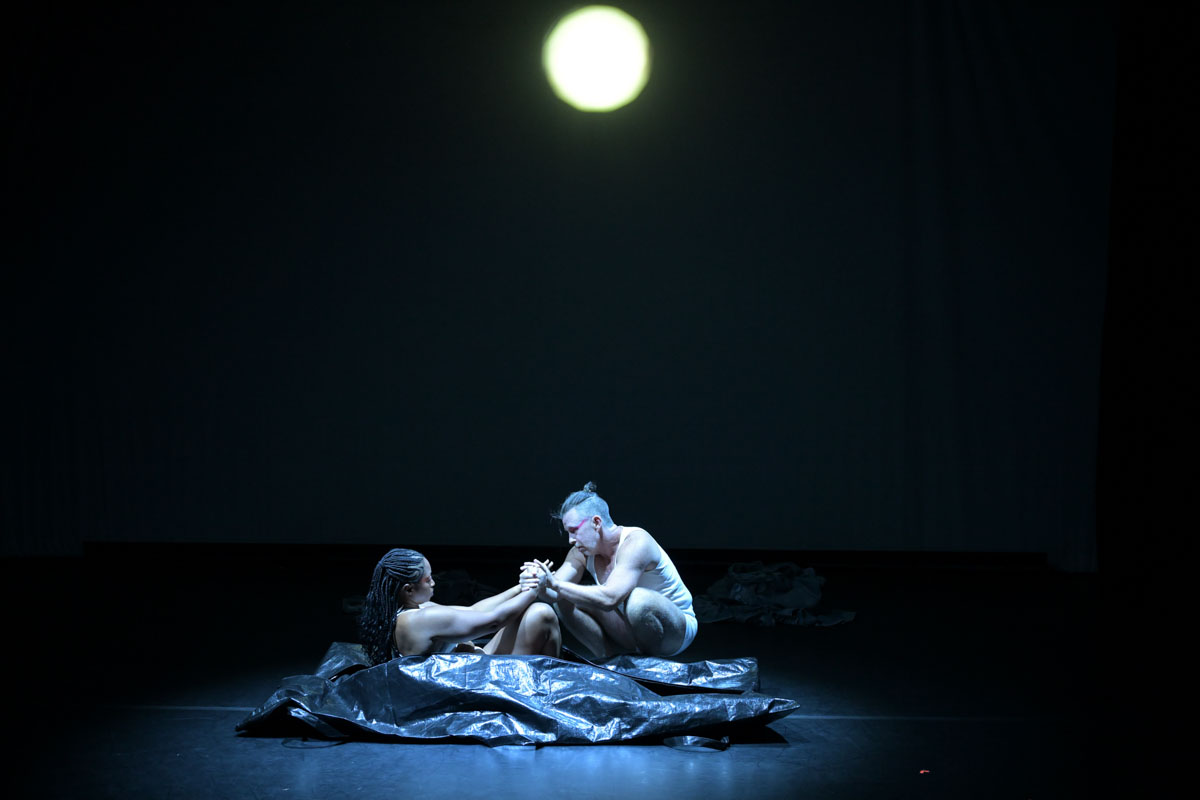
Beautiful Eunuchs, Burning Bones and butoh are anything but conventional. They are a salve for our contemporary, high-velocity, information age.
“People are drowning in information,” Mulinix says. “They want transformation.”
Through decelerated movements and duration, Beautiful Eunuchs attempts to deliver such transformation. By expanding performance from actions to icons and by distinguishing gender from identity and personal customs, the performance stretches its viewers to see in a new way.
“You’re seeing,” Mulinix says. “You’re not behind a screen. You’re not a faceless body in a chair. You’re you specifically. You’re here with us and we are making something together.”
Beautiful Eunuchs. August 28 through August 30 at The Anchor. 645 Grant St. SE, Atlanta. Tickets, $35 for general admission and $20 for students and industry professionals, can be purchased online here.
::

Leia Genis is a trans artist and writer currently based in Atlanta. Her writing has been published in Hyperallergic, Frieze, Burnaway, Art Papers and Number: Inc. magazine. Genis is a graduate of the Savannah College of Art and Design and is also an avid cyclist with a competition history at the national level.
STAY UP TO DATE ON ALL THINGS ArtsATL
Subscribe to our free weekly e-newsletter.

PLEASE SUPPORT ARTSATL
Your Gift Sustains the Coverage You Count On!
Related Posts