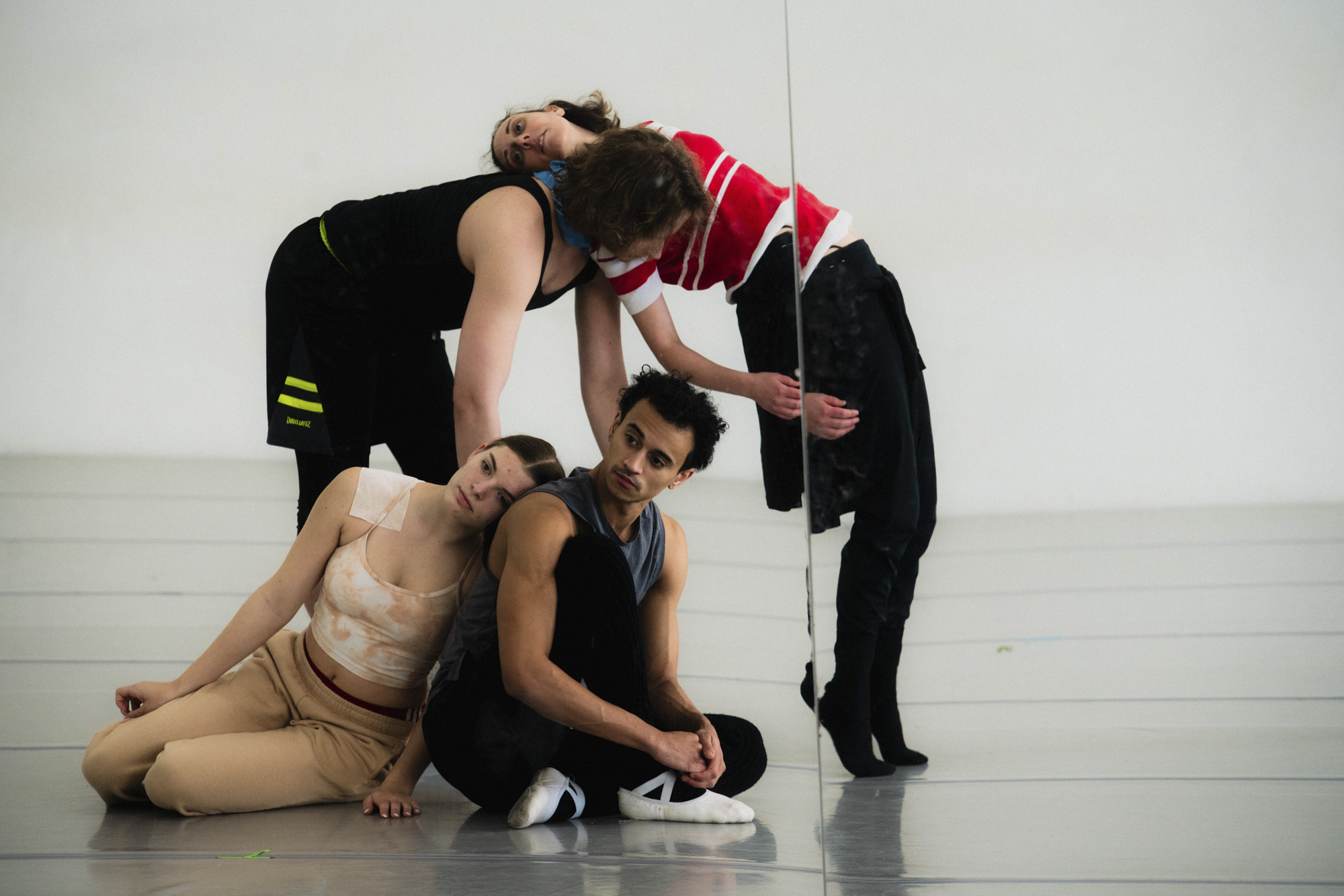
A classic turned on its head: ‘Rhapsody in Gershwin’ by Terminus Modern Ballet Theatre defies tradition
“We are a rebellious group of ballet dancers that thrives on calculated risks,” Terminus Modern Ballet Theatre Artistic Director John Welker told ArtsATL regarding its upcoming Rhapsody in Gershwin program. “It’s a tough time for the arts, right? The knee-jerk reaction is to play it safe, but I think that’s the wrong response, especially with a history like ours.”
As Welker explained, the choice of Gershwin was simultaneously calculation and risk. By choosing a composer whose work looms large in the American psyche, Welker calculated that he could hook the attention of dance and music lovers alike. “If you appreciate dance, you appreciate music,” he said. “You appreciate music; you appreciate dance. It’s a symbiotic relationship, and, as a director, I’m always thinking about what we can present that people recognize and gravitate toward, but that also opens a world of creative possibility.”
The choice was a risky one, though, for two reasons. First, when the score for a dance work is well-known, the audience brings its own experience and expectations of the music into the theater. That can set a high bar for choreographers and dancers to clear if they want to please the crowd and critics, especially if the artists are experimenting with a new movement vocabulary.
Second, Gershwin’s music in particular has already propelled memorable dance masterpieces like Gene Kelly’s watershed 17-minute ballet sequence in the 1951 musical film An American in Paris and George Balanchine’s neo-classical icon Who Cares? In selecting Gershwin, Welker was effectively asking the choreographers he commissioned to go toe-to-toe with some of dance history’s artistic giants.
Rhapsody in Gershwin will present three world premieres by choreographers Alexandra Light, Darvensky Louis and Annalee Traylor. Each of them has tapped into a unique connection with Gershwin and his music.
This is the first time Light has worked with TMBT. Welker discovered her last year when she created a duet for the Dance Canvas Choreographer Career Development Initiative. Welker said that Light quickly rose to the challenge of creating another duet to Gershwin’s Three Preludes for Piano. “She really dug deep into research,” said Welker, and she found a painting titled Music by Florine Stettheimer, a contemporary of Gershwin’s who ran in the same New York social circles and, together with her two sisters, hosted salons in her Manhattan apartment. Music depicts a musician sitting at a piano, and Light’s piece explores the possibility that the famous composer was an inspiration or even a model for the figure in the painting.
In rehearsal, Christian Clark and Georgia Dalton offered a preview of the costumes and the choreography. Clark, in an elegant cream-colored pantsuit, and Dalton, in a scarlet unitard, engaged in extended, seamlessly fluid sequences of partnering. Light’s vocabulary is neo-classical, but the lifts and adagio she devised for the couple have a sinuous, contemporary edge, drawing out both dancers’ grace and strength in equal measure.
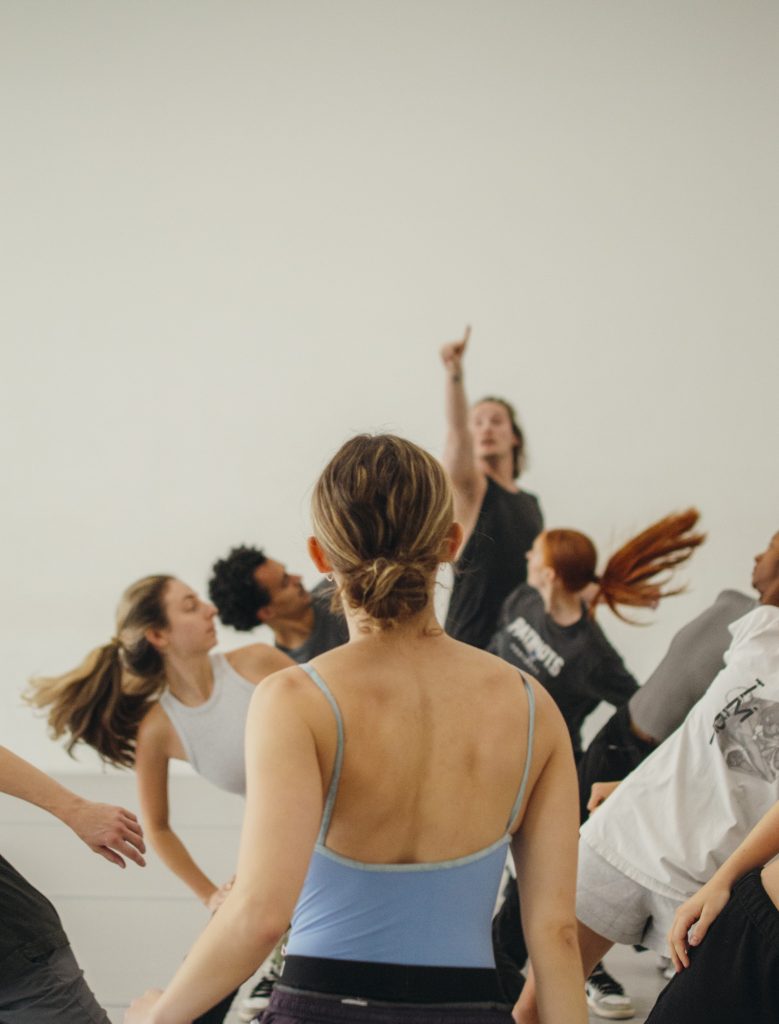
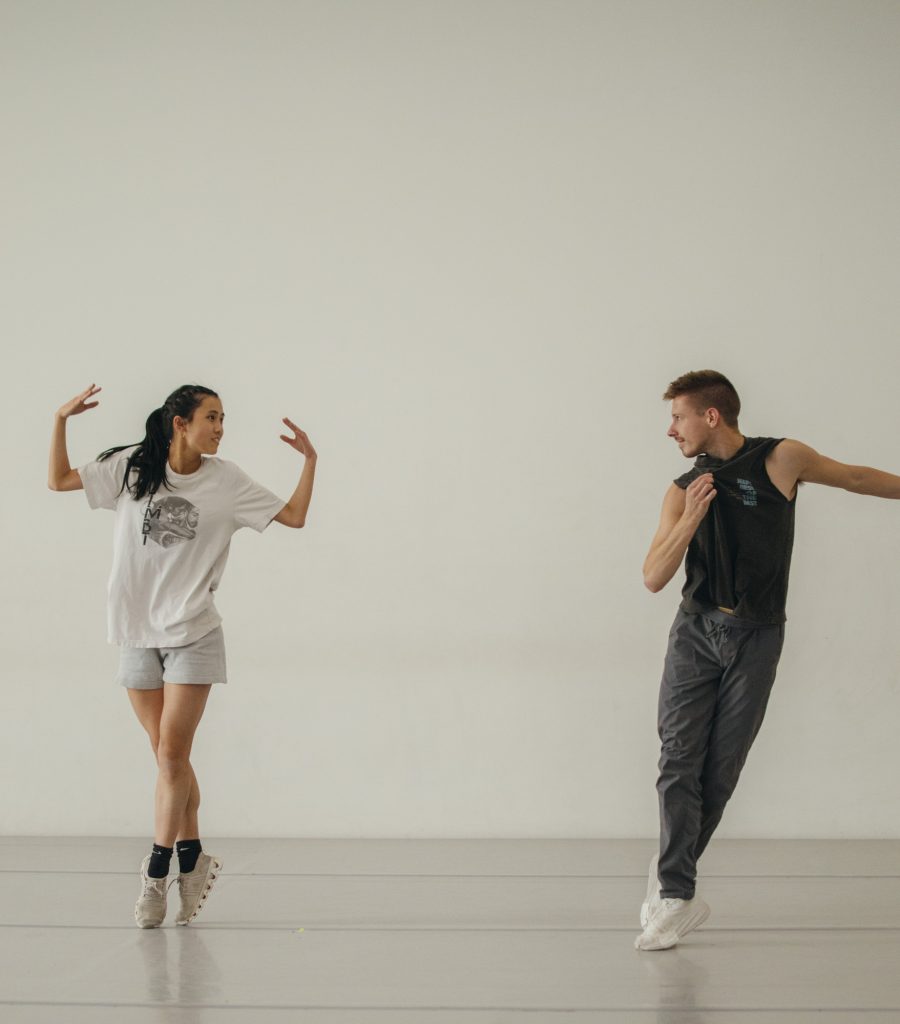
Welker tasked Louis, whose history with TMBT dates back to the company’s early days, with setting a work to Rhapsody in Blue. While he has choreographed for the Terminus Modern Ballet School student company, this is his first dance for TMBT. “Rhapsody in Blue is a tricky piece of music that even critics have trouble categorizing,” Welker said. Louis came to concert dance and ballet through hip-hop. “I love the tools that Darvensky brings in,” Welker continued. “And the perspective that he brings to a composition that wasn’t, in my mind, a great fit for pure ballet.”
As he was doing his own research, Welker said he also saw a number of parallels between Louis’ artistic journey and Gershwin’s history. “Like Gershwin, Darvensky is the son of immigrants,” Welker explained, and the two share a working-class background. They came to their art “sideways,” via a nontraditional path — Gershwin following his brothers who were musicians and Louis pursuing his love of hip hop — to create work that defies tradition and categorization.
Her piece for the Rhapsody in Gershwin bill will be Traylor’s second for TMBT. Welker did not find out until after he offered her the commission that Traylor’s father is a jazz professor who loves Gershwin and that her partner is a Gershwin scholar. Welker asked Traylor to explore the Gershwin “songbook” of public domain music. “I told her, I would love it if you could bring these pieces together to create a through line,” Welker said. “What story would you want to tell?”
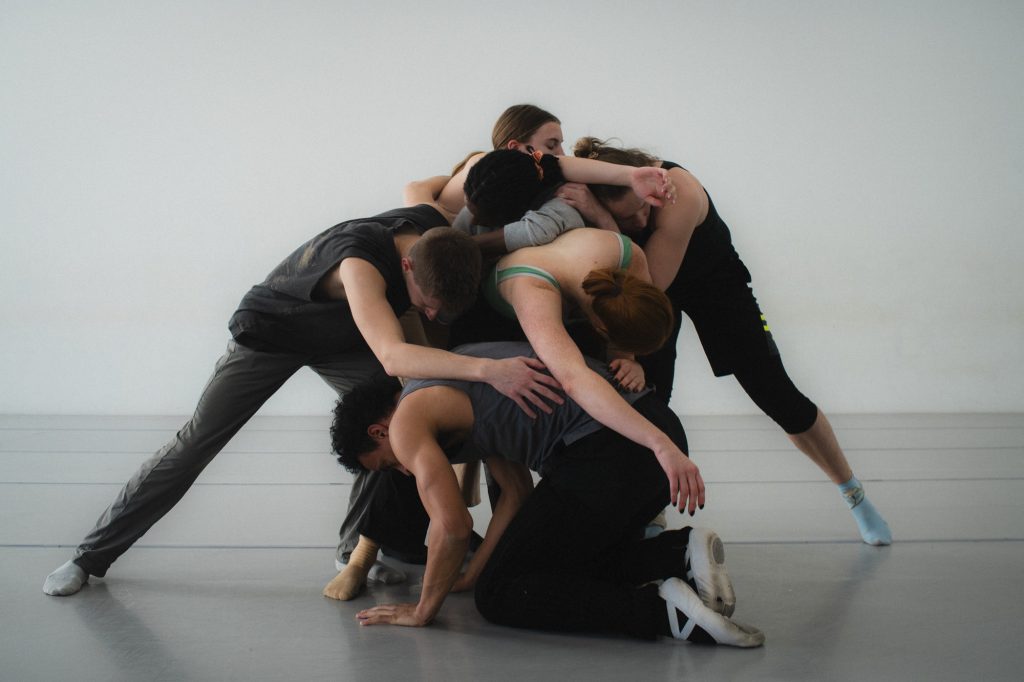
Traylor’s choreographic process draws on her graduate and professional experience in experimental theater. In rehearsal with Cailan Orn, Traylor’s assistant, the dancers transformed themselves into a cast of characters who all seemed to be just barely keeping it together, projecting a thin veneer of fun that masked a deep wellspring of chaos. Alex Brown, one of TMBT’s newest members, said, “I feel like I disappear into Annalee’s piece. I don’t feel like myself; it’s fun and freeing.”
Traylor’s movement pulls and contorts the time signatures of Gershwin’s movement like taffy, finding the silence between the cascading notes of a glissando or marking the duration of whole and half notes with tight phrases that unspool like clockwork. Speaking about the connection between sound and gesture in Traylor’s new work, TMBT dancer Amalie Chase said, “It’s like if you looked at these two things on paper, they seem like they should be completely different, but, when I’m dancing, they just feel so right together. I can’t imagine this music going with anything else.”
Rhapsody in Gershwin will debut this weekend at the Kennesaw State University Dance Theatre (Marietta campus), from Friday, March 6 through Sunday, March 8. To borrow an evocative image suggested by Brown, audiences who come out for the show can watch as TMBT turns Gershwin upside down, shakes the dust off and flips it right side up once more, celebrating the composer’s legacy by making his music new once again.
::

Robin Wharton studied dance at the School of American Ballet and the Pacific Northwest Ballet School. As an undergraduate at Tulane University in New Orleans, she was a member of the Newcomb Dance Company. In addition to a bachelor of arts in English from Tulane, Robin holds a law degree and a Ph.D. in English, both from the University of Georgia.
STAY UP TO DATE ON ALL THINGS ArtsATL
Subscribe to our free weekly e-newsletter.

PLEASE SUPPORT ARTSATL
Your Gift Sustains the Coverage You Count On!
Related Posts