Dance Canvas’ choreographer initiative a game changer
From Schrödinger’s Cat to African inspired dance, the work of seven emerging choreographers will be presented in this year’s Choreographer Career Development Initiative showcase on March 21 and March 22.
::
Alexandra Light, a principal dancer with Texas Ballet Theater in Fort Worth, was in New York creating a piece for The Steps Conservatory dancers at Steps on Broadway when she got the good news. Angela Harris, executive director of Dance Canvas, called to tell Light she had been selected to participate in the 2024-25 Choreographer Career Development Initiative (CCDI) and create a new work for this year’s showcase at the Rialto Center for the Arts on March 21 and March 22.
One of seven choreographers selected to participate in the Initiative this season, Light said she applied to the program because finding opportunities to present new choreography in Fort Worth can be challenging. “I almost didn’t apply because I was so busy at the time, but I’m so glad that I did. This program has been a game changer for me in many ways.”
This is the CCDI’s 17th season, and Harris said she is excited to see the showcase return to the Rialto for the first time since 2016. Well-known locally for supporting emerging Atlanta choreographers, Harris always includes out-of-town artists. This year, however, is something of a high-water mark for national participation. Three of the choreographers are from elsewhere — Light from Fort Worth, Jameel Hendricks from Philadelphia and Erica Rae Smith from Maryland. Sevon Wright, an alumna of DC Next, another Dance Canvas program, splits her time between Atlanta and Philadelphia.
Works by Atlanta-based choreographers Savannah “Van” Banks, Versaille Jones and Meaghan Novoa will round out the program.
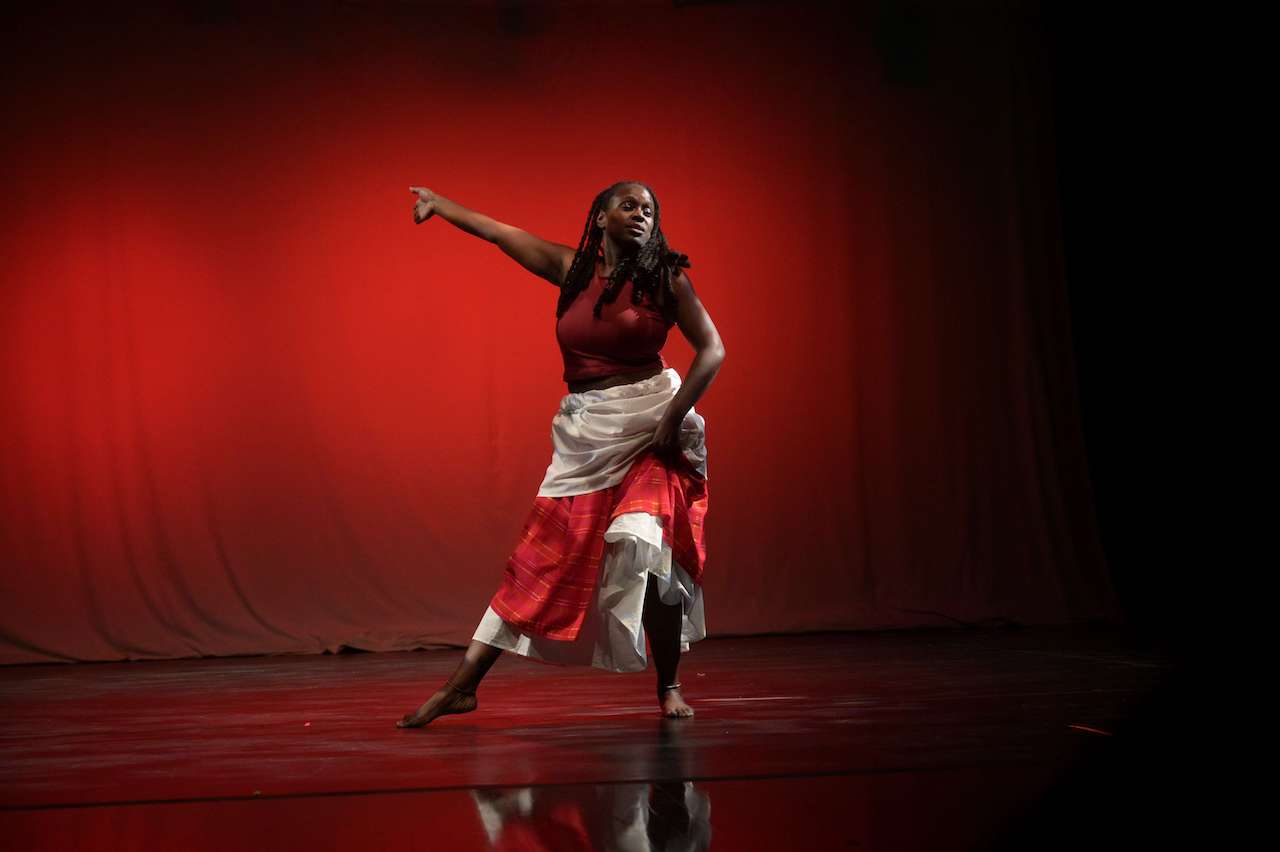
Smith received a M’Singha Wuti, meaning “of the people,” teacher certification from the National Association of American African Dance Teachers for Umfundalai contemporary African technique, and she was a 2018 recipient of the John F. Kennedy Center’s Local Dance Commissioning Project.
She saw the Choreographer Career Development Initiative as an opportunity to work with more experienced dancers. Her company, Raediant Movement, began as a space to explore Jamaican dance hall style and has expanded to include other movement vocabularies grounded in a range of traditional and contemporary African techniques.
Harris’ and Smith’s former classmate from University of the Arts in Philadelphia helped Smith connect with Atlanta-based professional dancers trained in modern, hip-hop and West African technique. “They are all very skilled dancers, but this movement [a blend of Horton, Graham, dance hall and West and South African vocabularies] is totally new to them,” Smith said.
She traveled to Atlanta in early January and spent four days in the studio setting the piece and later conducted rehearsals remotely and asynchronously on Zoom. She will have a few days of in-person rehearsals in Atlanta before the premiere, which she has tentatively titled Veneration.
“I created a work via Zoom during Covid, but this largely remote process for something to be performed in-person was new for me,” said Smith. “Because I am asking them to be vulnerable, not just because the movement is unfamiliar but also because the subject matter of the piece is so deeply personal, I have made an extra effort to get to know the dancers outside of rehearsals, texting and calling to check in to see how they are doing, what they need.”
Generation evolved from a shorter piece Smith created in her Maryland studio with local dancers, and she credits them with the initial inspiration for what she describes as an embodied conversation among the ancestors. “I began with a question,” she said. “What if the ancestors spoke with one another? What would they say?” The piece simultaneously honors the past and looks forward to the future of the African diaspora and African dance.
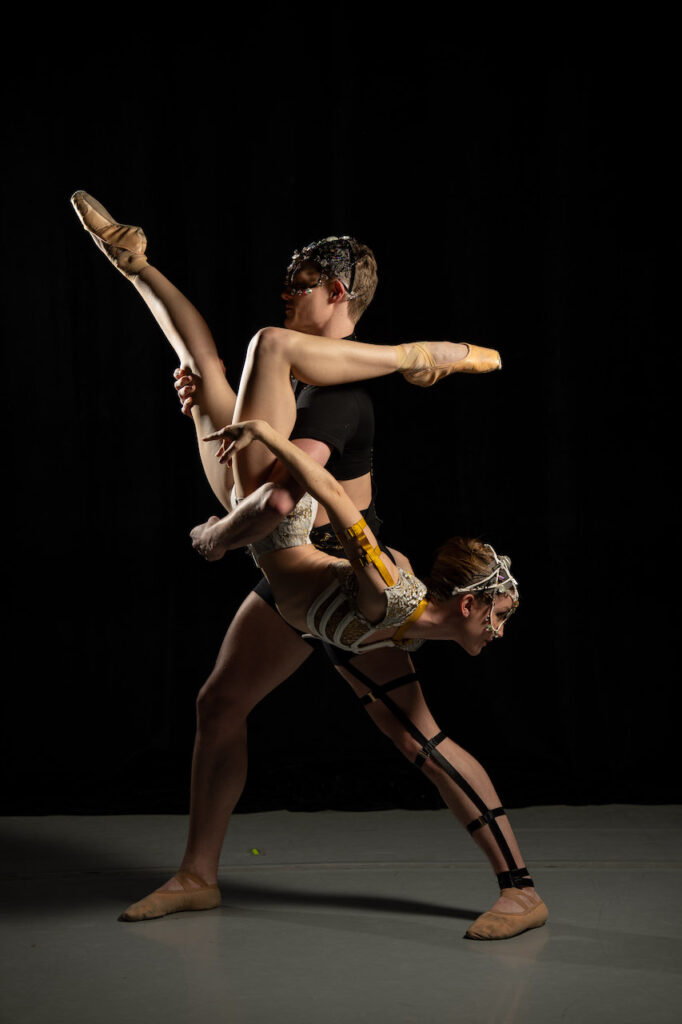
Light will bring some of her Texas Ballet Theater colleagues to the Rialto in her piece, Schrödinger’s Cat. She said Harris and the CCDI are covering travel costs for her and the performers, just one aspect of the help she received from them. Every choreographer gets a one-on-one session with a local marketing consultant. “I walked away excited and inspired to do that additional work on PR that is so essential but can often get overlooked,” she said. Other professional development opportunities include an hour with the Rialto’s lighting designer to set cues and finalize stage design. “Angela has been amazing and so accessible throughout this process. I felt like I could just email her anytime,” said Light.
Light participated in the inaugural Jacob’s Pillow ChoreoTech Lab and used artificial intelligence to create Schrödinger’s Cat, which is set to an original score by Dallas-based composer Aleyna Brown. As its name implies, the piece is based on Erwin Schrödinger’s thought experiment designed to explain the theory of superposition. She choreographed the first movement, in which the experimental cat is dead, with prompts and ChatGPT. She then “collaborated” with ChatGPT for the second movement, in which the cat is simultaneously alive and dead, crafting some of the steps by herself and using AI and prompts for other sequences. The final section, in which the cat is alive, is entirely her own, without any computer assistance.

According to Wright, the DC Next alum who has, in her words, “come full circle” in joining this year’s CCDI cohort, this sort of innovation and experimentation is fully supported, another of the program’s strengths. “The best part of this experience was bouncing so many ideas off of different brains. The process allowed me to go through different ideas, experiment and get opinions in real time.”
Wright’s company, Burgundy Blue Dance, strives to create immersive experiences for the audience. Her piece for the showcase, Sense Senses, includes an original score composed by her father, as well as a custom perfume and candies inspired by Wright’s original choreography. The audience can sample the fragrance and sweet treats at an art installation in the Rialto’s lobby.
Before the show, at 5 p.m. on March 22, Dance Canvas will screen dance films created by the 2024-25 Dance Canvas: on Film artists, including Temporary, a narrative dance film by Atlanta-based director and choreographer Page Yang.
The film follows a young Asian-American woman as she navigates the delicate balance between independence and vulnerability. Yang says the film was inspired by her mother and the stories passed down from her immigrant family, which have profoundly shaped the lens through which she views the world and creates art.
::

Robin Wharton studied dance at the School of American Ballet and the Pacific Northwest Ballet School. As an undergraduate at Tulane University in New Orleans, she was a member of the Newcomb Dance Company. In addition to a bachelor of arts in English from Tulane, Robin holds a law degree and a Ph.D. in English, both from the University of Georgia.
STAY UP TO DATE ON ALL THINGS ArtsATL
Subscribe to our free weekly e-newsletter.

PLEASE SUPPORT ARTSATL
Your Gift Sustains the Coverage You Count On!
Related Posts