Atlanta Ballet’s ‘Frida’ offers a complex and vibrant portrait of Mexican artist Frida Kahlo
Frida Kahlo — surrealist painter, political activist, feminist, gardener — spent a lifetime transforming her dreams into reality. For Larissa Capitanio Dal’Santo, one of two dancers cast in the titular role of Atlanta Ballet’s production of Frida, created by renowned choreographer Annabelle Lopez Ochoa, the opportunity to play Kahlo on stage is, fittingly, a dream come true.
As soon as the company announced Frida would be coming to Atlanta Ballet this season, Dal’Santo said she imagined what it might be like to take on the character of Frida, but she hardly dared hope that her name would show up on the final casting list. “And now, now that I am really doing it, I’m so excited,” she told ArtsATL. “It has been such an intense process, but I am enjoying every minute.”
Initially, Dal’Santo knew of Kahlo through the artist’s richly symbolic self-portraits. “When you look at her paintings, you are struck by something powerful,” said Dal’Santo. “There’s so much meaning there.” To bring Frida to life, in addition to studying her art more closely, Dal’Santo said she dove deeply into researching Kahlo’s biography and the political, geographic and cultural context that shaped and were shaped by Kahlo’s work.

Dal’Santo began by watching Julie Taymor’s 2002 biopic starring Salma Hayek. From there she moved to documentaries and blogs about post-revolutionary Mexico and La Casa Azul, Kahlo’s family home in Mexico City where she lived with Diego Rivera and is now a museum dedicated to Kahlo’s life and work. “There’s a weight that comes with performing the role of someone that actually existed, as opposed to a fictional character like Giselle,” explained Dal’Santo.
“We have Frida’s story in her art, and her dad was a photographer, so we have so many photos,” Dal’Santo continued. “At the same time, we still have to imagine a little bit.” That space for imagination is where Dal’Santo and choreographer Lopez Ochoa have the greatest artistic license as well as a shared and deeply-felt personal responsibility to explore and represent Kahlo’s complexity and humanity.
In addition to deepening her understanding of Kahlo’s biography, stepping into the role of Frida has also provided Dal’Santo an opportunity to work closely with Lopez Ochoa. “I was part of the company for Coco Chanel, but in the corps [de ballet],” recalled Dal’Santo. “So I didn’t get to really work with Annabelle full time. Now, working closely with her every day, it’s inspiring to see how supportive she is and how much she cares about all of the details.”
Like Dal’Santo, Lopez Ochoa began the creative process with research. The choreographer has gained acclaim for her full-length ballets depicting some of history’s most notorious female icons, both fictional and factual. Atlanta dance patrons perhaps know her best for Coco Chanel: The Life of a Fashion Icon, which was co-produced by Hong Kong Ballet and Queensland Ballet and had its North American premiere in 2024 with the Atlanta Ballet. Lopez Ochoa’s first narrative ballet was 2012’s A Streetcar Named Desire for Scottish Ballet, and her most recent work, Gentleman Jack, for Northern Ballet, tells the story of 19th-century Yorkshire diarist Anne Lister, often referred to as “the first modern lesbian.”
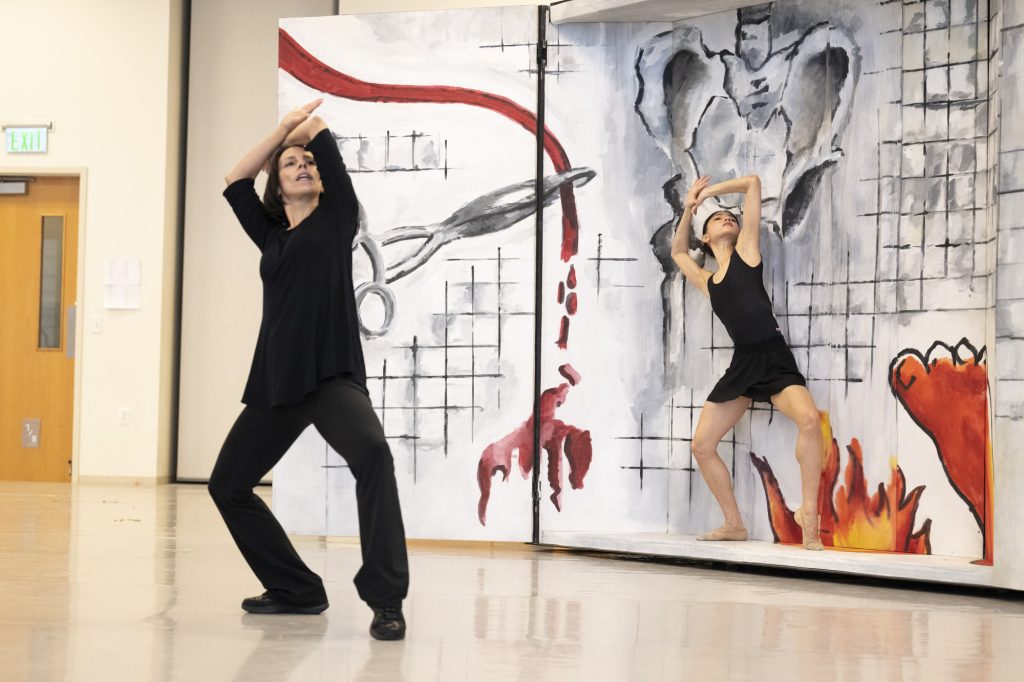
“The research takes longer than the choreography,” said Lopez Ochoa. Once she feels she has a handle on her subject, she writes a script with the assistance of a dramaturg and then hands the script off to her longtime collaborator, composer Peter Salem, for the scoring. “We are kind of married artistically,” Lopez Ochoa joked. “Sometimes he has questions about certain scenes,” she said, “and I answer those. Then he goes off, and two months later, I get presents.”
When creating the movement, Lopez Ochoa prefers to work chronologically from beginning to end. She goes into the studio with a provisional score, a mind full of knowledge and a blank slate. “I improvise in front of the dancers to develop the movement,” she said. Sometimes, she discovers that settling the drama of a scene takes longer than she anticipated, so she will use Garage Band to tinker with Salem’s score to give herself more time for the dancing. “He’s very open to extending or shortening a movement. I do it myself first, and then I send him all the edits, and he makes it more interesting.”
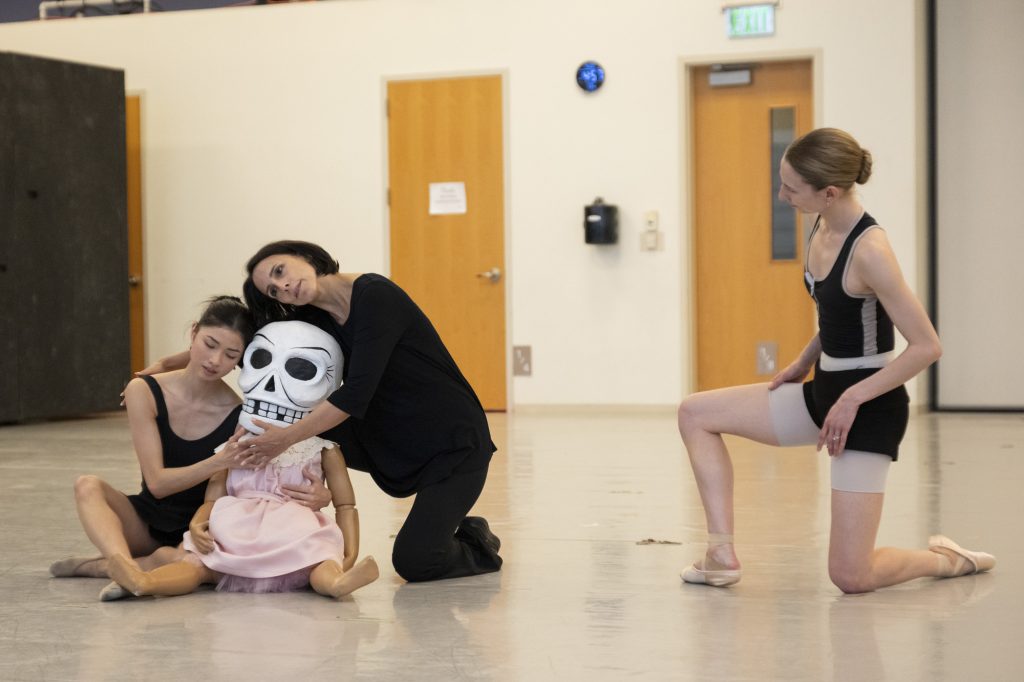
At the end of the process, each character in a ballet such as Frida has a distinctive vocabulary that expresses the essence and energy of the character. “I ask myself, what if I did not have the costumes? Would the audience understand this man coming in right now is Diego Rivera or that this female character is the deer and not the bird or Frida herself?”
Kahlo spent much of her life bedridden and in and out of hospitals for surgeries and treatments to repair damage caused by childhood polio and a catastrophic bus accident when she was 18. At the same time, she traveled widely and lived a life filled with intellectual curiosity, artistic experimentation, political activism, a tumultuous marriage and numerous passionate affairs with both men and women.
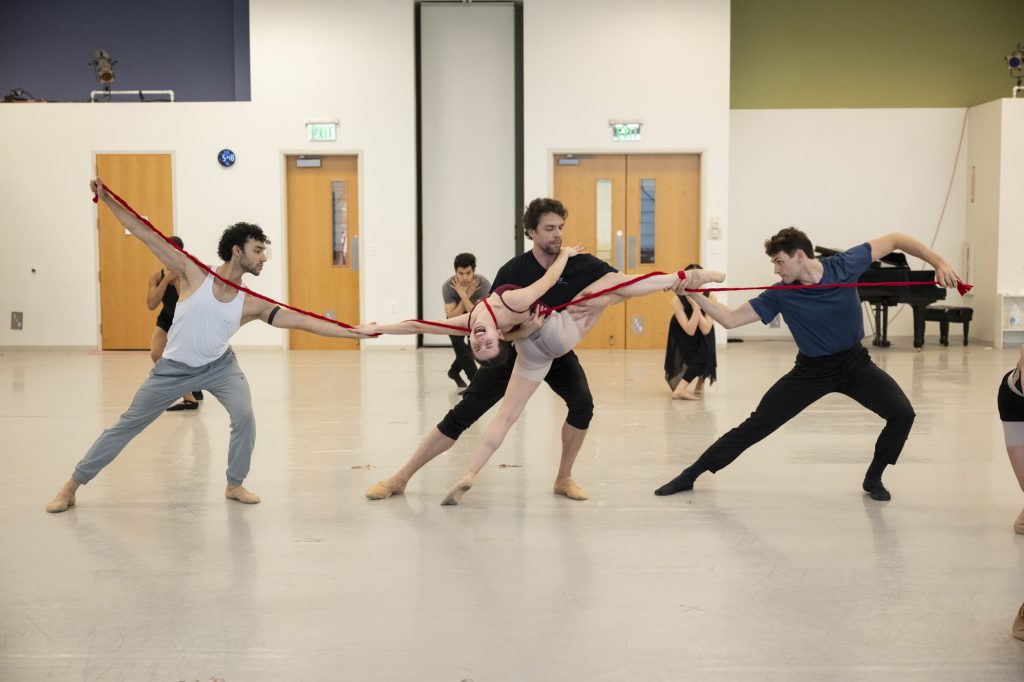
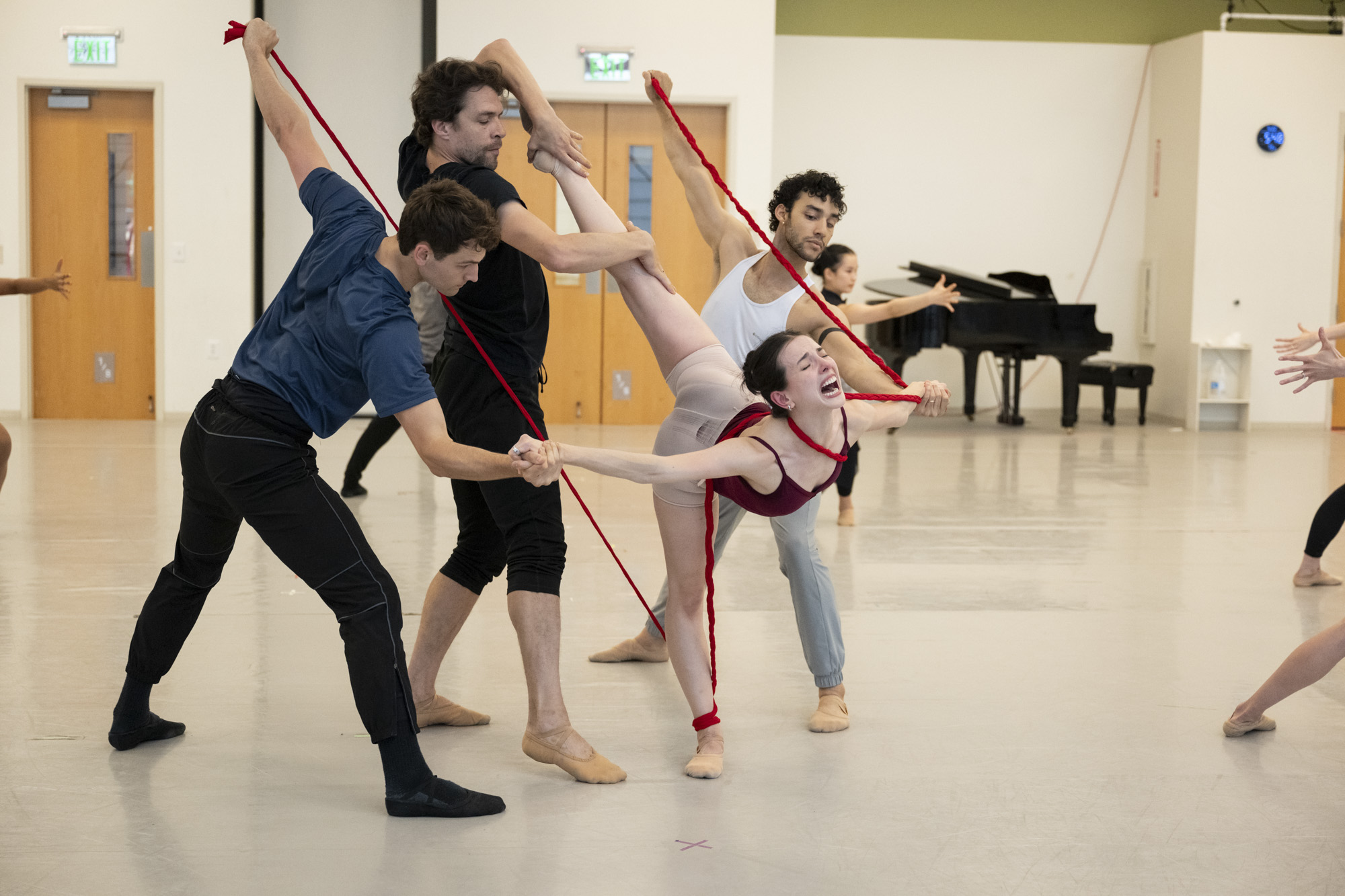
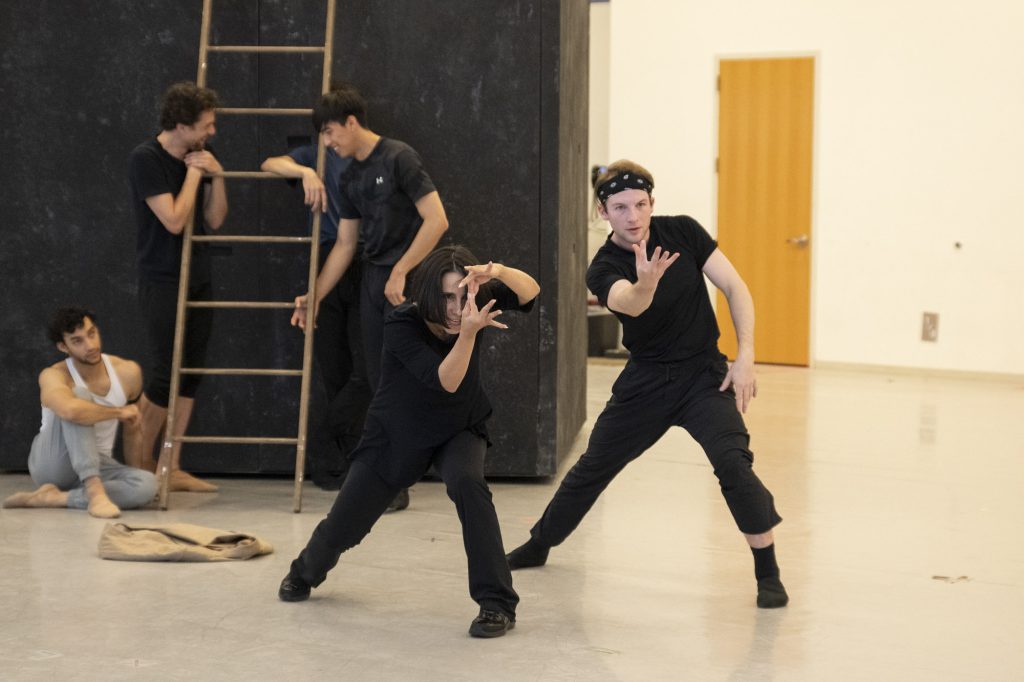
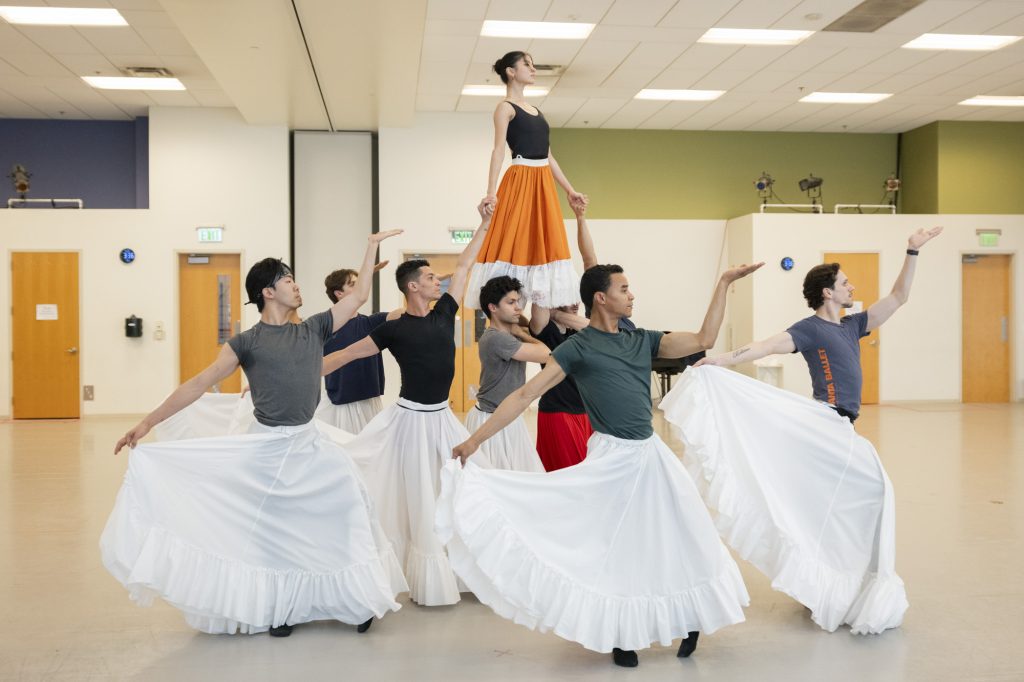
In Frida, Lopez Ochoa has given Kahlo a body that is literally broken, her identity distributed across a male “chorus” that embodies all of the different self-representations the artist painted over her lifetime: a female dancer as the central figure from the painting The Wounded Deer; another female dancer as a bird who represents Kahlo’s spirit and will; and, of course, one female dancer as Frida herself. That same embodied multiplicity, however, also helps to convey the stature and influence that Kahlo built and maintained through constant self-fashioning intended to express her deepest interior being.
For Dal’Santo, representing Frida’s physical disability meant unlearning a ballet dancer’s almost instinctual association between “looking pretty” and artistic perfection. “Frida is a real woman on stage with all of her strong and weak moments,” she said. “There is beauty in that, so I’m trying to embrace it, even if that means I’m not seeing a pretty ballerina in the mirror.”
While a preview of the male chorus in rehearsal confirmed that Frida will be filled with pageantry and beautiful dancing as well as nuanced characterization — the challenge of using ballet to present complex, flawed and ultimately human characters is what draws Lopez Ochoa to these powerful female figures. “Historical women teach us how they paved the way for all the freedoms that we have gained,” Lopez Ochoa said. “We take them for granted if we forget those who came before — women like my mother, who was given the choice by her father to be either a nun or a nurse and decided to be a nurse.”
Dal’Santo said the lessons she has learned from embodying Frida will shape her personal and professional life for a long time to come. “In the ballet, Frida lives her life as authentically as she can,” said Dal’Santo. “She isn’t afraid of showing her feelings; she doesn’t filter anything. I want to feel like that, to get away from comparing myself with other people and to find what I have that is my own and that is special.”
Atlanta Ballet will present Frida this weekend, May 8 through May 10, at the Cobb Energy Performing Arts Centre.
::

Robin Wharton studied dance at the School of American Ballet and the Pacific Northwest Ballet School. As an undergraduate at Tulane University in New Orleans, she was a member of the Newcomb Dance Company. In addition to a bachelor of arts in English from Tulane, Robin holds a law degree and a Ph.D. in English, both from the University of Georgia.
STAY UP TO DATE ON ALL THINGS ArtsATL
Subscribe to our free weekly e-newsletter.

PLEASE SUPPORT ARTSATL
Your Gift Sustains the Coverage You Count On!
Related Posts