The Foundry opened on a bet: that if he built it, artists would come
Artist Adam Bostic largely self-funded his vision for a new arts collective in an industrial building in Southwest Atlanta. His serendipitous timing ended up giving artists displaced by a fire a new home.
I arrived at the Foundry on Saturday night, August 15, as the grand opening party was winding down. The sounds of the place hit me before I could see much of it: skaters somewhere in the dark, a band setting up on the outdoor stage and faint chatter inside the brightly-lit warehouse at the edge of it all. Inside, the room displaying works on paper was scattered with red sold dots and empty spaces where pieces had already been taken home by their new owners. Vendors and artists still left on-site scurried around with excited energy and the feeling of catharsis that comes only after a night this big wraps up.
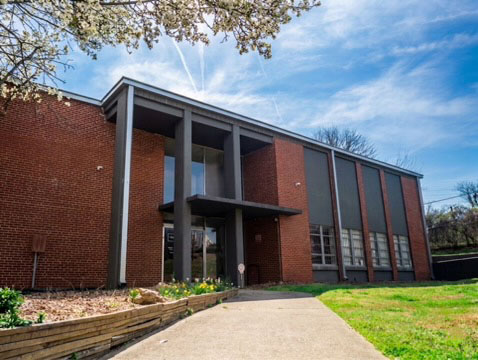
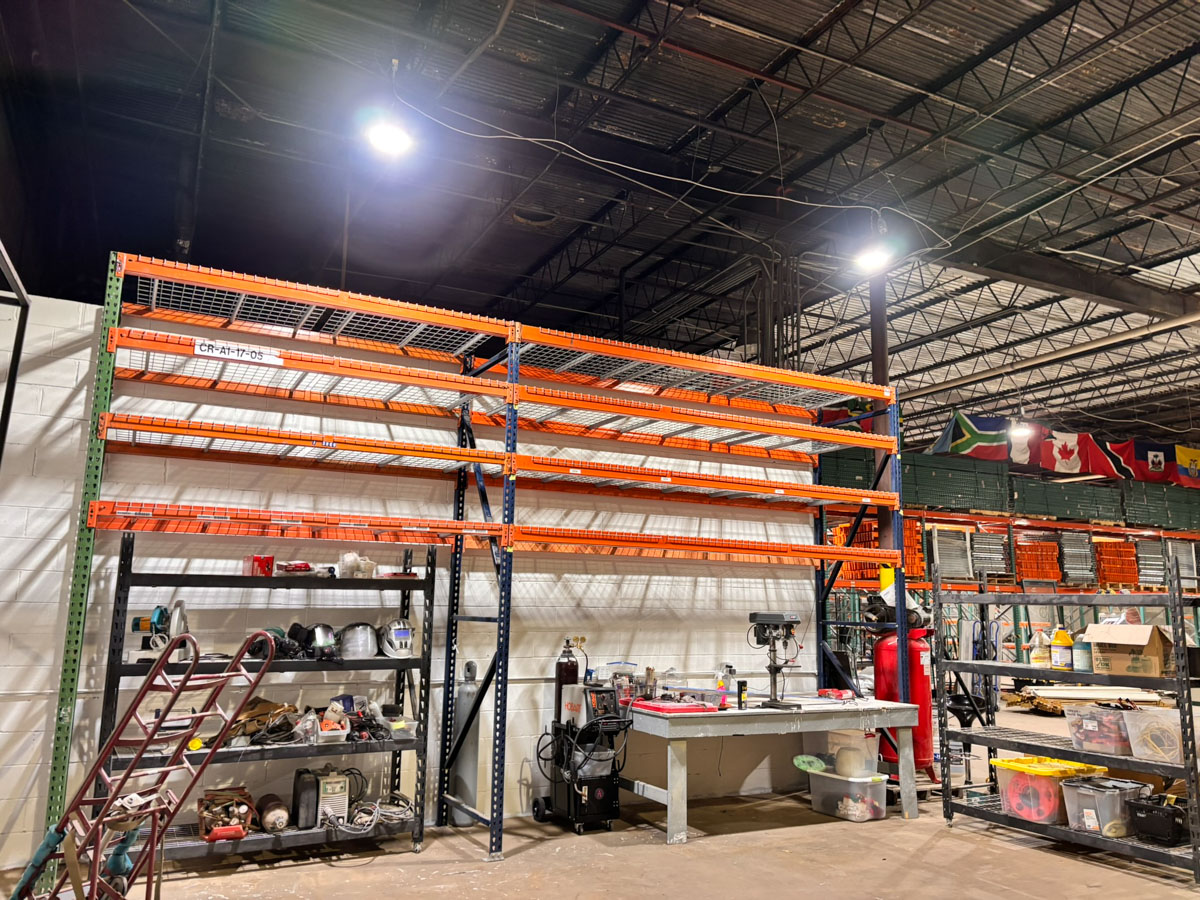
The Foundry is a 23,000-square-foot creative campus that opened August 15 inside the old Bronner Brothers manufacturing building in Southwest Atlanta, a few blocks from eyedrum, MET Atlanta and Day & Night Projects. It houses private studios, welding and woodworking shops, a shared materials and tool bank and a growing community of resident artists who use it all.
Adam Bostic, an artist, fabricator and entrepreneur who runs the fabrication studio ARC Design, built the foundations to open this new space. The problem he aimed to solve is one Atlanta artists know well: The city’s creative economy keeps growing, but affordable industrial workspace constantly comes and goes.
Bostic knows what it means to be displaced as an artist in this city, first being priced out of a space he occupied for years on Glenwood Avenue and then pushed out of a temporary spot at Lee & White. When a contact pointed him toward the Bronner Brothers building, a historic Black-owned beauty brand’s former manufacturing hub, he called other artists, knowing he couldn’t keep the space stable alone.
While Bostic was on the move, a fire on Fleetwood Drive tore through South River Art Studios and left several dozen artists and makers without studios, tools and, in many cases, without years of their finished work. A number of them expressed interest in joining Bostic and believed in his vision. Bostic put down a deposit, using savings he’d built up from his art and fabrication work, and the group started building out the complex alongside a handful of other artists.
An artist studio isn’t just a room one rents — it’s where the work lives and where artists find and support each other. For some affected by the South River fire, the Foundry has become a place to rebuild both their practice and community.
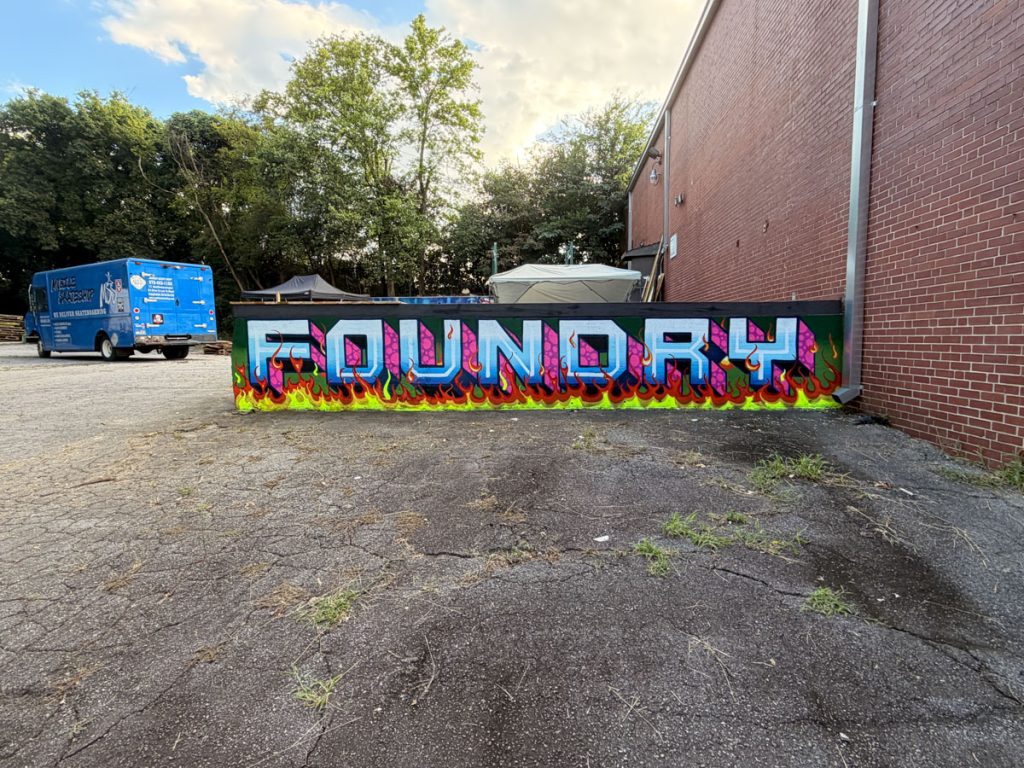
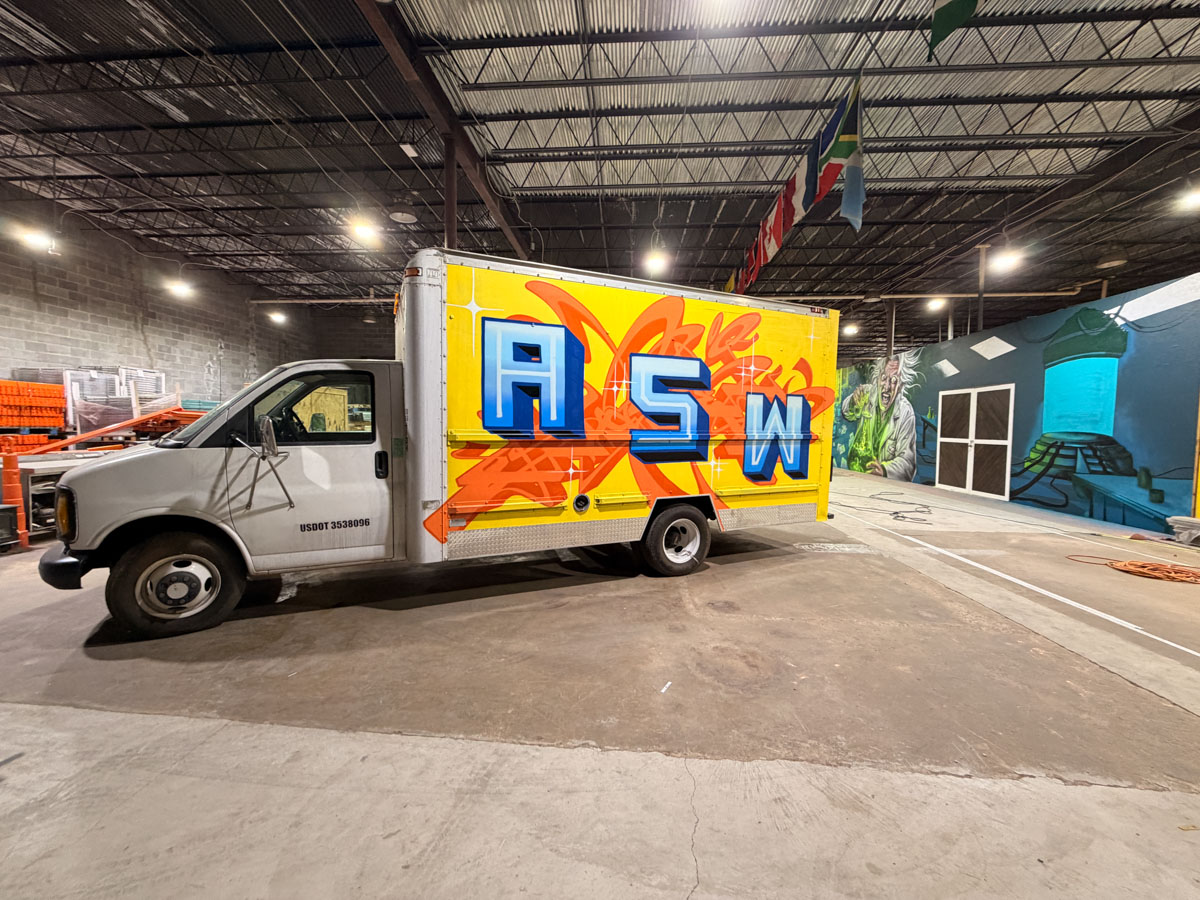
Atlanta Style Writers Association (ASW), a graffiti and style-writing collective, now rents studio space at the Foundry. A member of the organization, who stays anonymous in order to stay true to grafitti artist culture, described what sets the Foundry apart from a standard studio building.
“There’s a lot of artists who have a lot of really cool ideas, but maybe they’re hesitant to get started,” they said. “This is the type of space where those big projects can become a reality.”
What Bostic built isn’t structured like a typical arts nonprofit.
“The vision,” he says, “is that we would have a place that’s not funded by nonprofit grants.”
In practice, that has meant funding the build-out largely with savings he’s generated through his own work. He described waking up some nights wondering if he’s lost his mind, taking on a building that size with no guarantee to maintain it long-term. What kept him going, he says, were a multitude of people repeatedly telling him not to quit.
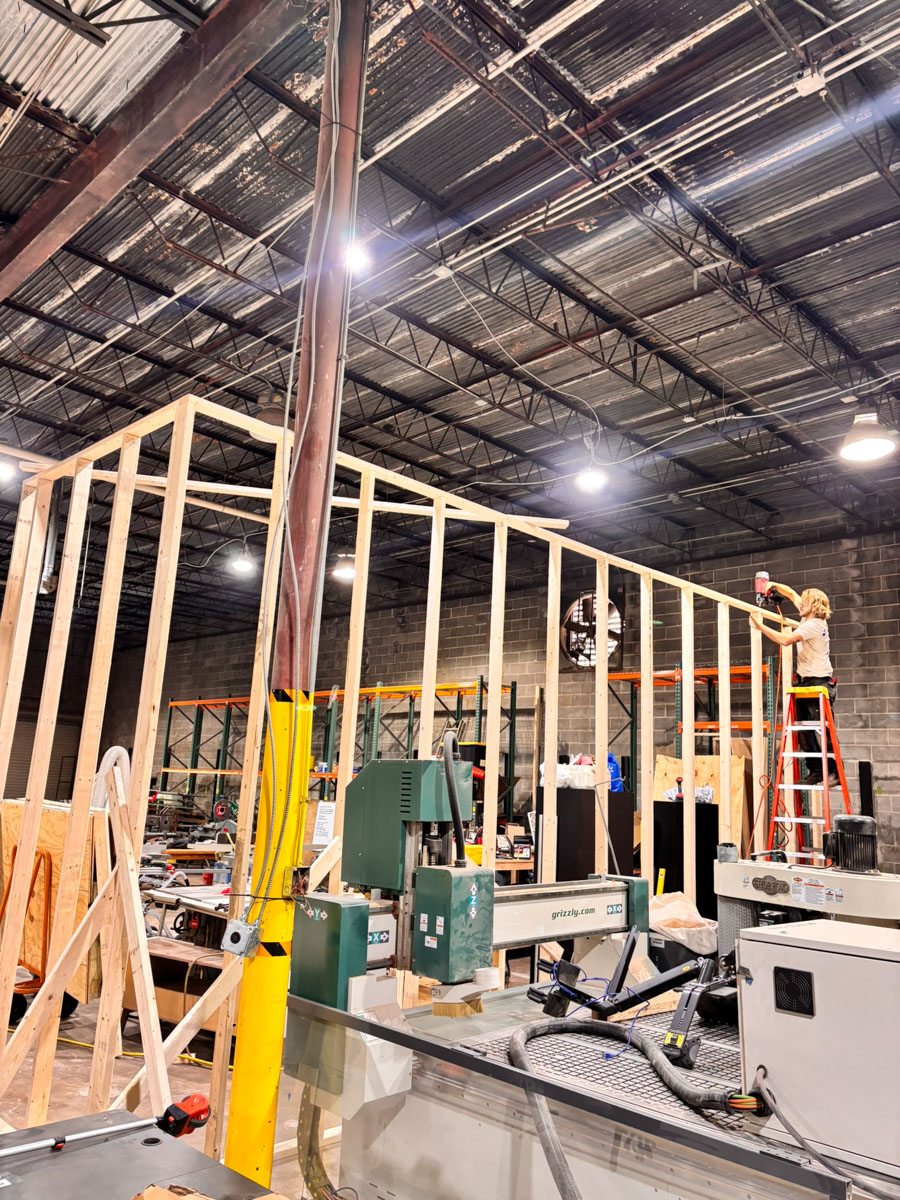
Some of the clearest proof that his investment is paying off predates the grand opening. Back in April, visitors walking through Oakland Cemetery for its annual Illumine exhibition probably encountered the VAYNE Mausoleum. A full-size tomb, it was painted to look like aged marble, covered in graffiti and built so it could be taken apart at the Foundry and put back together again on-site.
Atlanta Style Writers helped oversee that project. The artist, VAYNE, created the concept and contributed his building skills. VAYNE would draw a beveled letter or show photos of a spray-painted bevel, and Bostic would convert it into perfect angles to make the shapes real.
“Adam’s really good at translating the artist’s ideas and making it large scale. There’s pretty much nothing Adam can’t do,” an ASW member described with a proud energy. It’s part of why ASW wanted to throw the opening in the first place: “We think the space is dope, and we believe in it. We believe in you, you believe in us, type of thing.”
After decades spent collaborating with and mentoring other artists, Bostic speaks about the Foundry as if it’s his legacy, not just a business. He wants the space to carry some of the raw, underground edge he found in Long Beach and Los Angeles’ downtown warehouse galleries when he was living in California years ago — the kind of alternative art scene that’s not playing it safe.
That vibe could be felt at the Foundry’s grand opening, which ASW helped organize. There was a deliberate mash-up of skateboarders on freshly-built ramps, a paper show featuring artists such as Mr. Totem, Dr. Dax, VAYNE, CHEAK, Daze and KOAST, graffiti going up on the walls in real time and live music.
“We really want to just show a cool blend of cultures and scenes in Atlanta. Street graffiti, street art culture, skateboarding, punk music and stuff like that,” the ASW member said. “Those scenes overlapping in Atlanta create a special magic that we want to highlight.”
Bostic says the future vision also includes nine rehearsal spaces for bands, more workshops and a gallery built out in the back corner. It will exist somewhere between studio space and what Bostic calls “a third space.”
Standing in front of huge walls freshly painted with pieces that didn’t exist mere days before, it was not hard to envision a future where everybody keeps showing up for this new community.
::
Jasmine Hentschel is the founder and publisher of GULCH magazine, an independent print publication archiving Atlanta’s visual arts and culture scene. A digital designer and creative strategist, she launched GULCH to spotlight local artists, build community and explore the economics of Atlanta’s creative ecosystem.
STAY UP TO DATE ON ALL THINGS ArtsATL
Subscribe to our free weekly e-newsletter.

PLEASE SUPPORT ARTSATL
Your Gift Sustains the Coverage You Count On!
Related Posts