Steve on TV: Sex, socioeconomic tensions and echoes of ‘Silence of the Lambs’

Without this month’s election results and their implicit rejection of a decade’s worth of hate-fueled politics, I’m not sure I could have made it through all five episodes of Tip Toe on Starz. Even with the latest glimmers of hope, it’s still a hard watch. But it’s also full of wit and joy, even if they’re imperiled at every turn. The series gives fair warning, alerting us that each episode “contains violence and discriminatory behavior that may be upsetting to some viewers.” That’s really the whole point of the show. It’s a wake-up call.
Alan Cumming (in an emotionally transparent performance far removed from his Traitors duties) plays Leo, owner of a bar in Manchester’s gay Canal Street neighborhood. He’s a year away from 60 and employs a cheerful bevy of young gay and trans staffers still quibbling over proper pronoun usage.
This isn’t a spoiler, but it’s a hell of an opening-scene jolt: We first meet Leo when he’s dead, hanged from the lamppost in front of his townhouse. And his next-door neighbor, brawny, homophobic electrician Clive (David Morrissey), is belligerently claiming responsibility. Tip Toe is a tick-tocking timeline, showing what happens over the 10 days leading to that moment.
The troubles start when Leo locks himself out of his house, in his underwear, and has to knock on Clive’s door to call best pal Steph (Elizabeth Berrington), to bring her spare key. And Clive is absolutely the neighbor you don’t want to have. In that tricky, thankless role, Morrissey is as good as he possibly could be, capturing the performative aggression and emotional withholding of a certain kind of man — especially when he’s around people he thinks are “weird.” Clive suspects everybody’s weird, while buying without question some of the internet’s crazier conspiracy theories. He’s also the last to know that his 20-something son Saul (Joseph Evans) is running an OnlyFans account from his childhood bedroom, and 16-year-old son George (Jackson Connor) is popping up on the same sex apps Leo uses.
When Leo tentatively reaches out as an avuncular, older gay man to offer George support, you want to yell “don’t do it” — as you would at a pure-hearted heroine exploring the creepy attic in a horror movie. Many of the doomed actions in Tip Toe are driven by good intentions, but the show falls short in not giving self-righteous Clive more emotional shading. He’s irredeemable, despite Morrissey’s efforts to humanize him. You can feel all the anger and despair of the show’s creator heaped on the character.
Tip Toe comes from prolific, brilliant writer Russell T. Davies. He gave us the original Queer as Folk and was behind the 2005 reboot of Doctor Who. He’s also given broad overviews of LGBTQ and wider political trends in his AIDS drama It’s a Sin and his sociological sci-fi series Years and Years.
Tip Toe is neither futuristic like Years nor a period drama like Sin. It’s very much of our current aggrieved, resentful, conspiracy-driven anti trans/gay/anybody-non-white-cis-male era. It feels like it comes directly from Davies’ scared, furious heart and steel-trap brain. The drama touches on the effects of impersonal online culture, the threat of AI and our demeaning gig economy (Clive’s livelihood is threatened by YouTube DIY videos that show people how to fix electrical problems themselves). The storyline ends in a perfect storm of tragic choices and misunderstandings. Tip Toe makes its point, but it’s a bummer. Here’s hoping it will soon feel dated — a reminder of the deadly reefs we managed to sail past.
NETFLIX
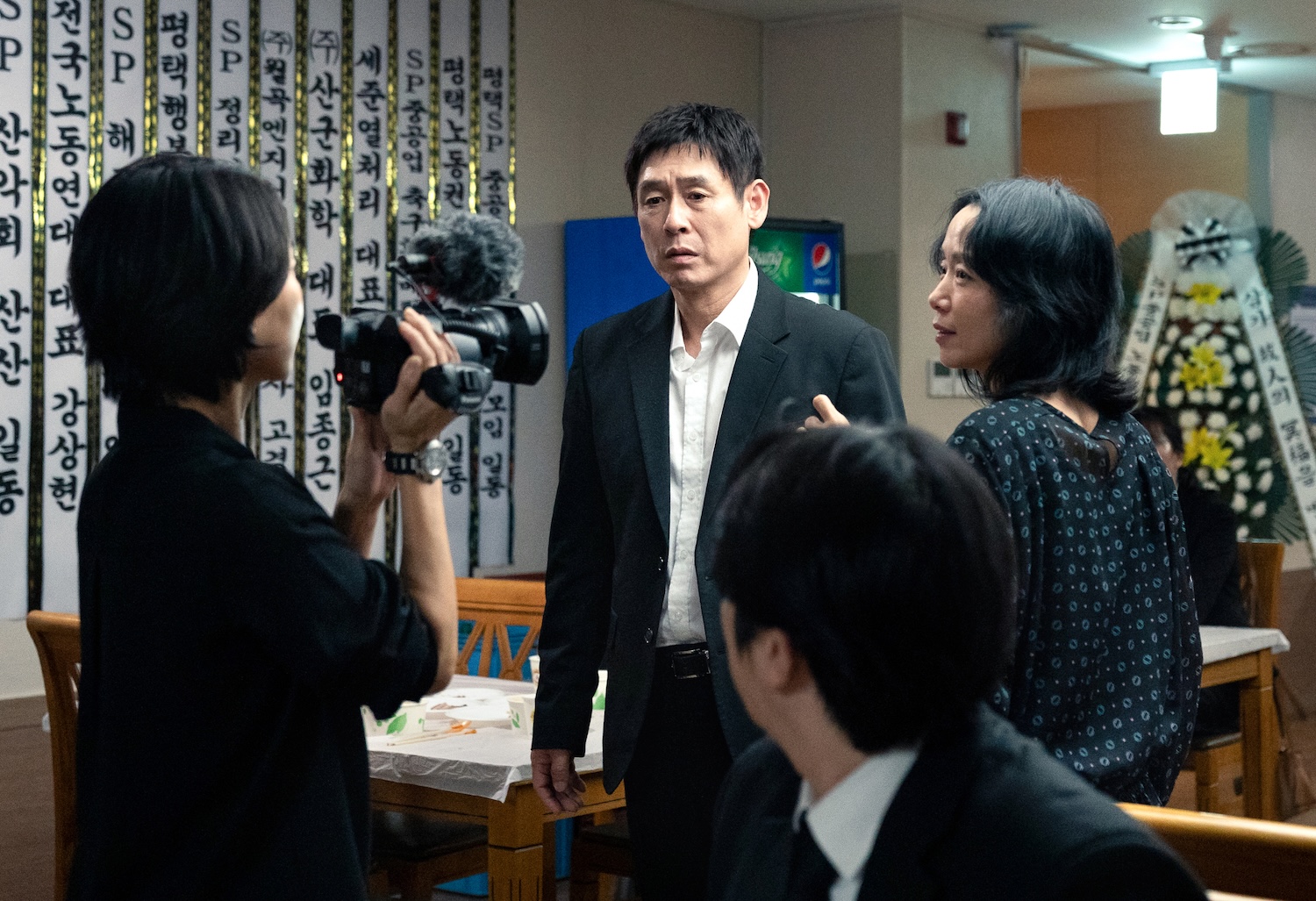
As in Tip Toe, sex, income inequality and incursions over social boundaries are elements in the tremendous film Possible Love from director Lee Chang-dong. His last feature was eight years ago: the measured, unsettling Burning, which also focused on class tensions. The socioeconomic theme is underscored in the casting of Cho Yeo-jeong, who played the oblivious, rich wife in Parasite.
Here she plays another coddled woman, Ye-ji, a documentary filmmaker whose well-meaning cluelessness sets the film in motion. With the support of her handsome, rich husband, Sang-woo (Zo In-sung, subtly powerful), she decides to make a film about the lives of workers laid off by a manufacturing plant.
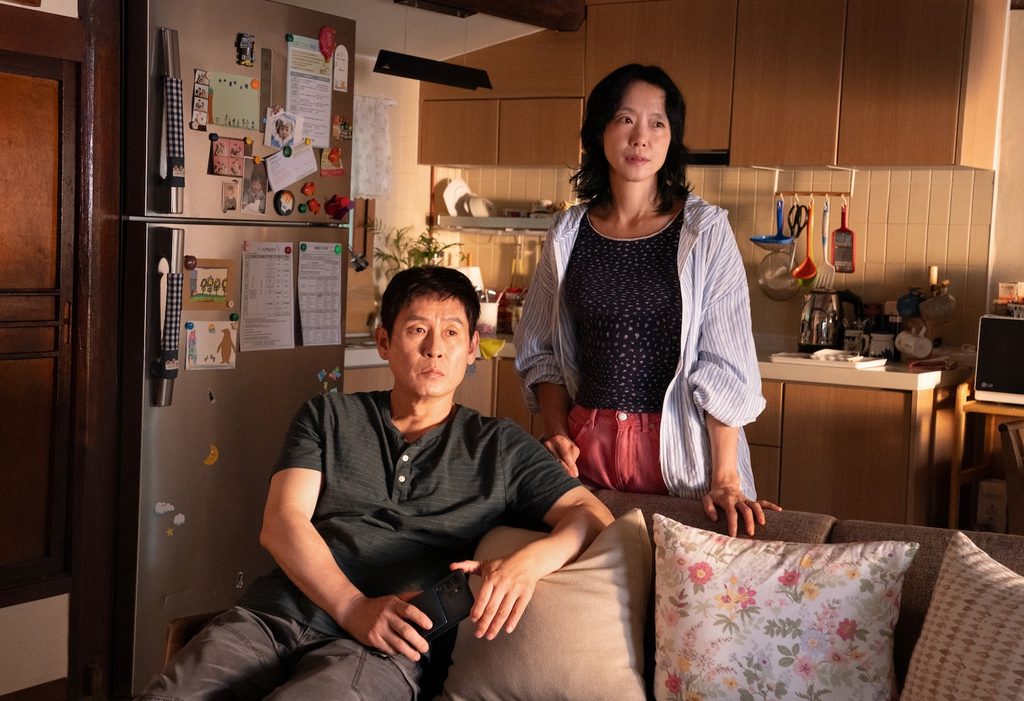
She finds her subjects in Ho-seok (Sul Kyung-gu), a taciturn, withdrawn man who walks through life like a veteran with PTSD, and his wife Mi-ok (Jeon Do-yeon, extraordinary). Mi-ok is raising their awkward young son but tending just as much to her husband. When Ye-ji turns her camera on the family, she tells her husband (without hearing the condescension), “I really want to do well by them!”
She abandons objectivity in ways that might remind you of the delicious discomforts in the hit doc You Can See Everything. Ye-ji invites the family to dinner at a restaurant with her husband and even to Sang-woo’s wealthy family’s seaside vacation home. Meanwhile, Mi-ok gasps when she discovers how much Je-yi’s handbag costs, develops a small crush on Sang-woo and becomes performative whenever the camera is aimed her way.
Possible Love is much richer than a simple sociological object lesson or economic satire. Guided by Jeon’s paradoxically sly and guileless performance and peppered with flashbacks that give us insight into Mi-ok and Ho-seok’s younger lives, the film is novelistic. Like a novel, it doesn’t rush with its 164-minute length. For me, that time flew by, but you need to be OK with subtitles and patient at teasing out the characters’ relationships at the start. The film was made as an homage to part 10 of the late Polish director Krzysztof Kieślowski’s Dekalog, the “thou-shalt-not-covet” episode. You can see the connection, but Lee’s film is a stand-alone wonder.

Also on Netflix, Ron Howard’s documentary Avedon gets most of its watchability from the undiminished power and wit of the photographer’s work. When I mentioned Richard Avedon’s name, my husband asked, “Who’s that?” A simple web search answers that with hundreds of photos lodged in our collective unconscious: The so-called sad Marilyn; the svelte fashion model posing with elephants; the ghastly Duke and Duchess of Windsor.
Once again, it’s a film that explores documentarian ethics — not with regard to director Howard’s approach but to Avedon’s. The photographer embedded himself with his subjects like a war journalist — even if the territory was simply his studio for an afternoon. Or maybe, more than a journalist, Avedon was like an apex predator, easing celebrities and regular folk alike into a state of comfort, eroding their defenses — then clicking the shutter with the reflexes of a springing lion. The results are amazing. Too bad Howard’s film never tells us anything very interesting about Avedon’s personal life, including his bisexuality and longtime relationship with director Mike Nichols. It doesn’t go nearly as deep as any one of Dick Avedon’s deceptively simple photos.

Also on Netflix, Léa Seydoux gives a strong performance in the frustrating European drama Gentle Monster from writer-director Marie Kreutzer. She plays Lucy, a world-famous pianist-vocalist (her performances look super-cringe) whose partner, Philip (Laurence Rupp), is charged with possession of a trove of juvenile pornography. When that news breaks, Lucy flees for comfort with her world-weary mother (Catherine Deneuve, doing Catherine Deneuve). But Lucy doesn’t tell her mom what’s happening.
In fact, the character’s prolonged refusal to confront the situation directly might be psychologically realistic, but it’s a dramatically stagnant choice. You keep wanting her to do something. (The movie is loosely drawn on events surrounding an actor Kreutzer once worked with.) Also, a parallel storyline about the German policewoman assigned to the case and her aging father (serial groper of nurses hired to care for him) exists mainly to support a thesis that all men are oversexed and awful. That may be realistic in the filmmakers’ experience, but it’s, um, a lil’ bit reductive.

APPLE TV+
I’ve watched seven of the 10 episodes of Nocturne, continuing weekly through December 25. It’s doing something right to keep me going. Mainly it’s the cast, because the plot itself is a Frankenstein’s monster. Liev Schreiber plays Jonah, your standard-issue, retired lawman with A Past, drawn back into a case resembling one that haunted him. It’s a series of kids and women abducted and kept alive in literal holes in the ground. That’s happening again. The problem is, the man convicted of the past crimes, Jurek Walter (Stephen Graham), is in a maximum-security psych prison. So Jonah’s protégé and FBI agent Saga (Atlanta’s Zazie Beetz) gets implanted undercover as a patient in the cell next door. Maybe she can get insight into the ID of the copycat kidnapper-killer from the OG himself.
OK, so you’re seeing the Silence of the Lambs echoes, right? (Speaking of copycats, Thomas Harris’ novel has built a whole industry.) Look, I think Stephen Graham is a great actor, in the right parts. Especially working-class, northern England parts. He has his menacing moments here (love how he bites a wall in fury), but he’s no Anthony Hopkins. Without spoiling it, I will say that the big reveal of his perp outside the prison walls is an eye-roller. I may have said a bad word out loud in disbelief. But I’ll keep watching.
I’m also sorta-kinda keeping tabs on the bank heist thriller 12 12 12 (worst title of the year?). Mainly, I’m watching because I dig its European scenery (sunny Southern France and snowy Switzerland). But the writing can be painfully on-the-nose. That’s especially true for its central ugly-American FBI agent (Anthony Mackie, a little at sea without his Marvel Universe shield or wings). He has a Javert-like hard-on, tracking the mastermind (Jamie Dornan) responsible for hitting a Zurich bank on Christmas Eve. Not sure I’ll make it through all eight episodes of this one, continuing through December 25.

NETFLIX
Finally, if you’re jonesing for an aw shucks easy watch, you can do worse than Heartland, set in the country music capital but partly shot in Georgia. (Don’t worry, for scenes set on its neon-soaked streets and music venues, Nashville gets to play itself.)
Clenched of brow, Jessica Chastain plays disgraced C&W star Misty Jones, who leaves her Georgia farm and heads back to her twangy old stomping grounds when her niece, rising country star Charlie Hart (Carter Faith), goes missing for a spell. Did her stalker get her? Was it her no-good boyfriend? Maybe her creepy manager? Or that older, beloved star (Jennifer Nettles of The Righteous Gemstones), whose eye Misty blackened back in the day? Well, whodunnit is less important than the fact that the mystery finds a way to put Misty in a bathroom with her old flame, played by the wonderful character actor John Hawkes, soaking in the bathtub where he writes his greatest hits. Heartland ain’t much more than a whole lot of nuthin. But it’s a fine time-waster while you’re waiting for season 2 of that ultimate guilty pleasure The Hunting Wives (November 26).
::
Steve Murray is an award-winning journalist and playwright who has covered the arts as a reporter and critic for many years. Catch up to Steve’s previous columns here.
STAY UP TO DATE ON ALL THINGS ArtsATL
Subscribe to our free weekly e-newsletter.

PLEASE SUPPORT ARTSATL
Your Gift Sustains the Coverage You Count On!
Related Posts