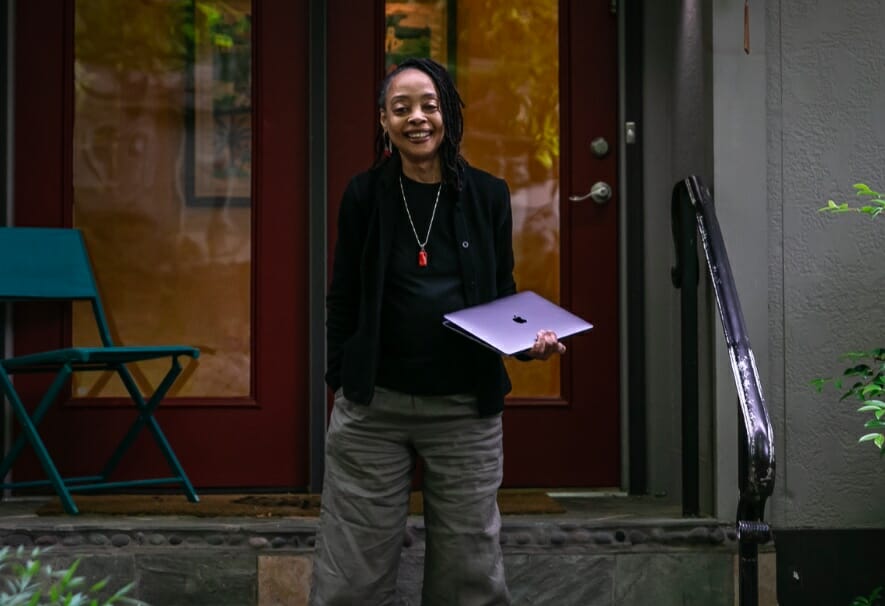
Remembrance: Author and mentor, Valerie Boyd’s kindness is her greatest legacy
After Alice Walker selected Valerie Boyd to curate, transcribe and edit personal journals spanning 50 years of Walker’s life, she said, “I can’t help feeling the imprint of the ancestors on the happy occurrence . . . that Valerie Boyd has emerged to stand beside me.”
Seven years later and just two months shy of the publication of Gathering Blossoms Under Fire: The Journals of Alice Walker (Simon & Schuster, 560 pages), Boyd has taken her place among the ancestors.
As news spread that Boyd — an award-winning biographer, essayist, arts and culture critic, editor, journalism professor and founding member of the ArtsATL board of directors — died of pancreatic cancer on February 12 at Emory Hospital in Atlanta, the response was swift and heartfelt.
Neighbors gathered outside the 58-year-old’s home in Pine Lake for a candlelight vigil. Social media platforms lit up with testimonials to her fidelity as a friend, and exacting standards as a writer who once said her responsibility as a storyteller was “to listen, to amplify, to synthesize, to distill.” State Sen. Kim Jackson celebrated her constituent’s life by invoking a moment of silence during morning roll in the Senate chamber on February 14.
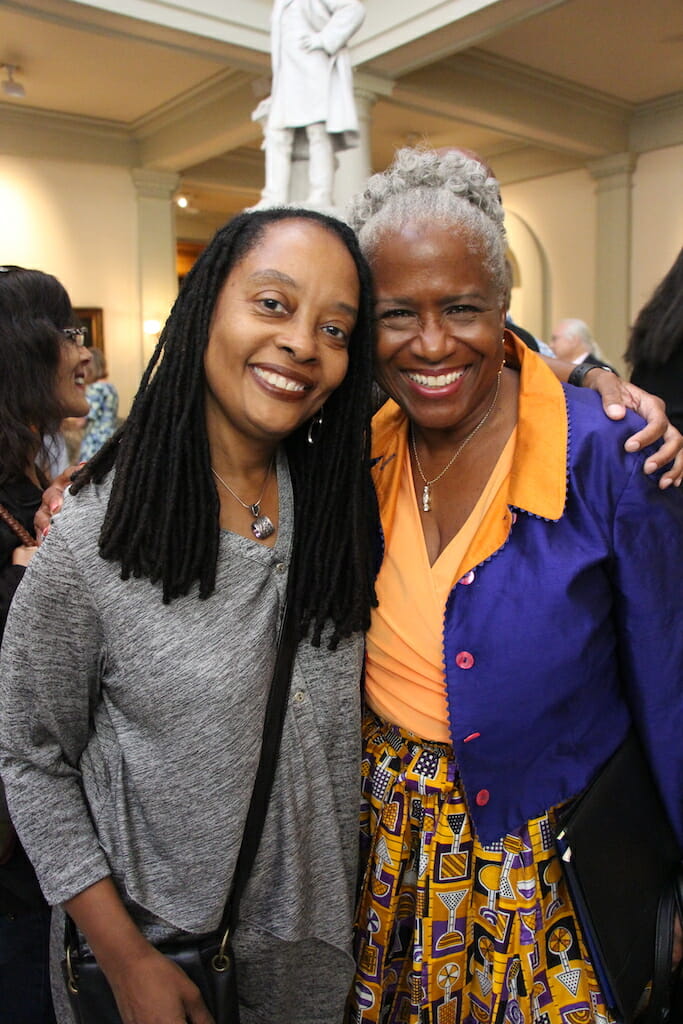
The timing of Jackson’s valentine was fitting owing to the fact that Boyd was so beloved by so many.
“Ahhhh . . . my darling Valerie,” says Monica Kaufman Pearson, when asked to recall a favorite memory of her late friend. They met in 2012 after Pearson retired from the anchor’s desk at WSB-TV and began her studies at the University of Georgia — where Boyd founded and directed the MFA Program in Narrative Nonfiction. Boyd was assigned to serve as Pearson’s advisor and chair of her thesis committee. Unbeknownst to Pearson, however, was the fact that she shared a decades-long connection with her new professor, who said she was inspired to become a journalist after hearing Pearson speak at her middle school in Atlanta nearly 30 years prior.
Never one to get stuck on sentimentality, Boyd was not easy on her role model-turned-pupil. To the contrary, Pearson remembers being “hammered” with the constant refrain of “Let the news writing go!” as Boyd stressed the difference between writing that passed muster in a newsroom versus propulsive writing that was based on solid reporting and research, read like a novel, rose to the level of literature and kept readers turning the page. The battering paid off as Pearson graduated magna cum laude (Media Studies Master of Arts, class of ’14) at the age of 67. And she continues to apply the lessons learned in her freelance work for WGCL-TV and PeachtreeTV.
“I now write for television the way I would write a book,” says Pearson. “Everything Valerie taught me about trusting my voice and establishing a rhythm as a storyteller has created a flow that makes the work so much easier.”
“The Help”
As an arts editor at the Atlanta Journal-Constitution in the early-aughts, Boyd had a reputation for being calming and charming with a quiet authority, according to Pierre Ruhe, then a classical music critic for the newspaper. When he and fellow writer Catherine Fox launched ArtsATL in 2009, they invited Boyd to be a founding board member and extended an open invitation to write whatever she wanted, whenever.
Boyd’s first review, which dissected the racist undertones of the film The Help, and the ensuing firestorm remain legendary at the publication.
“Within hours it brought in tens of thousands of views, and within a day there were hundreds of comments,” says Ruhe. “At first they were relatively mild . . . but all at once all the comments became racist, personal attacks. At that, I forever switched off commenting on ArtsATL stories.”
After someone called her a “race hustler,” Boyd shared her take on the responses in an email to Ruhe.
“I find many of the comments quite offensive, but I do agree with your general impulse to not stifle opinions,” wrote Boyd. “I’ve had my say, now it’s time for everyone else to have theirs. But I do think there are a lot of attacks on me rather than counter-views of the film. I also think many of the most outraged comments illustrate one of the important issues I address in the review — the fact that some people really don’t want to hear an honest opinion from a Black person on race. Unfortunately, most of the readers and writers of such comments probably don’t see how their hatred for a Black woman speaking to them on an equal playing field neatly sums up the whole dynamic!”
Zora Neale Hurston
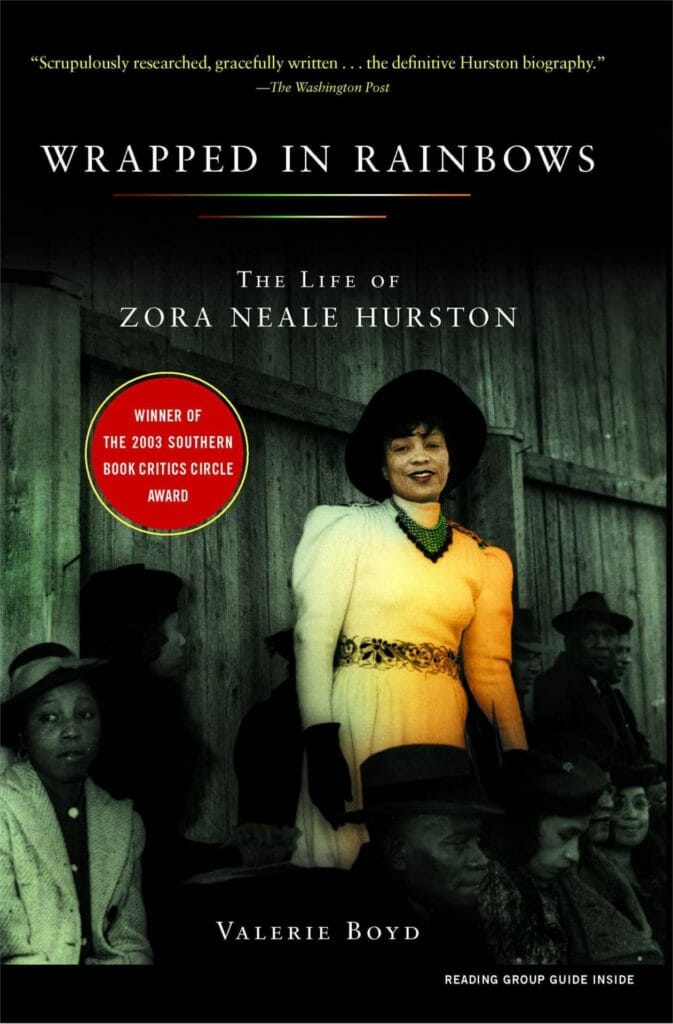
Boyd is best known nationally as the author of Wrapped in Rainbows: The Life of Zora Neale Hurston, which was hailed by Alice Walker as “magnificent” and “extraordinary.”
She was the recipient of a Southern Book Award, an American Library Association’s Notable Book Award and a Governor’s Award for the Arts and Humanities. At the time of her death, she was working on an anthology titled Bigger Than Bravery: Black Resilience and Reclamation in a Time of Pandemic, which will be published later this year.
Equally meticulous when documenting her personal response to what she called The Great Pause, Boyd’s short essay for the Pine Lake Porch Portraits: Surviving Quarantine series shed light on her resilience in the face of uncertainty of the pandemic. Ever the pragmatist, she saw the disruption of paradigms as “an opportunity to reimagine everything, to reinvent ourselves, in the godliest images we can conjure.”
“I also am privileging joy, seeking and finding beauty, comfort and solace in the smallest of things,” she wrote. “ . . . a satisfying FaceTime conversation with a friend; my late mother’s simple cornbread recipe; a stump planter of rosemary and cilantro; a dollop of sour cream in the middle of the pancake batter; a bottle of cold-pressed juice that boasts the perfect balance of lemon and watermelon juice; a successfully executed cardamom-lime loaf; a bright idea.”
Beyond her brilliance as a writer and a scholar, Boyd’s former student, James Murdock, says kindness is her greatest legacy. Now an American Literature and Creative Writing teacher at Jasper County High School in Monticello, he describes his mentor as a sage who had every right to assert her authority, but chose to lead with humility instead.
“If you’re familiar with the Buddhist concept of bodhisattva — enlightened people who come back to show the way for the rest of us fools — that’s the way I felt about Val,” says Murdock. “I come from a rural background, I’m a White man and I have said some downright ignorant things to Val . . . but she was kind, compassionate, curious and always trying to understand people who were different from her.”
Food and friendship
Pictures of family, friends and food dominated Boyd’s Facebook feed. If she wasn’t posting snapshots and snippets about the love of her life, her niece Kaylisha Boyd (aka: Special K), she was sharing selfies snapped with a pride of literary lionesses including Walker, Pearl Cleage, Sonia Sanchez, Farah Jasmine Griffin and Charlayne Hunter-Gault. (Boyd was named the Charlayne Hunter-Gault Distinguished Writer in Residence at UGA in 2007, and she directed the Giving Voice to the Voiceless grant program created by Hunter-Gault and her husband, Ron Gault.)
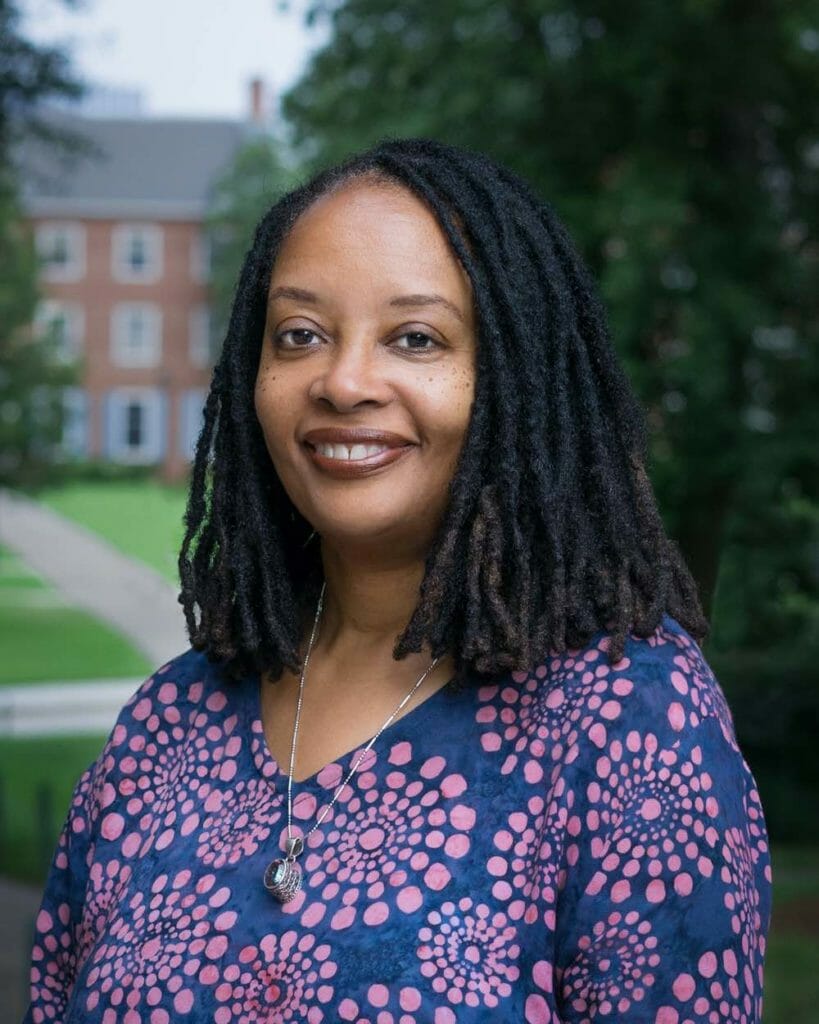
A foodie to the bone, she also was a driving force at the Southern Foodways Alliance, where its founding director John T. Edge fondly recalls the time Boyd collaborated with chef Mashama Bailey to tell the story of Zora Neale Hurston through a menu that ranged from roasted rabbit to smoked whiting for an Southern Foodways symposium in Oxford.
“There was an ease to Valerie’s convening,” says Edge, who directs the Mississippi Lab at the University of Mississippi and is a visiting professor of Narrative Nonfiction at UGA. “And yet, if you paid attention you recognized the purpose in that casualness as a means to welcome all. It was a signal that the group that convened at her behest already belonged together, and that all were to be included across any differences we might imagine. She willed that world into being each time she stepped into a room.”
Boyd’s facility for putting a vast constellation of friends and colleagues on one another’s radars was her soft power, according to Rose Scott, host of WABE’s news program Closer Look.
“I think Valerie’s desire to make connections was innate,” says Scott. “She would host a gathering and text or call to say, ‘You might want to come check this out if you have time.’ She had this little way of tilting her head and nodding – which was her way of telegraphing: This is what you should do, but I’m not going to force you . . . I’m just sayin’ . . .”
Alice Walker
Boyd was equally adept at cultivating cross-generational ties that could change the life of a young person.
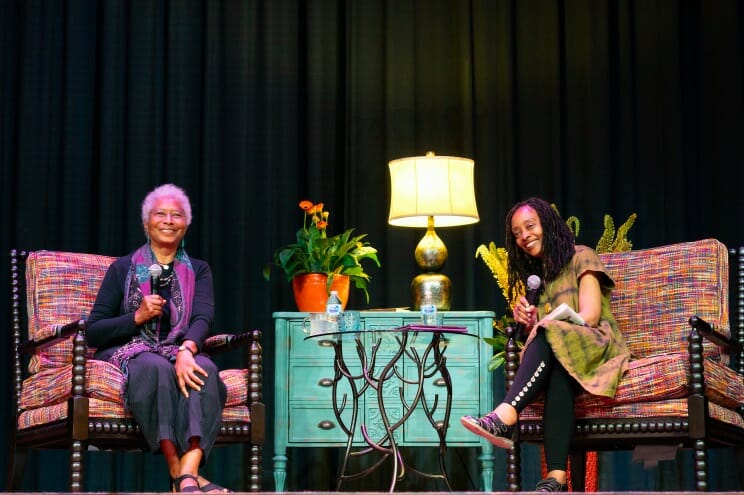
Shortly after her biography of Hurston was published, Boyd crossed paths with Walker — whose 1975 essay for Ms. magazine, “In Search of Zora Neale Hurston,” has been credited with reviving interest in Hurston’s writings. Walker was so awed by the long-overdue acknowledgement of her literary hero — the woman she called “a genius of the South” — that she simply embraced Boyd’s face with both hands while murmuring, “My child . . .” The gesture must have felt like a benediction to Boyd, who grew up idolizing Walker.
So when Boyd organized an intimate session to introduce 12 high school students to Walker at UGA’s Wilson Center for the Humanities and Arts in 2015, and the gathering ended with hugs, tears and Walker’s sweet embrace of each child’s face — it was the epitome of paying ones gifts forward.
“Valerie Boyd was one of the best people ever to live,” Walker said via a statement from Simon & Schuster. “Even though illness was stalking her the past several years, she accompanied me in gathering, transcribing, and editing my journals Gathering Blossoms Under Fire, and stood with me until the end . . . This was a major feat, a huge act of love and solidarity, of sisterhood, of soul generosity and shared joy, for which she will be remembered.”
For all the star-wattage that illuminated her life, Boyd was as content to attend the Broadway premiere of The Color Purple as she was to hang out with friends while walking her dog in Decatur. There was there was one arena, however, where Boyd lost her footing, according to her niece, Special K: when she was invited to a housewarming party where dancing would take place.
“My aunt didn’t want to seem off beat, so she tried to make me teach her to dance,” says Kaylisha. “But she didn’t have any rhythm. She didn’t even know how to do the Electric Slide. [By the end of the crash course], she learned how to snap on beat, but that’s it.” After laughing at the memory, Kaylisha breaks down, her voice strangled by emotion, as she reflects on the auntie whose devotion was peerless. “Aunt Valerie set the standard for my first instance of love, and how it should feel,” she says.
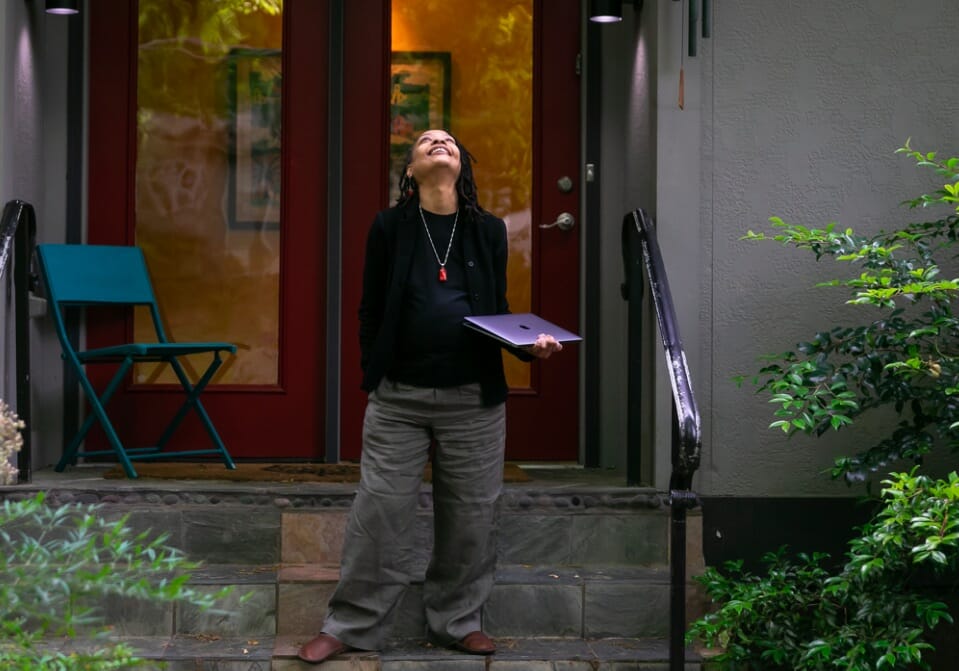
Like Kaylisha, Hank Klibanoff — Emory professor, host of WABE’s Buried Truths podcast and former managing editor of the AJC — struggles to count the ways in which Boyd’s transition is such a loss for the people who knew and loved her best. He describes his former colleague as an ever-present newsroom conscience who stood for decency, held [her reporters] to a higher standard, and bridled against cliched assumptions and stereotypes about people. Mostly, though, he cannot reconcile the fact that Boyd is not here to receive her laurels.
“Gosh, I get really upset,” says Klibanoff. “I get mad. I’m so mad about this. I know that people die but, doggone it! To have it happen so close to the launch of the Alice Walker book that has meant so much to Valerie . . . that to me is the heartbreaking part.”
Heartbreak is inevitable when bright lights like Boyd’s are extinguished. But thanks to the indelible heart-prints she left on everyone who is missing her, death is a feeble barrier to what remains.
Valerie Boyd’s family statement: We would like to express our deepest gratitude for the outpouring of love and condolences on the passing of our beloved sister and aunt, Valerie Boyd, who transitioned on February 12 after a long battle with cancer. A memorial service and a tribute to Valerie will be held in the coming weeks and months. We will announce dates once they are finalized. In the meantime, please continue to hold the family and her spirit in your hearts. And if you would like, please donate to the Black Women’s Health Imperative in her name.
::
Gail O’Neill is an ArtsATL editor-at-large. She hosts and coproduces Collective Knowledge, a conversational series that’s broadcast on THEA Network, and frequently moderates author talks for the Atlanta History Center.
STAY UP TO DATE ON ALL THINGS ArtsATL
Subscribe to our free weekly e-newsletter.

PLEASE SUPPORT ARTSATL
Your Gift Sustains the Coverage You Count On!
Related Posts