Review: Alliance Theatre’s terrific “Toni Stone” hurls a curveball at our conscience
Run, don’t walk, to the Alliance Theatre for Toni Stone.
Onstage through February 27, this baseball-centric production is a must-see. It stuns. It challenges. It amuses and enlightens. It educates and entertains. It’s based on history, yet it feels new, alive and revolutionary. There is no other play like it.
Playwright Lydia R. Diamond, whose last work seen on Atlanta stages was this season’s excellent Synchronicity Theatre production of The Bluest Eye, crafts a biography of Toni Stone, the first woman to play as a regular on an otherwise all-male American big-league professional baseball team. And Diamond’s script is fantastic, allowing Stone to tell her own story to the audience in a cyclical manner while stepping in and out of scenes from her life and career.
Signed in 1953, Stone played second base for the Negro American League team the Indianapolis Clowns, filling the position vacated by Hank Aaron. The signing was a stunt commandeered by White owners, who also hired clown mascots to entertain during the game, to increase attendance and publicity. Yet Stone played seriously and capably. Throughout her career, she faced much scrutiny, sexism and racism, and the play addresses all of that directly, while also bringing focus to her legacy and the way that American culture continues to treat Black and women athletes.
It’s a major undertaking, full of nuance, and the Alliance-Milwaukee Repertory Theater co-production directed by Tinashe Kajese-Bolden steps up to the plate and goes deep.
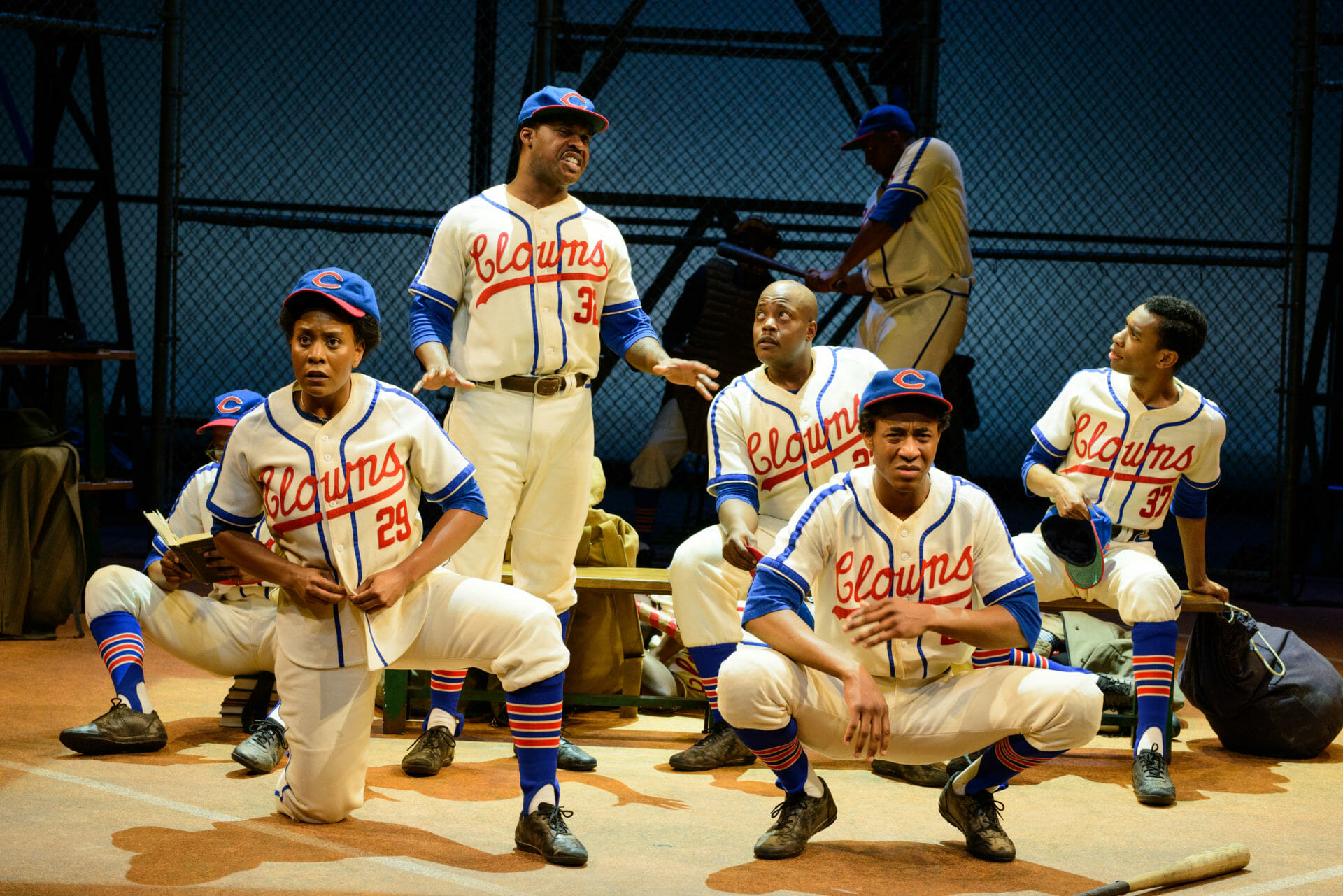
Toni Stone is superbly choreographed by Dell Howlett, though it is not a musical. It incorporates elements of dance, shared movement and athleticism. All the members of the ensemble function as a full baseball team, running the bases, signaling for fastballs, jumping to catch flyballs. The movement onstage is not limited to sports antics, though. Every cast member, save for lead actress Kedren Spencer, transforms the set based upon the scene, through mimed actions and rearrangements of set pieces. Occasionally, the ensemble functions as a representation of Toni Stone’s thoughts, creating tableaus upstage for the audience as the character narrates. And they fill multiple speaking roles of various races and genders.
The only woman on the stage, however, is Spencer, and she is a powerhouse.
Her character Toni is a non-linear storyteller and complicated thinker, and her story is presented by her as a series of anecdotes, asides and interjections. Occasionally, a character from one moment in her life will comment or offer her advice uninvited in the middle of another memory, where they don’t exactly belong, and then Toni will speak directly about the disorder of her stories to the audience. It’s never chaotic; it always makes sense.
Spencer has the audience completely in hand as the character leads us from one story to the next with an engaging level of excitement. The show begins with a spotlight upon a baseball at the center of the stage. Then, as she makes her way to the field, the ball — in a bit of stage magic that braces you for what’s to come — rolls itself toward her glove. The implication is clear: Toni Stone and baseball are powerfully connected. The sport is in her soul, and no obstacle, neither her race nor her gender, will stop her from playing this game.
Toni tells us that what matters about the baseball, as she feels it in her glove, is “not the thing itself, but the weight of it.” Without baseball, a part of her is missing.
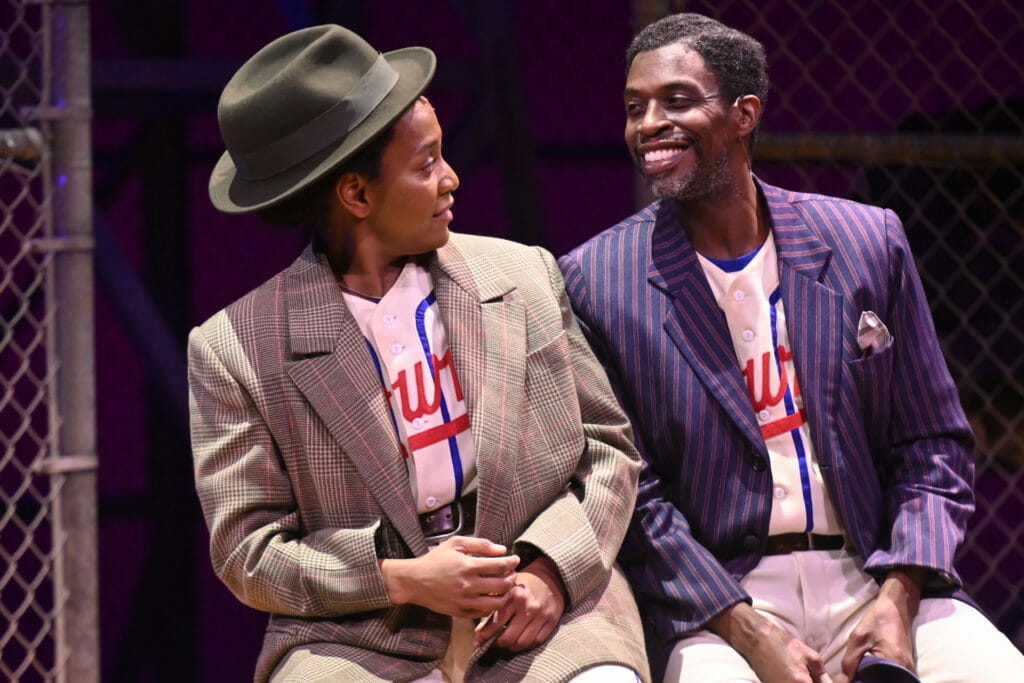
The play then explores all the ways in which people tried and failed to take the sport away from her, from her traditional mother to racists in the South who violently threatened her team and chased them during bus trips, to her teammates who feel she’s stealing attention from them. Even Alberga, a flirtatious and savvy businessman played by Sekou Laidlow, tries to rope her into matrimony and compromise her game.
Toni is steadfast in her loyalty to baseball, though, and it’s a delight to watch. The character’s tomboy childhood and social awkwardness are well-depicted by Spencer, who gives Toni a physical awkwardness whenever she is confronted by something uncomfortable. Before she catches the eye of Alberga, Toni is essentially asexual, and she recites baseball stats and facts she memorized off of baseball cards as a girl to calm herself down.
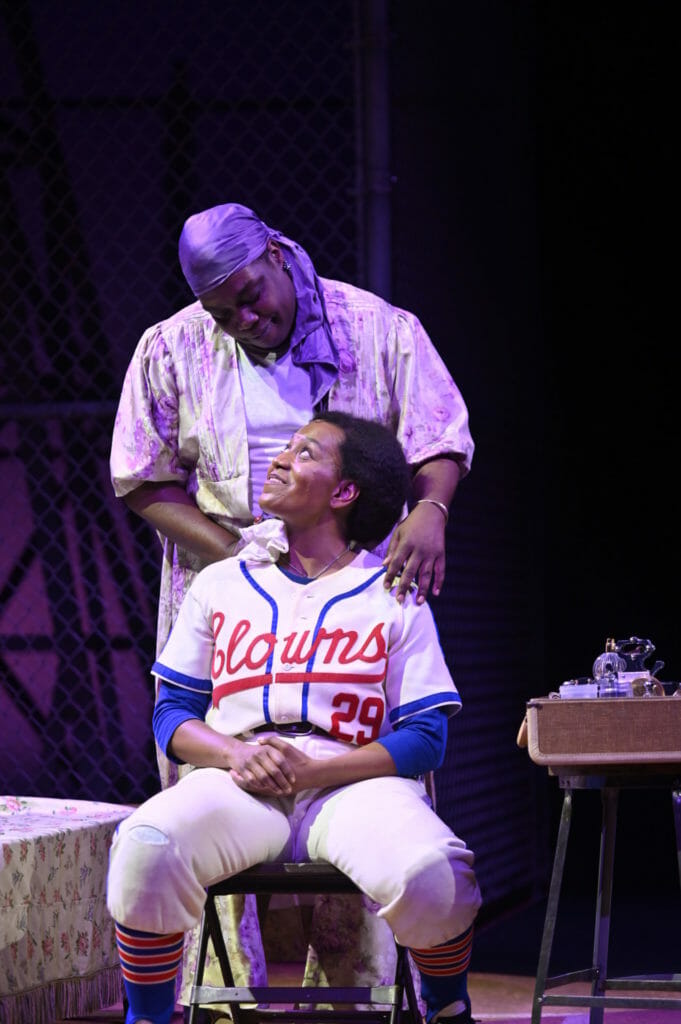
When her fellow Clowns decide to stop for the night at a brothel during a road trip, Toni befriends a prostitute named Millie, played by Enoch King in a hilarious and brilliant performance. Millie, more of a polished woman than Toni when they first meet, teaches the ballplayer the basics of hair care and wardrobe, often while wrapping the athlete’s extensive injuries. Millie also advises her on romance and sexual intimacy.
While she garners appreciation and affection as people come to understand her passion for the game and how it is tied to her identity, Toni is often blunt and insensitive about the struggles of others, particularly Millie. When Toni stumbles over social cues, threatening the friendship, it makes her even more relatable as a character. This show celebrates her as a human and as a forgotten icon.
Her legacy should live.
Toni Stone is interested in saying so much more than that, though. There is a daring moment at the close of the first act that is so powerful, a direct challenge to the audience that uses the technology of set design to cast a light upon our behavior and indict us. While the characters speak of the abuses of White spectators who treat Black bodies as tools for entertainment and amusement, the stadium lights grow to an unbearable brightness, and the characters stare down the audience, daring them to think upon their roles in our current culture.
That moment, more than any other, will make this play linger in the memory. Toni Stone and Toni Stone will have an impact.
::
Covid-19 protocols: The Alliance Theatre requires all audience members ages 12 and older to show identification and proof of vaccination or a negative test within 72 hours for entry. For guests under 16, an ID provided by an accompanying adult will be accepted. All guests are required to wear masks inside the theater. Food and beverage are not allowed inside the theater.
::
Benjamin Carr, a member of the American Theatre Critics Association, is an arts journalist and critic who has contributed to ArtsATL since 2019. His plays have been produced at The Vineyard Theatre in Manhattan, as part of the Samuel French Off-Off Broadway Short Play Festival, and the Center for Puppetry Arts. His first novel, Impacted, was published by The Story Plant in 2021.
STAY UP TO DATE ON ALL THINGS ArtsATL
Subscribe to our free weekly e-newsletter.

PLEASE SUPPORT ARTSATL
Your Gift Sustains the Coverage You Count On!
Related Posts