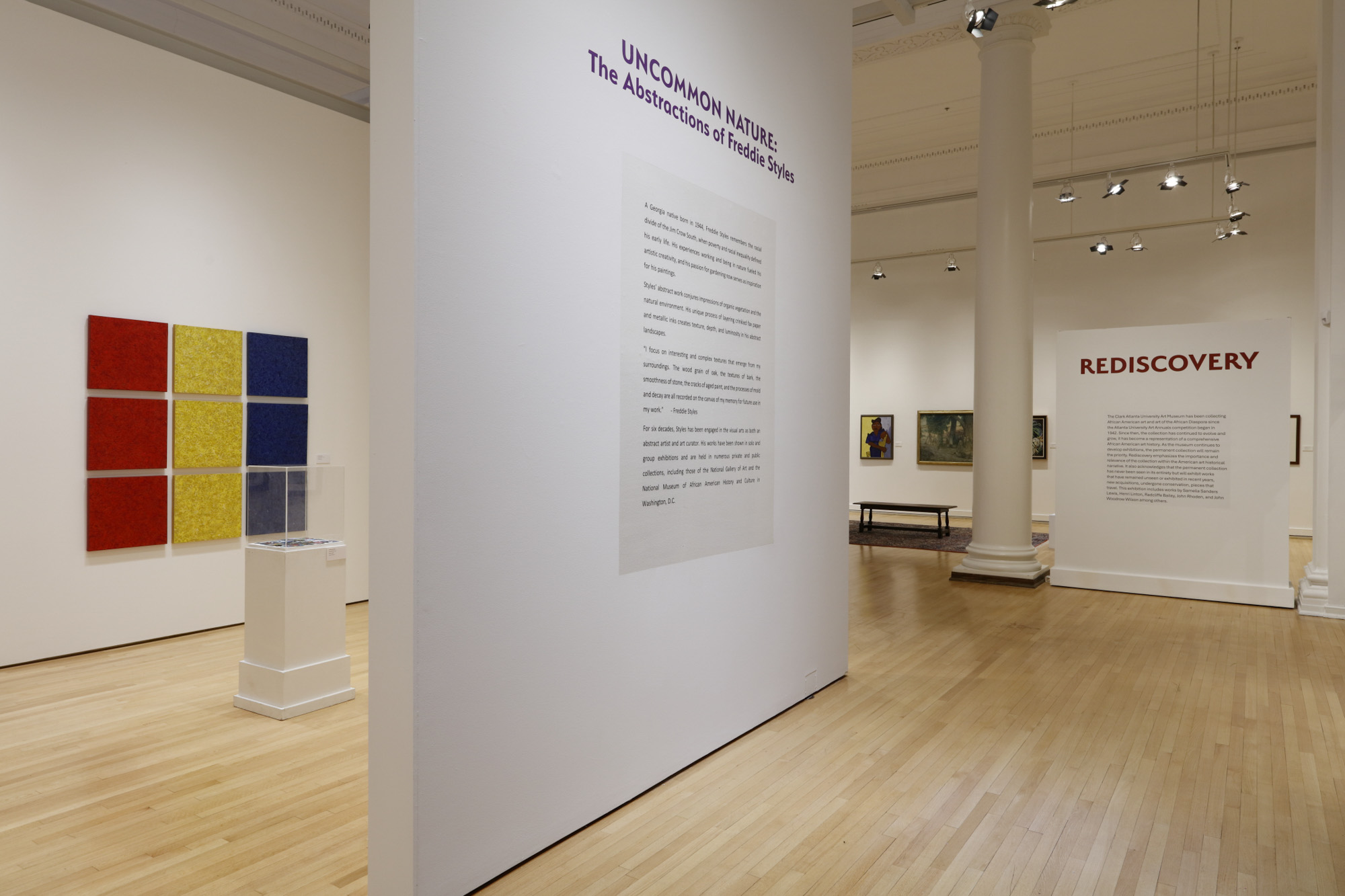
Reflecting on an artful life with ‘UNCOMMON NATURE: The Abstractions of Freddie Styles’
Currently on view at the Clark Atlanta University Art Museum, UNCOMMON NATURE: The Abstractions of Freddie Styles is an undeclared retrospective of this acclaimed Atlanta artist. Kerry Davis, an avid Atlanta collector of Black art, served as curator and worked closely with Styles to select more than 50 paintings, works on paper and prints spanning six decades.
UNCOMMON NATURE: The Abstractions of Freddie Styles, organized by the University of Maryland Global Campus Arts Program, is also quite miraculous: Only days after the University of Maryland picked up Styles’ work (about three-quarters of the 54 works in the exhibition are from his personal collection), his house burned down. All of his belongings, including his personal collection spanning six decades of artwork, were lost. What work has been saved is thanks to the serendipitous timing of this exhibition.
Now 81 years old, Styles is a beloved local artist. Born in Madison, Georgia, he moved to Atlanta when he was 5 years old with his mother, who was escaping an abusive relationship with his father. They first lived in Summerhill and later moved to the Pittsburgh neighborhood.
From his earliest days, Styles embraced art, drawing inspirations from his life and surroundings. His artistic trajectory was shaped by the racism and poverty he experienced in the Jim Crow South and his early acceptance of his own homosexuality, which, of course, resulted in confrontations with homophobia.
As an antidote, Styles developed a deep and profound attachment to the natural world — expressed in his art — and to gardening. He is a master of both. Although one could never categorize Styles’ work as political, its visionary strength includes shades of resistance embedded in abstract interpretations of nature.

Styles attended Morris Brown College from 1962 to 1965, taking art classes at Spelman and Clark Colleges, which were members of the Atlanta University Center consortium, one of the oldest HBCUs in the country. His experience in these classes solidified his commitment to a life of creativity.
At Atlanta University, he encountered the legacy of the legendary Hale Woodruff (1900-1980), whose work often explores the history and lived experiences of African Americans. Woodruff also launched the Atlanta University Art Annual in 1942, which was one of the few national juried exhibitions open to Black artists. Styles is one of the few surviving artists who participated in the annual exhibition, which was held until 1970.
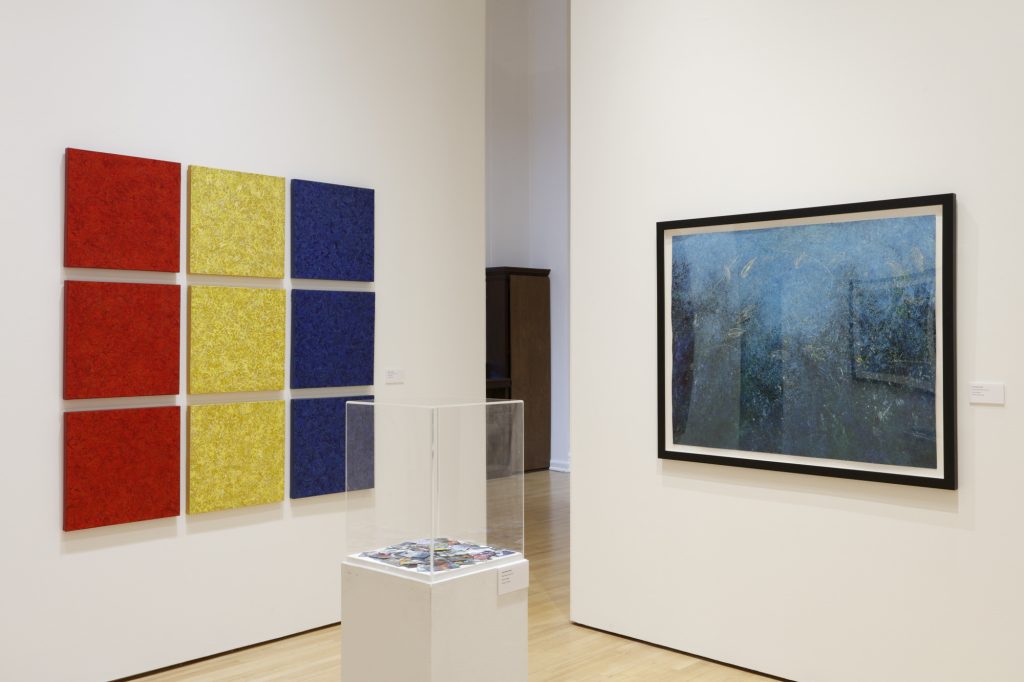
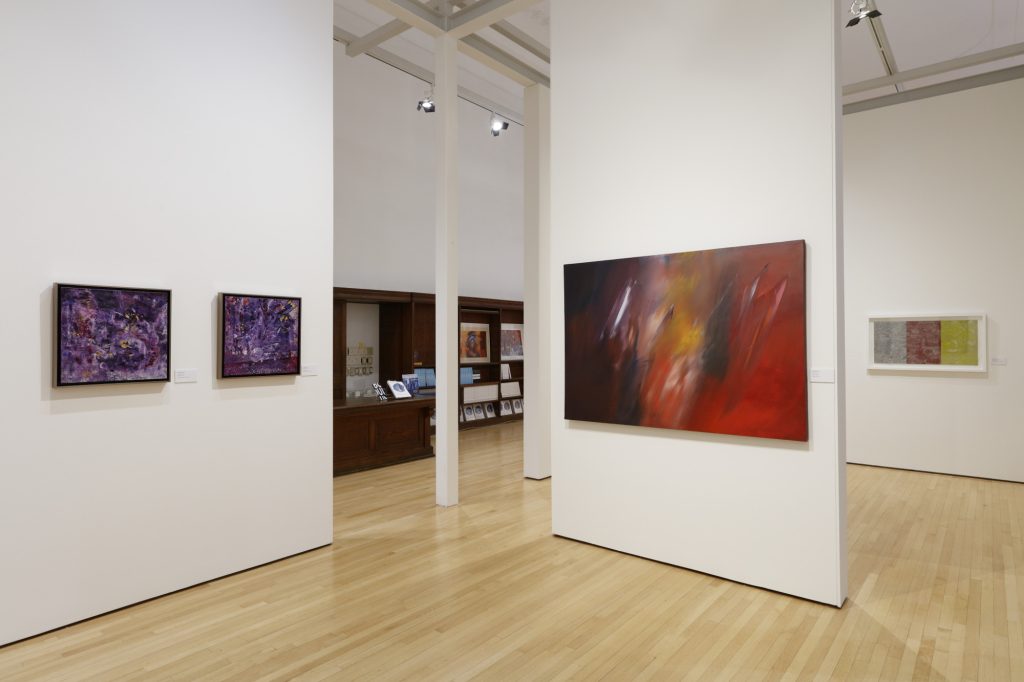
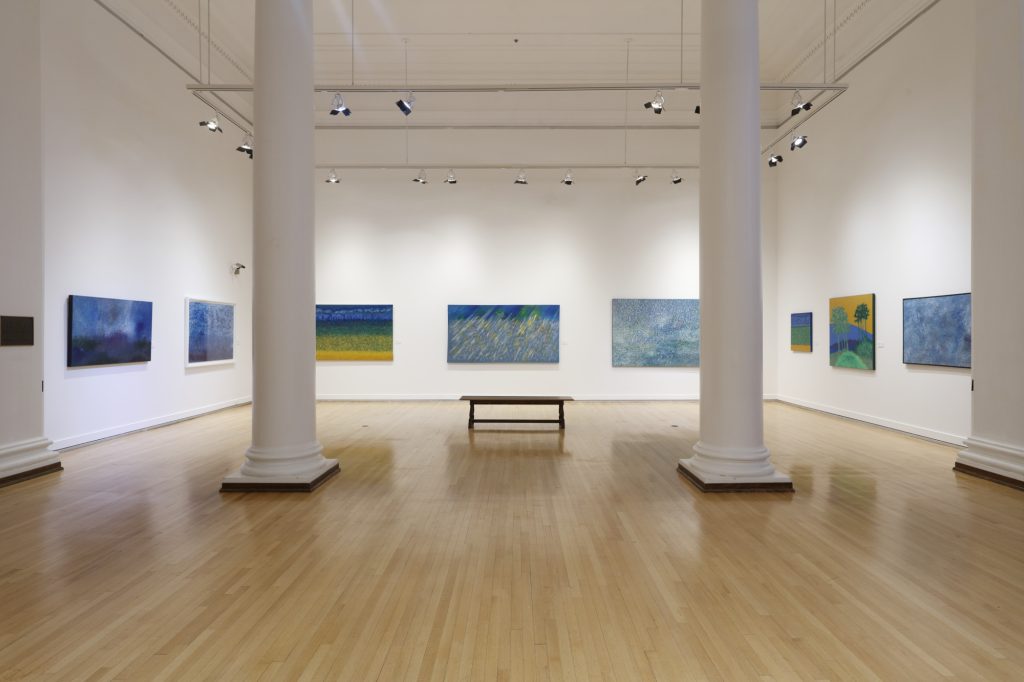
UNCOMMON NATURE is nicely installed according to visual affinities (color, style and size) and enhanced by the lovely Clark Atlanta University Art Museum venue. However, since the work is not hung chronologically, the exhibition would have been greatly enriched by interpretative texts that discuss Styles’ artistic evolution and his ongoing intent, themes and compositions. A lavish catalog profusely illustrated with selections of Styles’ artwork does include a thoughtful essay by Halima Taha and the artist’s curriculum vitae. Sharing some of the catalog’s content in the installation would have been welcomed, particularly by Atlanta University Center students.
Regardless, the exhibition is an opportunity to immerse oneself in Styles’ gentle and reflective art. Styles’ strongest artworks are clearly meditations about nature, with nods to artists such as Mark Tobey (1890-1976) and Norman Lewis (1909-1979). There are also echoes of Alma Thomas (1891-1978), whose paintings capture shifting light, colors and sound in a synesthetic vision of nature.
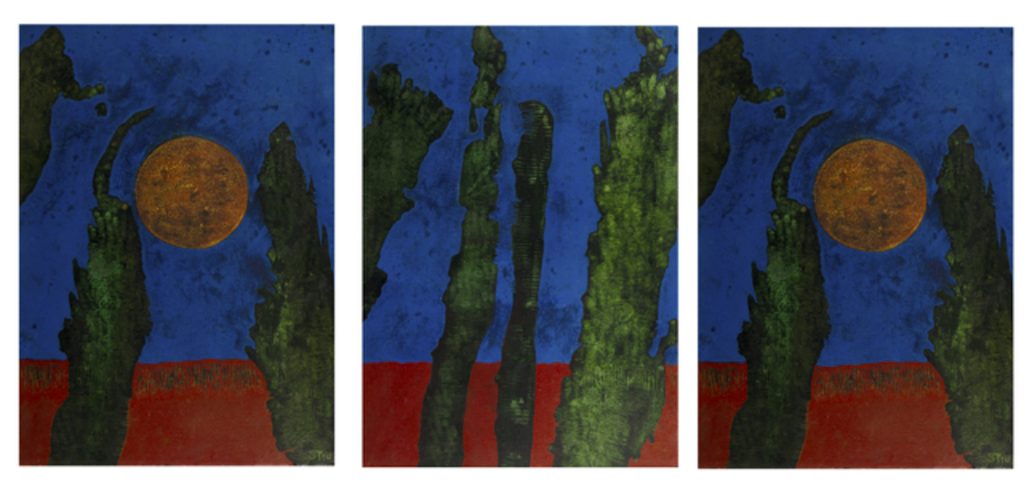
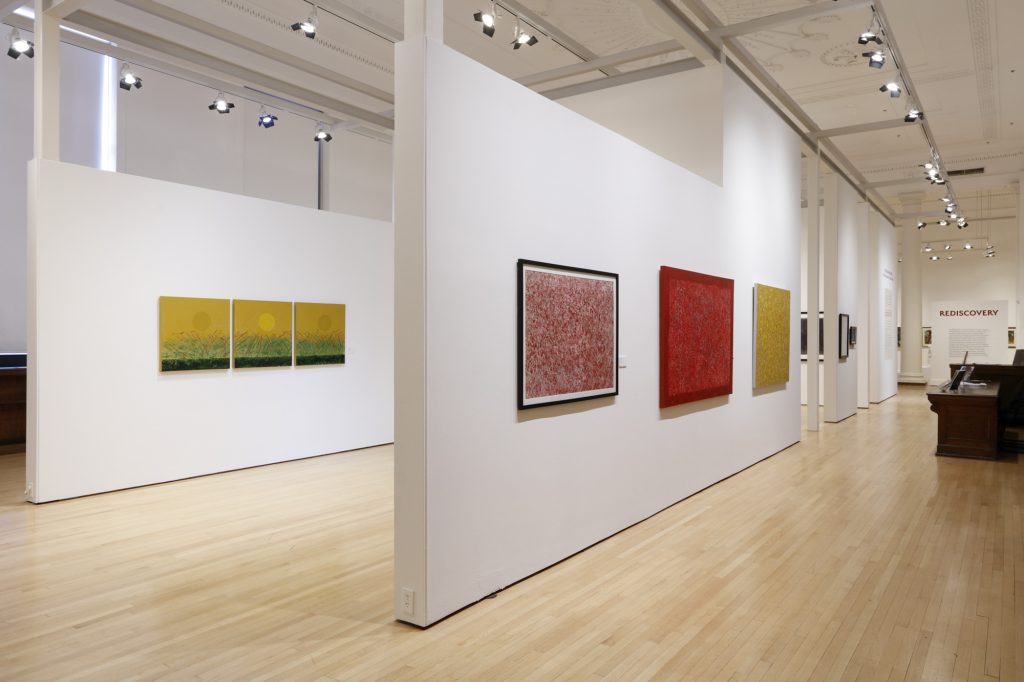
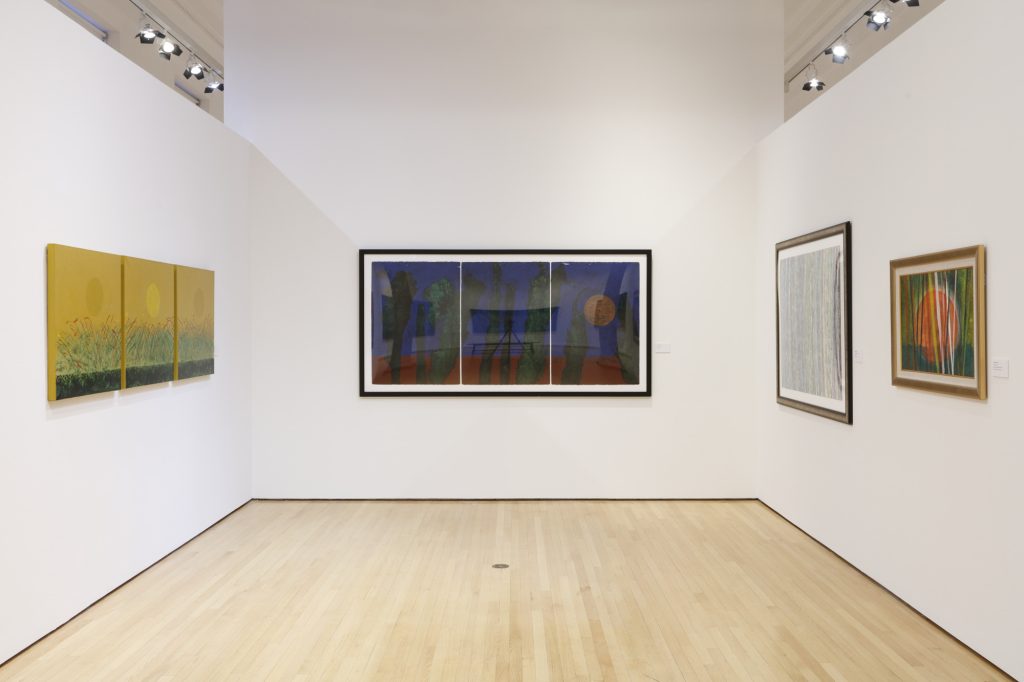
Particularly influenced by African American painter Richard Mayhew (1924-2024), Styles has produced, throughout his career, atmospheric and lyrical landscapes, often with deep horizon lines punctuated by trees and suns. Eddie’s Fantasy, a large-scale acrylic on paper triptych, is a dramatic example. Painted in deep hues of blues, reds and greens with touches of black, the 1986 work is an enigmatic landscape with abstract humanistic trees in front of a glowing sun. Styles honors Mayhew in his 2024 acrylic on canvas, MBP (Mayhew Birthday Painting) Series #1, in which groupings of green trees are surrounded by blue mountains under an orange sky.
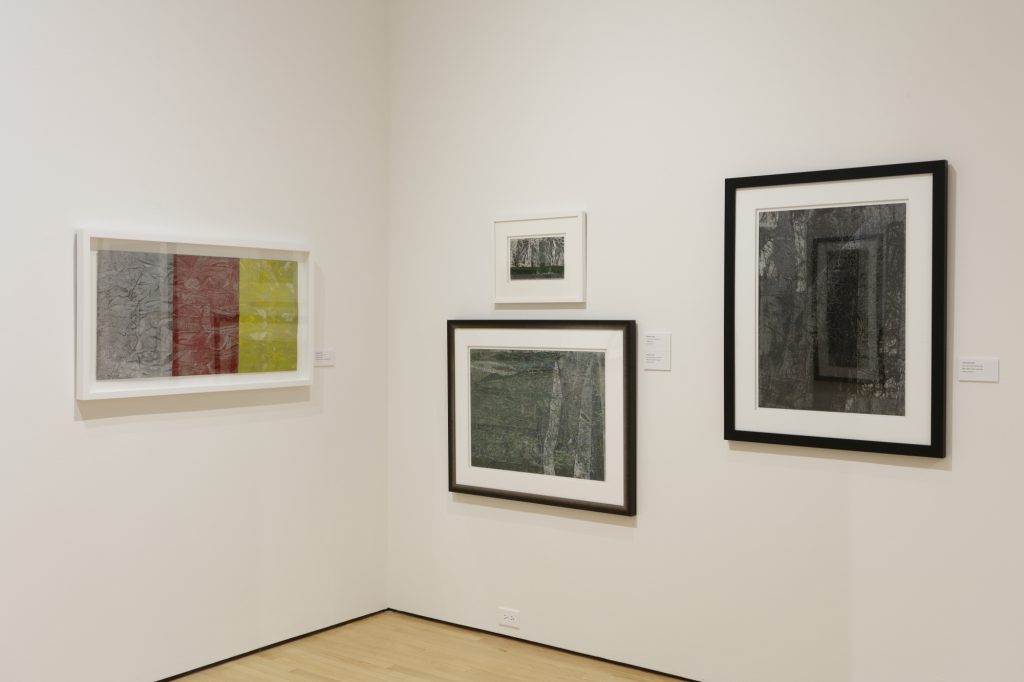
Where the Golden Leaves Fall, an acrylic on paper work created in 2011, is more subtle, reflecting his deep and profound attachment to the natural world. Equally, the 1983 acrylic on fabric-cover paper, Untitled, is a dense hedge or branches from which an abstract landscape background emerges. Indeed, these paintings depict the uncommon nature referred to in the exhibition’s title.
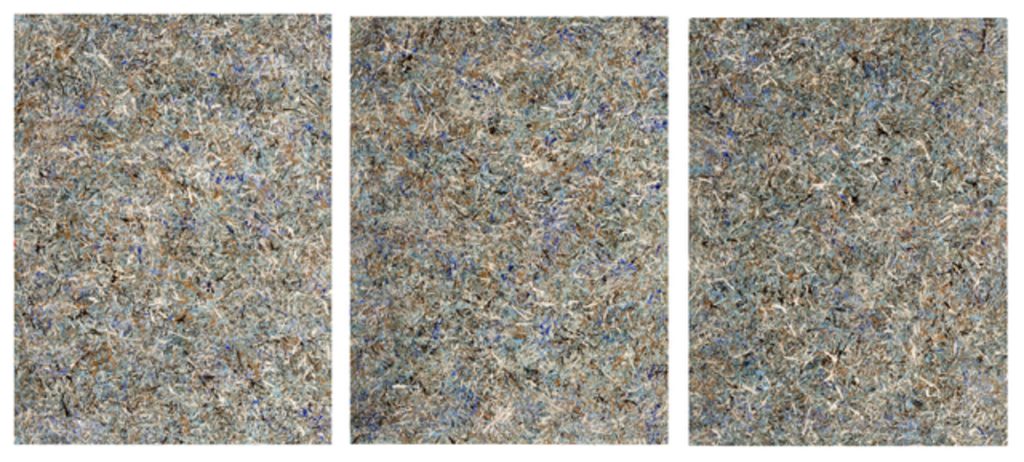
Styles has developed his own version of gestural abstraction by often employing pine needles as paint brushes or materials on which to build his surfaces. For example, Pine Needle Series #8, an acrylic on rag paper triptych, is an immersive 2011 work whose reference to nature is symbiotically linked by his using pine needles to create abstract surfaces of blue, brown and cream marks.
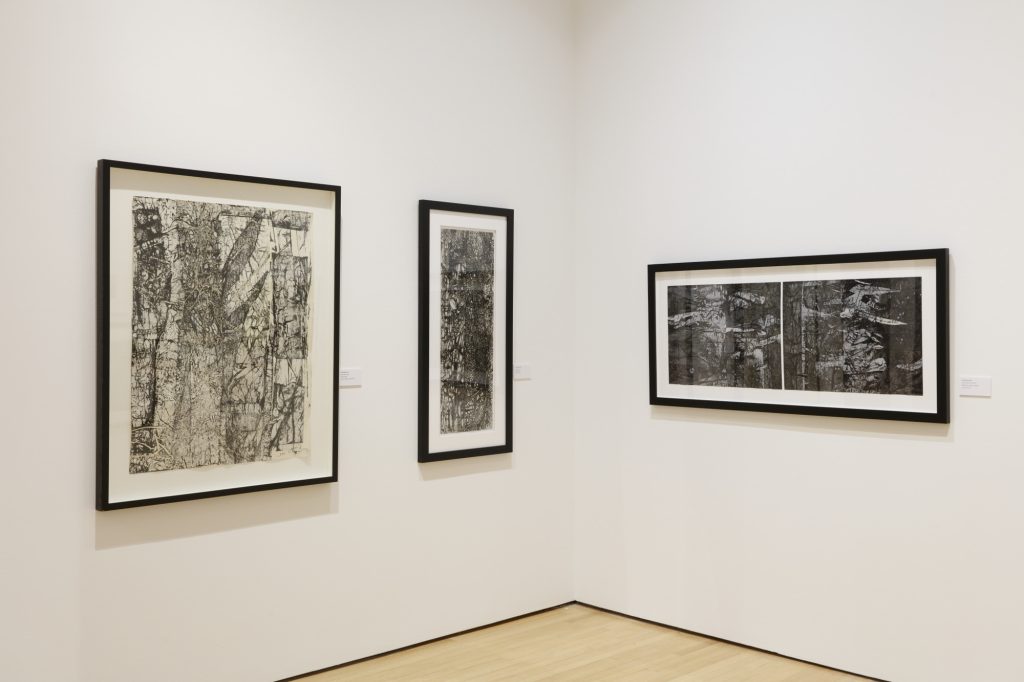
Styles also uses silver and other metallic paints as primary colors, convincing us that they are very much a part of the natural world. A groundbreaking series launched in the late 1990s incorporates old-fashioned coated fax paper that he inks and applies to gessoed paper. The strips of fax paper create a vertical armature on which he builds his compositions, then applying metallic inks on top. The resulting forms are reminiscent of organic vegetation stripped down to its essential vascular structures. This ongoing series takes on a dimension that is reflective of life itself and seeks to reveal a window to a more spiritual world.
While Uncommon Nature: The Abstractions of Freddie Styles, could have been more tightly curated, it is nonetheless a wonderful tribute to a beloved Atlanta artist. And, as a bonus, a visit to the museum is also an opportunity to see Hale Woodruff’s The Art of the Negro mural cycles (1950-51) that grace the atrium outside the CAU Art Museum, as well as selections from its collections, including Henry Ossawa Tanner’s masterpiece, Disciples, Healing and the Sick (ca. 1930).
::

Louise E. Shaw is an Atlanta-based arts and humanities curator and administrator. She most recently served as curator of the David J. Sencer CDC Museum.
STAY UP TO DATE ON ALL THINGS ArtsATL
Subscribe to our free weekly e-newsletter.

PLEASE SUPPORT ARTSATL
Your Gift Sustains the Coverage You Count On!
Related Posts