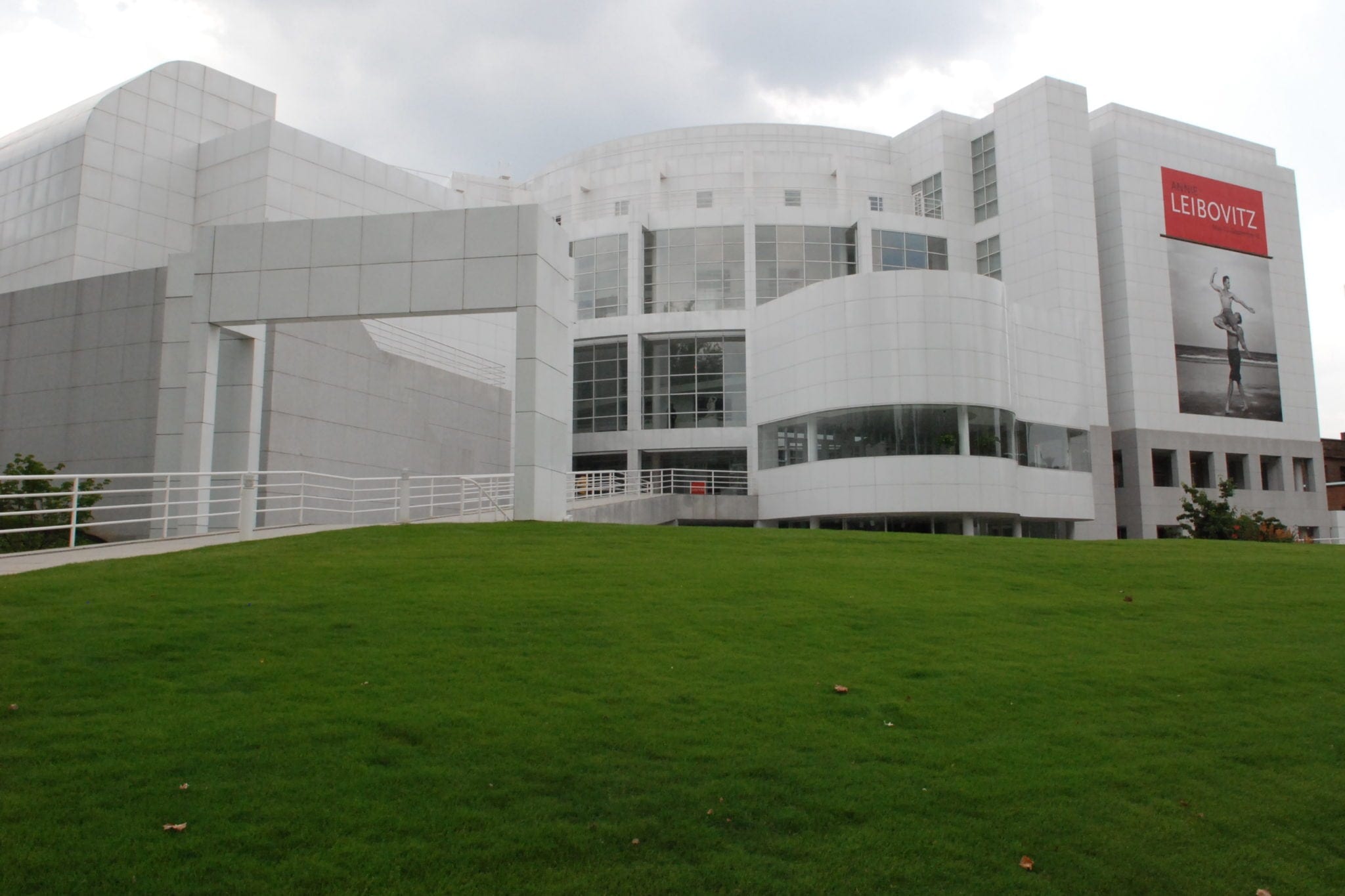
Missing funds leads to internal investigation at the High Museum
In December of 2025, leaders at the High Museum of Art made a grim discovery: irregularities in the institution’s financial records. An internal review later concluded that approximately $600,000 had been stolen from the facility, according to a statement from the Woodruff Arts Center, the museum’s parent organization. The matter has since been referred to the U.S. Attorney’s Office for the Northern District of Georgia for potential criminal prosecution.
One specific detail in the Woodruff Arts Center’s statement stands out: It specifically said the funds were “stolen.”
Large institutions often use cautious language when describing financial irregularities, and The Woodruff statement’s use of the word “stolen” suggests that the organization’s investigators concluded the activity involved intentional misconduct rather than an accounting error or policy violation. The fact that this matter was quickly referred to the U.S. Attorney’s Office also suggests the organization believed the matter could rise to the level of a criminal case.
And yet, as of this writing, no criminal charges have been announced and no suspect has been publicly identified by federal prosecutors. The U.S. Attorney’s Office declined to comment and has not indicated whether a target letter (a formal document from a federal agency notifying an individual they are the suspect in a criminal investigation) has been issued.
However, the Woodruff Arts Center said that its independent review “traced the irregularities back to High Museum COO Brady Lum,” who was placed on administrative leave and later resigned on December 9. (Editor’s note: Scroll to the bottom of this article to read the full statement from the Woodruff Arts Center)
What happened inside the High Museum — and whether it will ultimately result in criminal charges — remains unclear. While the Woodruff’s investigation named Lum, it’s important to note that an internal business investigation is not the same as a government investigation. Furthermore, there is no guarantee that any government entity will pursue charges against anyone. This is a case that could take months or years to resolve itself, if it becomes a case at all.
In this article, ArtsATL will seek to compile publicly available information, institutional statements and public records to explain what is known so far and what questions remain unanswered.
The power of the Woodruff Arts Center
To understand the stakes of the investigation, it helps to understand the scale of the institution involved.
The High Museum operates within the Woodruff Arts Center, which also includes the Atlanta Symphony Orchestra and the Alliance Theatre. Together, the three organizations form the largest cultural complex in the Southeastern United States. According to research compiled by Arts Capital | Atlanta, the Woodruff Arts Center operates on an annual budget of roughly $130 million.
That figure dwarfs the rest of the region’s arts ecosystem. Researchers estimate there are roughly 210 nonprofit arts organizations operating across metro Atlanta’s 11 counties. Combined, those organizations operate on approximately $92 million in annual budgets.
In other words, the Woodruff Arts Center alone operates with more resources than the rest of metro Atlanta’s nonprofit arts sector combined. Further complicating this funding disparity is that Georgia has consistently ranked in the absolute bottom of per-capita public arts funding nationwide, usually ranking 49th or 50th out of 50, and a mere 14 cents per person is allocated for public arts funding in our state.
Meanwhile, many other arts organizations in the region operate on extremely small budgets. Arts Capital | Atlanta reports that half of metro Atlanta arts nonprofits operate on less than $150,000 per year, often with minimal staff and limited financial reserves. Less than 5% of Metro Atlanta Arts organizations have an endowment and just over half of organizations are considered “at risk,” with three months or less of financial reserves to cover a crisis. In contrast, according to the most recent tax filings, the Woodruff Arts Center’s net assets total more than $500 million.
To manage these massive funding sources, the Woodruff often taps c-suite executives from major corporations in metro Atlanta, such as Brady Lum.
Who is Brady Lum?
According to a now-archived press release, Brady Lum joined the High Museum in 2019 as deputy director of operations and finance, a senior leadership position responsible for overseeing the museum’s operational and financial systems.
Before arriving at the High, Lum spent much of his career in corporate leadership roles.
From 1993 to 2008, he held several positions at The Coca-Cola Company, working in marketing, strategic planning and regional management. He later served as president and chief operating officer of Special Olympics International, overseeing global operations for the organization. Lum returned to Coca-Cola in 2014 as senior vice president and general manager of Coca-Cola/Keurig Ventures North America before moving into nonprofit leadership at the High Museum.
Tax filings show that Lum was among the higher-paid executives at the Woodruff Arts Center. The organization’s Form 990, filed March 25, 2025, reports that Lum earned $312,374 in compensation in his role as deputy director of the High Museum of Art. This compensation package is typical for c-suite executives within the Woodruff and its organizations. Brady Lum’s career path reflects the scale and pay of leadership inside the Woodruff Arts Center. Although the institution operates as a nonprofit, its size and governance structure more closely resemble a large corporate enterprise than a small arts organization.
An earlier incident
This is not the first time the Woodruff Arts Center has faced a major financial crime case. In January of 2014, federal prosecutors announced that Ralph Clark, the organization’s former director of facilities, had been sentenced for embezzling more than $1.1 million from the arts center.
According to prosecutors, Clark carried out the theft over several years by submitting bogus invoices for services that were never performed. Some of the invoices were tied to a cleaning company operated by his wife. After the Woodruff Arts Center’s Accounts Payable Department issued checks for the invoices, Clark collected the payments and deposited them into bank accounts he controlled. The scheme ran from 2005 to 2012.
Clark eventually pleaded guilty, and, in 2014, U.S. District Judge Julie Carnes sentenced him to two-and-a-half years in federal prison, followed by three years of supervised release. She ordered him to pay roughly $1 million in restitution.
That case was investigated by the FBI.
To help explain how cases like these unfold, ArtsATL spoke with Atlanta defense attorney Meg Strickler, who represented Clark during the case. Strickler declined to discuss the Clark matter or the current situation involving the High Museum, but she agreed to explain how federal white-collar investigations typically work — and why they often take far longer than the public expects.
The long road of federal investigations
An internal financial review, like the one conducted by the Woodruff Arts Center, is often only the beginning of a process that can take months or years to complete. According to Strickler, even if a company hands over documents to the government, the U.S. Attorney’s Office may choose not to pursue a case.
“In my opinion it’s serendipity, it’s luck and it’s who you know,” said Stickler.
She went on to say that when federal investigators become involved, cases can move even more slowly. White-collar investigations often require reconstructing years of financial activity, including invoices, bank records, contracts and internal communications. Because of the material’s complexity, federal cases frequently unfold, quietly, over long periods of time. It may take a year of investigation before a federal agency sends out a target letter, and it may be another year or more before a case is resolved through a plea agreement or trial.
In her practice, Strickler said she often sees several recurring motivations behind white-collar crimes, including attempts to cover the costs of drug addiction, sustain an expensive lifestyle or pay off gambling debts.
Strickler also noted that gambling-related embezzlement cases may become more common as sports betting laws have loosened across much of the United States, allowing bets to be placed easily through mobile apps. She added that even when charges are never filed, the public association with a financial investigation can have lasting consequences for the people involved. Even in the case that someone is proven innocent in a federal investigation, the expense of being involved in a federal case can quickly drain everything from the suspect.
“Your whole world is ruined. [Defendants] end up losing their job, losing their houses, losing their cars. I mean, you name it,” said Strickler.
The structure of the federal criminal system also means that most cases never reach a jury. According to an analysis cited by the Pew Research Center, more than 90% of federal criminal cases are resolved through plea agreements, while only a small percentage — roughly 2% — go to trial.
In 2018, according to the Pew Research Center, “320 of 79,704 total federal defendants — fewer than 1% — went to trial and won their cases, at least in the form of an acquittal, according to the Administrative Office of the U.S. Courts.”
Federal vs. state prosecution
Strickler also says another point that often confuses the public is why cases like this are handled in federal court rather than by local prosecutors.
Most crimes in the United States are prosecuted at the state level. But financial crimes involving large sums of money or complex financial systems are frequently investigated by federal agencies such as the FBI and prosecuted by the U.S. Attorney’s Office. Federal cases also operate under structured sentencing guidelines, which consider factors such as the amount of money involved and the defendant’s role in the offense. However, according to Strickler, there is no set amount of money stolen that automatically triggers a federal investigation (going back to her assertion sometimes it is the luck of the draw) and the U.S. Attorney’s Office can decline to pursue a case and kick it back to the state level.
As of this writing, there is no indication whether the federal government will actively pursue a case against Lum.
Unanswered questions
Seeking more information about the alleged theft, ArtsATL submitted a series of questions to the High Museum and the Woodruff Arts Center.
The organization declined to answer those questions beyond its public statement.
Key questions remain:
• Were the funds taken from High Museum accounts, Woodruff Arts Center accounts or another entity?
• Were donor-restricted funds affected?
• What type of transaction raised concern?
• Over what time period did the alleged theft occur?
• Was the $600,000 taken in one transaction or many?
• Did outside audits identify warning signs?
• Will the findings of the independent review be made public?
As federal authorities determine their next steps, ArtsATL will continue to follow the story and report new details as they emerge.
The official statement from the Woodruff Arts Center:
“This past December, the leadership of the High Museum of Art identified financial irregularities within its organization. These irregularities were immediately shared with the High Museum’s Executive Committee and reported to the Woodruff Arts Center’s Governing Board. A special committee was appointed and promptly initiated an independent review to understand the scope of this issue. It became clear during the investigation that approximately $600,000 was stolen.
The review ultimately traced the irregularities back to High Museum COO Brady Lum, who had been placed on administrative leave during this period and has since resigned. To ensure accountability and appropriate oversight, the Woodruff Arts Center’s Governing Board directed the outside law firm leading the independent review to refer this matter to the U.S. Attorney’s Office in Atlanta for potential criminal prosecution. The U.S. Attorney’s Office will determine next steps.
We do not anticipate any impact on the High Museum or the Woodruff Arts Center’s financial stability or operations. We’ve engaged an independent forensic auditor and other experts to review this matter and identify improvements to strengthen the High Museum and Woodruff Arts Center’s processes. We are committed to strong stewardship of the generous support entrusted to us by our patrons and community.”
::
Matthew Terrell works as a writer, artist, filmmaker and educator in Atlanta.
STAY UP TO DATE ON ALL THINGS ArtsATL
Subscribe to our free weekly e-newsletter.

PLEASE SUPPORT ARTSATL
Your Gift Sustains the Coverage You Count On!
Related Posts