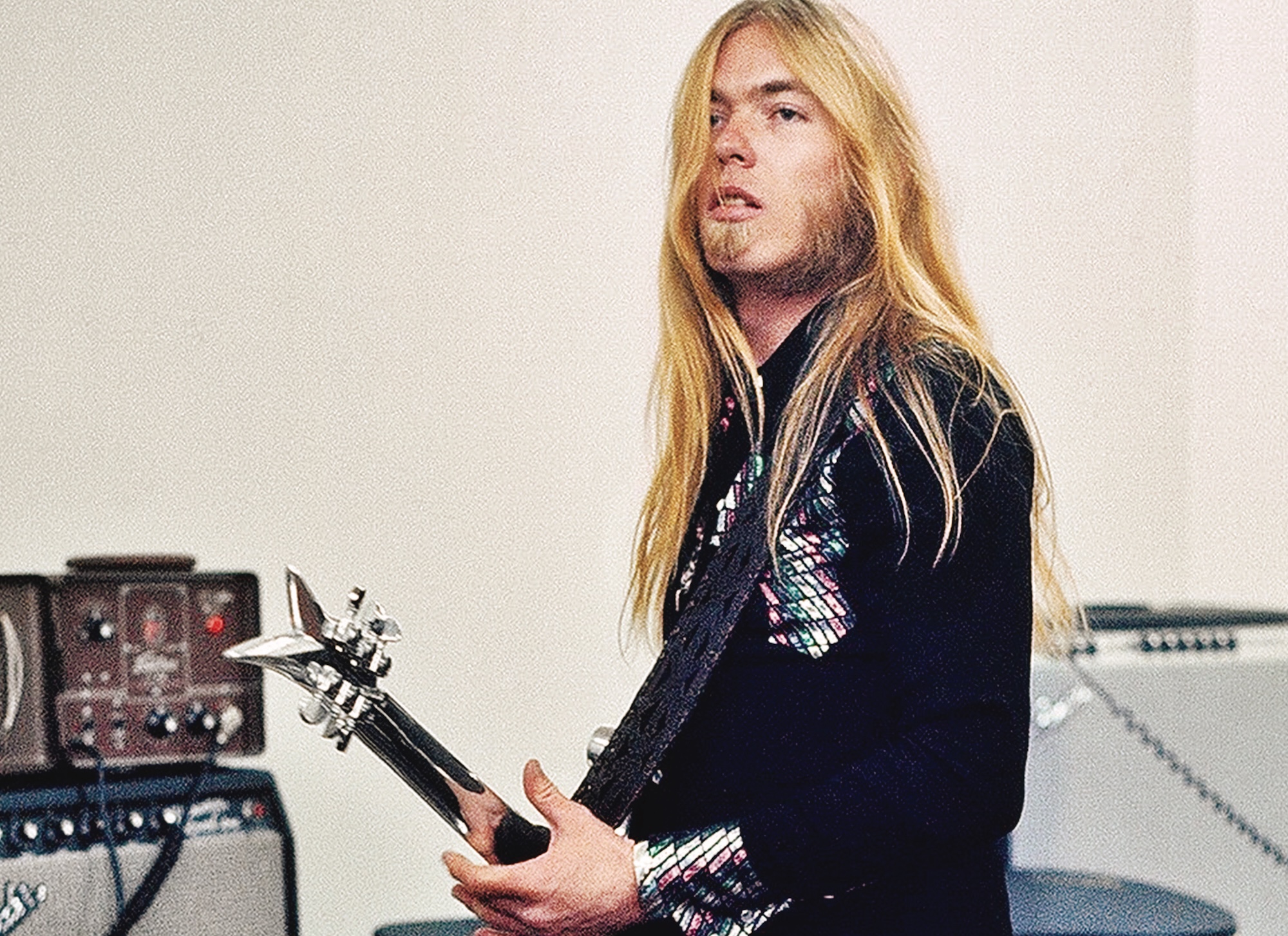
New Gregg Allman documentary is an unflinching portrait of a complex artist
“The way I try to approach the subject of a documentary is simple,” said director-actor-producer James Keach, “I like to basically ‘peel the onion,’ so to speak, to learn more about these people, just as the audience is learning about them.”
His latest production is Gregg Allman: The Music of My Soul, a comprehensive look at the life of the musician who co-founded The Allman Brothers Band.
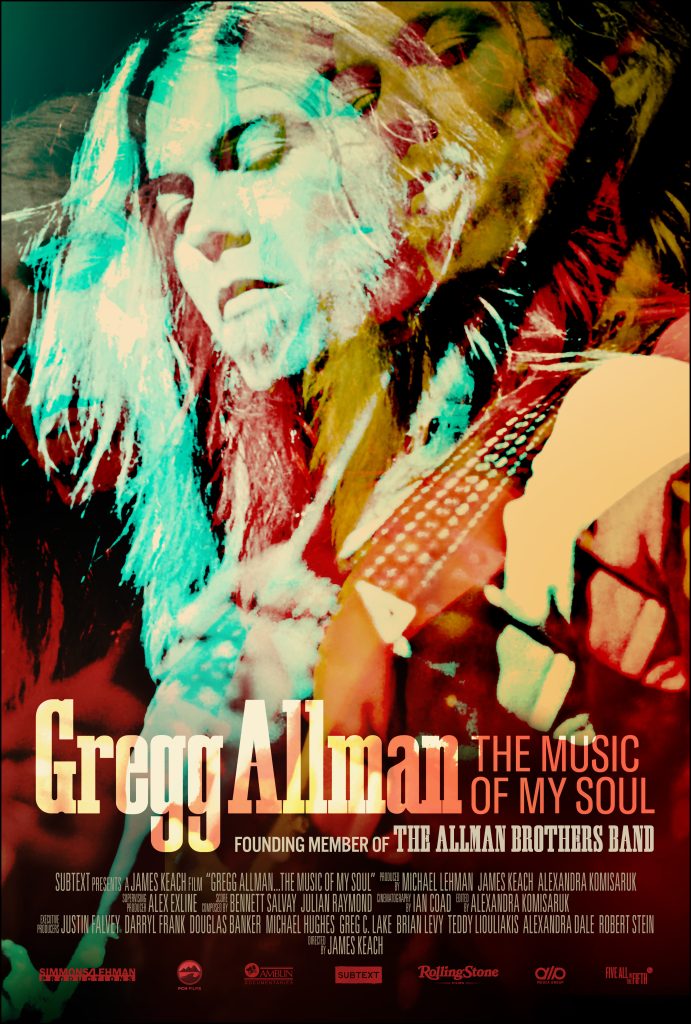
Keach utilizes archival recordings, detailed interviews and rare musical performances to reveal the various layers of Allman’s often stormy personal and professional life. Featuring candid conversations with Devon Allman, Galadrielle Allman, Chuck Leavell, Jaimoe Johanson, Cher and Jackson Browne, the film is an unflinching portrait of a complicated artist.
The director, who previously profiled Linda Ronstadt, Glen Campbell and David Crosby, said he found the musician’s life story particularly relatable. “I really identified with this one. I guess it’s because of my close relationship with my brother [fellow actor Stacy Keach], losing friends to addiction and basically living through the so-called rock ‘n’ roll years — all those things.”
One aspect of Allman’s life that Keach didn’t identify with was the musician’s iconic image and fan recognition. “I couldn’t imagine being Gregg on a day-to-day basis. He couldn’t go anywhere without just being surrounded. Especially in the heyday when he was with Cher.”
“I certainly admire the genuine ‘Southern-ness’ of his personality,” Keach said during a lengthy interview with ArtsATL from his studio in California.
“That’s where we really connect. I was born in New York but raised in South Texas. It was a Southern Confederate racist in terms of the customs there. It was like, ‘How come we can’t eat at the same table with everybody? ‘Well, that’s just not the way it is, Jimmy.’ It always bothered me, and, growing up in that environment, I could relate to Gregg’s real roots. So I wanted to include as much of Gregg’s Southern upbringing as I could, because I think it made him who he was — and of course it helped to shape the band.”
An integrated group in the segregated South was still an anomaly in the early ’70s. “I really love that fact about the Allman Brothers, and it wasn’t because they wanted to be cool or anything like that. They were just best friends and family playing music together.”
“It was not something we all consciously thought about on a daily basis,” recalled musician Chuck Leavell from his home near Macon. “I think, for all of us, having grown up in the South, our generation was the turning point of segregation. I remember before I even got to junior high, integration was happening, and it was obviously a big deal, but, personally, I didn’t think it was that big of a thing at the time. I think a lot of us who thought this way knew the struggles of Black people and the suppression and inequality of it all — and we thought, ‘Well, it’s only fair to basically right this wrong.’”
When Leavell joined the Allman Brothers in the early ’70s, he said he had already played in integrated combos. “Growing up in Tuscaloosa, I wound up playing with a group called the Jades from Stillman College. The keyboard player gave me some tips so I could play with them. They were great, and I certainly took some flak from folks who weren’t used to that sort of integration at that point. But having Jai in the Allmans, and then eventually Lamar Williams, it was all just a no-brainer to me. It was basically like we were saying, ‘Well, so what?’ We were doing it for the music and because we were friends. And that’s what playing music is all about.”
Leavell said that intense musical bond helped the band through a series of difficulties. “When I started playing with the Allman Brothers Band in ’72, it was a volatile time for everyone involved. You have to remember, this was a band who had lost their leader a year prior, they’d returned from an emotional and exhausting tour and they had a lot of weight on them to just survive without Duane. They proved they could — but that was the situation we were in back then.”
“I think Gregg’s solo album [1973’s Laid Back] was a bit of relief for him to actually do something different in the middle of all that pressure. When I came along,” said Leavell, “everyone was expecting a new dimension of the band. It really brought Gregg to the front as a writer and solo artist on his own. There were a lot of factors in play, certainly, and a lot of it is discussed in the film. But Gregg always rose to the occasion and really helped to create a new era for The Allman Brothers Band and his own material.”

Keach said the actual process of telling Allman’s complicated life was a labor of love. “But it was also a logistical nightmare. Going through all that archival material was something else. There’s seven or eight hundred different archival cuts in that film. From that era, there wasn’t that much good footage to pick from, and now, of course, everybody has a movie camera in their pocket. But so much of the material in this film had to be restored, just to be able to tell the story from Gregg’s perspective.”
Another challenge was creating a cohesive plot. “There were so many aspects of his life that I wanted to share,” Keach explained. “The movie I wanted to make was more of an emotional journey than just a straight timeline. It would be easy just to say, ‘Well, then he did this and then he did that.’ But I didn’t want that. This is an emotional dive into a person’s heart and soul. When you finish the journey of the film, I want the viewer to really feel something and to identify with something about him that you also feel in yourself — down in your soul. If I can accomplish that, then it’s all worthwhile, because that’s why I do what I do.”
At the upcoming screening in Macon, Keach said he will be watching both the film and the audience. “I like to see where people laugh; where they cry; just how they react to everything. Seeing one of my films in a theater is always a learning experience for me. I really like taking that whole trip along with them, because I made the film for that audience.”
The entire project has been an incredible ride for Keach.
“It’s been quite an adventure for sure. I got a call from [Allman’s longtime manager] Michael Lehman, and that’s how the whole thing started. Then my wife Nancy said, ‘Well, you have to do this; the Allman Brothers are my favorite band of all time.’ Then, when I started reading about the relationship of Duane and Gregg, and man, three-plus years later, here we are. I think there’s a real audience for Gregg Allman — his story, and most importantly, his music.”
Keach said he recently screened the documentary for someone in their 20s just to observe their reactions. “They said they had no idea of who Gregg Allman was, but, as soon as the music came on, they said, ‘Oh, I know that music.’ Then, by the time the movie was over, they’re like, ‘OK. Now I know the guy. Now I know what it’s like to be a rock star.’ He was the epitome of sex, drugs and rock ‘n’ roll. And, most importantly, he lived the good of it — and the bad of it. So we had to show all of it.”
Presenting a balance of all aspects of Allman’s life was the main priority for Keach and company.
“It’s a fine line,” he said, “because you want to tell the truth. That’s the bottom line of the entire thing. Gregg always told the real, soulful truth. So in making a movie about him, I also had to tell the truth. I had to find those moments where he revealed his truth and include them in the final edit. Because from that truth, there’s redemption and hope. My own personal hope is that if someone is struggling with drugs or life, they can see this movie and say, ‘I can change. I can do this, and I don’t have to end up like Jimi Hendrix or Lenny Bruce.’ This is truly a redemptive story on every level.”
“I think it’s such a redeeming piece because Gregg was a lover of mankind, and he was always so giving,” agreed Lehman, Allman’s manager and co-producer of the documentary. “He gave with his time, his life and especially his music.”
Lehman recalled Allman’s hectic final time in Georgia. “In those last 180 days of his life, after he did that last show in Atlanta at Lakewood with ZZ Top, we went to New York. He had lost his voice, and then we had to cancel everything. We flew down to the Mayo Clinic, and then he made his final journey back to his home in Savannah. He came full circle with everything — and this film really sums it all up. It’s an emotional journey and an extremely sensitive viewing experience.”
“It really is a little view into Gregg’s soul,” Lehman concluded. “Every time we’ve had a screening, there’s not a dry eye in the house. People are gonna see a very real, extremely vulnerable human, because that’s who Gregg Allman was — and that’s definitely the person I knew. Now everyone can finally know him.”
Where and when
The premiere screening of Gregg Allman: The Music of My Soul is Thursday, June 11, at The Piedmont Grand Opera House. It opens nationwide on June 17. VIP premiere tickets include entry to the screening, a musical appearance by Chuck Leavell and a post-screening Q&A panel with the filmmakers. For more information, contact The Piedmont Grand Opera House box office team by email at tickets@mercer.edu. For more info on the limited nationwide screenings, visit the documentary’s website.
::
Lee Valentine Smith is an Atlanta-born artist, writer and musician. Currently a regular contributor to The Atlanta Journal-Constitution, his work has been syndicated internationally. He has appeared at Music Midtown, on CBS Radio and on Air America. He also served as art director, consultant and archivist for projects with ’80s hitmakers The Go-Go’s.
STAY UP TO DATE ON ALL THINGS ArtsATL
Subscribe to our free weekly e-newsletter.

PLEASE SUPPORT ARTSATL
Your Gift Sustains the Coverage You Count On!
Related Posts