Steve on TV: Sexy Southern DILFS, a champagne-swilling killer and self-indulgent insanity

The satanic majesty that Javier Bardem brings to the role of vengeful Max Cady in the new Apple TV version of Cape Fear is both the overlong series’ strength and weakness. You could watch both the previous film versions (the 1962 Robert Mitchum original and Martin Scorsese/Robert De Niro’s 1991 remake) in the time it takes to cover the new series’ first four episodes. The show meanders on for an additional six hours after that. (The final episode airs July 31.)
One advantage to the bloat? It gives Bardem room to preen and to terrify viewers and the on-screen family he targets for vengeance. We get a sense of his power in the first episode. That’s when he convinces a woman obsessed with him to confess to a killing that landed him in prison for 17 years. Then, he coaxes her to shoot herself in the face. Twice! He does this by murmuring to her on the phone. Impressive. Sometimes, I can’t get somebody to take my coffee order, even when I’m at full volume and standing right in front of them.
Born in Spain, Max was reared in a South Carolina cuckoo-cracker kingdom ruled by a brimstone-preaching father (Ron Perlman) who liked to cage his kids, one of whom is half-sister Crystal (a cleverly cast Juliette Lewis, who made her who’s-that-girl breakthrough performance as a teen in the Scorsese film). Now released back into the general pop of Savannah, Max turns his suave fury on the attorney who defended him, Anna (Amy Adams) and his prosecutor Tom (Patrick Wilson). The two have since gotten married and raised two teenagers. They’re elder sis Natalie (Lily Collias, nuanced as a sensitive, smart baby lesbian) and half-brother Zach (Joe Anders, doing his best with a character the writers can’t decide is a troubled boy or a psychopath).
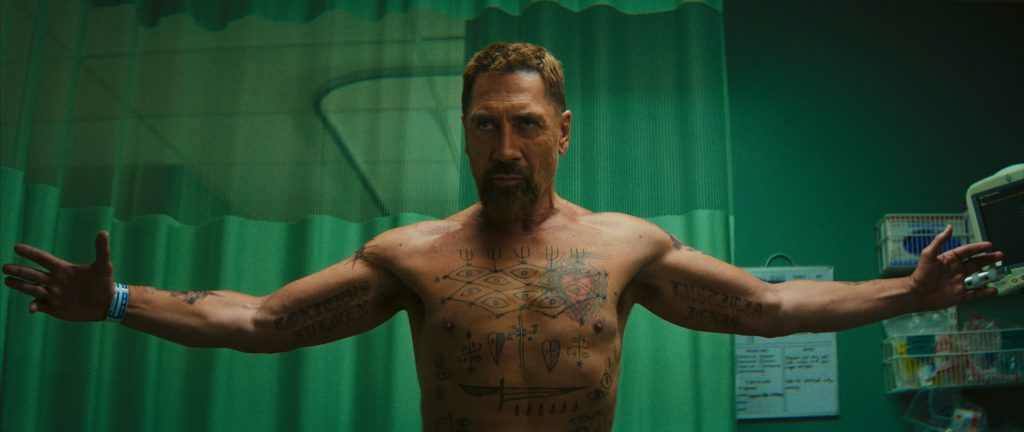
Back to Bardem, though, since he’s the prime reason to watch. As Max, he’s as sexy a DILF as he was repulsive in his Oscar-winning turn underneath the world’s worst haircut as the stoic murderer in No Country for Old Men. Here he looks so good sporting a Cuban-style fedora, it’ll probably delude a million middle-aged dads into believing they can rock the same look. This might be his best work, partly buried in the show’s excesses and procrastinations.
If you get distracted when the show is over-icing its steamy cake with plot twists, psychotropic drugs, secret trysts, bad parenting choices, visions of dead people, bad lawyering, paternity tests and lashings of Bernard Herrmann’s original 1962 score, you can always entertain yourself, spotting the many scenes where Atlanta substitutes for Savannah. Prime example: The exterior of the attorney family’s home is a lovely Inman Park home, its neighborhood trees transformed by a sea of imported Spanish moss and industrial fans to simulate the branch-tossing approach of a coastal storm. Cape Fear is well made. But the streamlined vengeance plot of John D. MacDonald’s source novel, The Executioners, has been exploded into a glut of just about every contemporary parental terror possible. It’s both a lot that, weirdly, feels like too little.

PRIME VIDEO
Ride or Die has speedy car chases through old European streets, dozens of civilians murdered without emotional impact and glissandos on the soundtrack that mimic John Barry’s James Bond scores. And, like Judi Dench tapped to play M in the 007 films, it also gives us British acting royalty in the form of Bill Nighy as the head of the assassination squad that employs sleek, champagne-swilling killer Whiptail (Ted Lasso’s Hannah Waddingham).
That’s her codename. She’s better known as Judith to her clueless longtime friend, Debbie (Oscar winner Octavia Spencer), whose main job is to manage the life of her husband, a member of Parliament. But she’s suddenly unemployed when hubby is murdered, Debbie discovers Judith’s secret identity and the two besties race across Europe (mainly Prague, standing in for everywhere else) to find out who’s behind the killings.
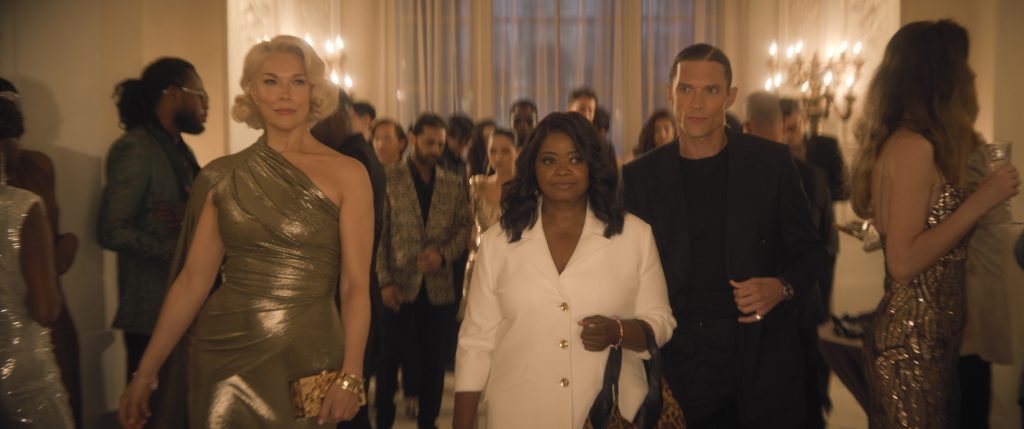
Satisfying and undemanding, the eight-episode Ride scratches an itch without asking for much in return. Both talented actors are playing archetypes at least one or two big steps removed from the recognizable world. That’s what escapism is all about. The show has just enough of the rowdy spy glamour but sadly none of the high-stakes edge, to make me miss Prime’s Mr. & Mrs. Smith, reportedly shooting a second season now. I couldn’t help noting the headline written for The Guardian’s review of this show: “the perimenopausal TV of your dreams.” That pretty much sums it up.
Also on Prime, the three-episode documentary series Murder 101 works better in concept than in execution. Based on the podcast of the same name, it focuses on the Tennessee high school classroom of Alex Campbell. He’s assigned one sociology class every year since 2018 to study the cold cases of a string of down-on-their-luck women found killed and dumped across the state; they’re collectively known as the Redhead Murders. The series focuses on the kids as they deal with frustrations that include filing FOIA requests to attain police records and just being a teen in small-town Tennessee.
There’s something in behavioral science called the Hawthorne Effect — when a group is observed (as with, say, a documentary camera in the classroom), their “natural” behavior is inevitably influenced. That happens here. Campbell too often seems to be playing the role of antic inspirational teacher for the lens. The camera waits around for magic to happen, and, when it doesn’t, the sweet, earnest students do their best to fulfill expectations. Filmmaker Stacey Lee follows them to their homes and to their “spontaneous” meet-ups in diners, recording their discovery that, through studying the victims’ case histories, they, uh, you know, came to, um, see these overlooked, murdered women as, like, people. That’s great, yeah. We need more compassion and empathy in this nation, maybe more than ever in our 250-year history as our “leaders” build their careers on trying to divide its citizens. If Murder 101 spins other young people in that direction, it’s a success. For more discerning lovers of the documentary, it’s an also-ran.
HULU
The six-episode cringe comedy Alice and Steve brings together two good actors in a fascinating situation, then bungles the premise in just about every way. Nicola Walker and Jemaine Clement play the title characters, two besties who dated a long time ago but have spent the last 25 years as each other’s platonic BFF. They’re an exclusive, mutual admiration society of two who go through the world dissing everyone else’s career and romantic choices while unconditionally supporting each other’s iffy decisions.
We meet them as two aging, emotionally arrested adolescents, capping a friend’s funeral with a coked-up night at a club where they’re shocked by anyone suggesting it’s not a great look for people in their 50s. Alice spends their time out trying to set Steve up with women too young for him. So perhaps it’s a cruel irony that the night ends with Steve drunkenly hooking up with Alice’s adult daughter Izzy (Yali Topol Margalith). And yeah, there’s something a little icky about the pairing, though there’s nothing actually wrong with it. Yet when the new, accidental couple decides to make a go of the relationship, despite the age gap and awkwardness, Alice becomes a monster.
That’s the most glaring flaw of the show, written by Sophie Goodhart. We watch Walker, from one episode to the next, behave horribly as Alice, sabotaging her best pal and daughter’s relationship. The second biggest problem here is the lack of chemistry between Clement and Margalith. They’re like separate species forced into the same enclosure. It’s just a sad, abrasive misfire.
NETFLIX
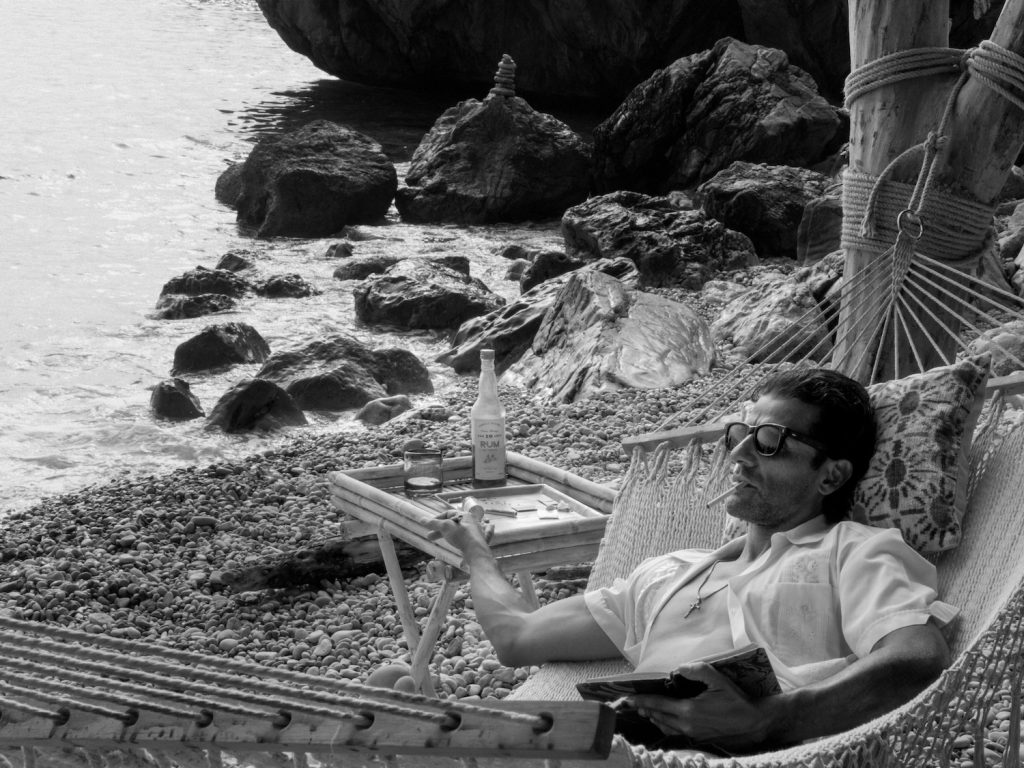
Even at their worst moments, no show in this roundup — nothing this year, really — approaches the absolute, self-indulgent insanity of In the Hand of Dante. That’s not too surprising, given the source — the 2002 book from Nick Tosches. (Yes, I read it.) Best known for delivering dazzlingly written bios of Jerry Lee Lewis, Dean Martin and Sonny Liston and the showbiz biographer of Dean Martin, the author strayed off his path to deliver this violent, bizarre novel. It’s a blood-soaked what-if about a rare book expert named Nick and some mafia thugs searching for something that isn’t supposed to exist: an original, handwritten copy of Dante’s Divine Comedy. Anybody who gets in their way gets a bullet in the head in the film’s black-and-white modern-day sequences.
The color episodes, shot in Italy, purport to tell us how Dante himself wrote the manuscript that’s sought centuries later by Nick. Both men are played by Oscar Isaac, as are other roles in both time frames. That includes Gal Gadot, beaming seraphically as two versions of a tough-guy’s wet dream: a sexually available Madonna. It’s all adapted and directed by painter Julian Schnabel, who can make movies both great (Before Night Falls; The Diving Bell and the Butterfly) and mind-blowingly bad (this one).
For a lovely palate cleanser, I’ll direct you to a highlight of last year’s Atlanta Film Festival, Color Book, now streaming on Netflix. You can look at it as a small-scale urban descendant of The Odyssey in its tale of one man facing a series of obstacles in the course of his heartfelt quest across a dangerous territory. Here’s my mini-review from back then:
The opening night presentation is an example of old-school humanist filmmaking that shows off Atlanta with a gritty, fond familiarity. Writer-director and Morehouse graduate David Fortune’s first feature stars an impressive William Catlett as end-of-his-rope dad Lucky. Dealing with the loss of his wife, he now has to take on the daily care of their 11-year-old, Mason (Jeremiah Alexander Daniels). Father and son adore each other (the actors’ rapport is wonderful), but Mason has Down syndrome. Even the best days require extra parental push-and-pull. In the small-scale heroic quest that forms the movie’s core, Lucky determines to take his son — by foot, MARTA rail and bus — to the Braves’ opening game. Fortune and his actors invest a lot of deep feeling in the deceptively simple story, and Nikolaus Summerer’s black-and-white cinematography captures the bleak beauty of our city in its drizzly, early-spring days.
::
Steve Murray is an award-winning journalist and playwright who has covered the arts as a reporter and critic for many years. Catch up to Steve’s previous columns here.
STAY UP TO DATE ON ALL THINGS ArtsATL
Subscribe to our free weekly e-newsletter.

PLEASE SUPPORT ARTSATL
Your Gift Sustains the Coverage You Count On!
Related Posts