
A rare look inside Mailchimp’s very unusual art collection
When Mailchimp relocated to larger headquarters under new corporate management, it needed to humanize the space. Art was the answer.
::
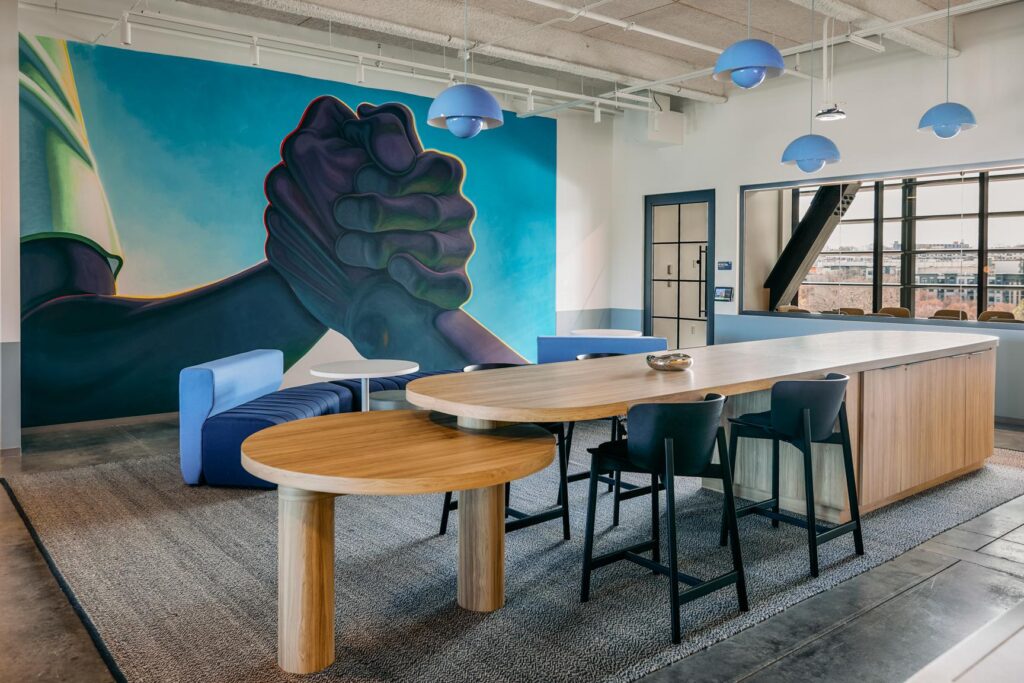
Atlanta tech titan Mailchimp has invested in a new tool to ease the transition back into office work: art.
“It’s well-known that art has a positive impact on mental well-being and can serve as a catalyst for imaginative and diverse thinking,” says Trey Wadsworth, the creative director for Mailchimp in an email exchange. Wadsworth oversaw the purchase and installation of hundreds of new pieces of art. “That’s where we see art as a unique advantage, elevating office spaces into inspiring galleries that stimulate creative thinking and nurture a culture of innovation.”
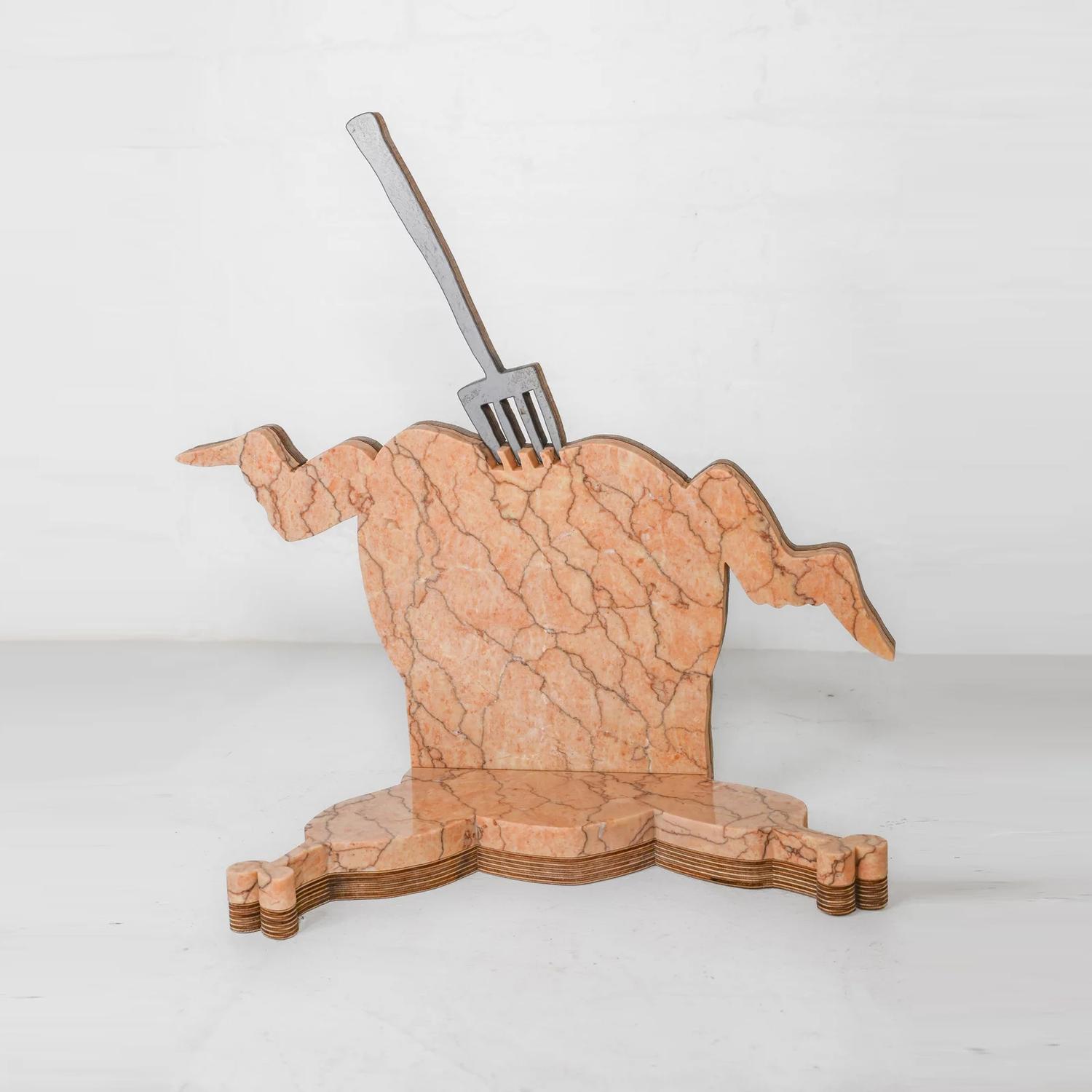
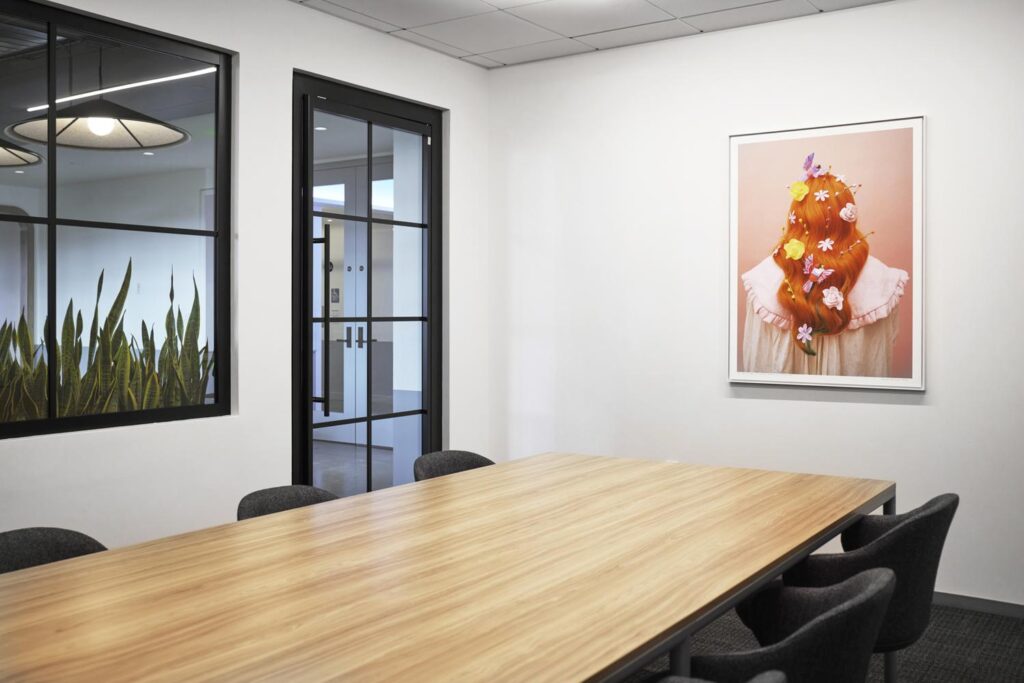
In his role, Wadsworth is part creative visionary, part curator and part interior designer. He worked with company executives to implement an art initiative that sets the company apart from many other corporate work spaces. By the numbers, this includes 40 murals, 93 paintings, 85 works on paper, 40 sculptures, eight textile works (such as quilts), 13 mixed media works, 14 ceramic works and 14 photographic works.
This ambitious new collection is the direct result of having entered a new phase in Mailchimp’s operations. The growing company, which started as a small and scrappy newsletter and mailing list management software company, was bought in 2021 by the Silicon Valley company Intuit (which also owns TurboTax and Credit Karma). Part of Intuit’s vision for Mailchimp included leasing a new eight-floor office tower above the Atlanta Beltline, with plenty of room for new and returning employees to work, play, eat and flourish creatively.

For perspective, Mailchimp left its 126,000 square-foot office at Ponce City Market and moved into a 360,000 square-foot space at 405 N. Angier Ave. across the street. Lining the halls and office spaces of this substantially bigger new office tower is a massive collection of art meant to engage and inspire the 1,000-plus employees who are now trickling back into the office at Mailchimp.
In looking at how other companies approach art in the workplace, Wadsworth made several key observations. First, many companies prioritize artwork only for conference rooms and executive offices. Common spaces either have no art, generic hotel-style art or even dreadful inspirational posters. Next, Wadsworth realized that companies with sizable art collections often lack an overall theme or vision and sometimes just put any art piece anywhere it can fit. Finally, size and scale matter; if a company favors only small, framed works, the overall impact of the artwork on the work space might not be appreciable.
The first thing someone notices when visiting Mailchimp is that art is everywhere. This includes the lobby with Expert Absurdist, a wall-mounted sculptural work Wadsworth describes as an “exploded logo” that takes the colorful Mailchimp branding and turns it into an abstract expression of shapes and colors. Wadsworth points out that this work, which was designed by Mailchimp’s in-house creative service, Wink Creative, is the only logo-based artwork of major prominence in the new Mailchimp offices because he wanted to steer away from the tech industry trend of favoring art that is just a variation on the company logo.
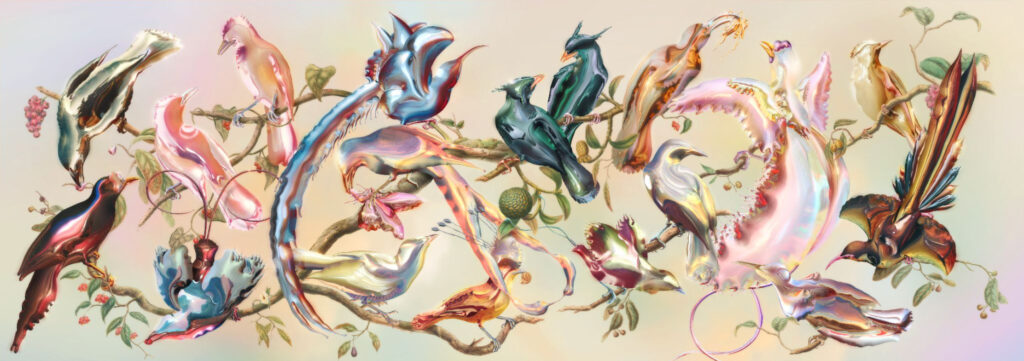
The remainder of the collection amps up this approach of bucking the trend by showcasing work that is genuinely as challenging and striking as any work in the contemporary art houses of the world’s global art capitals. Focusing mainly on work by promising early and mid-career artists from around the world, the collection features, for example, bright aquatint prints by the buzzy, San Francisco-based Woody De Othello and creepy AI-generated color images by Sentient Muppet Factory, the alter-ego of Montreal- and Mexico City-based Beth Frey.
Although the collection is sourced globally, it also includes Atlanta’s Tori Tinsley, Michael Reese and Alic Brock, among others.
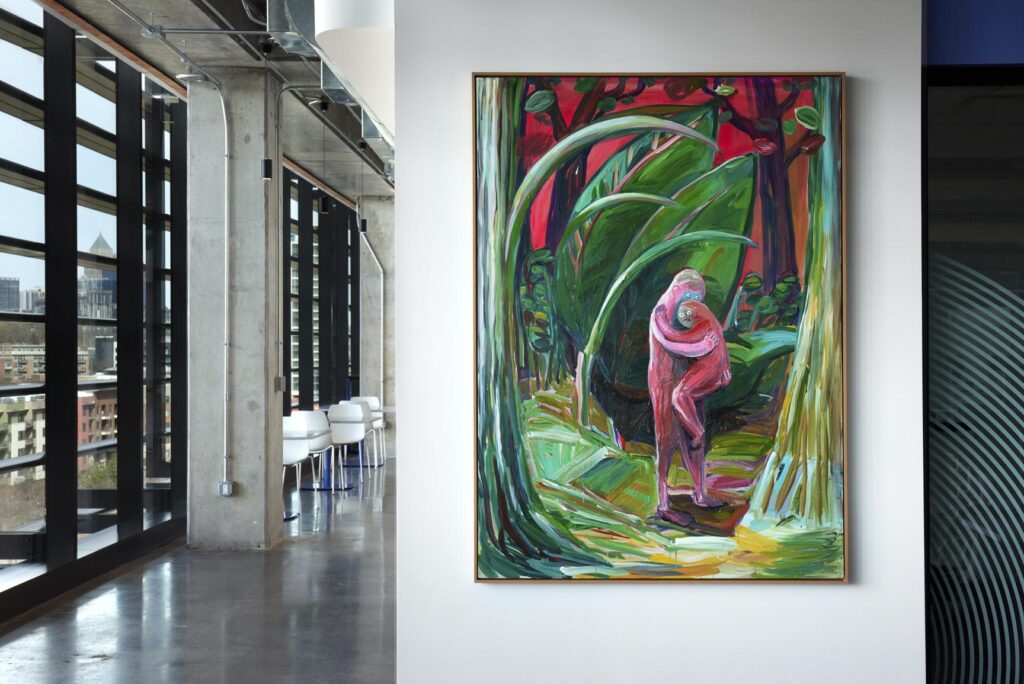
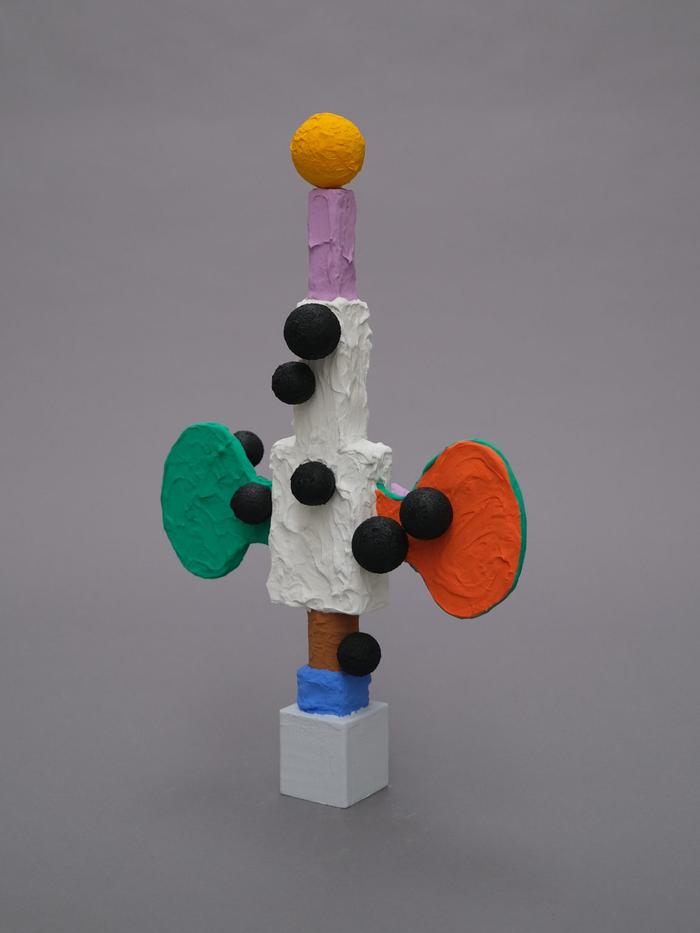
Each floor in the new Mailchimp office tower has a different art theme, including outsider art, minimalism, surrealism, contemporary art, pop art and op (optical) art. (Although these terms are applied loosely, they serve to organize the collection along aesthetic lines.) As you step off the elevator at each floor, you are immediately greeted with a new batch of artwork and informational signage about that floor’s themes. Overall, the experience is much more museum-like, rather than typical of a corporate office building.

“Each floor is designed with a vibrant, community-centric vision in mind, where each floor embodies the spirit and character of a different neighborhood [within the office space]. These neighborhoods are enriched with their own art museums, each dedicated to celebrating a diverse array of art movements that mirror principles of our brand identity. For instance, with a touch of surrealism, our brand aims to captivate and engage, appealing to those who appreciate the absurd and unexpected,” wrote Wadsworth.
Many people may not realize how impactful the Mailchimp graphic design style has been over the last decade. Imagine clean lines, high-key colors and human figures drawn with simplistic shapes. Originally, this style was part of a wave of commercial art used to distinguish companies like Mailchimp as more youthful and to impart a friendlier and less corporate vibe. Over time, more companies started to pick up on this style, so much so that it got the nickname “corporate vector” or “corporate Memphis.”
“We worked with a lot of digital illustrators, which is why some of our earlier art had a vector style,” says Wadsworth. “Vector” refers to digital illustration technology that most often results in images with clean, precise lines rather than the rougher, softer lines that typically result from hand-made art techniques.
Today you see this style of artwork everywhere in advertisements from grocery stores to tampons and credit cards. The one place you won’t see that style is in the new Mailchimp office tower. They’ve completely moved away from the heavy focus on vector art toward a more handmade aesthetic.
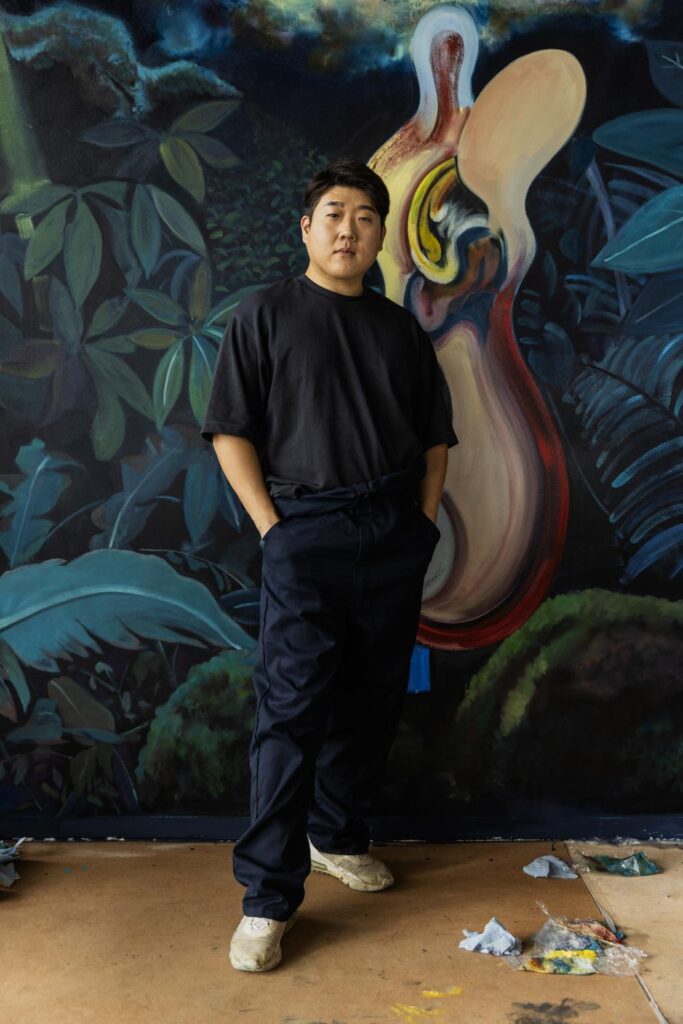
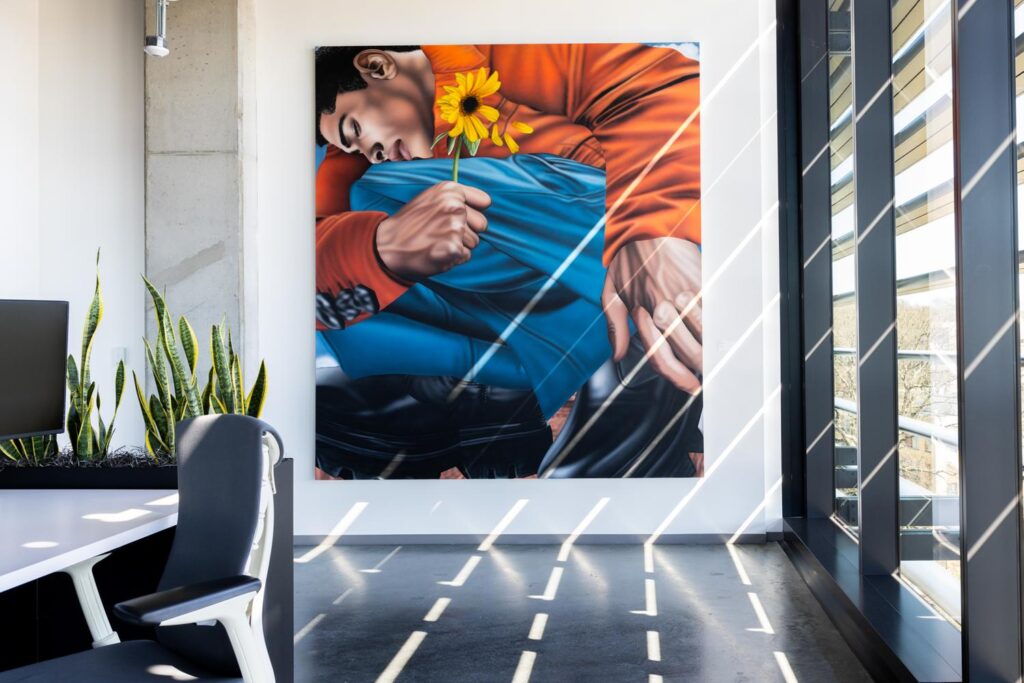
That quirky human touch, which can be seen in so many of the works, sets the new Mailchimp collection apart from a typical corporate art collection. There are quilts with hand-stitched edges. Murals are painted directly on the walls with visible brushstrokes and textures, such as Korean Dallas-based artist Jay Chung’s Superposition.
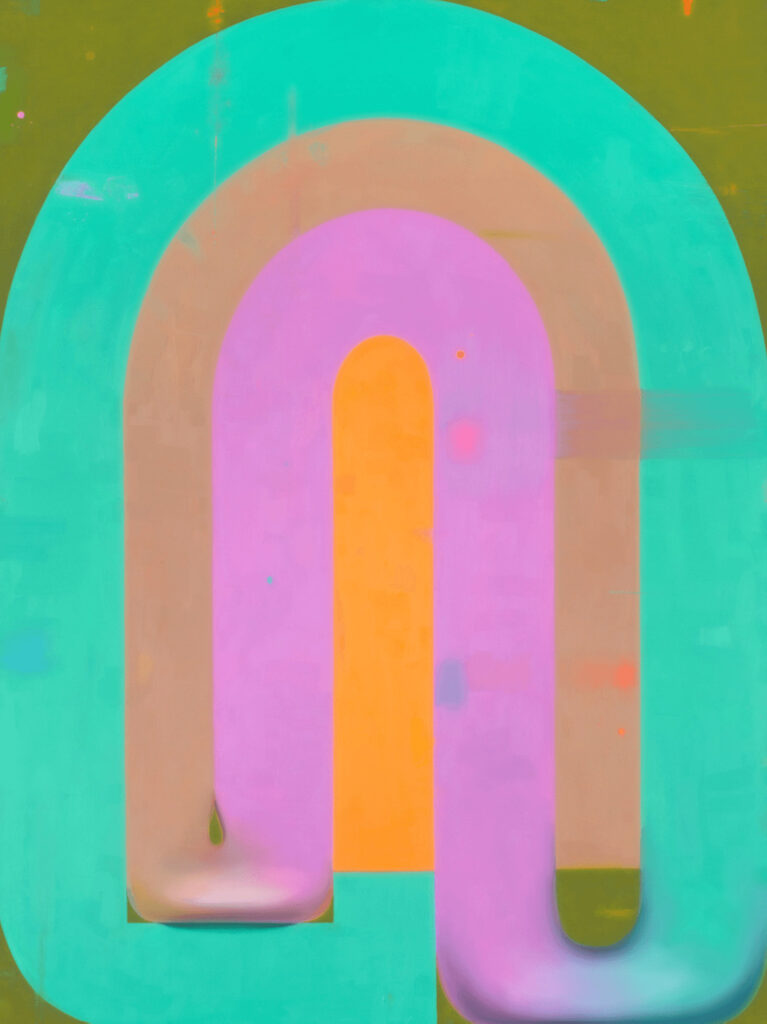
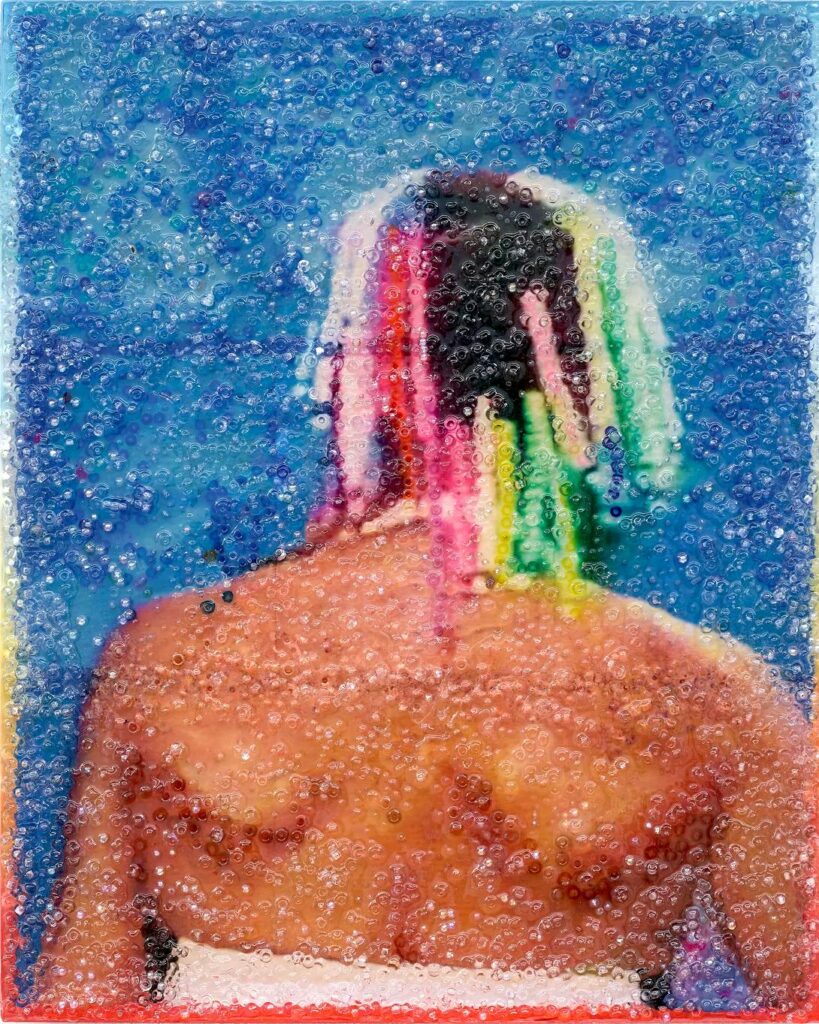

Some of the sculptures you must resist touching, sitting on or petting (as is the case with Troy Emery’s Jupiter Has 53 Named Moons and Another 26 Awaiting Official Names, which is a dog sculpted from pink rope). Overall, the impact is one that humanizes the office environment and gives it more of a “third space” feel — that is, a common space that is neither work nor home — rather than being a cubicle farm.
One bold move that Mailchimp made in the new space, which it also made in its previous digs in Ponce City Market, is to paint murals directly onto the walls. While the company does have a long-term lease on the new office tower, it doesn’t own the space outright. That means if the company moves again, it won’t be able to take many of the artworks with it.
Yet, according to Wadsworth, that is part of the vision. The art may be temporary, or it may be enjoyed by future tenants (who basically would get dozens of free murals) who prefer to keep them rather than paint over them. Several of the murals at the previous space in Ponce City Market were kept by the new tenants.
“As a company deeply rooted in the creative community, Mailchimp has a profound appreciation for the arts,” wrote Wadsworth. “Our previous headquarters was filled with hand-painted murals that showcased our commitment to working with and supporting artists. When relocating to our new space, it was imperative that we carry on this legacy of artist collaboration by commissioning new murals and investing in artworks.”

For now, this art collection is only available to view by Mailchimp employees and guests coming into the office space. There is currently no plan to open the collection up to the public; however, Wadsworth acknowledges that this could be a future possibility. Perhaps school tours could come through, he muses, or private tours — similar to the trajectory that the Weiland collection took before becoming the private museum space “The Warehouse” in northwest Atlanta.
Mailchimp has developed a website called Gallery Wink, where the entire collection can be viewed online. And, in true corporate synergistic style, Mailchimp has prioritized creating content such as online videos and social media posts about the artists and their work. Not only does this make the collection available to the public for virtual engagement but also adds to the mystique of Mailchimp as a creative corporate powerhouse.
“Being surrounded by original artworks grounds us,” says Wadsworth, “infusing a tangible layer of authenticity and intimacy that can oftentimes be absent in a tech-focused world.”
DISCLOSURE: Mailchimp is an ArtsATL funder. All coverage and writing decisions, however, have been made solely by the writer in consultation with editorial staff with no oversight or editorial input from Mailchimp.
::
Matthew Terrell is an assistant professor of media and entertainment in the School of Communications at Kennesaw State University.
STAY UP TO DATE ON ALL THINGS ArtsATL
Subscribe to our free weekly e-newsletter.

PLEASE SUPPORT ARTSATL
Your Gift Sustains the Coverage You Count On!
Related Posts