Viktor&Rolf’s ‘Fashion Statements’ hovers between two worlds
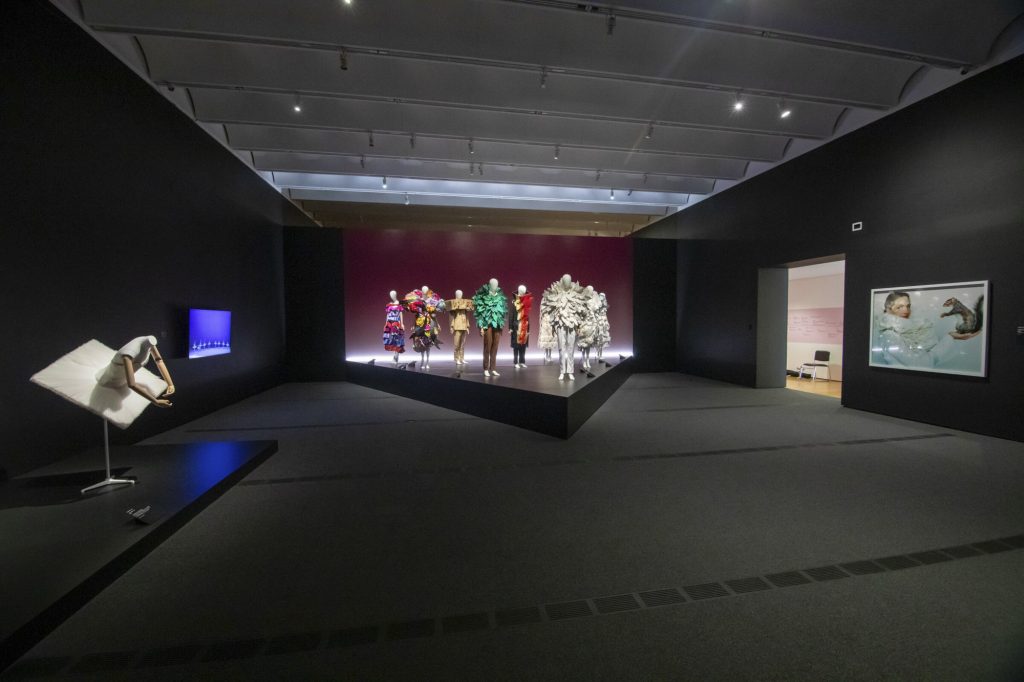
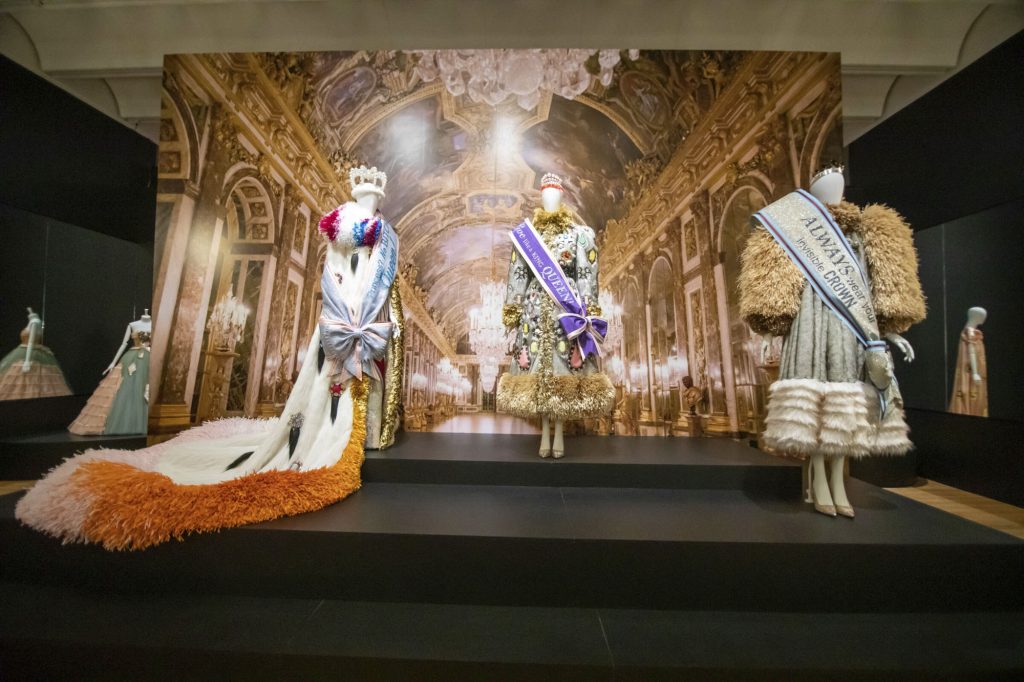
Viktor&Rolf: Fashion Statements, on view at the High Museum of Art through February 8, 2026, is the first major retrospective of Dutch conceptualist fashion designers Viktor Horsting and Rolf Snoeren. Organized by curator Thierry-Maxime Loriot and the Kunsthalle München exhibition hall where the show debuted last year, the High is the exclusive U.S. venue for the 30-year survey.
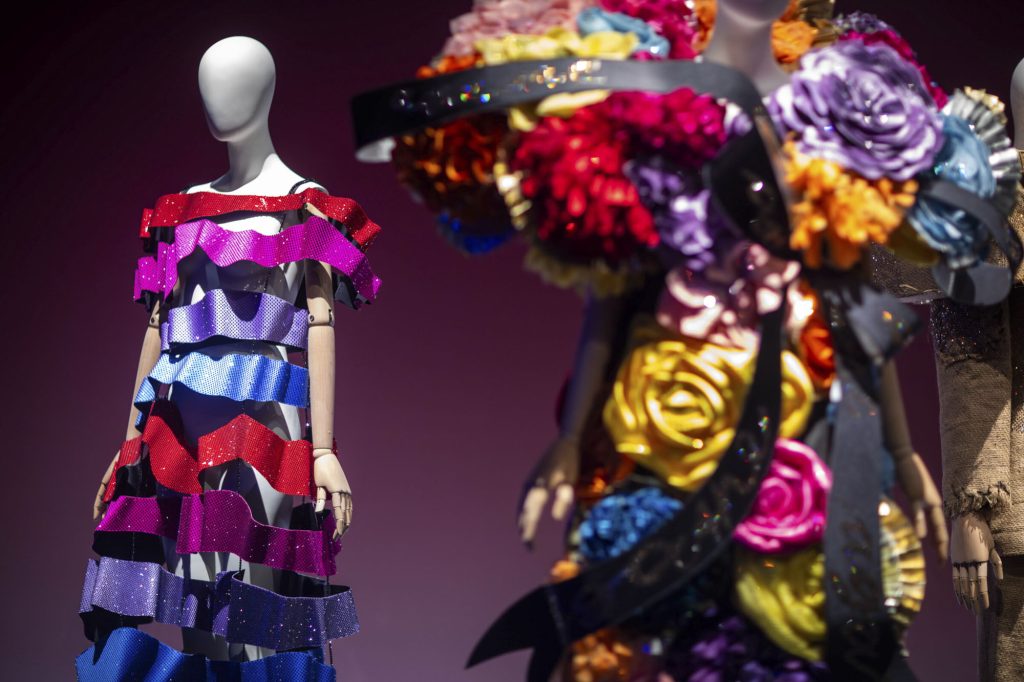
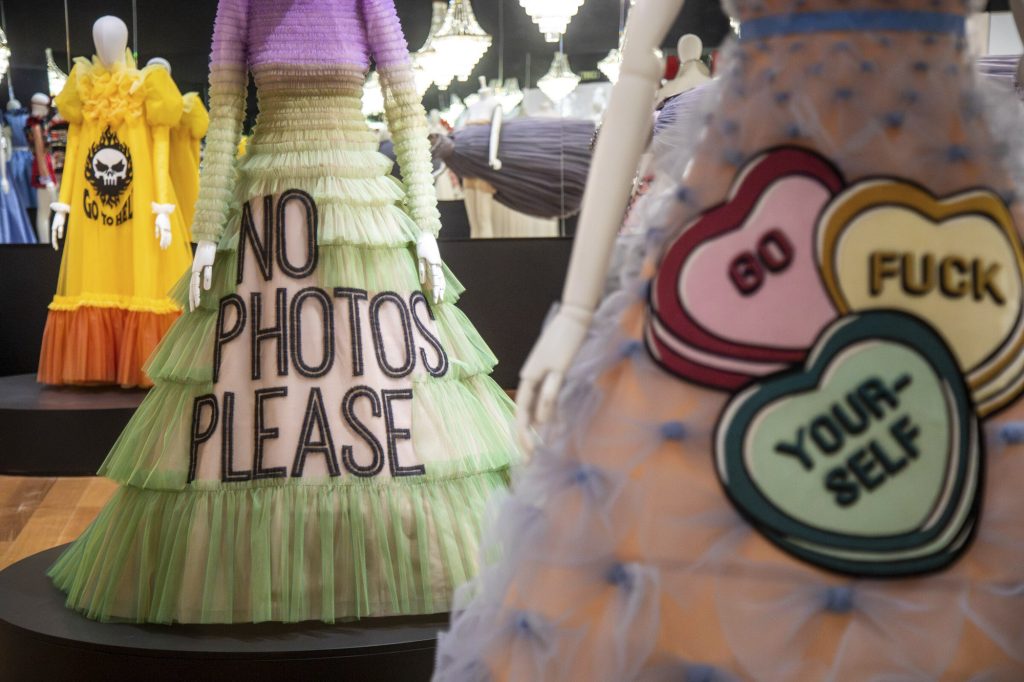
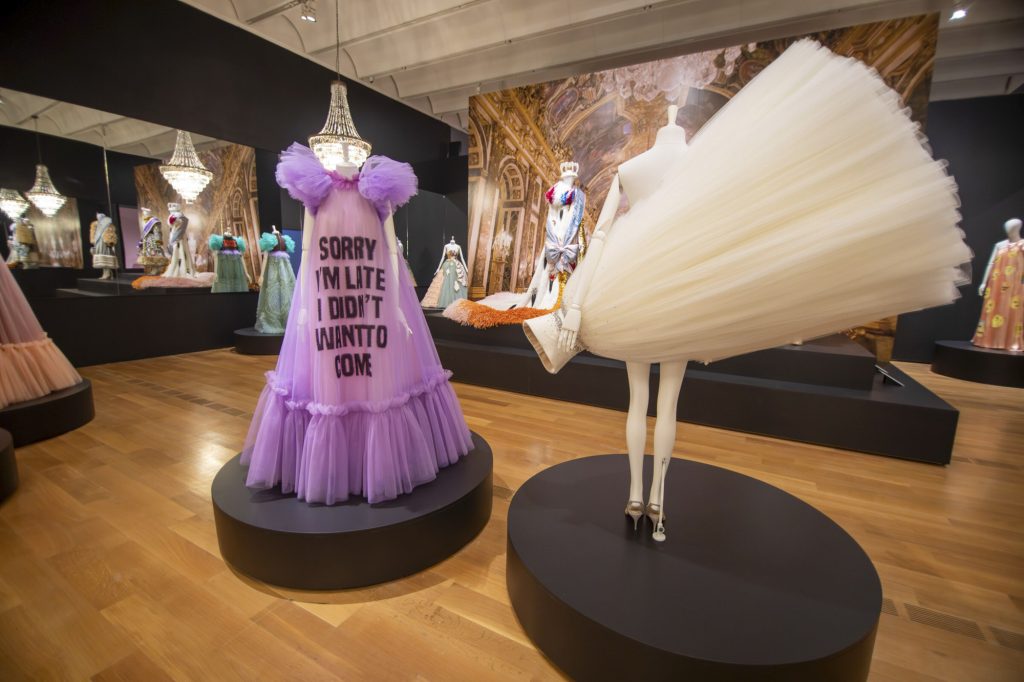
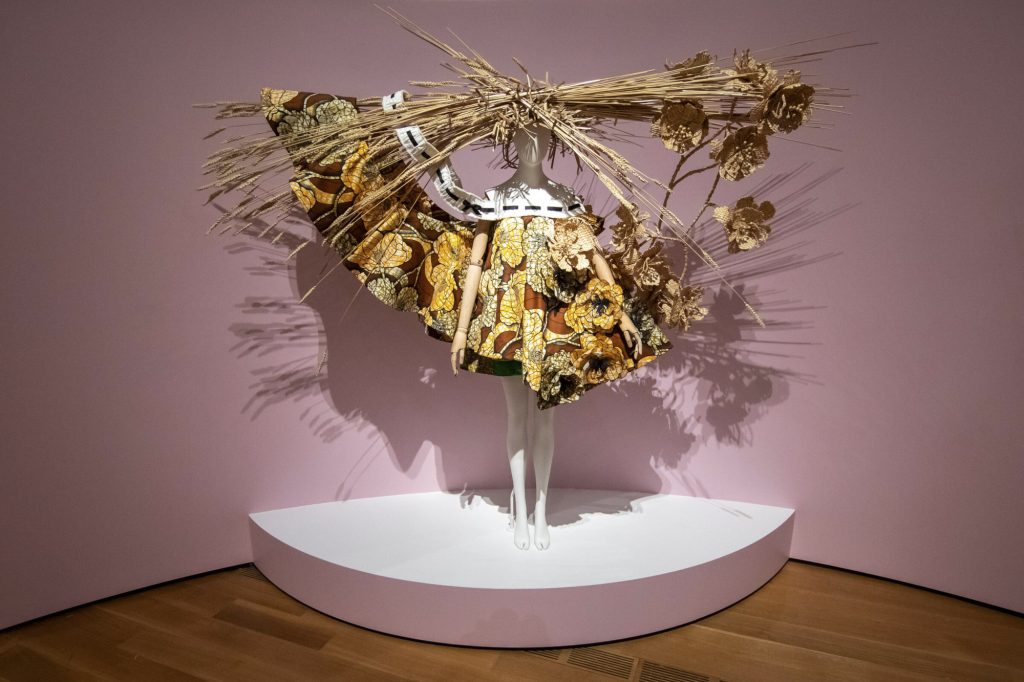
Bringing together more than 100 works, sketches, photographs and immersive video installations, this career-spanning retrospective makes clear that the self-styled “fashion artists” are having a lot of fun pushing the boundaries of fine art and haute couture. It’s also apparent that it is far from the only boundary they’re interrogating.
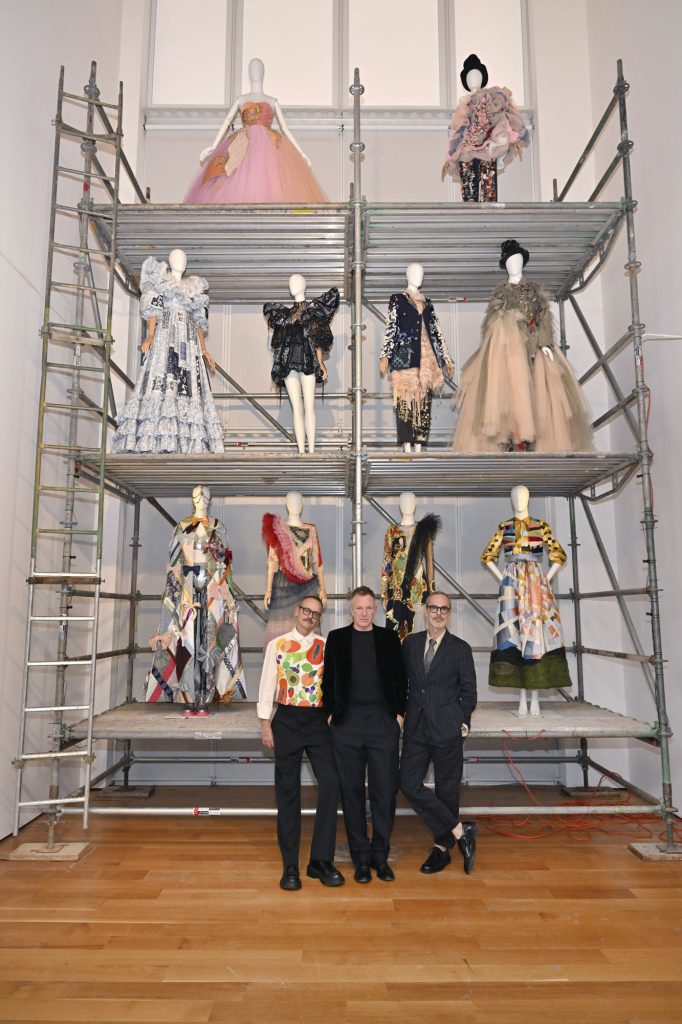
The two designers first met in 1988 while studying art and design at the ArtEZ Academy of Art & Design Arnhem in the Netherlands. In the late ’80s, just as the two were beginning to collaborate, the Dutch government made designers eligible for arts grants, which may account for the team’s equal comfort navigating the world of fine art as well as haute couture.
Viktor&Rolf’s 2002-2003 exhibition, for example, took its title Long Live the Immaterial! from the text of Chelsea Hotel Manifesto (1961) by mid-century artist Yves Klein, an artist whose famous blue monochromes pursued what he paradoxically called a “static velocity.” Klein’s work and the tenets of fine art remain touchstones for Viktor&Rolf’s work, and the designers seem especially galvanized by exploring the kind of paradoxical, contradictory or liminal spaces that so fascinated Klein.
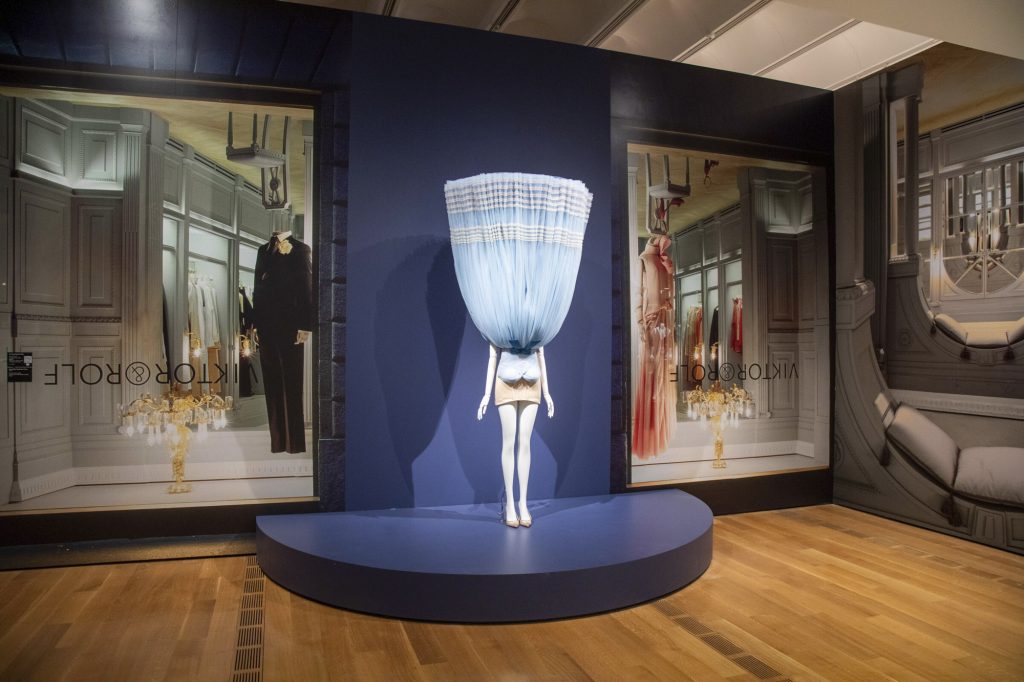
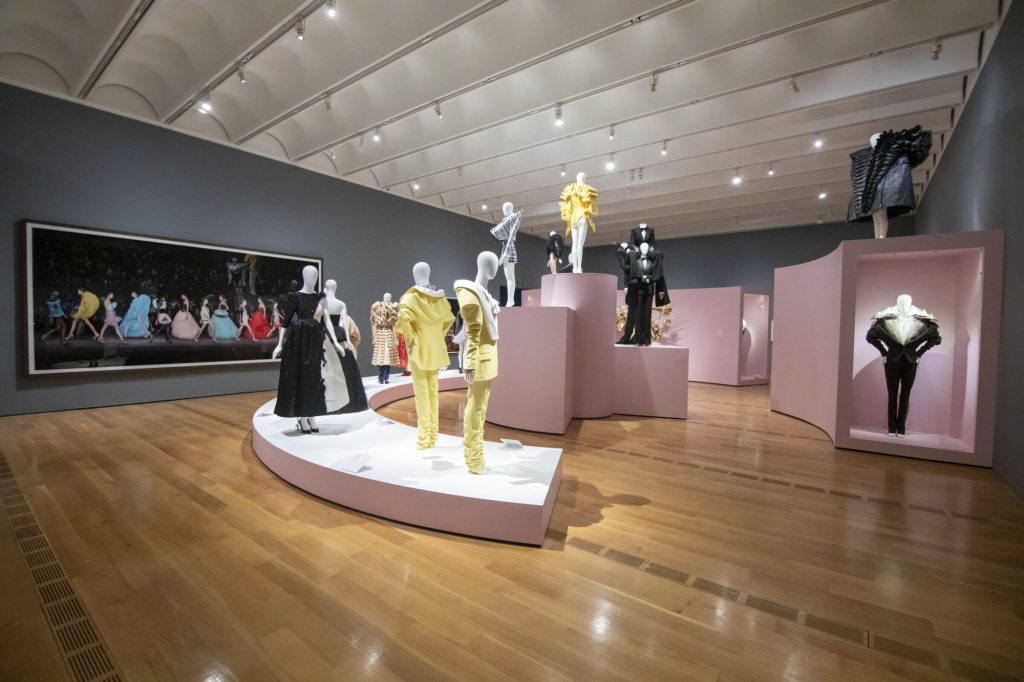
Organized not chronologically but instead around eight chapters focused on a theme or project favored by the designers, the exhibit opens with the visually arresting Look 15 from their Spring/Summer 2023 collection Late Stage Capitalism Waltz. The selection features pastel gowns that incorporate 3D-printed structures which present the gowns turned upside down, sideways or inside out.
The upside down dress that opens the High’s show immediately announces the designers’ penchant for upending assumptions about fashion and pushing the boundaries between high art and couture. Composed of light blue tulle and satin, the dress appears as though it’s been blown up over the mannequin’s head, exposing the tan cotton coutil bodice underneath. The unexpectedness of this ensemble’s presentation showcases the designers’ conceptual brazenness even as the eye is drawn to the tiniest of material details: the sparkle of the cream-colored high-heeled shoes and the delicacy of the upside down bow on the upper torso of the mannequin. Like the designers who themselves hover between art and fashion, this piece from Late Stage Capitalism Waltz showcases a haute couture ball gown as a conceptualist tour de force, questioning the excesses of luxury fashion houses and the relationships between concealment and display, body and garment.
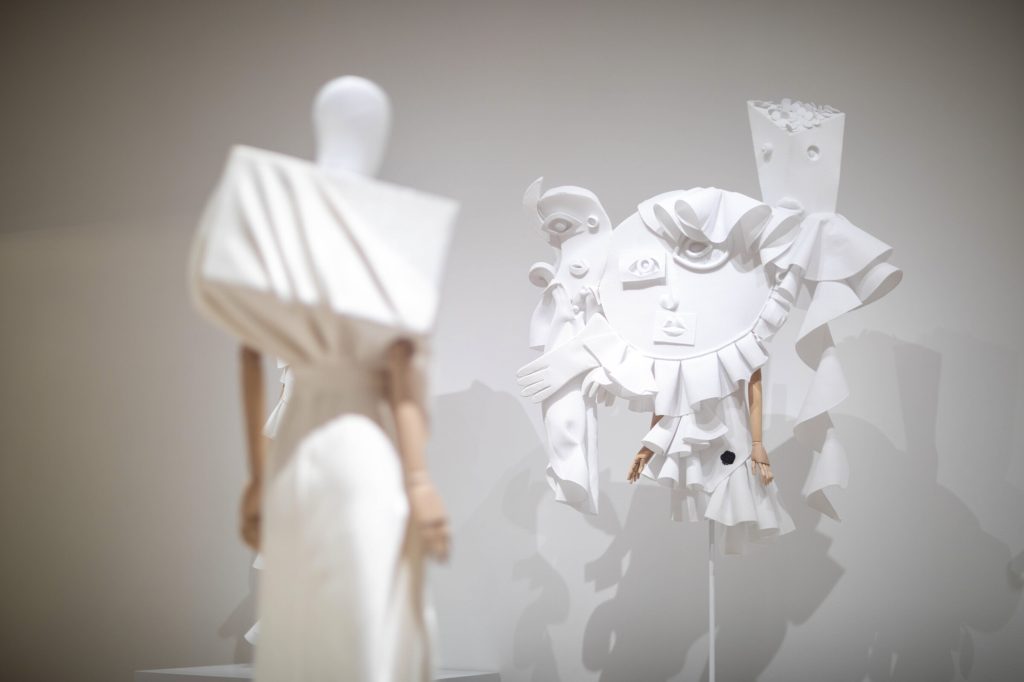
“We turn the phenomenon of fashion into its own subject matter,” the designers told T: The New York Times Style Magazine in 2008. That becomes even more explicit with their Spring/Summer 2016 collection Performance of Sculptures, which is also included in the retrospective. Inspired by the work of Picasso and cubism, these white polyester and nylon wearable sculptures blur the lines between art and fashion by leaving the models hardly visible beneath the garments’ enormous, marmoreal forms. This again plays with ideas of presence and absence while questioning what it even means to get dressed.
Given the frequent references to artists such as Klein, Picasso and the surrealists, it’s not surprising that Viktor&Rolf’s earliest recognition came from the art world rather than from that of high fashion. For the collection The Appearance of Emptiness — the French title L’appearance du vide is a clear reference to Yves Klein’s 1958 landmark exhibition The Void — the designers originally staged the show in a Paris art gallery rather than on a conventional catwalk.
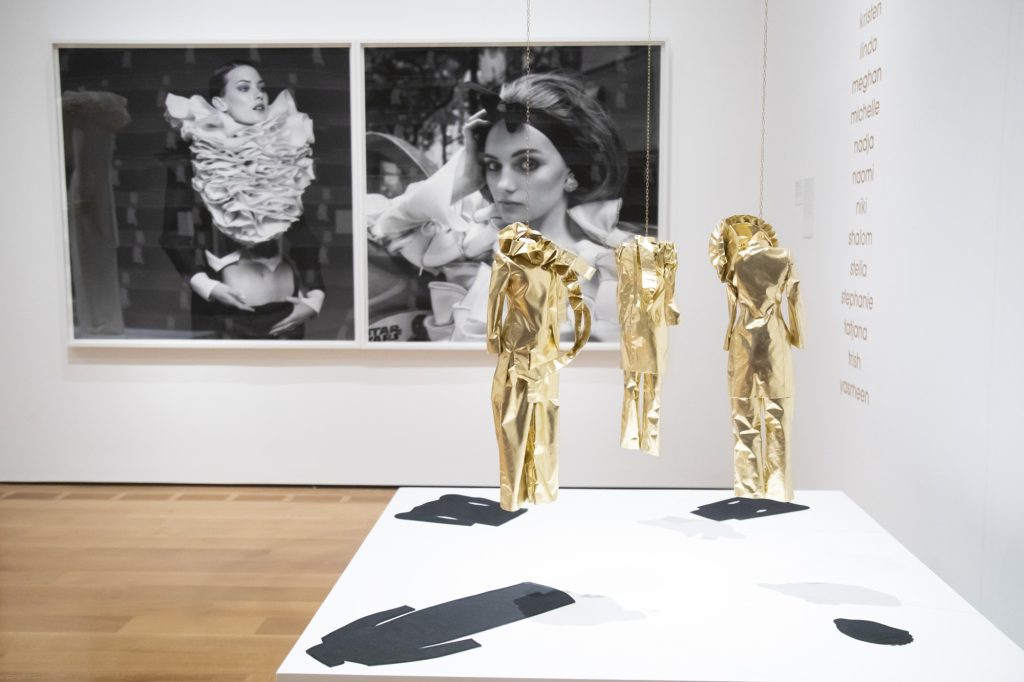
In the High’s exhibit, five empty dresses in gold-coated polyester hang suspended by an invisible thread, their shadows approximated on the floor beneath in black, flat silk organza. The names of prominent supermodels are printed on a nearby wall. As with Late Stage Capitalism Waltz, The Appearance of Emptiness raises questions about the vacuousness of the fashion world and how society’s obsession with celebrity has overshadowed a focus on the clothes themselves. The black, almost funereal organza shadows displayed here also explore themes of reproduction and the transience of fashion, two issues that have long since preoccupied the designers and are appropriately explored in the retrospective.

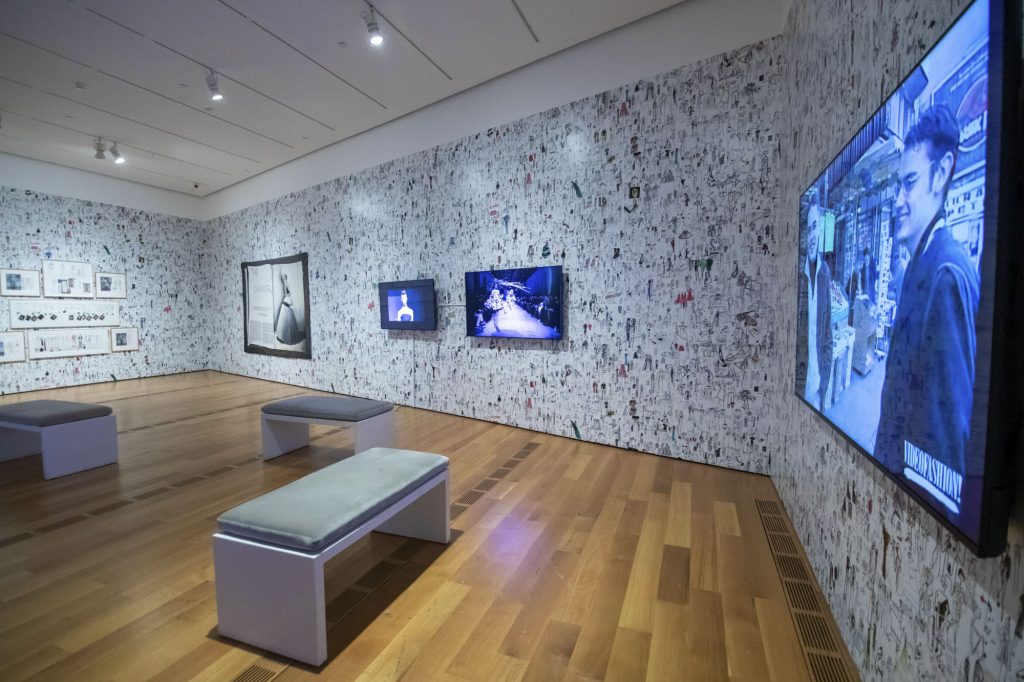

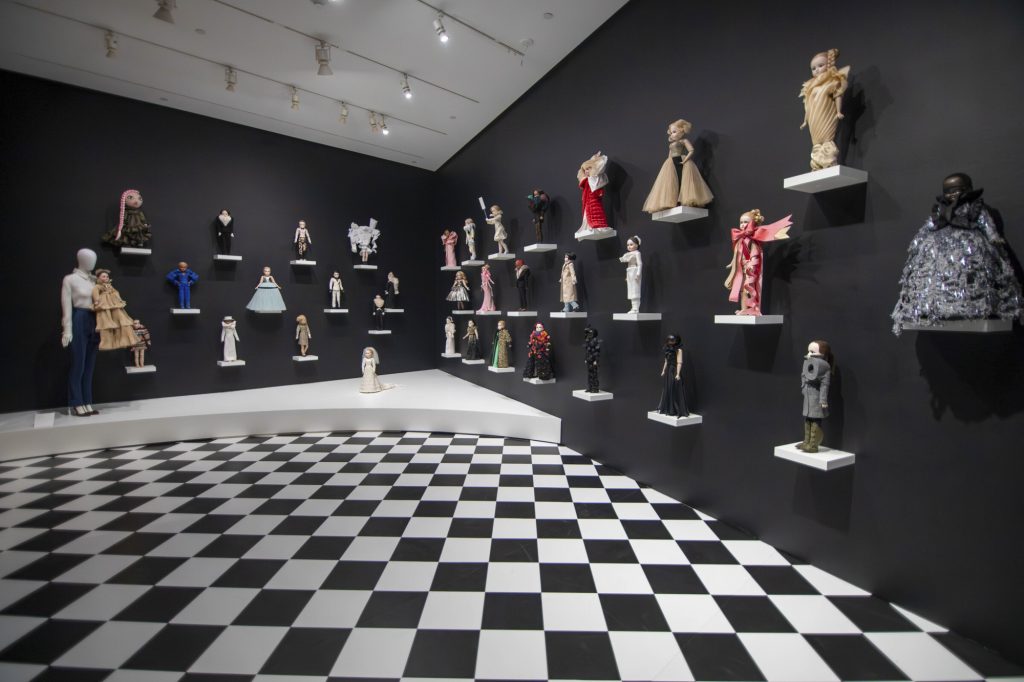
During an interview with British journalist Suzy Menkes, Snoeren commented on what the two see as “an unrealistic approach in the West to newness.” In what appears as a deliberate strategy to forestall the immediate obsolescence of “last year’s model,” the designers have become famous for reproducing their own works in the form of miniature porcelain dolls.
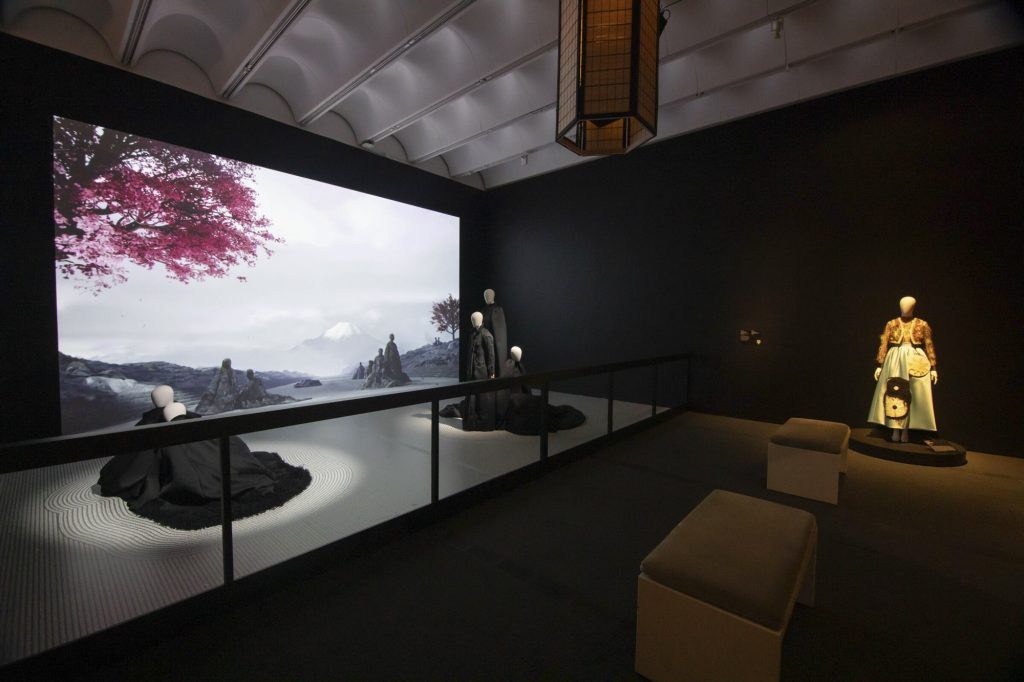
The High’s retrospective includes many delightful examples of these. The reproductions of their greatest hits in miniscule offers a rejoinder to the seasonal obsessions of the fashion world; a way for the designers to question or resist the pressure to chase what’s new and still embrace the ephemeral nature of fashion. This impulse is also at the heart of the remarkable installation Zen Garden, a virtual recreation of the 2013 collection by the same name that drew inspiration from Japanese Zen gardens. Zen Garden is one of several immersive video experiences included in the exhibit and is a collaboration between the designers and RodeoFX, the Canadian-based video production company whose work has been featured in Game of Thrones, Stranger Things and the John Wick 4.
Fine art can be admittedly intimidating and even alienating to some, most especially haute couture. That is precisely what makes it all the more remarkable that Viktor&Rolf: Fashion Statements bridges these two worlds in a way that is inviting, provocative and, yes, fun.
::

Robert Stalker is an Atlanta-based freelance writer who covers modern and contemporary art.
STAY UP TO DATE ON ALL THINGS ArtsATL
Subscribe to our free weekly e-newsletter.

PLEASE SUPPORT ARTSATL
Your Gift Sustains the Coverage You Count On!
Related Posts