Two whitespace exhibitions push us to contemplate the familiar, see with greater depth
Walking up to whitespace is an enchanting experience. The gallery is built inside a converted carriage house that sits behind trees, where lights and other whimsical objects hang from branches. The setting is peaceful, quiet, inviting — almost as if removed from the city around it. The space is designed to encourage conversation, which is exactly what is heard when walking up.
Two exhibits currently showing through September 12, Constance Thalken’s Heart of a Bird and Lauren Lesley’s Uncertainty, present a similar challenge: to look at the familiar and examine it with greater depth. Thalken’s exhibit is largely about the natural world, while Lesley’s exhibit is about memory. Thalken’s photographs look at the complicated relationships between humans and the world around us. Lesley’s drawings explore the instability of memories from the perspective of someone with obsessive-compulsive disorder (OCD). Together, the two show how looking closely does not always mean easily understanding something. The world around us can be, at the same time, both familiar and strange.
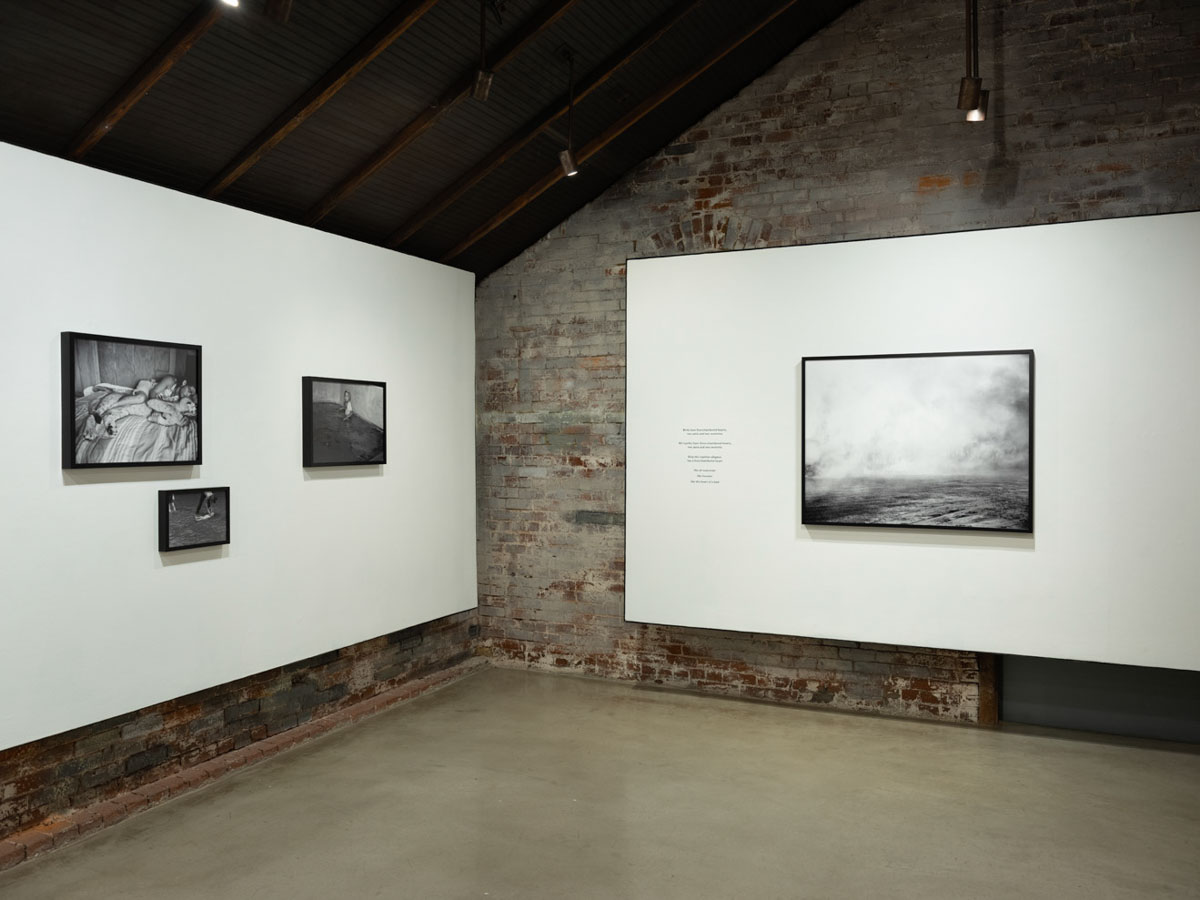
Thalken’s exhibit, in the main whitespace gallery, was the first exhibition I encountered. The gallery feels like a rustic barn with its sliding door, yet its large glass windows and glass door lend the space lots of light. Such openness complements Thalken’s photos, which were made during a five-year journey she took in a camper along the coastal Southeast.
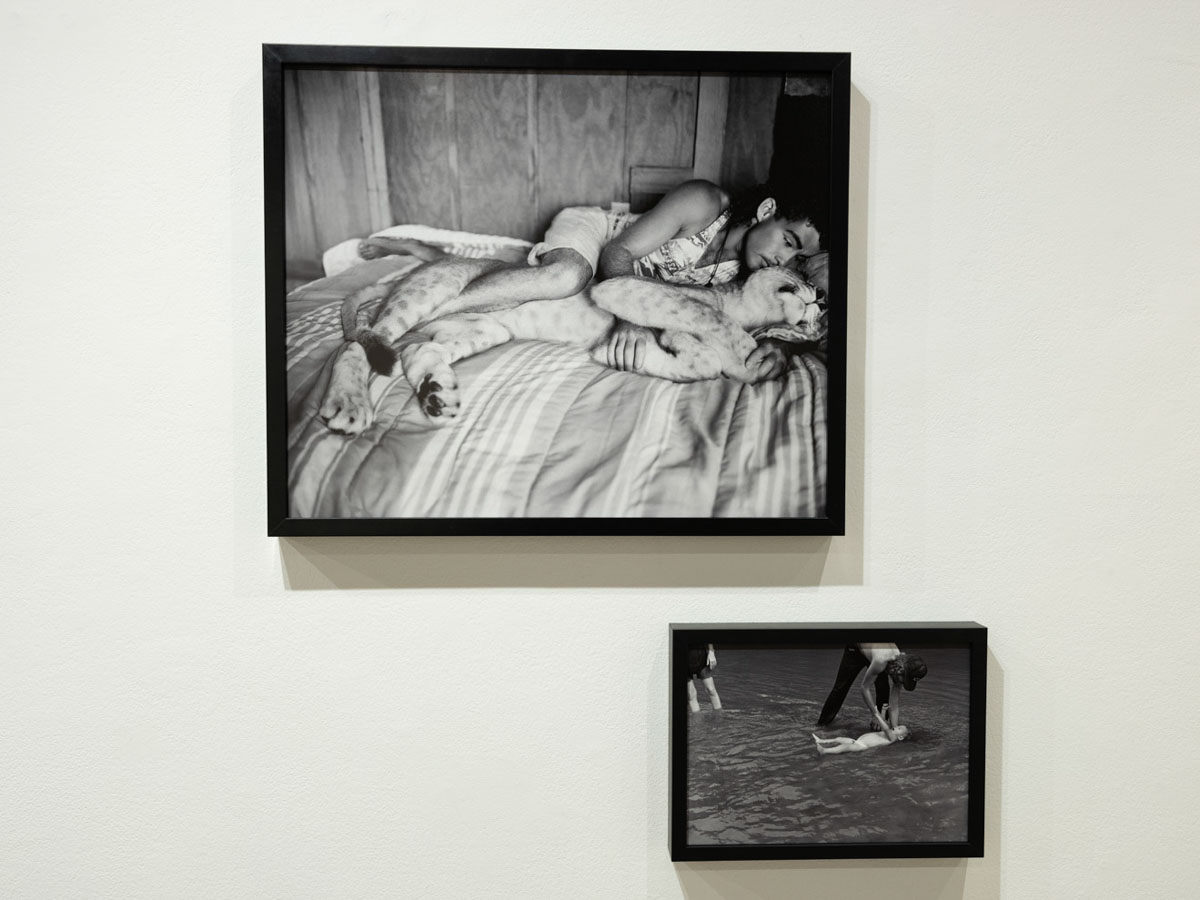
Her journey as photographed reveals that Thalken did not take the photos because of their picturesque locations but rather that she was intentionally capturing whatever she encountered along the way. The resulting black-and-white photos, which feature water, fishermen, nature, animals and landscapes, feel quiet and observational. In them, humans are not at the top of a hierarchy. Nature is not just a backdrop to human life. Rather, humans and nature coexist.
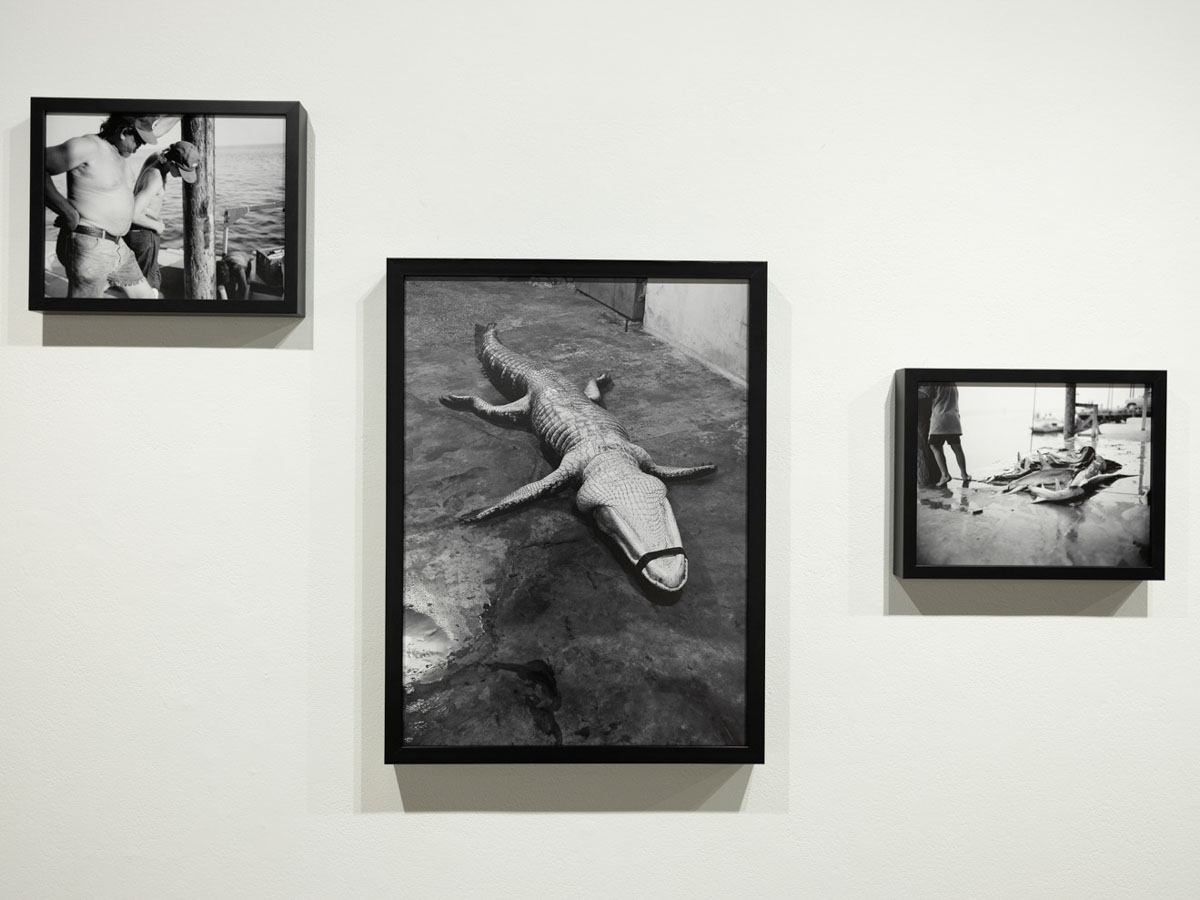
There is tension in some of the photos, particularly in those with alligators, which were captured during the annual alligator harvest. These photos evoke fear, show human intervention and explore the complicated meeting of humans and alligators as they encounter one another. In one photo, Thalken is so close to the alligator that viewers can see its rough texture, which confronts the viewer with its presence, inviting fascination alongside fear. Alligators often are seen as wild animals to stay far away from, but Thalken brings us close.
We see other sides of human interactions with nature. In the photo titled John and Sasha, a man and a lion experience closeness, which evokes feelings of connection, care, affection and familiarity. This relationship is not one of fear but of attachment.
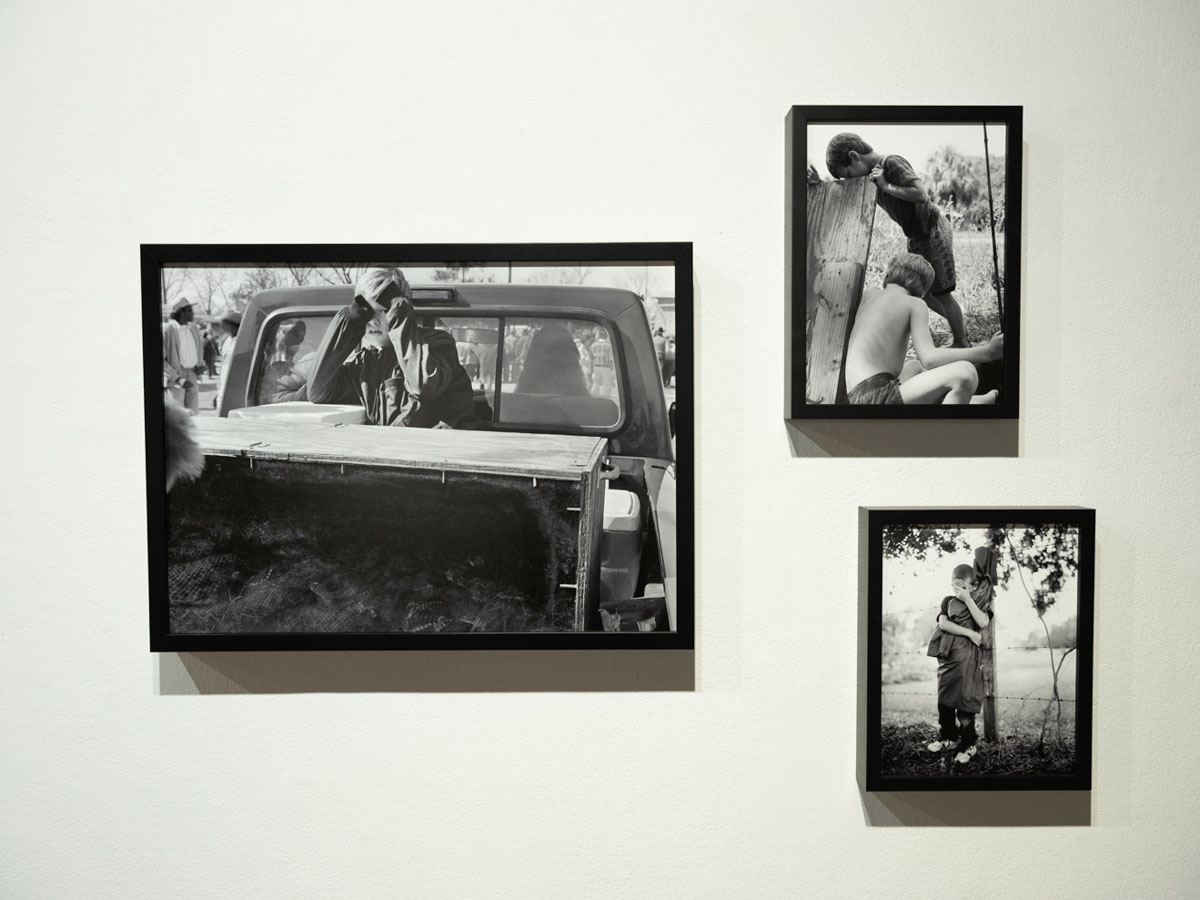
Thalken’s exhibit feels to be a commentary on all types of relationships between humans and the world we inhabit. It is a compelling show that asks the viewer to consider how humans and animals connect with one another and how humans assign value to the natural world.
Uncertainty, by Lauren Lesley, in whitespace’s smaller gallery, whitespec, similarly asks viewers to reconsider what might seem familiar. The tension in this exhibit exists between what is real and what is distorted. This exhibition occupies a windowless space. It explores OCD and unreliable memories through graphite drawings of blurred objects. At first glance, the drawings seem like photographs, and they appear hyperrealistic.
There is a deep sense of nostalgia throughout. For example: drawings of an Etch A Sketch, erasers in the shapes of stars and a water balloon with a smiley face — objects associated with childhood and everyday life.
While the images felt familiar, something about them also felt wrong, which created a sense of uncertainty, especially when viewing the blurred images. Memory often works this way. It is complicated. We might view memory as a recording, but sometimes details shift or we fill them in with what we think happened, which may or may not be what actually took place.

The blurred images hover between recognition and disappearance, something we see but cannot completely recover in our minds. It’s like a foggy dream, teetering on the edge of our memories. Uncertainty can be uncomfortable, which is what makes the images so contemplative. Lesley does not try to comfort the viewer or bring them clarity; instead, she asks viewers to consider the precarious nature of memory.
Although these two exhibitions are different, both complicate our relationship with seemingly ordinary, everyday interactions with the world around us and our interpersonal relationships. In both exhibits, we move from familiarity to reflection and contemplation. While the photos and drawings are of things that might be known to us, the deeper we look, the more complicated what we are viewing seems.
Both exhibitions are on view until September 12. This Saturday, August 22, from 3 p.m. to 5 p.m. Constance Thalken will join High Museum of Art’s Donald and Marilyn Keough Family Curator of Photography Gregory Harris for a conversation about her exhibition Heart of a Bird.
::

Jhazzmyn Joiner (aka Jhazzy) is a writer, poet and creative spirit with a soft spot for storytelling that uplifts community voices. She’s the editor-in-chief of Three Panels Press and leads communications at L’Arche Atlanta. With a background in gerontology, media and making meaning out of everyday moments, her work lives at the intersection of art, equity and expression. A singer, traveler and lover of bold ideas, she’s often deep in a playlist, scribbling a poem or wandering an art show, dreaming up her next big project.
STAY UP TO DATE ON ALL THINGS ArtsATL
Subscribe to our free weekly e-newsletter.

PLEASE SUPPORT ARTSATL
Your Gift Sustains the Coverage You Count On!
Related Posts