Review: Martin Puryear distills history, nature and freedom into pure form at the High
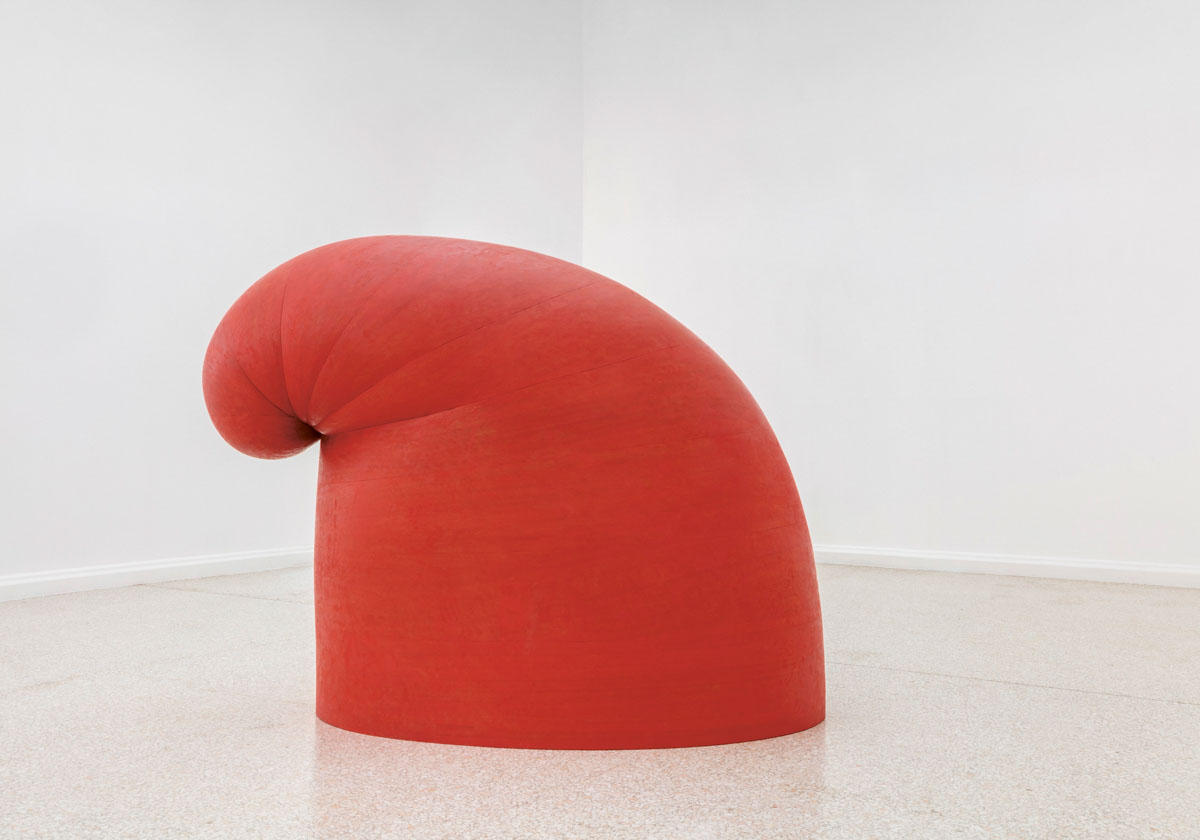
Nearly 5 feet tall and painted vivid red, with a bulbous body and a peak curling forward, the cedar sculpture Big Phrygian commands attention in Martin Puryear: Nexus, the widely acclaimed touring exhibition making its last stop at the High Museum of Art through January 17, 2027.
Organized by The Cleveland Museum of Art and Museum of Fine Arts Boston, the exhibition comprises 70 of Puryear’s works spanning nearly six decades. Now 85, Puryear is an American master sculptor, printmaker, draftsman and public artist.
Big Phrygian (2010-2014) is emblematic of his work. It succinctly synthesizes his conceptualization and reduces forms that reference history, culture and nature. In service to his intentions is his commitment to craftsmanship; he is a master of natural materials, especially wood.
An oft-repeated form echoing in Nexus, the Phrygian cap is a soft conical hat with a bent apex originating in ancient Persian, Greek and Roman times. Because the Roman goddess of liberty, Libertas, is usually shown with such a cap in hand, the Phrygian became known as a “liberty hat” by American and French revolutionaries. The cap later became associated with other revolutions and Black liberation movements around the world, including in Haiti and Latin America.
Big Phrygian distills this complex history to its essence. The sculpture’s exaggerated form is reduced to its most abstract. Its shape and hue, imbued with historic and modern symbolism, is elegant. The work is both humanistic and political.
Through the exhibition’s loosely chronological survey of the artist’s focused career and practice, visitors can study how Puryear processed his experiences as an African American man with a nomadic life and engage with his creative commentary on society’s contemporary conditions and the natural world.
Born in 1941, Puryear grew up in segregated Washington, D.C. As a child, he was a regular visitor to the capital’s public libraries, where he read about wildlife and nature. He attended The Catholic University of America there, initially majoring in biology before pivoting to art.
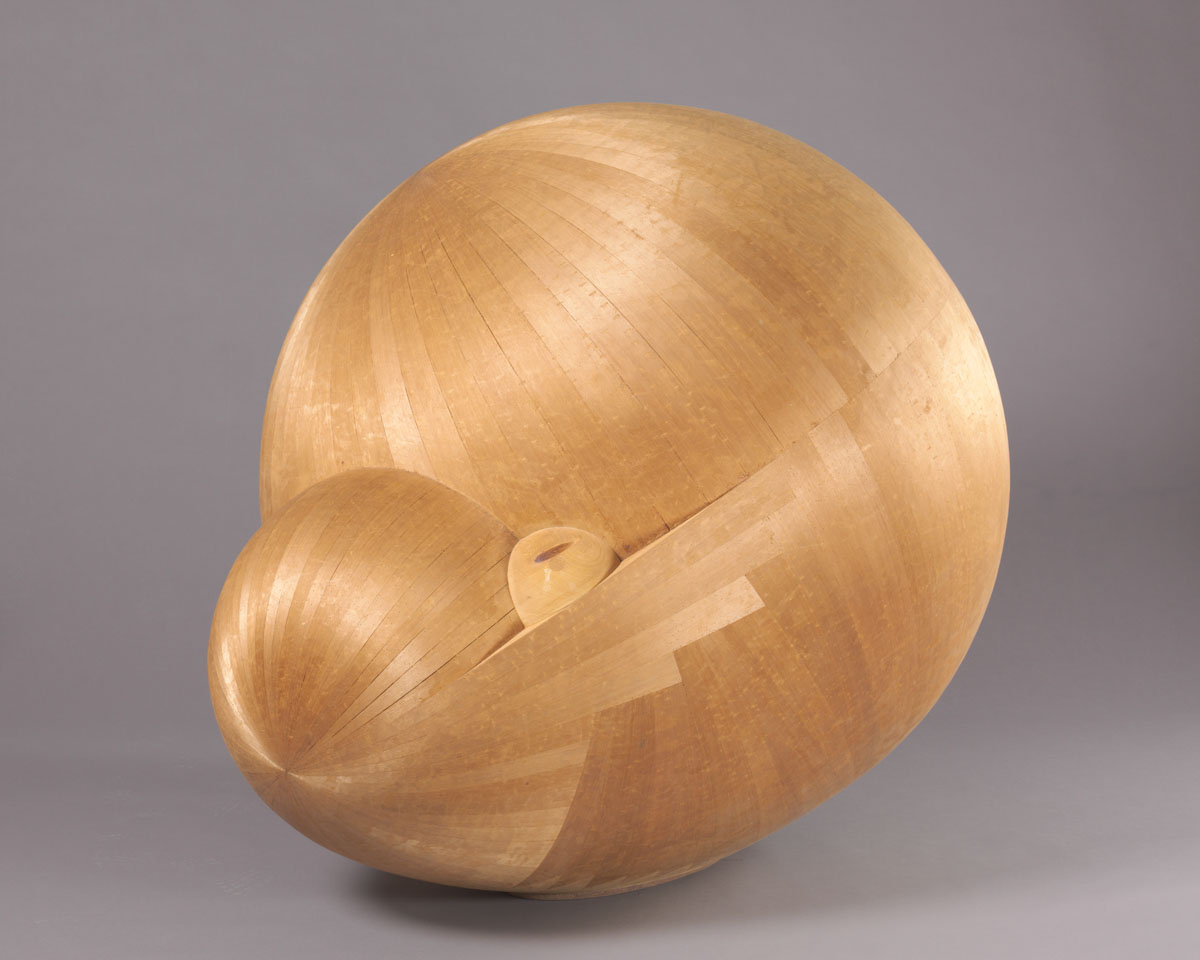
Marks Gallery)
At the Smithsonian Museum of Natural History, Puryear became interested in John James Audubon’s Birds of America. He was particularly drawn to gyrfalcons, large Arctic raptors. Some gyrfalcons have dark plumage, while others have white. Which color the gyrfalcons develop is determined by the bird’s habitat in different Arctic regions. Puryear once stated that he “made a connection about human racial difference by way of these species.” Eventually, he became a trained falconer.
Unsurprisingly, falcons are essential elements of his artistic vocabulary. Bird forms appear throughout the exhibition, including a large-scale installation unique to Atlanta’s showing curated by Michael Rooks, the Wieland family curator of modern and contemporary art at the High.
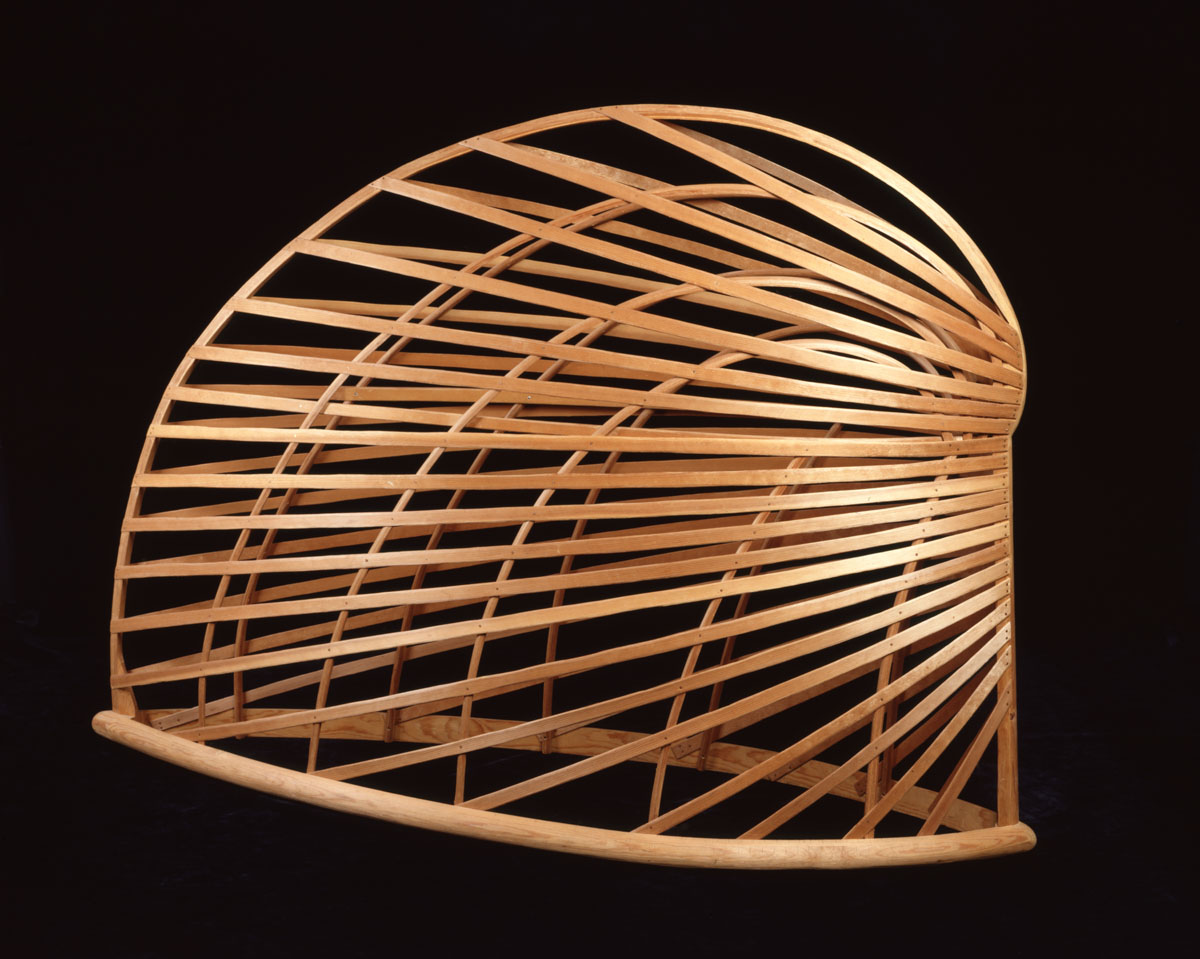
Titled Frozen Dreams, the installation sets multiple falcons that Puryear crafted over the years from wood, blown glass and cast bronze amid a large bentwood yurt simplified to its circular framing. (Yurts are domiciles used by nomadic peoples in Central Asia.) Audubon’s gyrfalcon engravings hang on the walls. Puryear began making yurts as early as 1981, which he historically paired with bird sculptures. Both forms reference mobility and freedom.

Nexus’ earliest works are drawings from Puryear’s service in the Peace Corps from 1964 to 1966 in Sierra Leone. Living in West Africa during this pivotal period of his own artistic development was formative. He was drawn not only to reductive forms of African sculptural objects but also to the craftsmanship of those objects, made harmoniously with natural materials. He appreciated the skills of community carpenters. There he also came face-to-face with the mechanisms and legacy of colonialism.
Puryear’s artistic development continued in Sweden — both complementing and contrasting with his time in Sierra Leone. Between 1966 and 1968, he was enrolled at the Royal Academy in Stockholm in printmaking. Through the years, Puryear has returned to printmaking; etchings and woodcuts are installed throughout Nexus.
In Sweden, Puryear also sought out master woodworker and craft philosopher James Krenov, a Russian American based in Sweden, after seeing an example of his work in Stockholm’s national museum. Puryear became deeply influenced by the quality of Krenov’s hand tool techniques.
Puryear returned to the U.S. in 1969 to attend graduate school at Yale School of Art, graduating in 1971 with an MFA in sculpture. At Yale, he was exposed to minimalism — a leading trend at the time. Although minimalism shaped his practice, Puryear ultimately rejected its impersonality and formalism, embracing instead natural materials and craftsmanship. He also did not shy away from historic or scientific content.
After Yale, Puryear taught at Fisk University in Tennessee for several years. Some Lines for Jim Beckwourth (1978) is made of animal skins he cleaned and dried while living in Nashville. Seven lines of rawhide, one nearly 22 feet long, are installed like the lines of a musical staff. Jim Beckwourth (1798–1866) was a fur trapper, rancher and entrepreneur who was born enslaved in Virginia. His father, Jennings Beckwith, was a white planter whose children were born by Beckwourth’s enslaved mother.
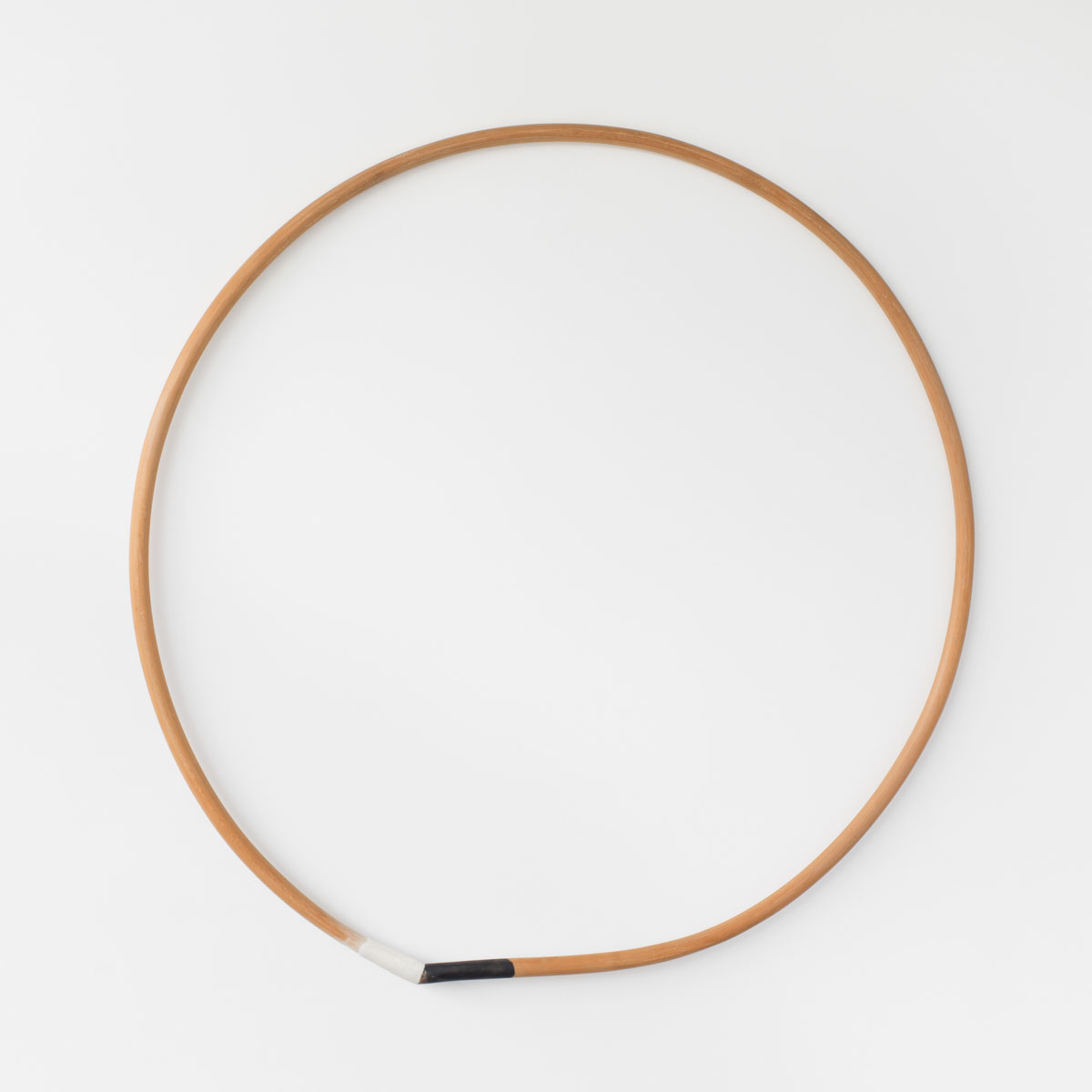
Also from this period is Nexus, the work that inspired the exhibition’s title, a 45-inch-diameter cedar hoop crafted in 1979. Rings and circularity are frequent motifs in Puryear’s work. His reputation continued to grow from the 1980s to the present, resulting in major museum exhibitions, international residencies and a 1989 MacArthur Foundation fellowship. The exhibition includes many important sculptures spanning decades, such as On the Tundra (1986), Alien Huddle (1993-1995) and Aso Oke (2019).
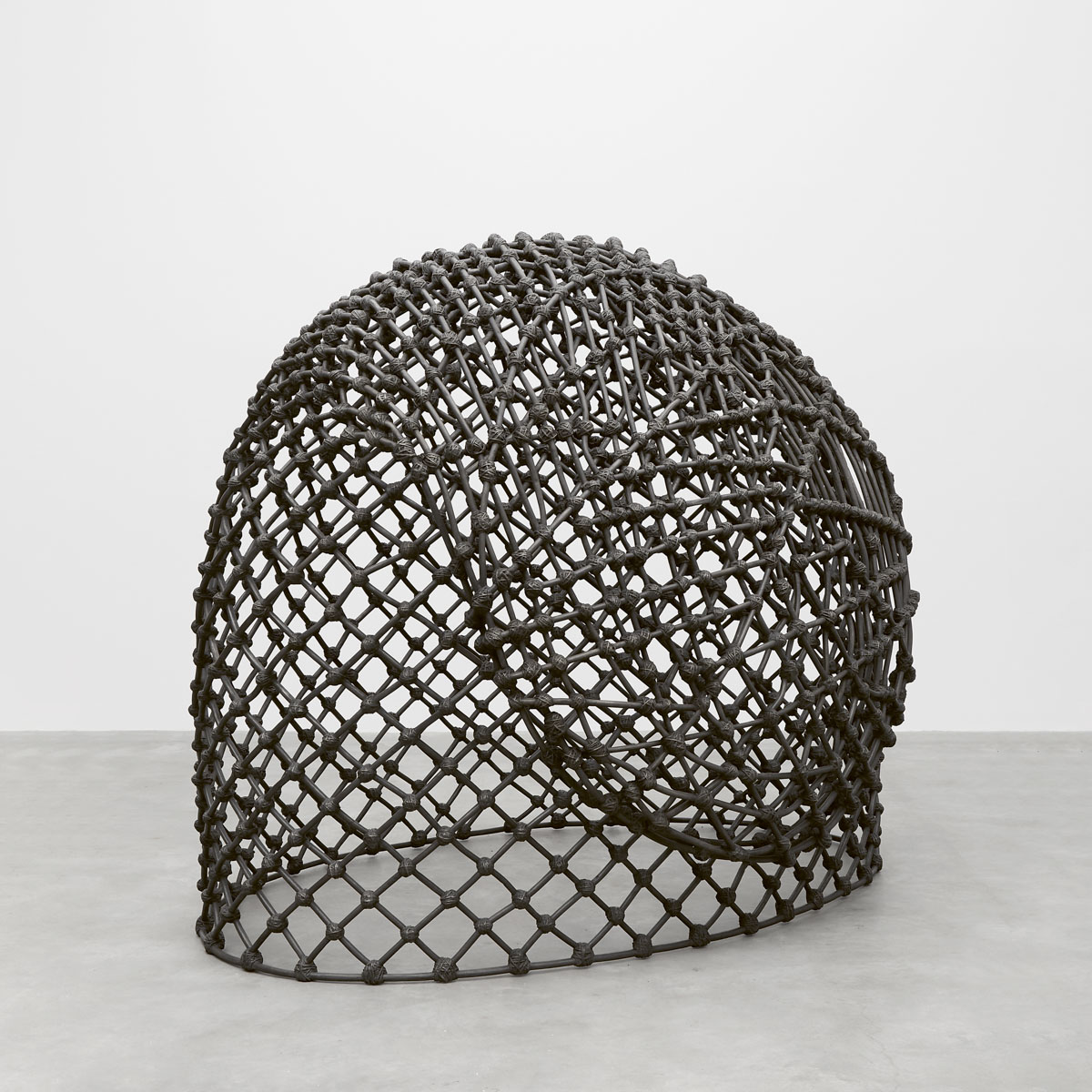
During the first Trump administration, Puryear was commissioned to represent the United States at the 2019 Venice Biennale. His exhibition, Liberty/Libertà, installed at the neoclassical American Pavilion, examined American history, concepts of freedom, democracy and national identity. It was a pinnacle of Puryear’s career. Two sculptures originating from that exhibition are currently at the High. One, Hibernian Testosterone, is a 12-foot-wide cast of the antlers of an Irish elk, an extinct species common during the Ice Age. Scientists once theorized that the antlers, which helped males compete for mates, also contributed to the species’ extinction when they grew too heavy to carry. What lessons do these antlers hold for our politically fraught time?
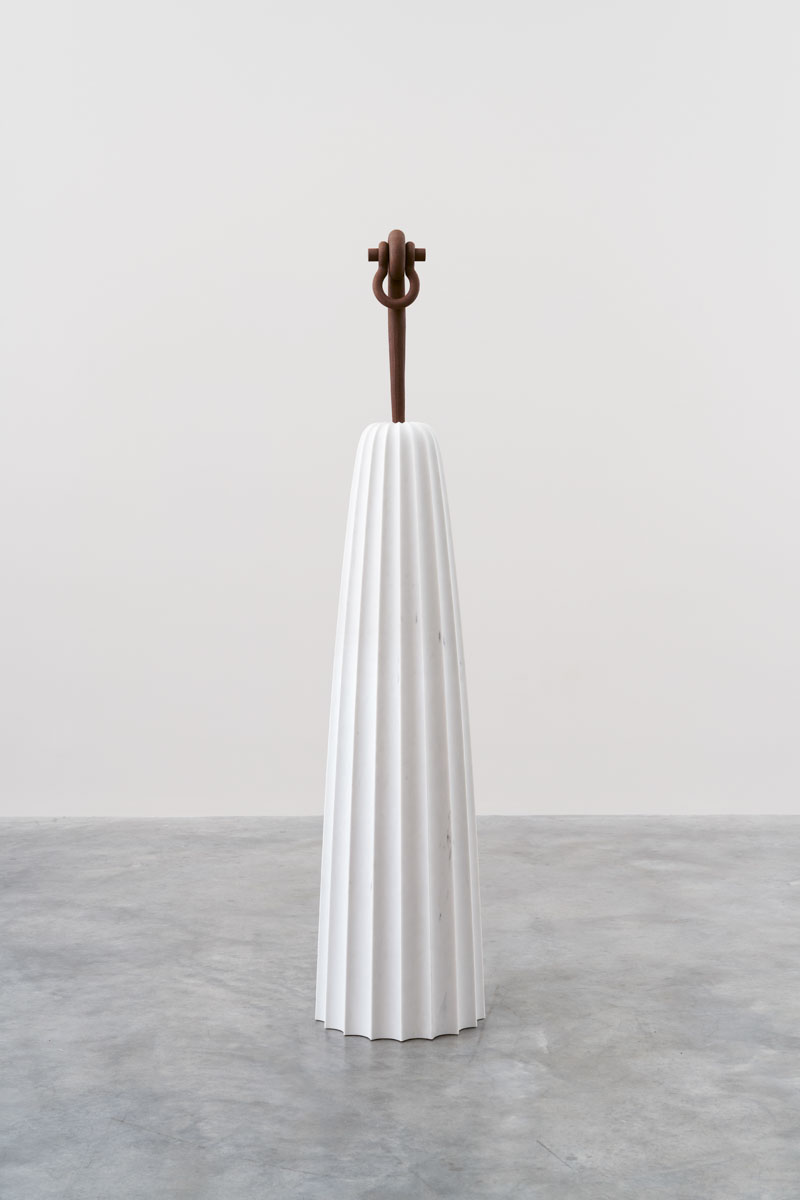
A Column for Sally Hemings honors the enslaved woman who gave birth to at least six of President Thomas Jefferson’s children. Its nearly 5-foot-high marble base echoes the Doric columns outside the U.S. Pavilion and at Monticello, Jefferson’s home in Virginia. A cast-iron stake and shackle are thrust into the top of the column. The contrast between the forms and materials underscores the paradox between the logic of classical architecture and the irrationality of slavery.

Over the past several decades, Puryear has received temporary and permanent public art commissions in the United States and in other countries around the world, including France, Norway, Sweden and Japan. Many are documented in the exhibition, including the maquette for Big Bling, commissioned by the Madison Square Park Conservancy in New York in 2016 and now permanently installed at MASS MoCA in Western Massachusetts. Referencing 1990s hip-hop bling, its abstract, animal-like structure topped with a gold shackle suggests historical dialogues about freedom, constraint and the architecture of power.
Recently, the Obama Presidential Library in Chicago commissioned Puryear to create a work for the John Lewis Plaza outside its entrance. Referencing the Martin Luther King Jr. quote about the arc of the moral universe, Bending the Arc is a monumental steel sculpture that was created from a 3D scan of a 34-foot wooden beam that Puryear had hand-carved. Although too recent to be documented in the exhibition, it is important to note — along with President Obama’s National Medal of the Arts award given to Puryear in 2011 — that just weeks ago, the Smithsonian presented him the Archives of American Art award. Martin Puryear is truly a national treasure.
Martin Puryear: Nexus is on view through January 17, 2027, at the High Museum of Art, 1280 Peachtree St. NE. Admission is $23.50; free for members. 404-733-4400, high.org.
::
Louise E. Shaw is a curator and arts administrator. As the former director of Nexus Contemporary Art Center (now Atlanta Contemporary), she is delighted by how Puryear has embraced the nexus concept.
STAY UP TO DATE ON ALL THINGS ArtsATL
Subscribe to our free weekly e-newsletter.

PLEASE SUPPORT ARTSATL
Your Gift Sustains the Coverage You Count On!
Related Posts