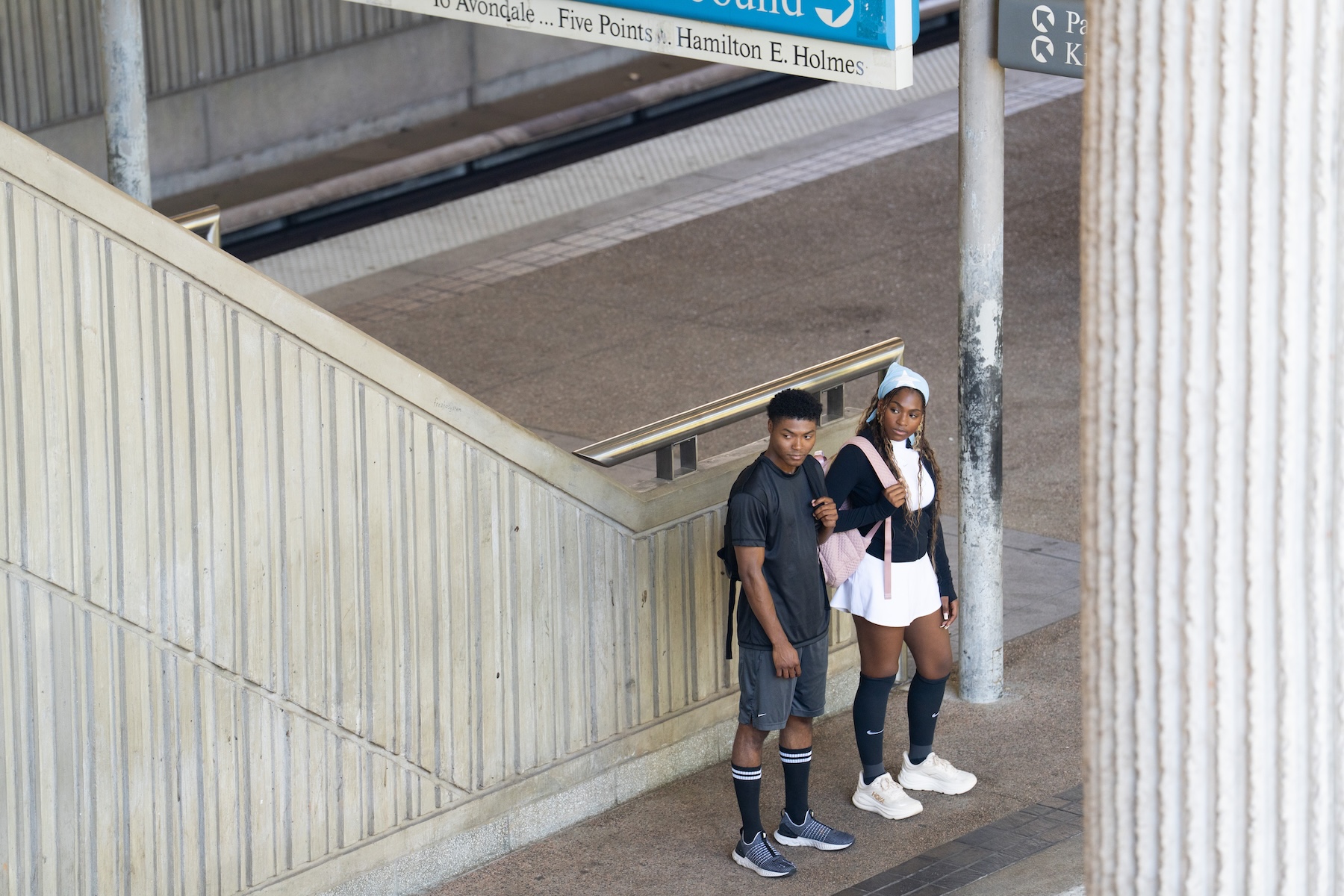
The Atlanta Film Festival at 50: A miracle of history and persistence
Rare is the American film festival that can boast great longevity. “There’s less than 10 film festivals nationwide that have turned 50,” says Atlanta Film Festival Executive Director Christopher Escobar. “So, it’s a big deal for us.” Kicking off on April 23, the half-century-old ATLFF will present some 150 international and local short and feature-length works, representing more than 50 countries. Screenings at the Escobar-owned Plaza Theatre and Tara Atlanta continue through May 3.
Presented by the nonprofit Atlanta Film Society, ATLFF is one of only two dozen Academy Award-qualifying festivals in the nation (along with Atlanta’s Out On Film). This year’s Academy nominees included three shown at last year’s Festival: the short documentary The Devil Is Busy; the animated short The Retirement Plan; and the documentary feature Come See Me in the Good Light.
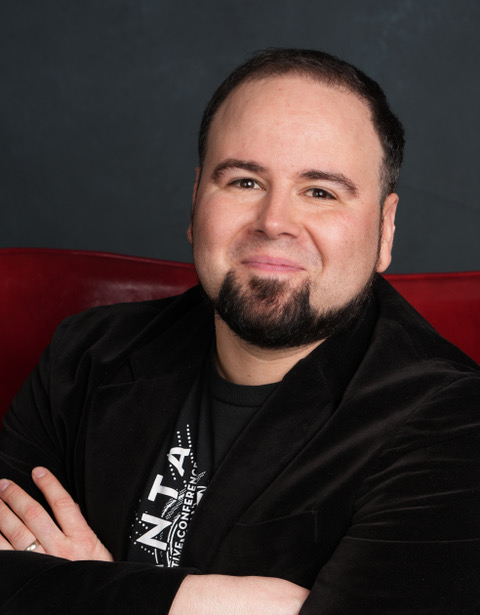
In its earliest years, the Festival went through multiple hands and formats. “We were started by this diverse group of people,” Escobar says. “There really was no one founder. It was more than a dozen folks coming together to do it right.”
The upside of that has been many voices and viewpoints over the years. The organization has shown a knack for permutating to stay alive, a lot like Atlanta itself. “It almost survived by adaptation. You know, over the decades, it kind of became this and became that,” he adds. (For a timeline on the Festival’s history, check out the ATLFF’s breakdown: https://www.atlantafilmfestival.com/50-history )
A downside of ATLFF’s history is a lack of the institutional knowledge that comes with something that begins with a single guiding figurehead, like, say, Robert Redford’s Sundance. It was never “one person’s baby,” Escobar says.
“It’s kind of a miracle in many ways that it made it this long, especially when you put it in the context of the fact that … we’re in the state with the most challenging public arts funding, foundation funding, corporate funding, especially today … We’ve really beat the odds in a number of ways.”
During its decades, ATLFF has shown works by filmmakers who went on to become household names. That starts with Atlanta-born Morehouse grad Spike Lee and includes David O. Russell, James Ponsoldt, Trey Parker and Matt Stone (the South Park duo whose original Jesus-fights-Santa short The Spirit of Christmas played here).
The Festival can’t lay claim to launching big careers by itself but has served as an important way station. Escobar says Lee has publicly credited a screening of one of his early films at ATLFF as being a turning point. “The validation that gave him internally was what he needed to decide, ‘OK, I’m going to pursue becoming a filmmaker,’” Escobar says. “Because if it wasn’t for that moment, he would have been pursuing a career in radio.”
Filmmakers including actors, writers and directors will attend screenings throughout the week. It begins with the opening night presentation at the Plaza of the Dave Franco-starring Idiots, co-written and directed by Macon Blair (Blue Ruin). In addition to screenings, the Festival includes its annual Creative Conference, focusing on the hands-on realities of the media business. (Though it’s aimed at film-industry professionals, Escobar underscores that those sessions and presentations are open to anybody who wants to learn more about film.)
While the focus, as always, is on new work, in honor of its big anniversary, this year’s lineup includes older films with connections to previous festivals, including The Signal, The Spectacular Now, Daughters of the Dust and Blood Car.
As it goes for people lucky enough to live that long, the year 50 is a good time for re-evaluation. Atlanta Film Festival has been around a couple of decades longer than, say, the Savannah Film Festival — but it lacks the private SCAD money that brings in starry people such as Brendan Fraser, Mark Hamill and Oscar Isaac, only three of last year’s slew of guests who come with hefty attendance fees.
So, yes, ATLFF is historic and persistent. But is it properly supported by the city that has grown up around it so richly and enormously in the last 50 years?
“I personally think, and I think a number of people do, the Atlanta Film Festival should be much bigger than it is,” Escobar says. “It’s important for us to talk about and examine why it’s not, what are the challenges and do we still want this to be the same size festival the next 50 years? Or do we want more?”
Below are my short takes on some of the films I had the chance to preview. The focus, when possible, was on films with Georgia connections.
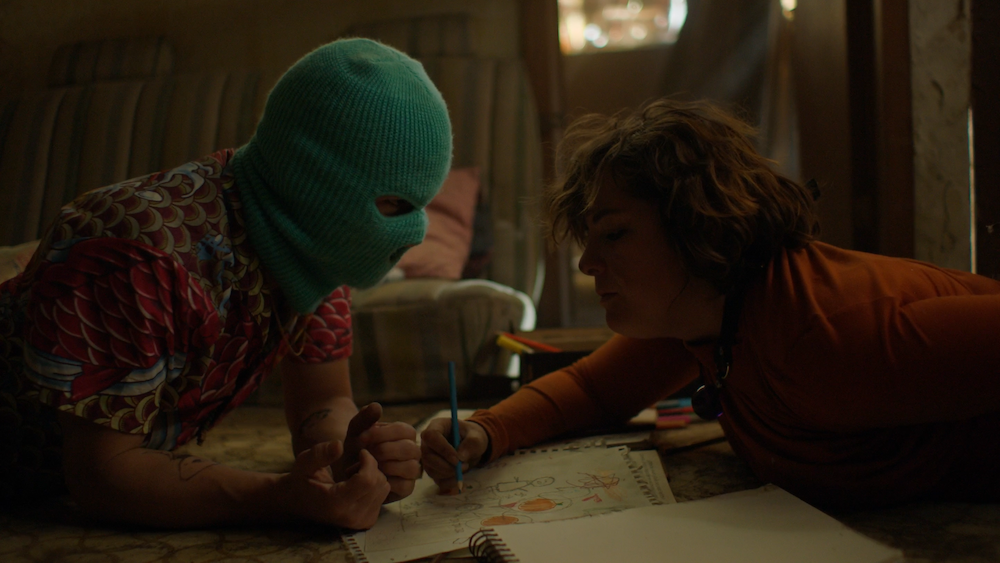
Berehezade (Berezada). Writer-director Danae Reynaud plays Bere, a Mexican stand-up comic whose shtick gets her in trouble. Onstage, she plays a pampered princess. Naturally, a couple of dimwitted guys kidnap her, convinced they’ll get a great ransom. Wrong. The dramedy’s grimy realities, especially the captors’ initial violence, too quickly give way to camaraderie among the young people. Like another feature on this list, it uses one character’s illness as a too-easy plot device. And the movie squanders its greatest material: As one kidnapper wonders, why isn’t anyone anxious to rescue Bere? You’re left wanting to know more about the flawed woman Reynaud plays. Still, her movie is a pleasant hang.
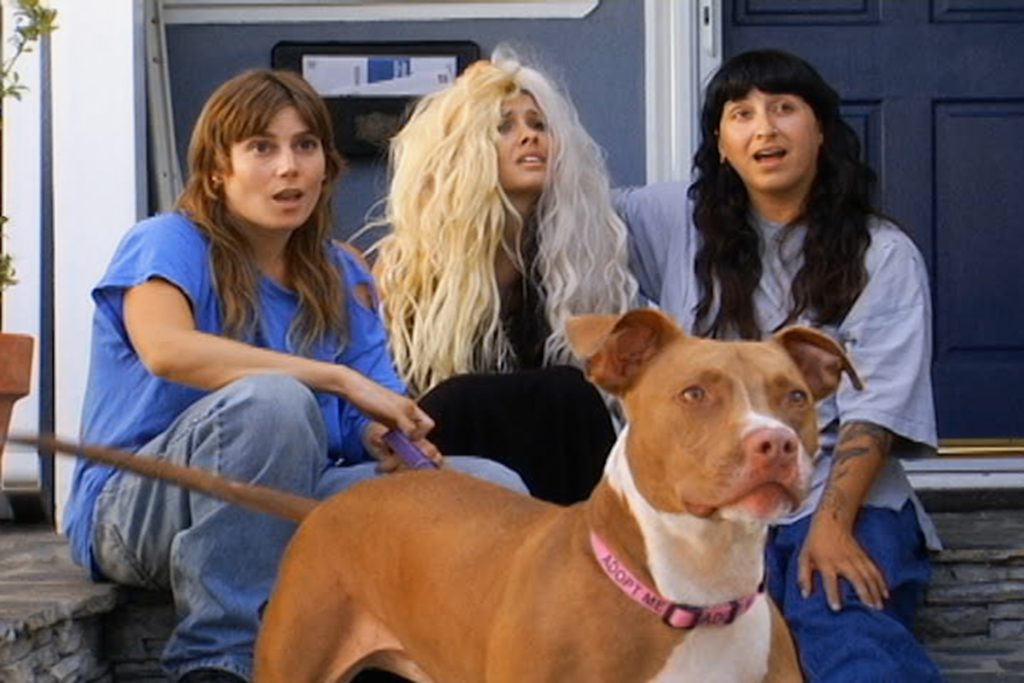
Danny Is My Boyfriend. If anybody ever believed Christopher Hitchens’ assertion that women can’t be funny, here’s hilarious rebuttal. (In this movie, that means funny haha as well as funny weird.) Writer-director duo Mechi Lakatos and Lucy Sandler play two reality-challenged LA women who discover they’re both dating the same dude, and sort of try to, like, get their revenge? What starts as a standard romcom setup gets an improv-driven treatment fueled by a gaggle of millennial and Gen-Z comedians (plus the great Silence of the Lambs actor Brooke Smith), creating a bubble of deadpan absurdity. By the time the leads are packed in a van with a bunch of women wearing bad wigs, Danny has lifted into a rare level of batshit-crazy bliss.

Frogtown. (Georgia Film) Walking a curious path between documentary and narrative, writer-director Costa Karalis’ film focuses on smiling eccentric Kathleen (Laurel Lynn Collins). She wants to organize a parade in her small north Florida town to celebrate the man-sized frog king she saw in the swamp as a girl. (Among her quiet detractors is her own adult daughter, who notes, “Every frog looks big when you’re 6 years old.”) Kathleen is upbeat but single-minded, the sort of person you might find yourself easing away from at the Publix. This mix of Ross McElwee-style study of Southern eccentricity and a panhandle variant on Great Pumpkin-ish delusion is a tonal experiment that never quite finds its (webbed?) footing.
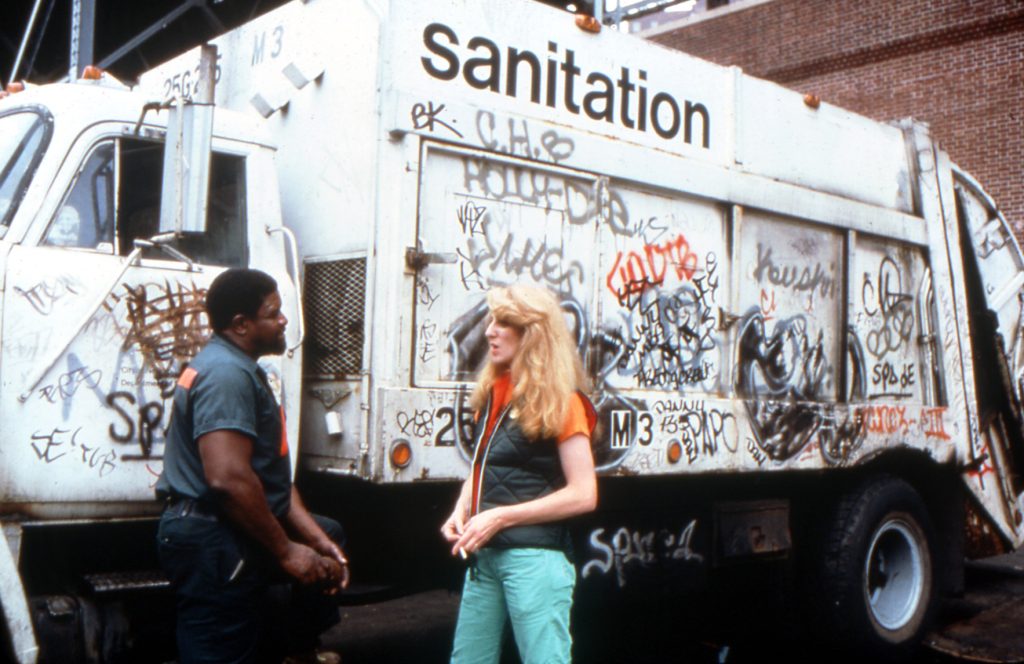
Maintenance Artist. In 1979, the gangly, long-haired Mierle Ukeles stood in front of a bunch of skeptical garbage collectors in a New York borough and announced, “I’m a maintenance artist.” It sounds like the start of a mockumentary, but Ukeles — learning the gender limitations in an art world celebrating men like Pollock, Rauschenberg and Rothko — found her calling by transforming the idea of what we see as art. An unpaid employee of New York’s Sanitation Department, she created awareness of work provided by overlooked subsets of the population — not only the guys who pick up trash but the cleaning crews, cooks and caretakers who make society function. Toby Perl Freilich’s informative documentary reminded me of the terrific 2010 Brazilian documentary Waste Land, about another artist who found both art and meaning in what most of the world sees as trash.
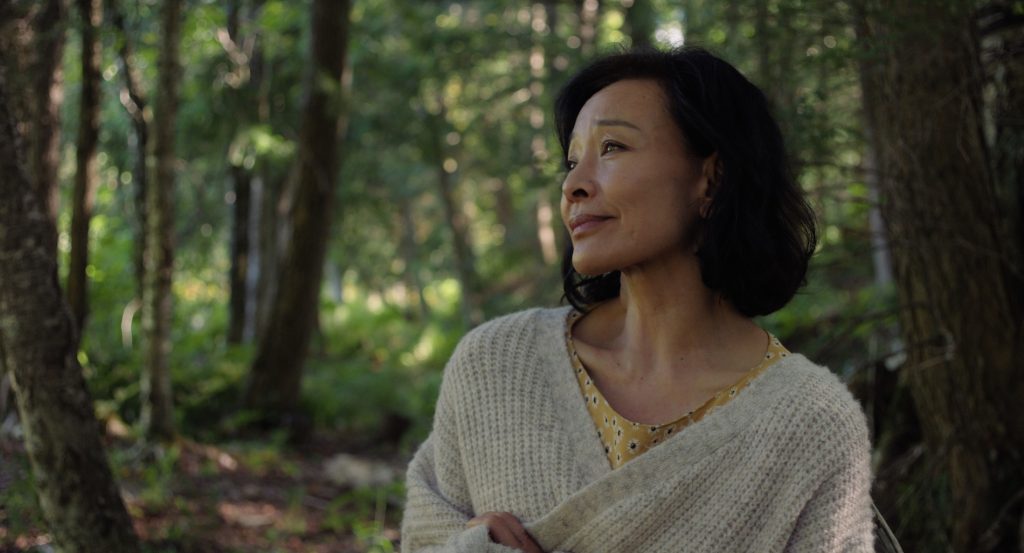
Montréal, ma belle. Joan Chen’s luminous face was the first thing we saw in Twin Peaks, though the David Lynch show never found a way to showcase her. Thirty-seven years later, writer-director Xiaodan He’s lovely film gives her room to flex in its tale of a woman grasping for a fresh start she partly doubts she deserves. Chen plays Chinese immigrant Feng Xia, who has lived for many years in Montreal, raising her daughter and son while helping husband Ang Jun (John Xu) run a convenience store. Her midlife crisis, or resurrection, begins when she meets younger woman Lisa (Charlotte Aubin) on a dating app. In a beautifully nuanced performance, Chen marks the character’s alternate shame and joy as she allows pleasure into her life. The characters are wonderfully flawed in a film that leaves Feng Xia’s options open — not in a copout way but to put us in her place. It asks what we’d do if we were torn between duty and passion, the country of our birth or the nation that restores your soul.

Party USA. (Georgia Film) The biggest snag I had with director/co-writer Jared Sprouse’s drama is that it fooled me into thinking I was watching a black comedy. Instead, it morphs into a modern noir that captures the soul-deadening nature of minimum-wage jobs and the petty power plays found in the workplace. Taylor (Ainsley Seiger, spiky and focused) works as an assistant manager at the cut-rate party venue of the title. She has a supportive boyfriend, Damian (Phillip Andre Botello), but her dad suddenly dies, and Taylor’s job is vital to cover her disabled mom’s insurance and help out her useless kid brother. She feels trapped even before a bad work accident tightens the movie’s screws. It’s rough around the edges, but Party nicely captures the trap of working-class life.

Summer Lost. (Georgia film) Writer-director Timothy Hall follows up last year’s The Pastor’s Daughter with another engaging regional drama. This one is set in North Carolina and centers on a romance between Spanish native Jordi (Eduardo José Paco Mateo) and Nick (Ryan Austin), who meet in the days before Nick’s sister’s wedding. Or is that actually when they meet? Hall cleverly tweaks the time frame here to intentionally disorienting effect. There’s an illness in the film that’s used as a sort of MacGuffin; it doesn’t track as medically plausible. Awkward performances throw a few scenes off-kilter. But the movie pays off in a big way emotionally. The scenery (North Carolina, Barcelona, Paris, Amsterdam) is a plus, too.
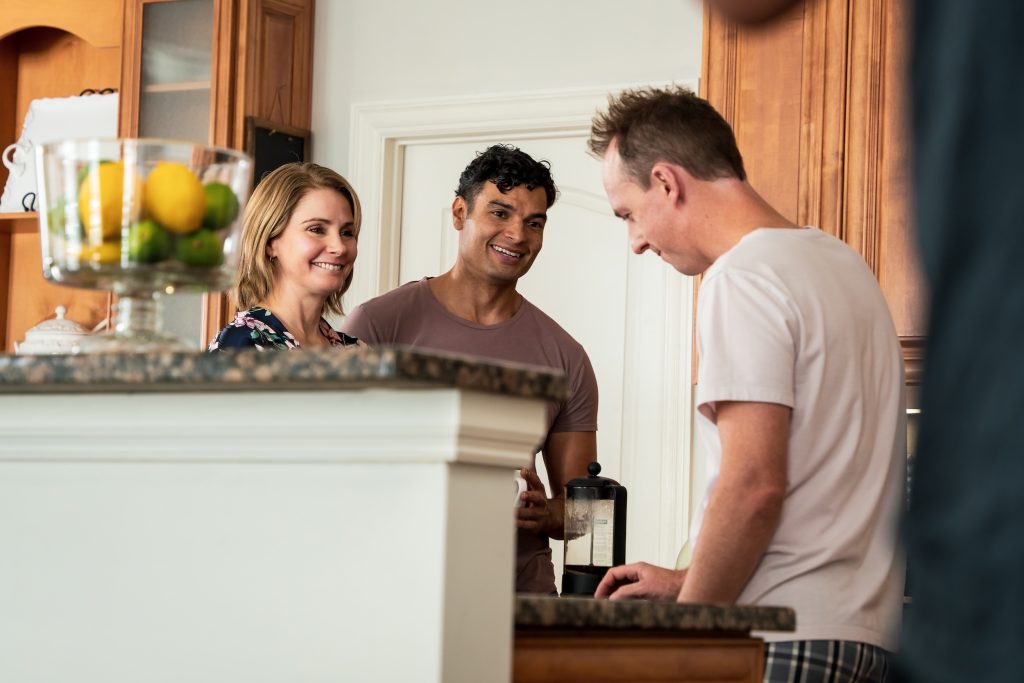
Third. (Georgia Film) A naked man falling into your backyard pool doesn’t happen every day. But in writer-director Alexander Parkinson’s sci-fi comedy, married couple Thomas (Parkinson) and Sandra (Coley Campany) treat handsome Ernesto’s (Norio Nishimura) arrival as a happy accident. Only it isn’t. He’s the latest offering from a global marketing monster known as Smile (commercials for its many services and products pepper the film). Soon, the three are sharing a bedroom, gallons of booze and a ton of Smile-brand cocaine, their lives reduced to algorithms designed to sell more stuff. A genially absurd takedown of our out-of-control consumer culture.
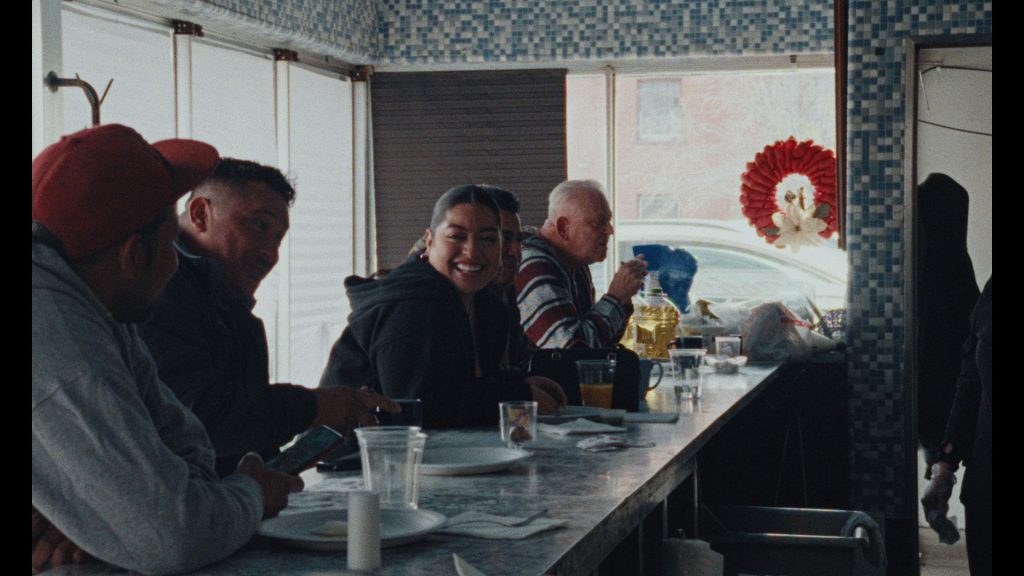
Valentina. Director and co-writer Tatti Ribeiro’s drama personifies that old takes-a-village ideal. Valentina (charmingly boisterous Keyla Monterroso Mejia) bounces back and forth between Juarez and El Paso, racking up countless parking tickets. She’s a mess, and so is the movie, in an entertaining way. It builds a portrait of the border-straddling community around Valentina as she hustles her way, with charm and cockeyed confidence, through a gig-economy existence. The movie doesn’t arrive at a clear destination, but she’s a fun tour guide through the daily improvisations she leans on to navigate her way through life.
The nearly two dozen narrative and documentary shorts I watched deepened my appreciation of Georgia filmmakers’ diversity and breadth. Sure, some of the films whiffed of vanity projects (actors staring at the camera, working up actorly tears). But there’s a lot of great, surprising stuff here.
Probably my top films in the two categories both touched on the richness that the immigrant population brings to Atlanta.
Crisply shot by cinematographer Eric Branco, director Korstiaan Vandiver and writer Valerie Alexander’s Beyond Unstoppable follows a Somali teenager newly arrived to Decatur who finds community through a local soccer league. He’s befriended by a teenage girl who’s also from Somalia, but she’s lived in the States longer. You could say the film is an updated afterschool special with a fairy tale twist, but it’s beautifully made — and maybe that’s exactly what we need these days.
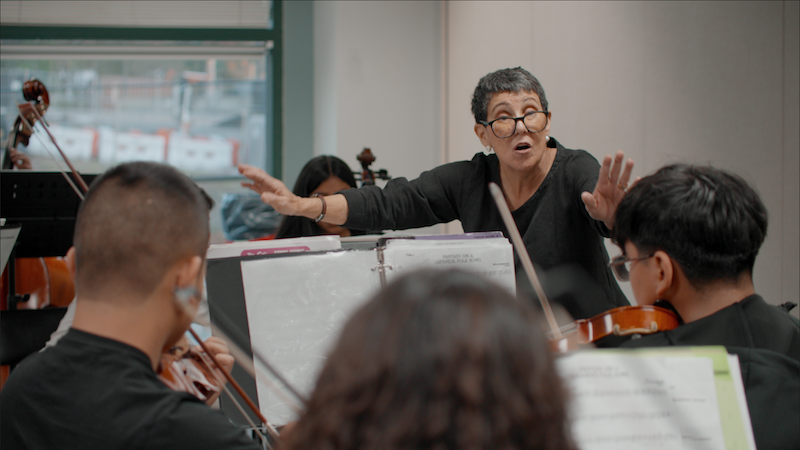
Director-producer Monica Villavicencio and Stephanie Liu’s La Orquesta delivers a portrait of Cuban conductor Juana Alzaga and her Buford Highway Orchestra Project, created to give children of undocumented and mixed-status families a place to play their instruments for the demanding “Miss Juanita.” When the Georgia Legislature passes the immigrant-tracking HB-1105, Alzaga vows, “I will sell my furniture and put bunk beds in all my house” for any children whose parents get detained. That doesn’t happen in this film, which primarily celebrates the power of both music and unity.
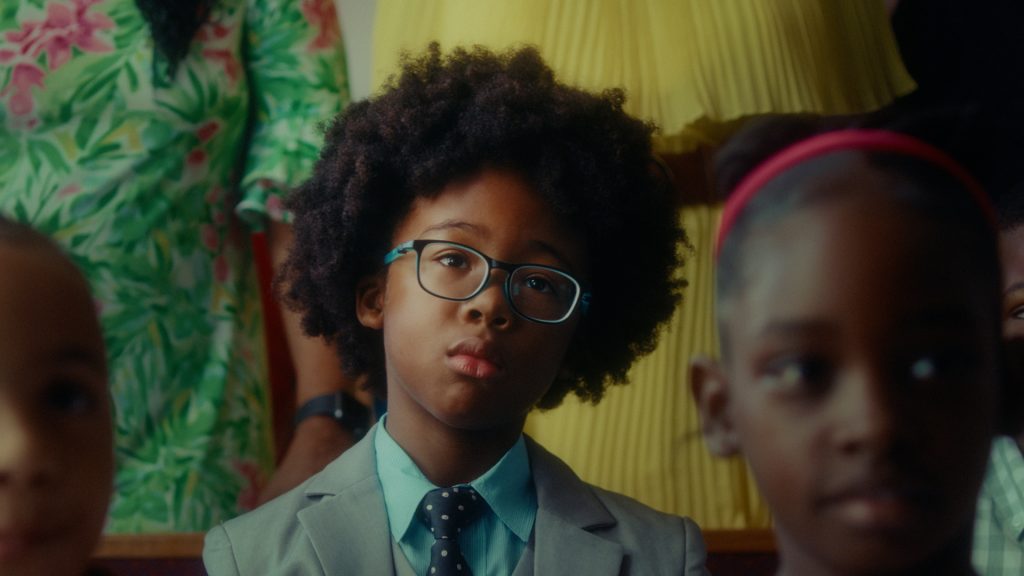
Among the other narrative shorts, I recommend Band Practice, directors Linda Denson and Diana Khong’s amusing tale of two high school BFFs going to a house party hoping to find new girlfriends — or at least some action. Director co-writer Thang Ho’s Girl Therapy also focuses on two high school besties, who discover, while exploring a Victorian house, that its two ghosts had similar frenemy issues. Before it winds up with a sci-fi “huh” of an ending, director Chris Anthony Hamilton’s Missing While Black captures the empathy gap between a white detective and a Black mother whose daughter has gone missing. Some stubborn men in an Indian city wage a low-tech battle against encroaching AI in writer-director Pranav Bhasin’s We Were Here. An adorable boy turns Easter Sunday into a chance to proclaim love for a classmate in writer-director Ivan Rome’s Oh Happy Day! Tapestry is Jason Sheedy’s brief, spooky freakout of a mood piece. And in What Are Grandchildren Made Of?, writer-director Lindsey Susor turns a tragic accident into a surreal, bloody black comedy about enterprising elders whose granddaughter keeps on giving in ways you won’t believe.
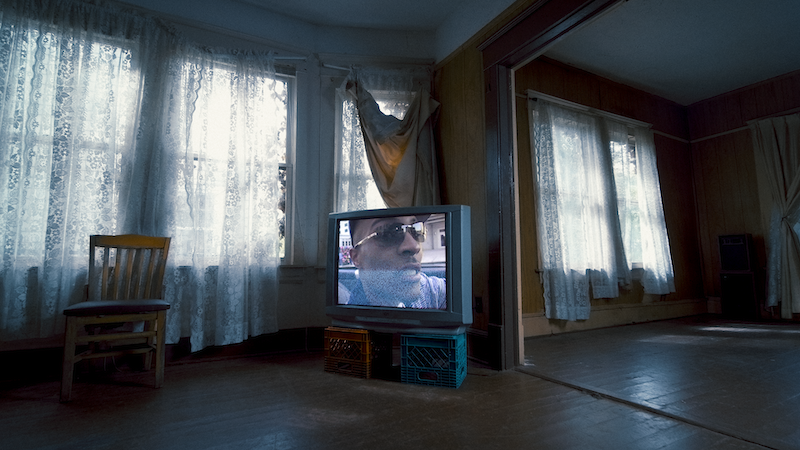
Among the documentary shorts, check out In the Garden, writer-director Ivey Redding’s visually impressionistic and loving tribute to her mother, which also serves as a valentine to a certain subset of Southern white ladies. Also impressionistic and memorable is director Kyle Kramb’s meditation on a semi-rural patch of southeastern Atlanta land known as Constitution Lakes. Christopher Scholar’s The Birth of Trap Music is a decent short primer, but you might want to seek out the superior feature doc made by my friend Ryon Horne and his brother Tyson for the AJC, 2024’s The South Got Something to Say. And director Isabella Sullivan’s Drag Me to Church is a nice corrective to the backlash against anything that isn’t hetero, white and performatively “Christian.” It shows Atlanta’s St. Luke Lutheran Church hosting a gospel celebration by drag queens — and the explosion of online hatred aimed at the church’s pastor as a result of his community outreach.
Where & when
The Atlanta Film Festival and Creative Conference will take place from April 23 through May 3 at the Plaza Theatre and the Tara Theatre.
::

Steve Murray is an award-winning journalist and playwright who has covered the arts as a reporter and critic for many years. Catch up on his monthly Steve on TV columns here.
STAY UP TO DATE ON ALL THINGS ArtsATL
Subscribe to our free weekly e-newsletter.

PLEASE SUPPORT ARTSATL
Your Gift Sustains the Coverage You Count On!
Related Posts