Review: Theatrical Outfit’s ‘The Price’ exposes economic disparity through precise performance
Throughout his career, Arthur Miller was known for his searing critiques of American capitalism and the so-called “American dream.” In The Price, the laconic tale of aging policeman Victor Franz, Miller examines what happens when the American dream is deferred and the impact on individual worth and family ties. The current production running through May 3 at Theatrical Outfit — a co-production with The Breman Museum — zeroes in on the personal nature of the piece, making for a deeply moving, if occasionally stiff, theatrical production.
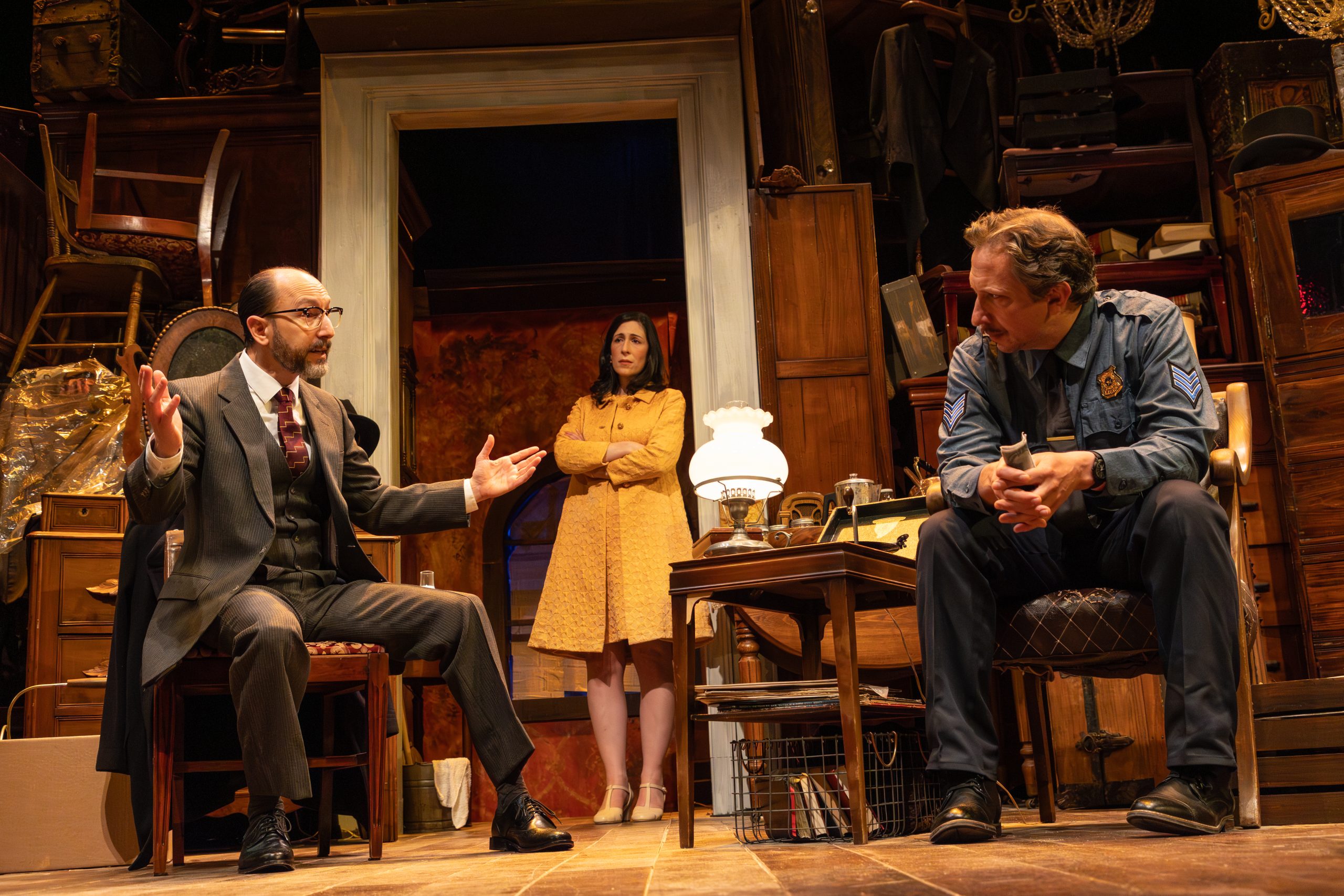
The Price is set in an overcrowded attic filled with antiques and memorabilia of decades passed. The house was previously owned by Victor’s late father, and, with the building set to be torn down, Victor must figure out what to do with the remnants of his childhood. His wife Esther (Cara Mantella), dissatisfied with their station in life, is desperate to sell everything, hoping the money will finally provide them with a level of financial security they have never had. Victor (Eric Mendenhall), who dropped out of college decades ago to support his father, is conflicted about parting with the last of his family’s possessions.
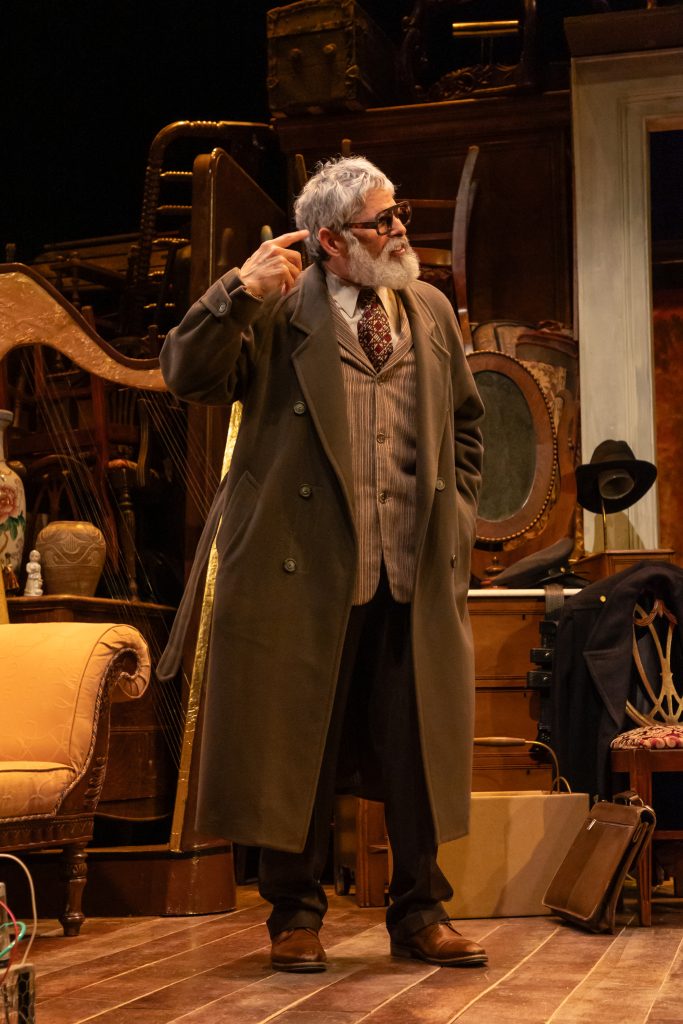
The cast of characters is rounded out by Gregory Solomon (Brian Kurlander), an elderly appraiser who Victor hopes will buy the contents of the house, and Walter Franz (Andrew Benator), Victor’s much more successful brother with whom he has a fraught relationship.
Though largely revolving around what will become of all of this old furniture, The Price is about how we navigate financial hardships and how we cope with the cost of our decisions. The core tension is between Victor and his brother, who chose to pursue medical school during the Great Depression rather than stay and help Victor take care of their father.
Directed by Matt Torney, the production is slow and even-tempered, subtle at times to the point of soporific. The meat of the story is Victor and Walter’s relationship, and, since Walter does not appear until the very end of Act I, much of the first act can feel like treading water, setting the stage for their confrontation. In Act II, however, the play explodes into action as old wounds and long-buried resentments start to emerge.
The play is carried by the performances, which are comfortable and dispassionate for the first half before ratcheting up in intensity in the second. Mendenhall’s Victor, as the character with the most to hold in, is the most stoic throughout the play. There is a restraint to Mendenhall’s performance, a set to his jaw as if Victor is perennially holding himself in position. He is the fixed point around which the rest of the production rotates, and he finds worthy complements in the rest of the cast.
As Victor’s unsatisfied and hungry wife Esther, Mantella is a sympathetic yet assertive force. Mantella conveys the nuances in how Esther manages the situation, trying to keep everything in balance while still praying she gets what she wants.
Kurlander is a scene stealer as the elderly Solomon and the play’s only hint of comedic relief. Kurlander disappears into the role, dispensing wisdom and unintentional comedy with seamless ease. He is easily the highlight of the first act.
As for Walter, Benator walks a fine line between personable and superior. His Walter works the situation in front of him with as much precision as he can before Victor’s stubborn pride forces him to drop his walls.
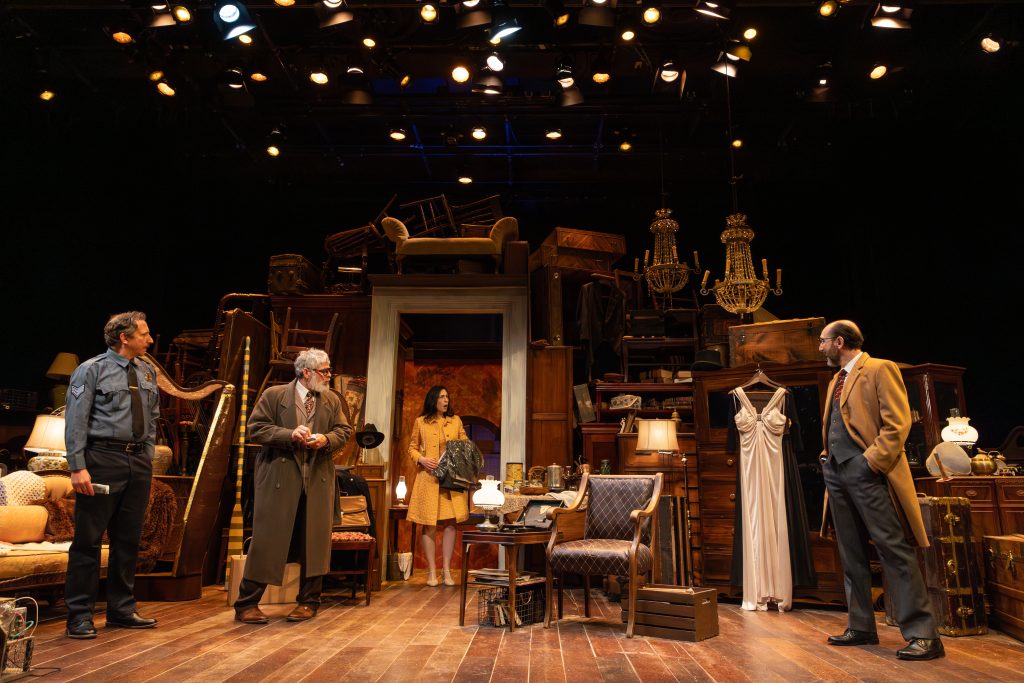
The fifth character, of course, is the set by Isabel and Moriah Curley-Clay — a towering monstrosity of keepsakes representing a life that has been tucked away. One can itemize as much as they want, looking at the various assortment of chairs, wardrobes and old musical instruments, but it is the overbearing shape of it all bearing down on the characters that gives the play its thematic weight.
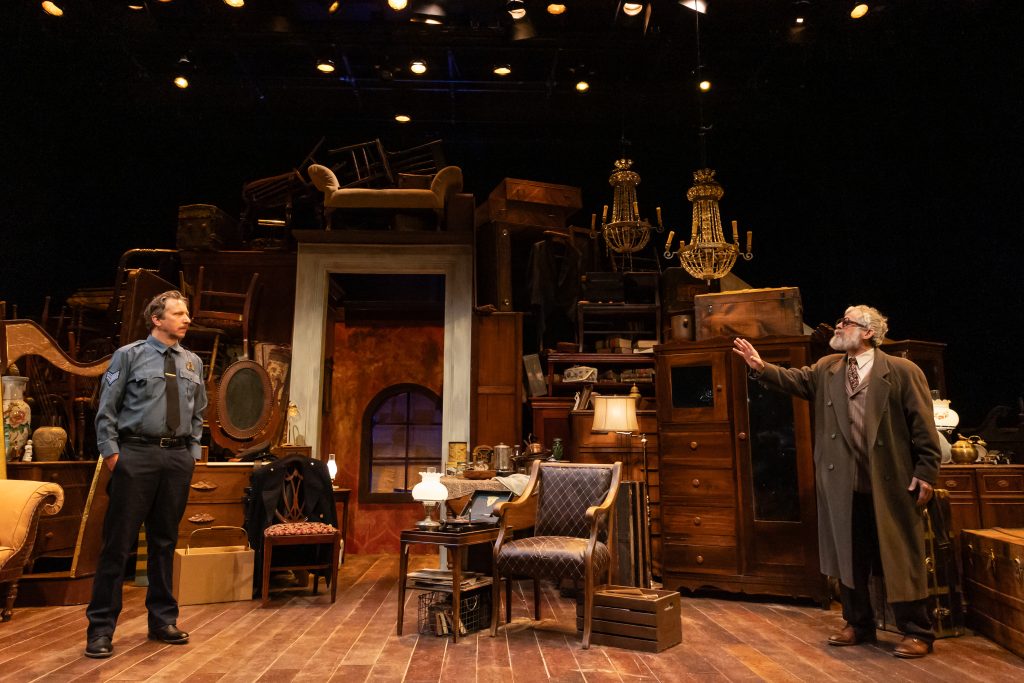
Rachael N. Blackwell bathes the set in warm lights, giving it a homey glow, while costume designer April Andrew Carswell adds subtle touches to the characters’ clothes, such as Walter’s shoes being tailored and polished while Victor’s are worn and scuffed.
The highlight of the play, however, is the way that Mendenhall and Benator carry the ideological conflict. Both characters have their flaws, and Miller is careful not to make either of them strictly right or wrong. The result is that when the actors really go at each other, it feels like watching an emotional tennis match — the viewer goes back and forth trying to decide which character is more justified in their grievances.
In the end, as in all of Miller’s work, the true villain is the system that creates such scarcity and forces people into choosing between stability and loyalty. This message underpins the story, and the actors carry it off with nuance and care. It is a play that rewards patience and attentiveness and ultimately asks us to consider how the decisions we make might end up haunting us.
Where & When
The Price is at Theatrical Outfit through May 3. Tickets, $59.
84 Luckie St. NW.
::

Luke Evans is an Atlanta-based writer, critic and dramaturg. He covers theater for ArtsATL and Broadway World Atlanta and has worked with theaters such as the Alliance, Actor’s Express, Out Front Theatre and Woodstock Arts. He’s a graduate of Oglethorpe University, where he earned his bachelor’s degree, and the University of Houston, where he earned his master’s.
STAY UP TO DATE ON ALL THINGS ArtsATL
Subscribe to our free weekly e-newsletter.

PLEASE SUPPORT ARTSATL
Your Gift Sustains the Coverage You Count On!
Related Posts