Set Life: Cafecito Productions’ Erika Miranda and Caitlin Hargraves celebrate and create everyday magic
Magical realism. The term is an oxymoron. And like the best of them, it emphasizes with exactitude an oftentimes concealed truth.
That is, the magic in life is everywhere, in the everyday, in the real. And oftentimes, it’s missed until someone points it out to you.
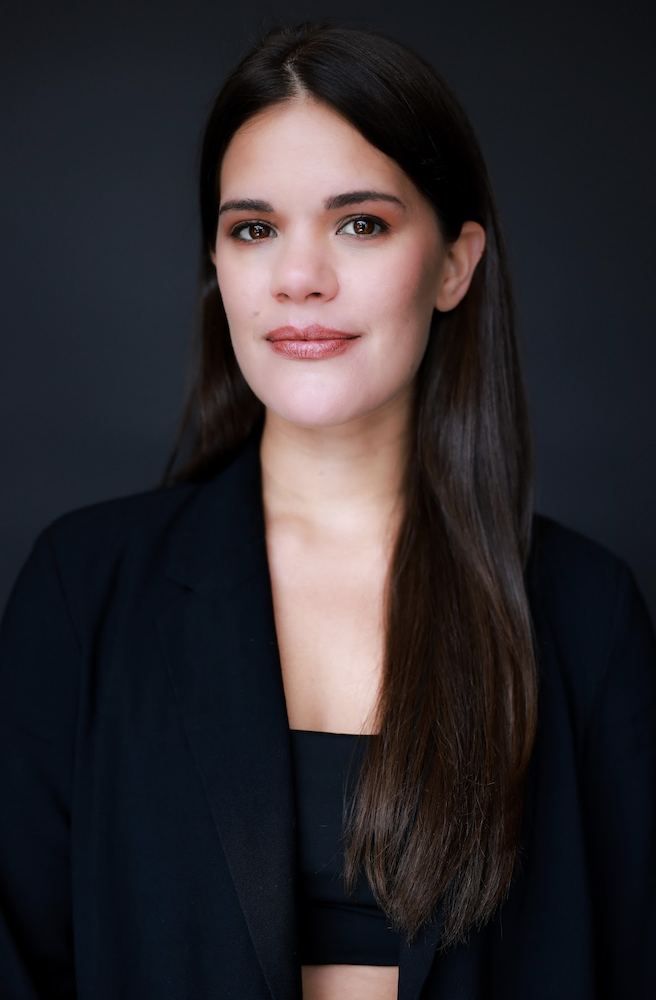
The founder and owner of Atlanta-based Cafecito Productions, producer Erika Miranda, alongside producer Caitlin Hargraves, are creatives devoted to storytelling that shows that magic — yanking off the cloak and allowing viewers to notice and observe the real and the raw.
Miranda describes the day-to-day work at six-year-old Cafecito Productions this way: “Most of our work has been in Atlanta, where our roots began, with collaborators we’ve found in the Atlanta scene.”
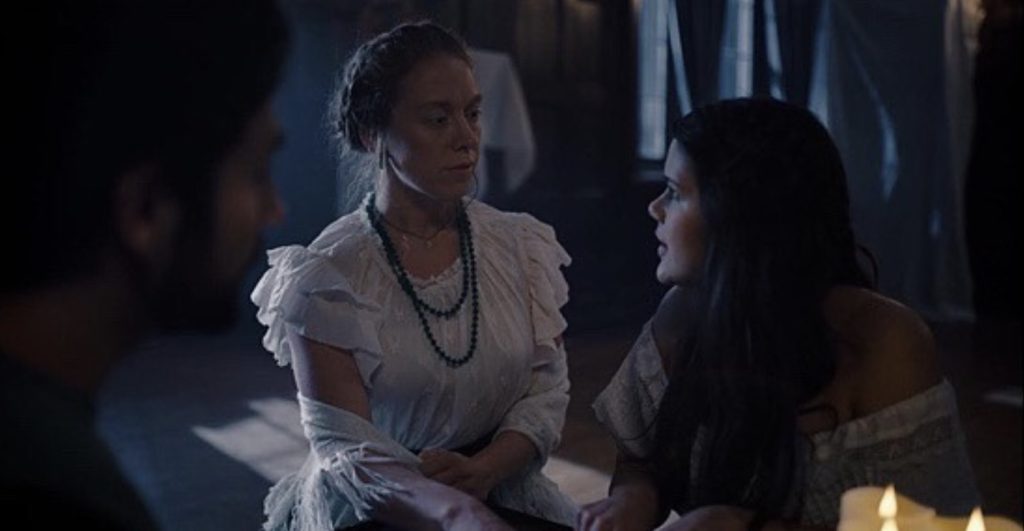
Their first film, Mi Casa, was adapted for the screen from a theatrical play written by Jocelyn Rick.
“We were fortunate to license it to HBO. And it features two ghost sisters, Caitlin and myself,” Miranda says of the actor hat both have worn throughout the years, first onstage and then on-screen.
Currently, Cafecito Productions has a film on Roku, Trailer [Trash] Magic, which is Miranda’s directorial debut, written by Keatyn Lee.
“It’s about Mexican American witches who live in a trailer park in Appalachia. So you see the magical theme there,” Miranda describes.
Their latest film, Her Bones My Body, leans into the animalistic instincts that often arise between mother and daughter. Miranda directed and appears in the film and describes the work as “leaning into an otherworldly sort of element.” Hargraves wrote and also appears in the drama.
Cafecito Productions’ next project is a proof-of-concept for a feature-length film that Hargraves and Miranda co-wrote.
“It’s called You’re Leaving Me Behind, and it was our first time working together as writers,” Hargraves says. “We’ve really pushed ourselves to try on new hats with every project, and we’ve put a lot of ourselves and our experiences into the writing.”
She also notes that as time goes on, she and Miranda are fully integrating themselves as artists, as friends and as collaborators. Fearless, together.
Like most of their projects, You’re Leaving Me Behind is highly personal and a mix between shared experiences, larger human truths and, as the Cafecito website describes, “messy, magical and tender cinema.”
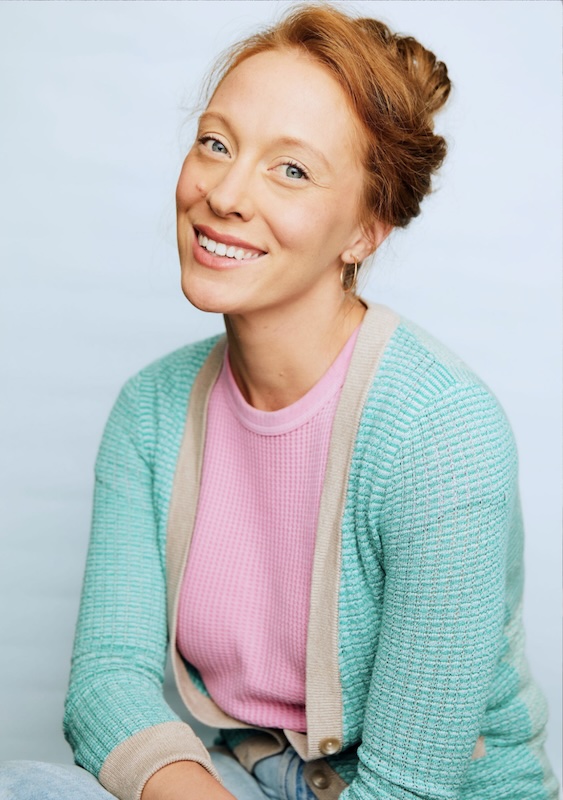
It’s a mix that suits the creative collaborators.
“Caitlin and I are a little bit of this and a little bit of that,” Miranda notes. She describes herself as “half Mexican with Norwegian roots, born in Cleveland and raised in the South,” while Hargraves describes herself as “half Chilean and half Arkansas, also raised in the South.”
Hargraves observes, “I think that magical realism thread from our cultures and backgrounds — our families being from Latin America — that we’ve been able to use that lens to get closer to our audiences and create space to talk about the messy and tender subjects and to really create an empathetic connection between viewer and film.”
Tough subjects, the co-creators find, are more digestible and easier to talk about when there’s a bit of magic involved.
“Another strength [we share] is that we’re coming from the perspective and viewpoint of women,” Hargraves adds. “It’s no surprise that in all of our stories women take on a whole lot of strength, bravery, vulnerability and empathy.”
How would they advise other independent filmmakers and creatives to find like-minded or like-focused collaborators, as they have been so fortunate to do in an industry with its ups and downs?
Miranda says, “You need to surround yourself with people who say yes to your wild.”
At the fellow creatives’ first meet-up for coffee after being introduced in the Atlanta film community, Miranda adds, “I asked Caitlin if she wanted to produce a theater festival with me, and she goes, ‘I don’t even know you, but yes.’”
That festival, SheATL, was a branch of SheNYC Summer Festivals, where producers and mentors to up-and-coming playwrights pair up to produce their first full-length plays or musicals.
It’s a program that’s still going on six years later, although the business partners stepped back to work on individual and joint film projects.
Exploration and exposure to other creatives in various locales have also given Miranda and Hargraves ideas and skills to further hone in Atlanta.
“Caitlin and I have lived in different cities through our work — New York, Chicago and LA — and I don’t think it’s an accident that Atlanta was the breeding ground for our film work and our success as independent creators,” Miranda notes.
She adds, “We pride ourselves in saying that we’ve been community-built.”
In Atlanta, the filmmaking pair has also raised funds for two of its movies, and the local support has enabled them to build audiences outside of Atlanta.
“We’ve made six films,” Miranda says. “So we’ve been able to encounter fundraising in a variety of ways, and it’s looked a lot of different ways for us.”
They funded their first film together (the one that was then licensed by HBO). Then, two of their films were funded through local Seed&Spark, an independent film crowdfunding platform.
“It makes it easy [for indie filmmakers] to pump each other up,” Hargraves says. “We love to see our friends building a campaign on Seed&Spark and to be able to contribute to their success, as well.”
Trailer [Trash] Magic was paid for by a grant that Miranda received as a recipient of the Georgia Film Impact Award, an honor bestowed on local industry professionals and leaders who’ve made significant contributions in the creative industry.
“There’s actually several grants we’ve gotten through different sources,” Miranda adds.
Not only have Miranda and Hargraves cheered on and supported other indie filmmakers through crowdfunding efforts, they have been a source of support to local Georgia film crews.
“When we ask ourselves, how do we sustain the momentum and how do we continue to scale, we give back to the crews who have said yes to us time and time again,” Miranda says.
Overall, the co-creators are still refining their methods for success and for supporting the local creative ecosystem in the process.
Miranda notes, “I think Caitlin and I have cultivated a set that is respectful, that is brave, that is creative — and it wasn’t automatic [to trust our voices] to create a team that’s willing to say yes.”
Cafecito’s last few films have all been women-forward.
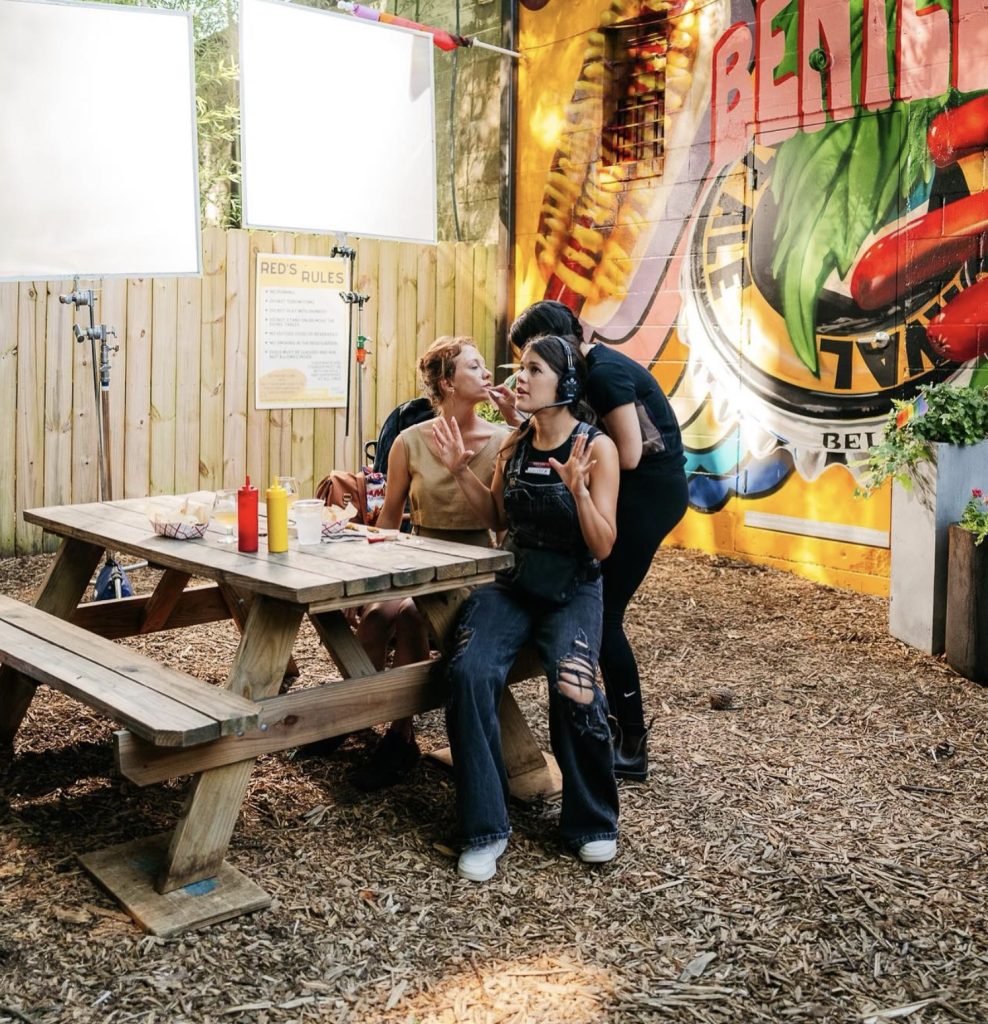
For example, Her Bones My Body featured a crew that was 99% female and led by women or non-binary professionals.
“We’re doing the footwork that we can to empower those voices along the way,” Miranda adds — and perhaps to create teams capable of producing the tender magic.
“Erika and I didn’t go to school to become filmmakers. We have deep-rooted training in acting,” Hargraves says. “We’ve let what we know be a strength, we’ve asked questions and educated ourselves and we are bringing a strength to the table.”
And she closes, “Our projects are made for us and for the community and not based on what’s going to sell or what will fit in someone else’s slate. It’s what’s feeding us as humans and as artists.”
::
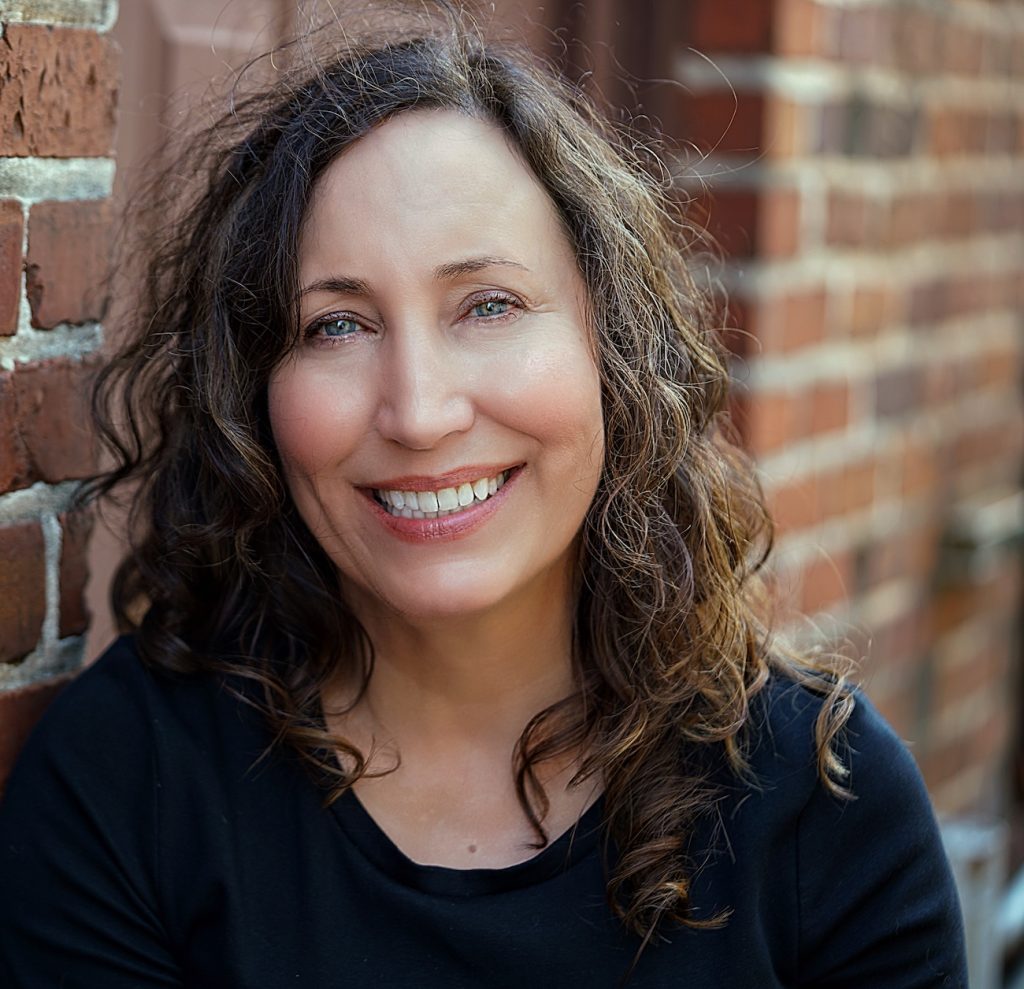
Carol Badaracco Padgett is an Atlanta-based freelance writer who focuses on film and television, the automotive industry, architectural design and collaborative storytelling projects.
STAY UP TO DATE ON ALL THINGS ArtsATL
Subscribe to our free weekly e-newsletter.

PLEASE SUPPORT ARTSATL
Your Gift Sustains the Coverage You Count On!
Related Posts