
Take an enigmatic journey through Americana with Atlanta’s Boxcar Radio
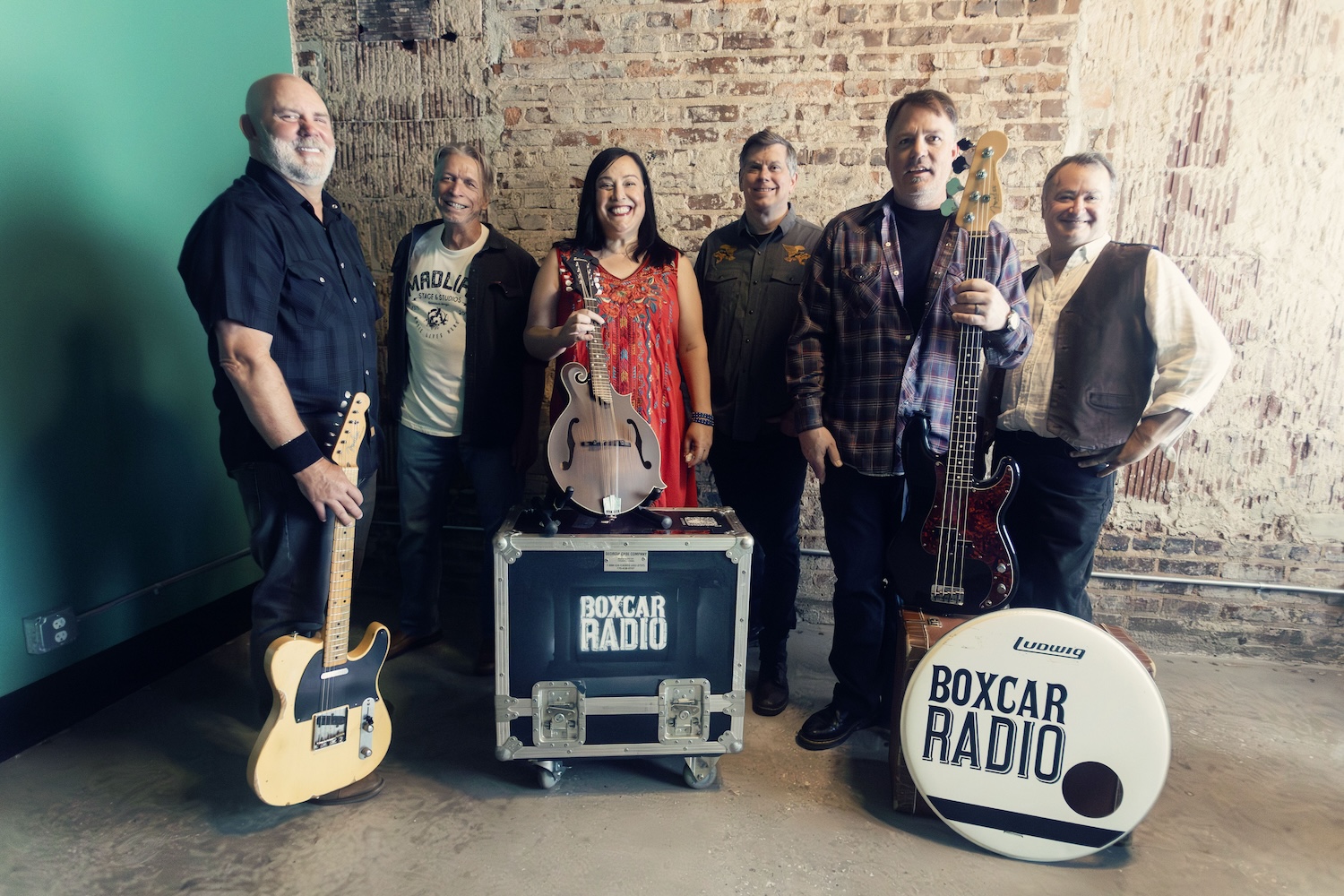
Boxcar Radio (vocalist/songwriter Rodney Bond, lead guitarist/songwriter Mark Evers, Jeff Hall on bass guitar and harmonies, Don Olsen on drums, Mark Abrahams on keys and Beth Kelhoffer on harmonies) holds a unique place among the many Americana bands that perform in Atlanta. In a genre known for honest and plainspoken storytelling, the band members’ varied talents, experiences and perspectives work together to take the music one step further. They don’t just tell their own stories; they make space for the listeners to find theirs.
The band began 11 years ago as a Gram Parsons tribute act and now regularly performs original music at Atlanta venues such as Eddie’s Attic and Smith’s Olde Bar. Over the years, they’ve added members and built a loyal following and strong reputation, sharing the stage with many better-known artists, including Donna the Buffalo, Shawn Mullins and Jackson County Line. Their two most recent albums, Born on Blood and The Devil’s Cut (both produced by Jonny Daly), explore familiar Americana territory. But what distinguishes many of the songs on these albums is the use of techniques such as alternative storytelling, lyrical/musical dichotomy and evolving song structure to position the listener as an active participant. “We want people to interpret what they want it to mean for them … it doesn’t matter if they exactly understood what the song is saying, if they liked the song and it means something different to them,” says Bond.
This space for the listener begins with the band’s ability to collaborate in song development, Bond explains. “We all have our different strengths. Everybody has a say. We’ll try something, and, if we say that it doesn’t work, nobody gets their feelings hurt. We just work really well together.” It also seems an outgrowth of the differing musical experiences and perspectives of primary songwriters Bond and Evers.
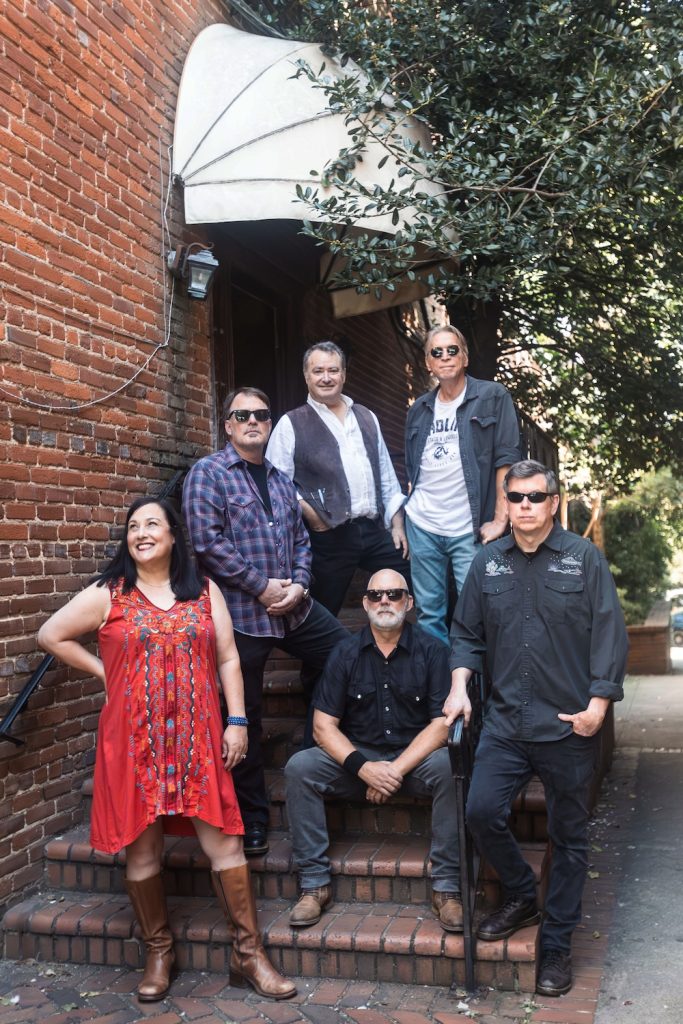
For Bond, musical intrigue began at a record store. “I saw this Judas Priest album. I didn’t even know what it sounded like. I saw the cover had this cool mausoleum on it, and I thought, I’ve got to get this,” he says. That experience began not only a lifelong affinity for heavy metal music but also a fascination with the paranormal. Music, to him, provides a mystical means of escape from the mundane existence of everyday life. Bond describes the experience of listening to music as “like packing up and going on a trip, leaving stuff behind and coming back,” and he hopes that listeners will experience the same thing.
That sense of the mystical is evident in the song structure that creates hazy impressions rather than following a conventional narrative arc. That approach allows the rest of Boxcar Radio to fill in with sounds that support the overall message of the lyrics. In “Did I Dream You?,” for example, Evers begins by sustaining one note through multiple measures, providing a steady foundation for repeating waves of bell-like guitar and Abrahams’ sparing keyboard accents. Olsen creates just enough height at the right points but stays largely in the background, pulsating rather than driving the melody home. Hall and Kelhoffer provide secondary harmonies that don’t overpower the primary vocal delivery. Bond delivers vocal inflection that lies somewhere between Jay Farrar’s resigned-but-not-completely intonation and Jeff Tweedy’s world-weary stepping away from emotion. The composition and production foreground that distance, and this paradoxical rendering of reality provides the feeling of what it’s like to first fall in love or how a dream dissolves as you try to make sense of it. “Birds” uses a similarly dreamy sound to capture the incongruity in how two feelings — pride and pain — can exist side by side while watching your children grow up and find their own way in the world without you there to protect them anymore.
For Evers, music was not so much an escape as it was an anchor that helped him process his own feelings and his sharp sensitivity to the pain of others. The guitar playing of Mark Knopfler in Dire Straits’ “Sultans of Swing” captured his attention when he was around 10. “I’d stay up, literally, wait two hours to hear it again on the radio, because that’s how we did it back then. That was the first time I knew, oh my God, I want to do that. And it was to play guitar,” he says. Music was the constant as he experienced the loss of his father as a young teen, through the unraveling of an important relationship, when he floundered trying to find direction and as he watched friends experience life-altering tragedies or self-destruct from addiction and depression. His aim as a guitarist has always been to choose melodies and fills carefully and intentionally to better communicate the feelings of the song’s implied narrator and deepen its emotional core.
“Harder Than Hell” is a telling example. Inspired by Evers’ mother’s decline from dementia, the song captures the exhaustion of caretaking and the heartbreak of watching a loved one disappear while feeling helpless to do anything about it. He relays this feeling with vocals that hit on nearly every beat, intensifying the feelings of desperation as time is running out. While it was the most difficult experience he’s ever been through, he says, there was something poignant about it as well. There’s an ambiguity to the experience that he wanted to capture in the song’s chorus. “As you’re taking care of someone like that, there are all these beautiful moments, and that’s what the chorus of the song is. It’s about holding her hand because she would sometimes still be Mom and still be funny and loving — all that stuff in between those maddening times.” This song is the one he is most proud of, and it means a lot to him when audience members come up to tell him after a show how much it touched them.
In addition to impressionistic storytelling and lyrical/musical contrast, Boxcar Radio provides contemplative space for the listener through extended outros that augment, and even redefine, a song’s narrative. “Rusted Car,” for example, begins as rollicking, alt-country fare about a battered heart that is still willing to take a chance, like an old car that still runs, if just barely. But mid-track, the band abandons that earlier energy with an outro that doesn’t quickly fade out, as would be typical, but is longer, slower and more poignant than the first part of the song. This shift reframes the song into a reflection that, despite the earlier jaunty tone, it takes real effort to remain vulnerable and resilient after rejection. The effect is that the sentiment in the earlier lyrics resonates more heavily.
Boxcar Radio’s music works best when it is a balance of both songwriting perspectives — mystical and personal — but dominated by neither. Songs like “Ghost of New Orleans” (about ghosts gathering at a grave), for example, or “Waiting on a Phone” (about Mark’s friend who needed a heart transplant) lean too much in one direction or the other. It’s not that they aren’t well-constructed or enjoyable songs, but they diverge so far from each other and the rest of the music that it can impede the listener from fully understanding who the band is and what they are all about. A clear identity hook may be what is needed to gain new repeat listeners and move to the next level in terms of venue size and reach beyond the local.
The brand of Boxcar Radio, what makes it different from the typical Americana band, is music that does not instruct the listener what to think or feel but creates space for reflection, allowing listeners to become more mindful of their own thoughts and feelings and those of others. Their music, then, serves not so much as a soundtrack to life’s journey but an accompaniment — an idea reflected not only in their music but in the band’s name as well. As Bond explains, “You’ve packed up your bag, and you’re hitting the rails, riding the train, and all you’ve got with you is a little radio. You’re listening to it, and that’s your connection to the world.”
Where & when
Boxcar Radio performs at Eddie’s Attic at 9 p.m. January 3.
::

Shannon Marie Tovey is a freelance music journalist and educator who covers the jazz, blues and rock scene.
STAY UP TO DATE ON ALL THINGS ArtsATL
Subscribe to our free weekly e-newsletter.

PLEASE SUPPORT ARTSATL
Your Gift Sustains the Coverage You Count On!
Related Posts

