Steve on TV: When humanizing the monsters goes wrong, and refocusing a classic goes right

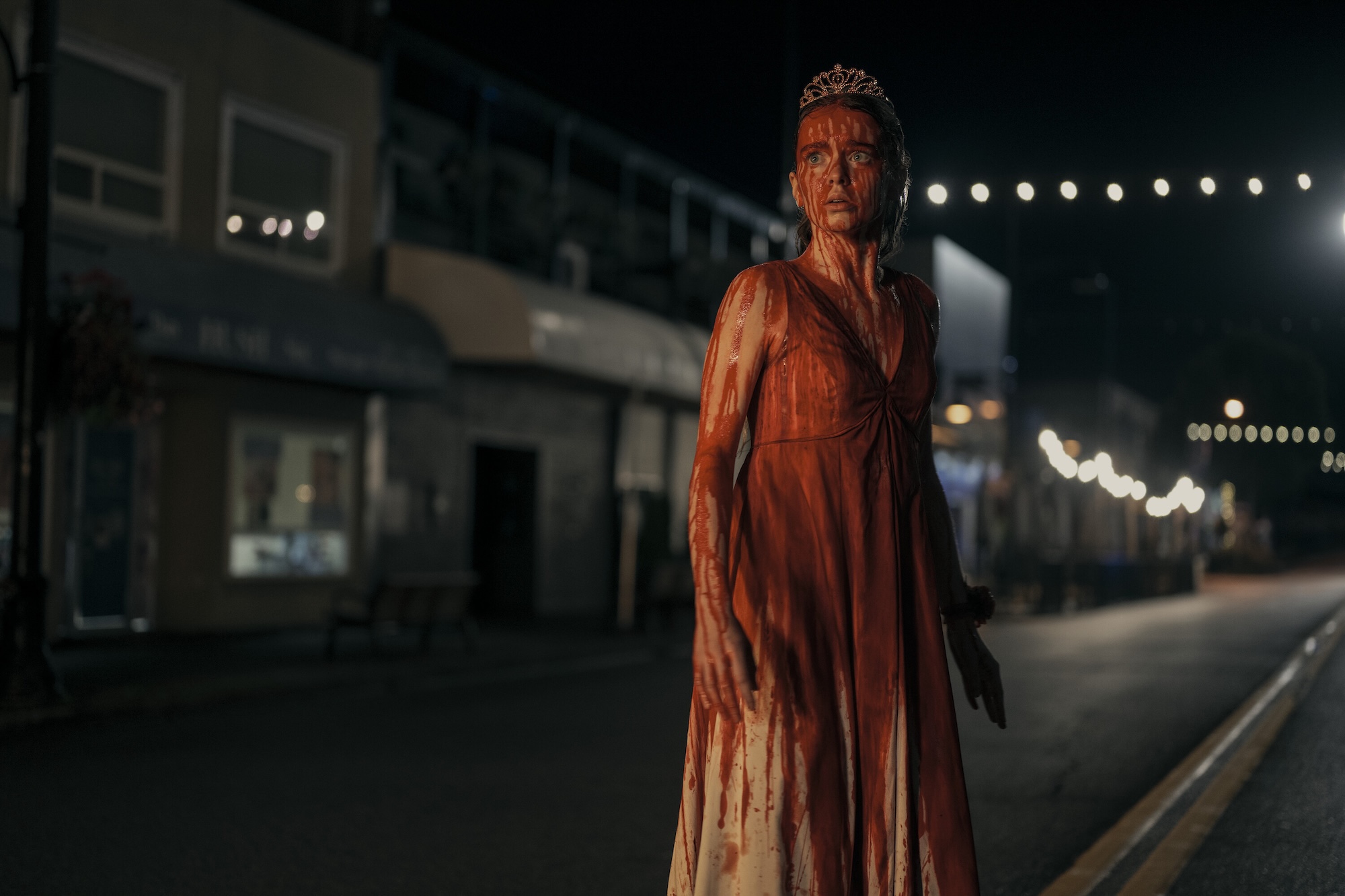
Do we really need a redo of Stephen King’s Carrie, one that updates the story to our era of social media overkill and culturally divided furor? King himself seems to think so. He personally approved Prime Video’s 21st-century revisions by Mike Flanagan, former go-to director of horror adaptations at Netflix (The Haunting of Hill House, The Fall of the House of Usher). So now we get to see telekinetic teen Carrie White put through the wringer for the fourth time, her humiliation and bloody prom-night revenge multiplied on a thousand teenagers’ smartphone screens. (There have been two previous theatrical versions of the novel and one TV two-parter; let’s play nice and forget the big-screen sequel, The Rage: Carrie 2).
Even if this latest Carrie has King’s approval, should we trust him? King despised Stanley Kubrick’s stunning take on The Shining and tried to “correct” it with a 1997 TV version that’s more faithful to his novel –and pretty much unwatchable. Still, under Flanagan’s guidance, the first two-thirds of Prime Video’s eight episodes are smart and compelling. The last third falls off a cliff.
Played by fresh-faced Summer H. Howell, Carrie is not some pasty cellar dweller but a perky go-getter who enters the wilds of public high school with awed enthusiasm. Yes, that infamous “plug-it-up” incident in the girls’ locker room is traumatic, but she bounces back with a resilience never seen in the panicked Sissy Spacek of Brian De Palma’s great 1976 film. This Carrie is like a houseplant opening up after being carried out into full sunlight.
Previously she’s been home-schooled by mom Margaret (Samantha Sloyan). In the past, the role has been given sinister, operatic spins by great actors: Piper Laurie, Julianne Moore and Patricia Clarkson. Here, Margaret is not the nutso, fundamentalist Christian fanatic of past iterations but the widow of a survivalist Q-Anon type who believes in tainted contrails and the deep state. Sloyan, in a no-nonsense, practical performance, shows how Margaret becomes a prom queen of her own bake-sale-fundraiser domain. Finding her niche at school assemblies and in front of local TV cameras, she becomes the town’s pundit on the state of our youth.

In other words, Carrie humanizes Carrie’s monstrous mother. Flanagan does that to all the characters here, dramatizing what Jean Renoir states more cynically at the end of his The Rules of the Game: Everyone has their reasons. That extends to Carrie’s second villainess, spoiled teen princess Chris Hargensen. Played with a range that moves from ferocious to subtle, Alison Thornton is terrific in the role. But I want to hate Chris Hargensen, not learn she’s a bitch because her neglectful father is even worse. And I want to be freaked out by Margaret White — and by Carrie’s bloody, heartbreaking revenge. In Othello, the mystery of Iago’s evil is what drives the tragedy. I don’t need to know about the childhood trauma that made him bad.
Besides putting Carrie’s antagonists on the therapists’ couch, Flanagan pushes the story out of its pop Gothic vibe and into territory closer to comic books and the hallways of Xavier’s School for Gifted Youngsters.
Spoiler alert follows … More fatally, as happened in one previous adaptation, the miniseries rewrites the ending, not understanding that only in death does Carrie White become immortal. Flanagan robs the story of the tragedy that makes Carrie, well, Carrie. What we get instead is a super-powered after school special.
NETFLIX
Zoe Kazan, adapting the John Steinbeck novel that her granddad Elia turned into a movie decades before she was born, takes a similar revisionist approach to East of Eden. But I wasn’t sore with her tinkering. Grandpa Kazan’s 1955 film dramatizes only the last act of the sprawling novel. It’s best known as one of James Dean’s few screen vehicles. It also won a supporting actress Oscar for Jo Van Fleet, playing Dean’s villainous mother, Kate.
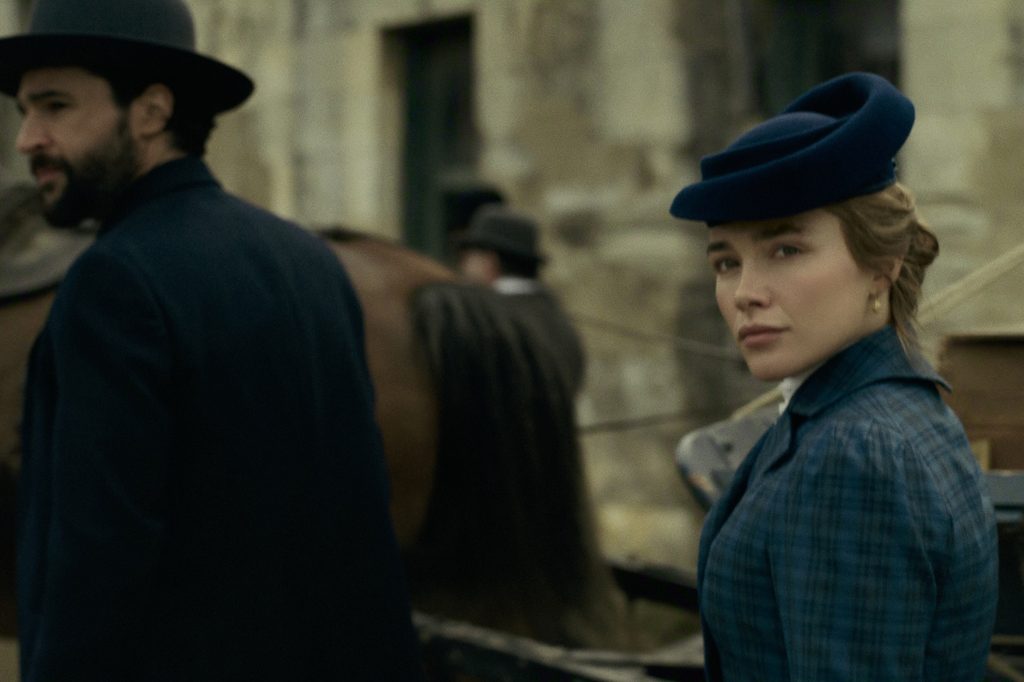
That’s the character benefiting from Zoe’s focus. When we meet her, she’s known as Cathy and is played by Florence Pugh. Directed in tandem by Garth Davis and Laure de Clermont-Tonnerre and beautifully shot in New Zealand, masquerading as turn-of-the-20th-century California, Eden is a thoughtfully made, intimate epic with strong performances. But Pugh is the reason to watch. Here, Cathy isn’t the whole show, exactly, but when she’s not around in its seven episodes, you miss her. And you have to get through the first full episode before she arrives.
In it, we meet the first of two separate sets of brothers who will thematically reflect the biblical struggle of Cain and Abel. Sons of a stern Civil War hero, Adam (Christopher Abbott of Girls) is the mild, obedient Abel stand-in, while his hot-headed half-brother Charles (Mike Faist of Challengers) … well, you get the drift.
Then comes Cathy, arriving at their homestead half beaten to death. She’s the snake — or Lilith figure — slithering through Steinbeck’s Genesis-themed book. While Adam, nursing her back to health, falls hard for what he thinks is an innocent young woman, Charles (“because kind recognizes kind”) knows there’s a forked tongue behind those pretty lips. Cathy proves him right when Adam weds and moves with Cathy to start a new life in California, and Cathy leaves him with two squealing baby sons and a bullet in his shoulder.
Here, Kazan does the heaviest lifting in her adaptation. She dramatizes how Cathy’s actions were forged as a young girl by sexual abuse, unloving parents and the need for a woman to survive at all costs in a world full of men. Fair enough … but most women don’t burn their parents to death, shoot their husbands and murder their way to become brothel madams who terrorize entire townships through blackmail. Again, I’m Ok with Iago. Sometimes, evil just is.
Still, Pugh is amazing. She has the skills of the greatest screen actors, conveying complex thoughts and emotions with minimal effort. A strong cast carries those downtimes when she’s offscreen. Ciarán Hinds plays Adam’s wise farming neighbor, while Hoon Lee is the supporting VIP, playing Lee, the Chinese American factotum who raises Adam and Cathy’s twins, Caleb and Aron (yes, the second Cain-Abel stand-ins). In a nice demonstration of code-switching, we watch as Lee shifts smoothly from the no-tickee-no-washee pidgin English most people expect from him, when in fact he’s probably the smartest American in all of Salinas, California.
Also on Netflix, in time for Halloween, I recommend the peculiar Argentine series My Sad Dead, a matter-of-fact meditation on mortality. It’s based on stories from writer Mariana Enriquez; her unnerving 2019 novel Our Share of Night is a must-read for anyone who loves literary horror.
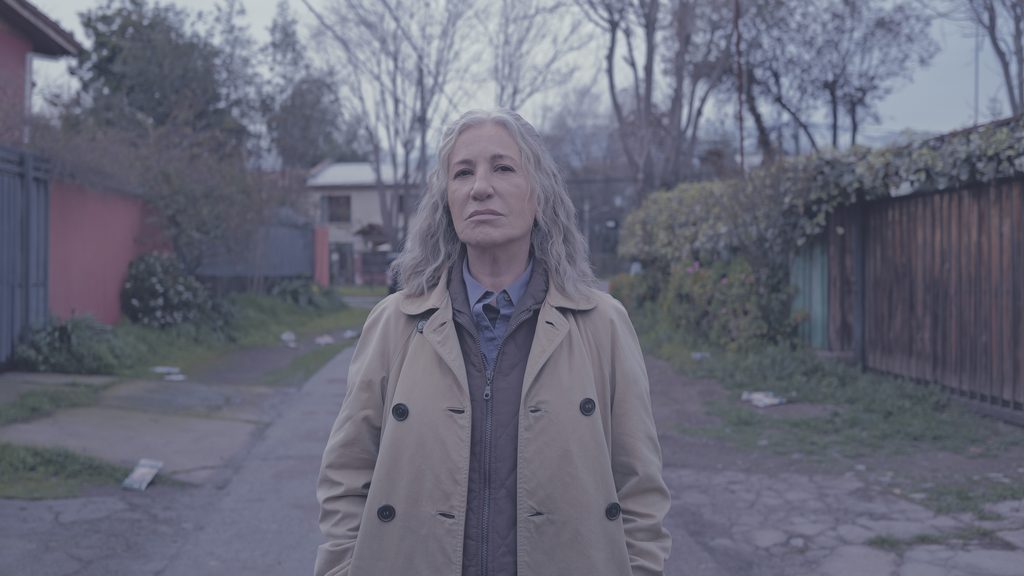
Though she can see and speak to spirits, there’s nothing otherwise woo-woo about Ema (Mercedes Morán). She brings the same level of reason to her ghostly communications as she did to work as a gastroenterologist; she’s been nudged out of her job following controversial decisions she made during the height of Covid-19. Now her days are filled with family issues as she deals with the lingering, moaning presence of her dead mother in the kitchen and visits from her semi-estranged adult daughter Caro (Dolores Fonzi). Caro isn’t quite sure if her mother really speaks to the dead, but that doesn’t stop her from wanting Ema to contact her ex-boyfriend, who died of an OD.
Soon, no one in their gang-beset slice of Buenos Aires doubts Ema’s abilities. When a woman drowns in the public water tower, it sets off another pandemic like the coronavirus, only paranormal. People who drink or bathe in the contaminated water start to see and hear the deceased. It’s a nuisance. The living are just trying to get by. They don’t need to have to put up with the dead, too.
Directed by Chilean filmmaker Pablo Larraín (Jackie, Neruda) in a softly desaturated palette, the four-part Dead isn’t chasing scares or shocks. It’s aiming for a melancholy unease that can seep into your bones.
HBO MAX
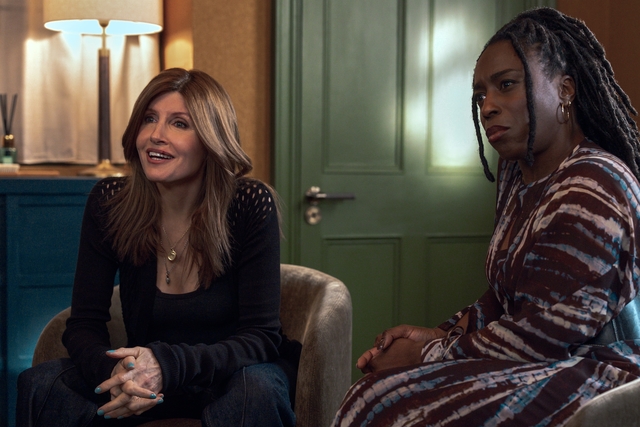
If you watched Prime Video’s Catastrophe or Bad Sisters on Apple TV+, then you already know gifted Irish writer-director Sharon Horgan. In Youth, her latest, she plays Alex, a Londoner entering her 50s and dealing with a demanding job as a literary agent, on-and-off again boyfriend Patrick (Rupert Friend) and son Ruari (Aran Murphy), whose first year in college has been derailed by some vague calamity.
Glossily shot, Youth shows off a seductive urban lifestyle that’s constantly undercut by Alex’s gift for self-sabotage. Horgan is great at mortification, whether accidentally drawing two men she’s dating to the same bar or exiting a crowded party with a period stain on her dress. As the show continued (the last of its eight episodes airs November 1), I found myself getting tired of the character’s endless talent for the self-own. I started wanting Horgan to give Alex a break — let her have one little triumph. Maybe Mike Flanagan’s touchy-feeliness is rubbing off on me.
::
Steve Murray is an award-winning journalist and playwright who has covered the arts as a reporter and critic for many years. Catch up to Steve’s previous columns here.
STAY UP TO DATE ON ALL THINGS ArtsATL
Subscribe to our free weekly e-newsletter.

PLEASE SUPPORT ARTSATL
Your Gift Sustains the Coverage You Count On!
Related Posts