A storied Atlanta filmmaker talks stepping outside the safety net
Atlanta Film Festival Founding Director William VanDerKloot’s production company marks 50 years in 2026.
::
In late 1975, William VanDerKloot moved from New York to Atlanta. Bringing along a lifelong love of storytelling on film, he opened up shop prolifically — including VanDerKloot Film & Television, Little Mammoth Media and the founding of Magick Lantern.
Along the way, he produced TV documentaries, broadcast commercials for Coca-Cola, Delta, CNN, Chick-fil-A and a long-running list of others, film shorts and theatrical features, and he earned Emmy Awards and a George Foster Peabody Award for his work.
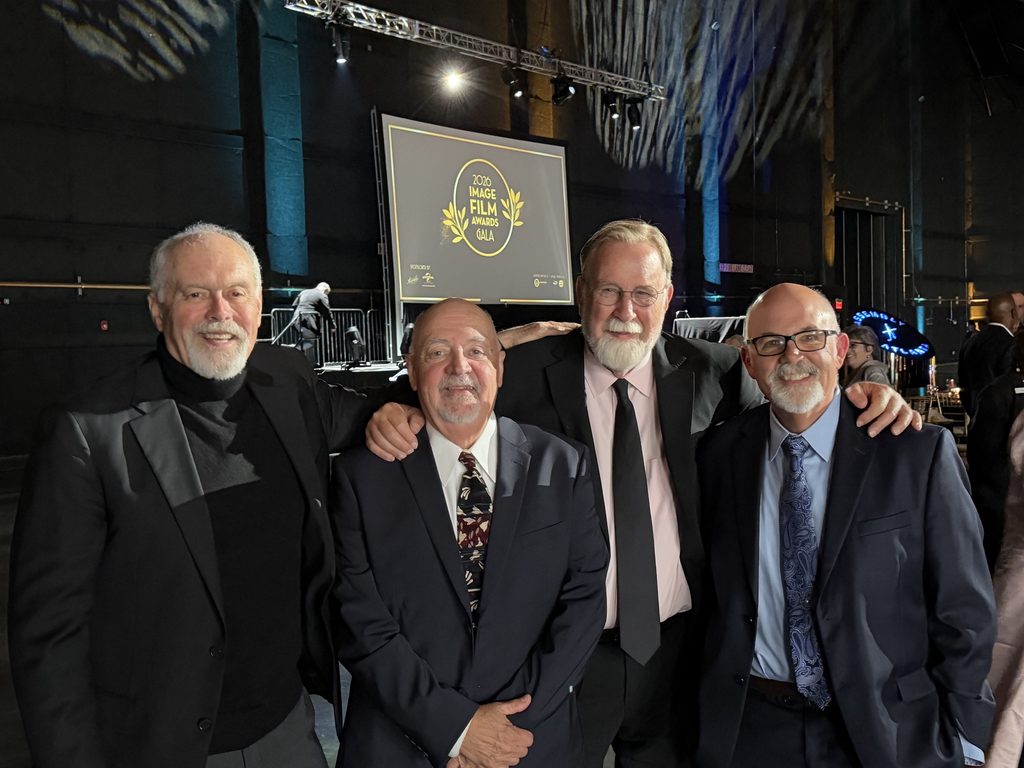
Left to right: William VanDerKloot, posing with industry legends Jerry Pece, Tom Luse and Mark Wofford at the 50th Atlanta Film Festival Gala earlier this year.
For the Jimmy Carter Library & Museum, he created films and seven video displays, and he produced the film Time and Dreams, which helped Atlanta win its bid for the Olympic Games in 1996.
Key Atlanta film organizations also gained their footing alongside VanDerKloot’s efforts, including the Atlanta Film Festival, where he was founding director, and Georgia Production Partnership, where he was a long-time board member and served as president. He is currently an active board member and former chair of the University of Georgia Library Board of Visitors.
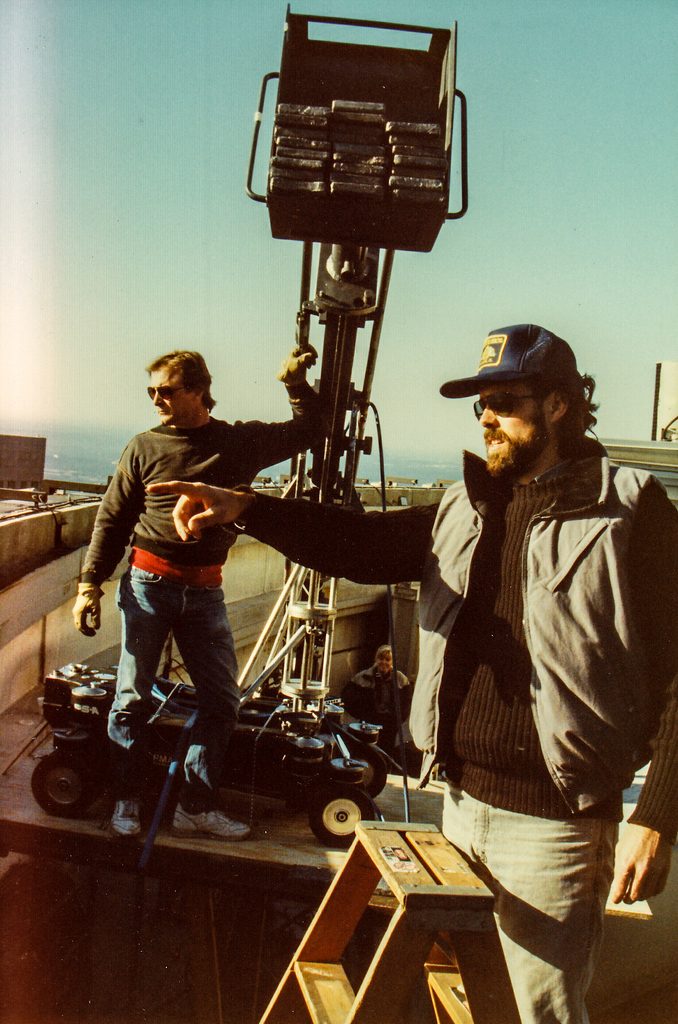
VanDerKloot with Roger Sherer on the roof of the Peachtree Plaza Hotel in Atlanta for the shooting of the Olympic film Time and Dreams in 1989.
Today, VanDerKloot Film & Television has turned 50; Little Mammoth Media, the independent production company serving up live-action children’s programs, remains dynamic and strong at 32 years; and 25-year-old Magick Lantern is a highly collaborative film and video production boutique.
In one form or another, film has always been VanDerKloot’s guiding spirit.
“When I was in middle school, I saved up my money from cutting lawns and bought a Super 8 camera,” he recalls. Then, in high school, his family took a trip to Expo 67 in Montreal, where he encountered a National Film Board of Canada exhibit.
“I saw Norman McLaren’s pixilated films [a technique that creates a stop-motion effect], and I was just fascinated because prior to this I thought films were a Western or an action film, and these were totally different films than I’d ever been exposed to,” VanDerKloot says.
Afterward, VanDerKloot and his friends began intense experimentation with pixilation, which he credits with helping to stretch his skills and mindset.
Then, life got in the way.
“The adults in my life said, ‘Film is a great hobby, but what you really need is a real job,’” he states.
So he applied to engineering schools, choosing Georgia Tech for a reason lots of 18-year-olds relate to: “because it was the farthest away from my home.” There, VanDerKloot decided to pursue a dual [engineering] degree — three years at the University of Georgia and two at Georgia Tech.
Once again, his mind was opened when he attended a lecture in his freshman year with Eugene Odum, the father of environmental ecology.
“The whole idea that we’re all interconnected, the plants and the animals and the whole [ecosystem], and I was fascinated,” VanDerKloot notes. “And so I got out of the dual degree program as an engineer and went into studying plant biology and some physics. But all that time, I was still loving film.”
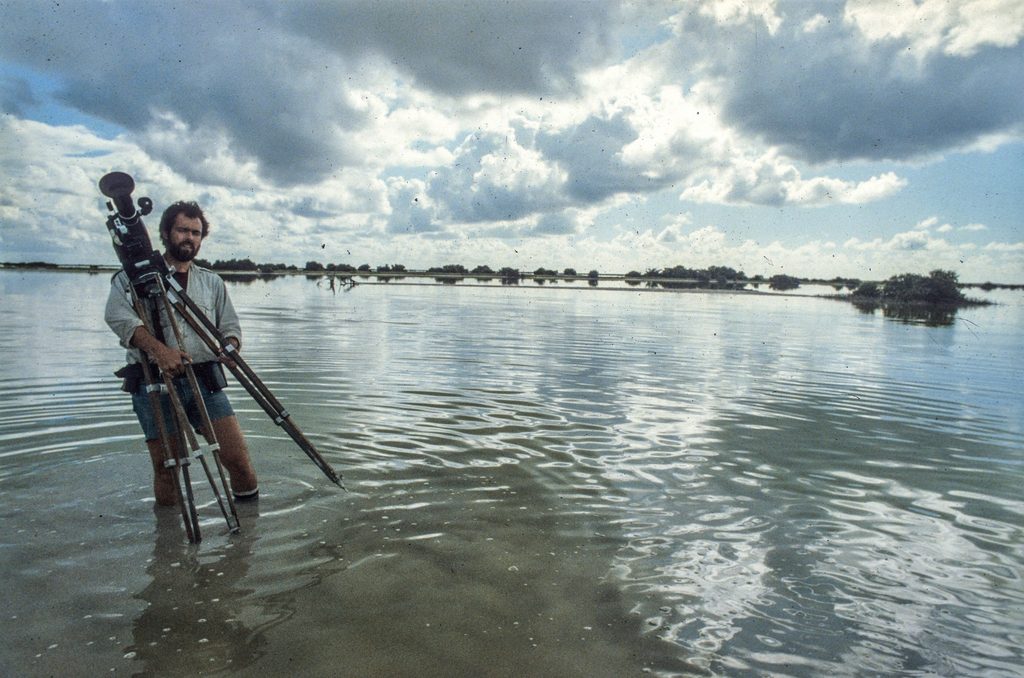
On Great Inagua in the Bahamas at the wild flamingo preserve, shooting the environmental series, World of Audubon for TBS, 1982.
He was president of the Alternative Cinema Society, helping bring foreign films to school, made copious Super 8 films with his friends, and wrote film reviews for the [school] paper.”
Every summer while in school, VanDerKloot also worked an internship for a Fortune 500 company that paid his tuition in return.
“It was a scholarship thing, and I’d work in their environmental engineering department,” he says. “And the whole idea was when you graduate, you’re guaranteed a job with the company.”
So when VanDerKloot’s graduation came, along with it came the job offer.
Right there, he realized there was a choice to make: “Do I want to do that, as interesting as that is, or do I want to be in the film business?”
VanDerKloot turned down the job. Looking back now, as a father, he finds, “My parents were apoplectic, as I would be.”
And, yet, his younger, film-focused version headed up to New York, slept on a friend’s couch, and went out knocking on the doors of production companies until he got his foot in the door. In his first job, he delivered a contract for the very first IMAX film.
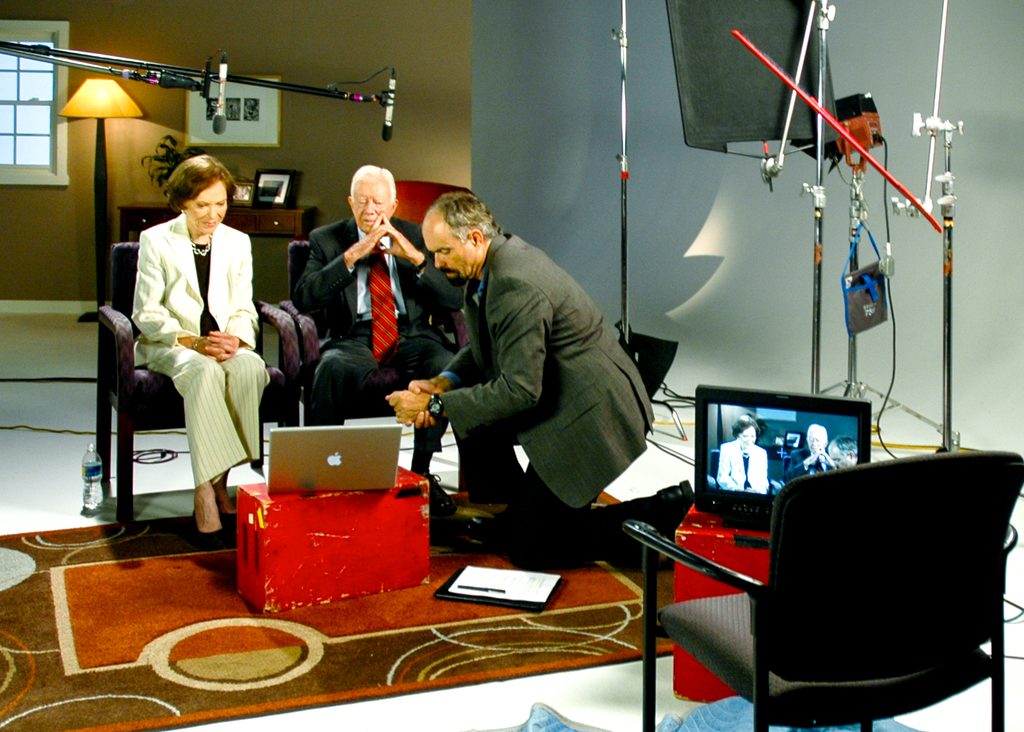
VanDerKloot directing President and Mrs. Carter on the Magick Lantern stage for a project for the Carter Center in 2008.
“It was part of the bicentennial thing, but the fact is that somebody was paying me to be in the film business and I was ecstatic,” he says.
And still, he found, New York was everything — but too much of it and with old thinking.
“I wanted to go someplace new where I could start a company,” VanDerKloot says, and so he moved back to Atlanta. “I think the passion takes you through the hard times.”
Looking back from a 50-year vantage, what would a documentary on VanDerKloot uncover about his life in film?
“I think I’m naturally curious, so filmmaking is the perfect job for me. I’m always wondering: What’s behind that door? And sometimes nobody else can get in there, and [since] you’re making a film about it, they’ll let you in,” he says.
“Almost anything is fascinating if you look close enough at it, and so that’s what I love about this business,” he adds.
Some of VanDerKloot’s favorite projects so far in his career involve firsts, but he’s quick to note that just about every project feels like his favorite during the time he’s working on it.
“My first television documentary, Iron Horse, was really meaningful to me because so many people I worked with in the business volunteered their time to help make it and make it possible,” he notes.
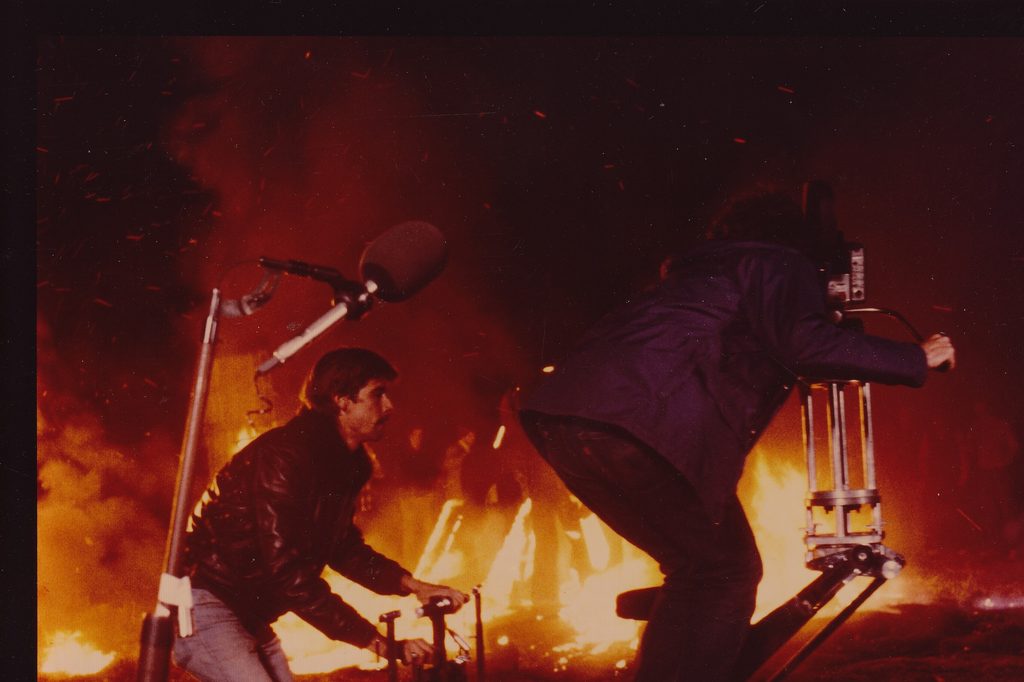
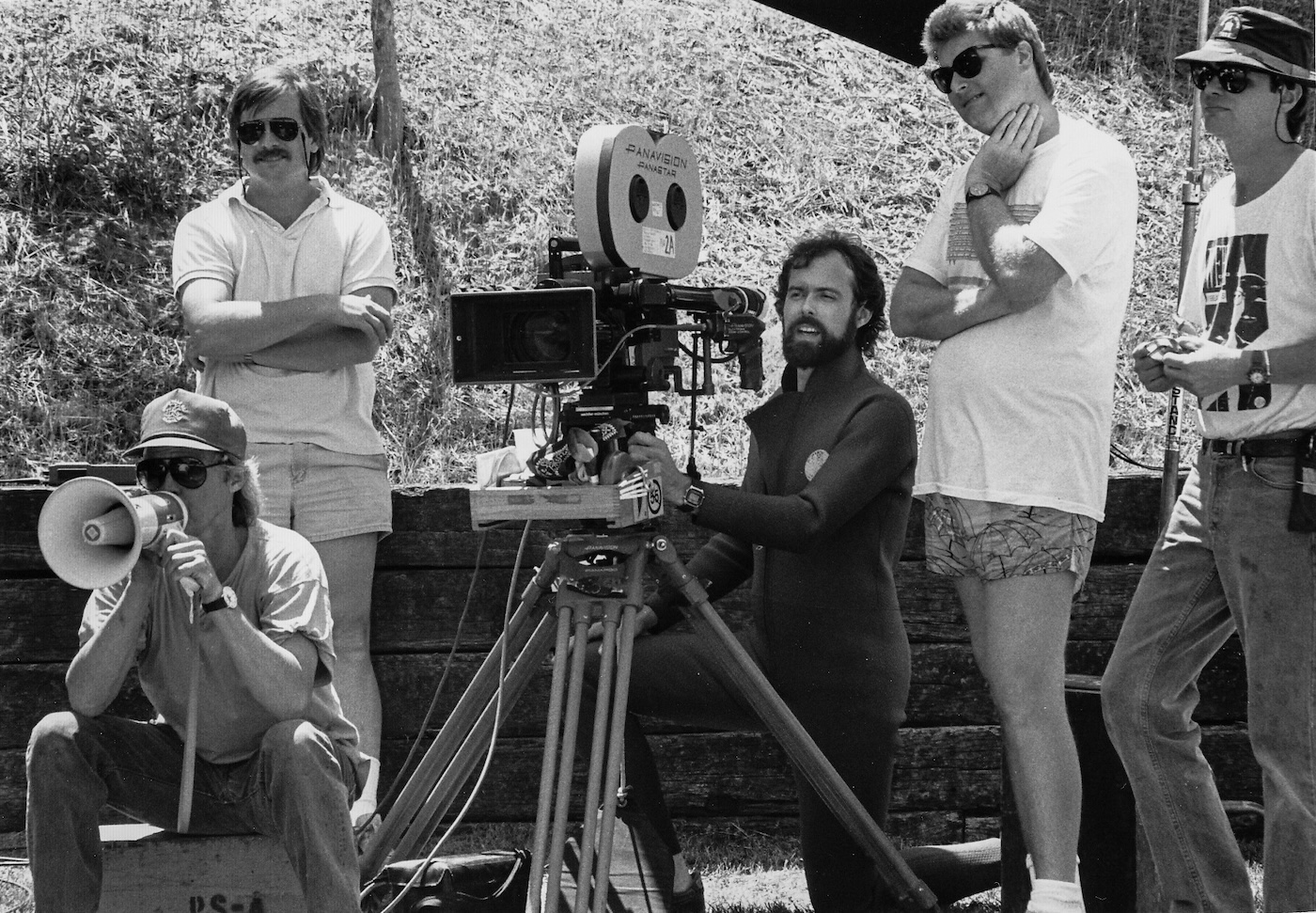
John Kelly pushes a dolly as VanDerKloot shoots the Iron Horse sculpture burning in 1979.
In a remark that seems to solidify the truth about the cyclic nature of the film industry, as well as its highly collaborative nature that endures, VanDerKloot says, “That was the spirit of the times in the film industry then.”
Now, with film as big business in Atlanta and currently adapting to the rise of an independent film reality at large, VanDerKloot’s assessment of the early days’ vibe sounds refreshingly like today’s.
“Because it was so small back then that everybody kind of helped each other. It was like, ‘Oh, I’m doing a film this weekend,’ and you help them on their film. And they help you. And it’s a real community,” he says.
The issue of finding funding, too, is déja vu.
And there’s something else about the industry that feels cyclical to VanDerKloot from his vantage as a veteran: Technology, including AI, has always been a roaming variable.
“The industry has gone through these things all the time. Silent movies had such beautiful, lyrical camera movements, and then suddenly sound came. And [with that] these giant cameras and everything’s static. Then when TV came, ‘Oh, that’s the end of the movies. People are just going to sit at home and watch TV.’ And then, Cinerama.”
From the film set he’s forever on, VanDerKloot closes, “I’m always optimistic. You’ve got to be optimistic and have a passion that will pull you through. I’d love to have made a blockbuster, but I didn’t get into it to make the most money I could. I got into it because I wanted to make a living making films and to work with some really great people.”
::

Carol Badaracco Padgett is an Atlanta-based freelance writer who focuses on film and television, the automotive industry, architectural design and collaborative storytelling projects.
STAY UP TO DATE ON ALL THINGS ArtsATL
Subscribe to our free weekly e-newsletter.

PLEASE SUPPORT ARTSATL
Your Gift Sustains the Coverage You Count On!
Related Posts