Review: ‘The Second Body’ casts art objects as surrogate bodies, then puts them in conversation, mostly to striking effect
Throughout history, man has shaped vessels in his own image. Makers have projected their anatomy, histories and emotions onto objects, equipping them with personified parts — necks, feet, bellies and mouths. Vessels are also entrusted with carrying and preserving life, belief and ritual. It is this history that sparked curator Donovan Johnson’s latest exhibition, The Second Body, at Johnson Lowe Gallery through December 19.
The Second Body seeks to expand this kinship between man and vessel to include art objects beyond the realm of traditional ceramics. Johnson not only speculates on the possibilities of what a vessel can be but asks whether these vessels can assume lives of their own, independent of the meaning and purpose originally bestowed upon them. And, if so, what conversations might unfold across time, memory and culture?
Paintings, photographs, abstract sculptures and ceramic forms become hosts — avatars acting as extensions of human life — blurring the boundary between manufactured object and living subject.
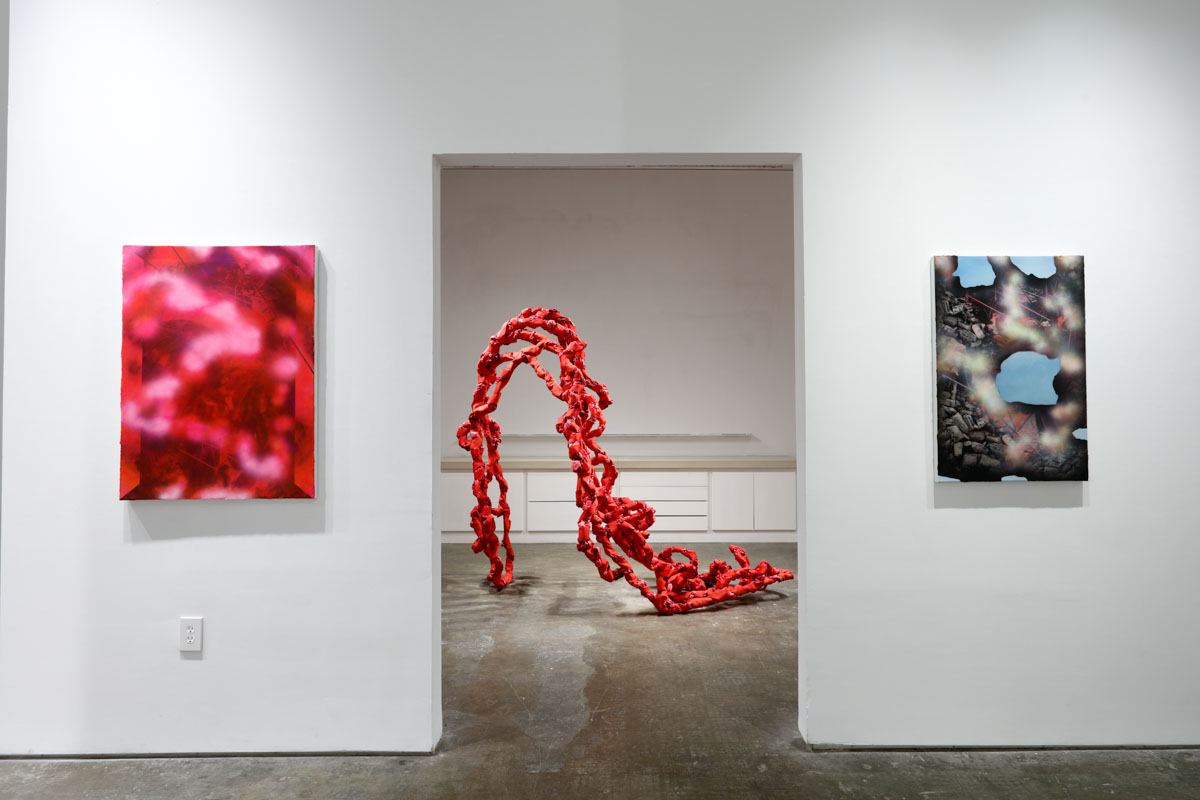
Throughout the gallery, works are arranged in conversational groupings, anchored by shared, visceral experiences of the body. In the opening gallery, visitors encounter a transhistorical, cross-cultural dialogue between artists Donald Locke, Masud Olufani, Steven Seinberg and Anthony Akinbola. Locke’s Echo from the Middle Passage #1 (2008) and Echo from the Middle Passage #3 (2008) sit in dialogue with Olufani’s Frequency (2026), initiating a conversation about the layered complexities of the African diaspora.
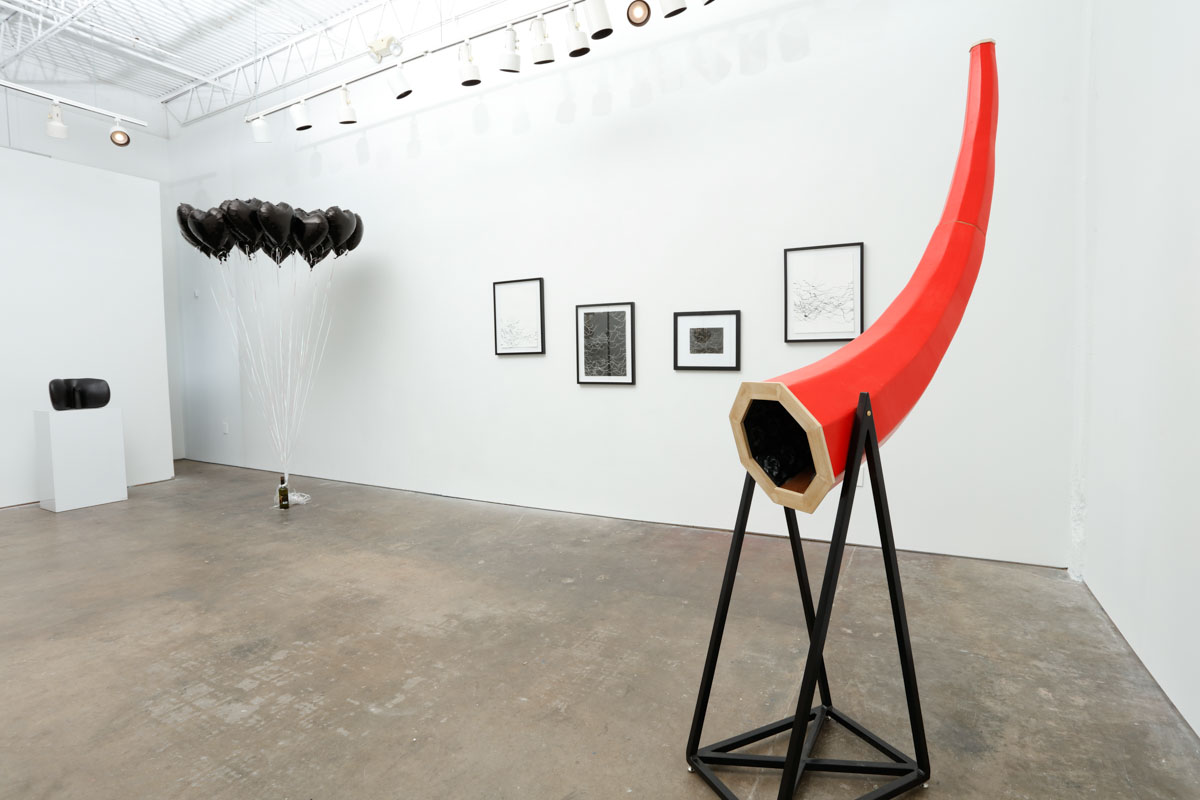
Locke’s mixed-media ceramic forms become surrogates for the violence inflicted upon Black bodies. Clay is molded and degraded like flesh, while bone, hair and fur erode the boundaries between human, animal and object. Where Locke’s forms bear the physical residue of historical violence, Olufani’s Frequency positions the body as an agent of survival and transmission. An elongated, orange, cornucopia-like vessel holds rows of cast black ears. From within the installation emerge recordings of female voices reciting recipes. Waves crash against the shore and merge with the sound of sizzling oil while knives rhythmically strike a cutting board. These sounds collapse distance between the domestic and the diasporic, between ancestral memory and its continued practice. Here, the body is no passive object of historical violence, but an active archive. Voice and breath become living transmitters, carrying knowledge, ritual and recipes across the Atlantic and into the New World.
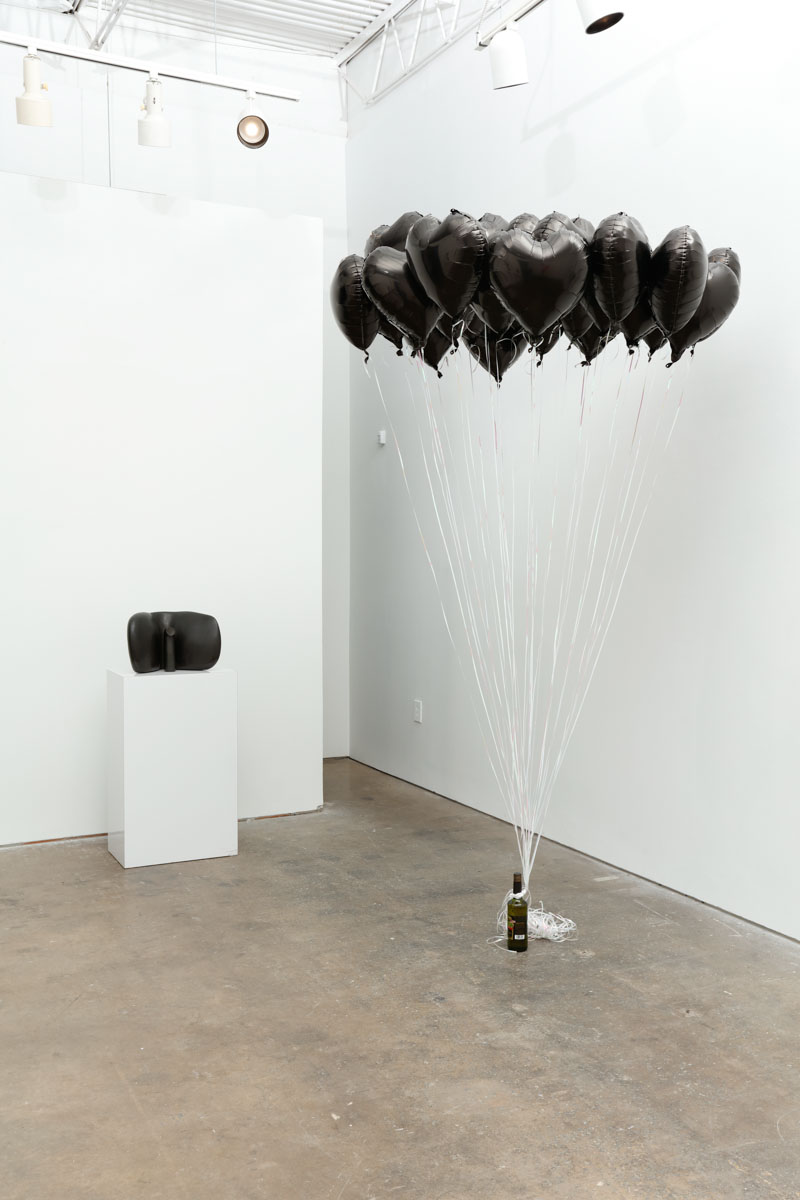
In the same room, Seinberg’s Collapse (2025-2026) series sits in dialogue with Akinbola’s Vessel (2026). Where Locke and Olufani treat their host forms as sites of transatlantic memory and spiritual transmission, Seinberg and Akinbola turn toward rhythm, endurance and erosion. The reductive and additive mark-making of Seinberg’s Collapse series suggests weathering: a continuous scraping and healing as the body adapts to environmental changes and endures through repetition. Akinbola’s Vessel, composed of black, heart-shaped Mylar balloons tethered to an olive oil bottle, makes this erosion literal. As the balloons slowly leak helium and sink over time, the work becomes an exercise in disappearance, bolstering the concept of the afterimage. Together, these objects ask what visual, emotional and spiritual sensations remain when the original source material — the body — is gone.
In the following space, Victoria Dugger’s Little Vicky of 3 Years (2021) sits alongside Olufani’s A Wishbone for Nina Simone (2024) and Thornton Dial’s A Bird Will Always Try to Fly (1991), evoking a compelling dialogue on limitation, hope, struggle and freedom within the body and material form. Dugger’s soft sculpture explores the tension of a body at once resilient and vulnerably fragile, its limitations inseparable from its capacity to endure. Olufani’s oversized, carved wooden wishbone, inspired by Nina Simone’s haunting longing for equality and the removal of social barriers in her 1967 song I Wish I Knew How It Would Feel to Be Free, becomes a study in opposing forces, a poetic metaphor for the struggle toward liberation. Dial’s A Bird Will Always Try to Fly (1991) rounds out the conversation. Assembled from burlap, rope and carpet, the bird confronts the realities of Black struggle in the American South, its form becoming a proxy for the Black human body. Together, the three works contend with the tension between the body’s biological, mental and socio-political constraints and its persistent desire for freedom — the necessary breaking before its emancipation.
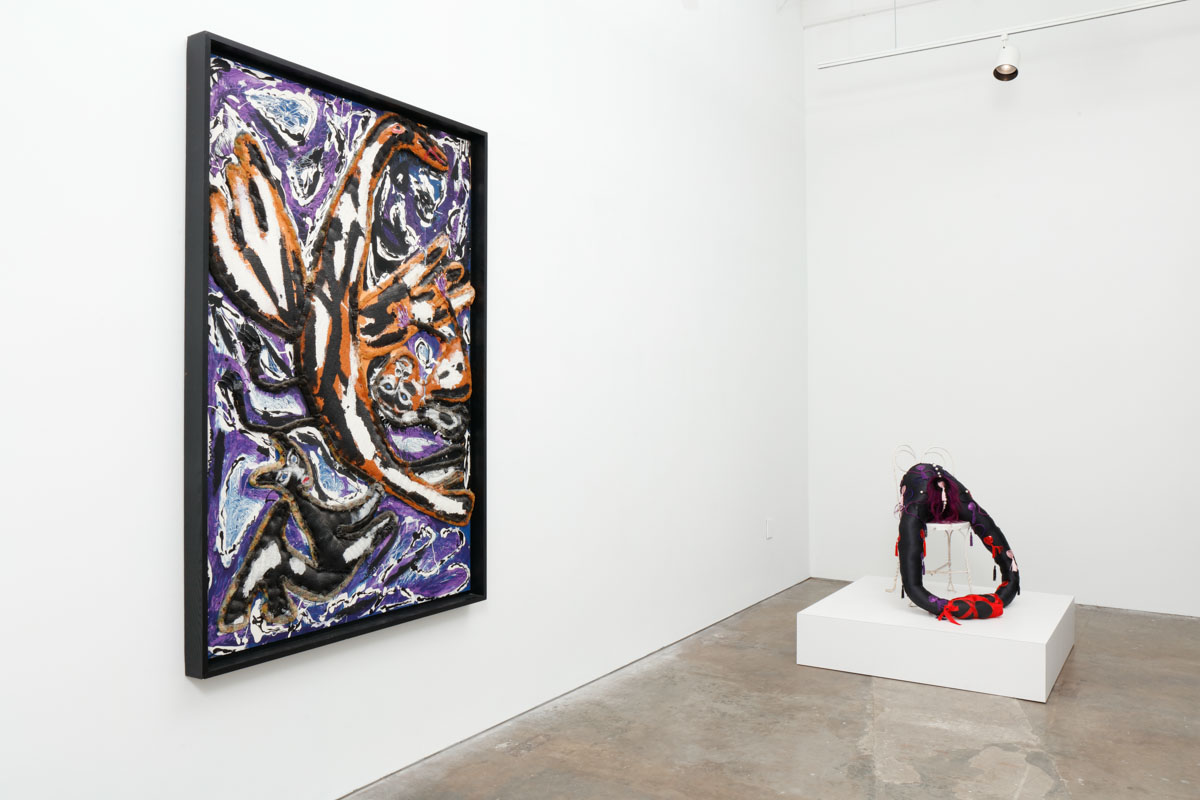
Among these strong clusters of dialogue, however, there are moments when the discourse feels interrupted. The most compelling moments in The Second Body emerge when the curation allows the history and life of one work to stimulate another. It is in these exchanges that the exhibition’s central premise — art objects assuming lives beyond their intended purpose — crystallizes. However, when the momentum occasionally falters, powerful works such as Phuong Nguyen’s Planche CXXXIII (2024) and Fahamu Pecou’s Fly Girl Whisk: Keyshia Cole (2025) and Fly Girl Whisk: Serena Williams (2025), are relegated to isolated spaces, effectively ostracized from the larger conversations unfolding throughout the gallery. Their separation feels particularly conspicuous when contrasted with the nearby charged encounter between Pecou’s Royal Peacock (2026) and Isaac Mehki’s Another Great Coward in Henry Grady’s House ½ AP. Positioned in confrontation with one another, the works demonstrate how the image of the body can become a cultural vessel, one intertwined with fantasy and mythology. In their juxtaposition, they carry competing narratives that critique and map America’s sociopolitical landscape. When certain pieces feel removed from that kind of dialogue, their connection to the overarching theme, and thus their power, weakens.
Nonetheless, these moments of isolation take little away from the visual, emotional and historical journey or from the questions the exhibition raises about what it means to imbue matter with life.
::
Amina Daugherty is an artist and writer whose work explores the intersections of creativity and community. An alumna of the Ernest G. Welch School of Art and Design at Georgia State University, where she earned her BFA in sculpture, her studio practice includes exhibiting in galleries across Atlanta and the United States. As a writer, Amina crafts deeply personal artist profiles, interviews and reviews, centering the unique human stories that inspire the artistic practices she highlights.
STAY UP TO DATE ON ALL THINGS ArtsATL
Subscribe to our free weekly e-newsletter.

PLEASE SUPPORT ARTSATL
Your Gift Sustains the Coverage You Count On!
Related Posts