Set Life: How Disney film composer and educator Andy Hill is activating Atlanta’s next big score in film arts
Midtown will offer a whole new kind of MFA film program this fall — Screen Scoring and Music Design at the Media Design School at Strayer, across from the Fox Theatre. To understand its educational significance, you have to consider the man behind the music and the film-scoring journey that’s brought him to Atlanta.
In the late 1980s, long before Georgia crossed his mind, Andy Hill was a working Chicago-based musician with a film degree from New York University’s Tisch School of the Arts. The young creative had a focused objective for his career moving forward: to write music for film and television.
“That’s what I was trained to do, and that’s what I wanted to do,” Hill recalls. “So I made some trips driving out to Hollywood from Chicago.”
With no internet at the time for research and direction, Hill made cold calls, one of them to Disney in Burbank, California.
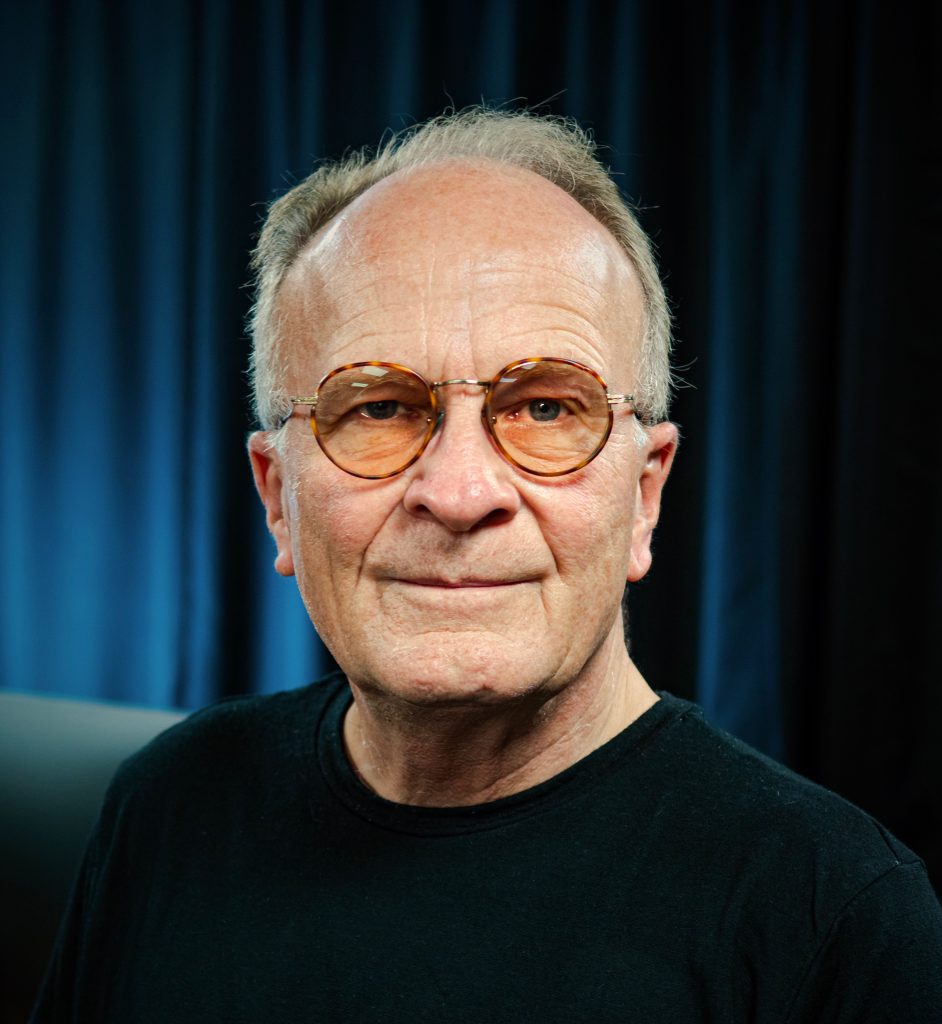
To his favor, he found Disney in the midst of a huge corporate turnover, converting itself from a family company into a global entertainment enterprise. And, like Hill, Disney had its sights on filmmaking.
“So they brought all these folks over from Paramount to rebuild the studio operations, and I was brought on as VP of music production as part of that hiring spree,” he says.
Looking around, Hill realized he was one of the few people in the music department who wasn’t a lawyer, an agent or a businessperson — but a music guy instead.
From this fortuitous position — where he was also given the exact office that Walt Disney had occupied years before — Hill needed a team of musical collaborators.
“So my boss walked in with a nervous-looking young guy and said, ‘Andy, I want you to meet Alan Menken,’” he recalls. “You’re going to be at his side for the next few years, and he’s going to be scoring films and writing songs for our animation division, and he needs someone who’s a veteran alongside him.”
Hill adds, “I was hardly a veteran, but when somebody offers you an opportunity like that in the entertainment business, you absolutely say, ‘Yes, I can.’” So he worked at Menken’s side for Disney’s next four films, which included The Little Mermaid, Pocahontas and The Lion King.
After 10 years with Disney, Hill set up his own company to do independent music supervision in Hollywood, where he would no longer sign over his intellectual property to a studio.
From this new independent gig, Hill worked for about 10 more years in Hollywood before turning his music career in another direction: education to train musicians as composers for film, TV and games.
“I try not to do anything halfway, so we started the first master of fine arts program for film composers at Columbia College Chicago in 2006,” Hill says.
Next, Berkeley College in New York brought Hill on board and sent him to Spain as part of its international program — and from there to Bulgaria, where Hill spent six years.
“As it turned out, there are fabulous musicians [in Bulgaria] who don’t cost a whole lot, so for the students it was a boon to be able to record their music with big orchestras,” Hill says.
Along the journey, Hill earned his doctorate in film musicology from the University of South Wales.
In time, Strategic Education Inc. (SEI), the parent company that owns Strayer University, entered Hill’s sphere. Its corporate leadership had long been interested in expanding Strayer’s creative arts education to include music and had acquired a media design school in New Zealand, which Hill says focused primarily on computer graphics, computer-generated imagery and game design.
But Strayer didn’t have a program for music, so its leadership approached Hill and asked if a music program for film, like the one he had led in Bulgaria, could be built in the United States — and, if so, where?
“So we started to explore, and we knew it would not be just cost-prohibitive but also competitively very difficult to go to a big city like New York or Chicago, much less Los Angeles,” Hill says. The focus sharpened to finding another vital city with a serious presence in film production.
Enter Atlanta, chosen over potential contenders such as Nashville and Memphis.
“For so many reasons, Atlanta seemed to be the best choice,” states Hill. Along with film industry infrastructure, talent and locations, the city essentially had no structured music sector for film.
“So we’re here [at Strayer] to try to correct that one shortfall in motion picture and television production and make Atlanta as much a destination city for production of music for movies as it is for production of movies themselves,” he states.
Hill’s vision for world-class education in film and TV music composition also includes creating a true community in the city for composers.
The idea of the lone composer in the house on the hill, sitting at his piano in the middle of the night, may exist in some places, according to Hill, but, due to rising levels of competition and cost in the industry, this every-composer-is-an-island approach isn’t sustainable.
As Hill envisions, “The future of this craft lies in composers forming consortiums or collectives. What I see happening is composers grouping together and forming music production companies, much like Hans Zimmer’s Remote Control Productions, based in Santa Monica.”
Zimmer’s production company now takes up nearly two city blocks and includes 20+ composers who work under him.
“There’s no reason something like that can’t happen in Atlanta. You do not have to be in Los Angeles to deliver this music successfully,” Hill states.
Along with the education he’s spearheading for Strayer in Atlanta and the composers’ collectives Hill believes will spring up as a result, he notes that large music production studios are also needed to fortify the existing world-class music scene that Atlanta is known for.
“Nashville has Ocean Way, for example, which can fit a 50- to 60-piece orchestra,” Hill says. “Right now, Atlanta doesn’t have that kind of facility, but people at Trilith Studios and Tyler Perry Studios are considering the fact that they should create some kind of scoring stage on their properties.”
First things first, though. Atlanta must be able to generate enough revenue through film and television music production to afford these types of stages. The city must also build up an ecosystem of recording engineers, music editors, conductors and musicians, Hill finds.
And he adds that it will make sense for these experts to migrate to Atlanta from cities such as LA and New York when they see they’ll be able to work consistently and build a career here.
Hill states with staccato, “That needs to happen in Atlanta.”
To that end, Strayer University established a new campus in Midtown Atlanta across from the Fox Theatre at 715 Peachtree St. NE. “We’ve built out the first two floors (on higher floors, Strayer University will conduct business and management classes). I’ve not seen anything like this in my history as a teacher,” says Hill.
“I got one set of directives from the leadership, and that was, ‘Build the finest film scoring program in the world.’ And I told them if they’d back me up, I’d give it everything I have,” he says.
As a result, students will enter right off the street into a room that’s two floors up to the ceiling and filled with natural light. “They’re going to have a state-of-the-art composer laboratory to work in, where we’re bringing in industry leaders to teach them,” Hill describes. “The classrooms are built, and the technology that needs to be there is all there.”
The Media Design School at Strayer is slated to open on October 5, 2026, offering its Master of Fine Arts Program in Screen Scoring and Music Design under the direction of Executive Dean Andy Hill.
::

Carol Badaracco Padgett is an Atlanta-based freelance writer who focuses on film and television, the automotive industry, architectural design and collaborative storytelling projects.
STAY UP TO DATE ON ALL THINGS ArtsATL
Subscribe to our free weekly e-newsletter.

PLEASE SUPPORT ARTSATL
Your Gift Sustains the Coverage You Count On!
Related Posts