Review: The ASO Beethoven Project has launched, raw and strong
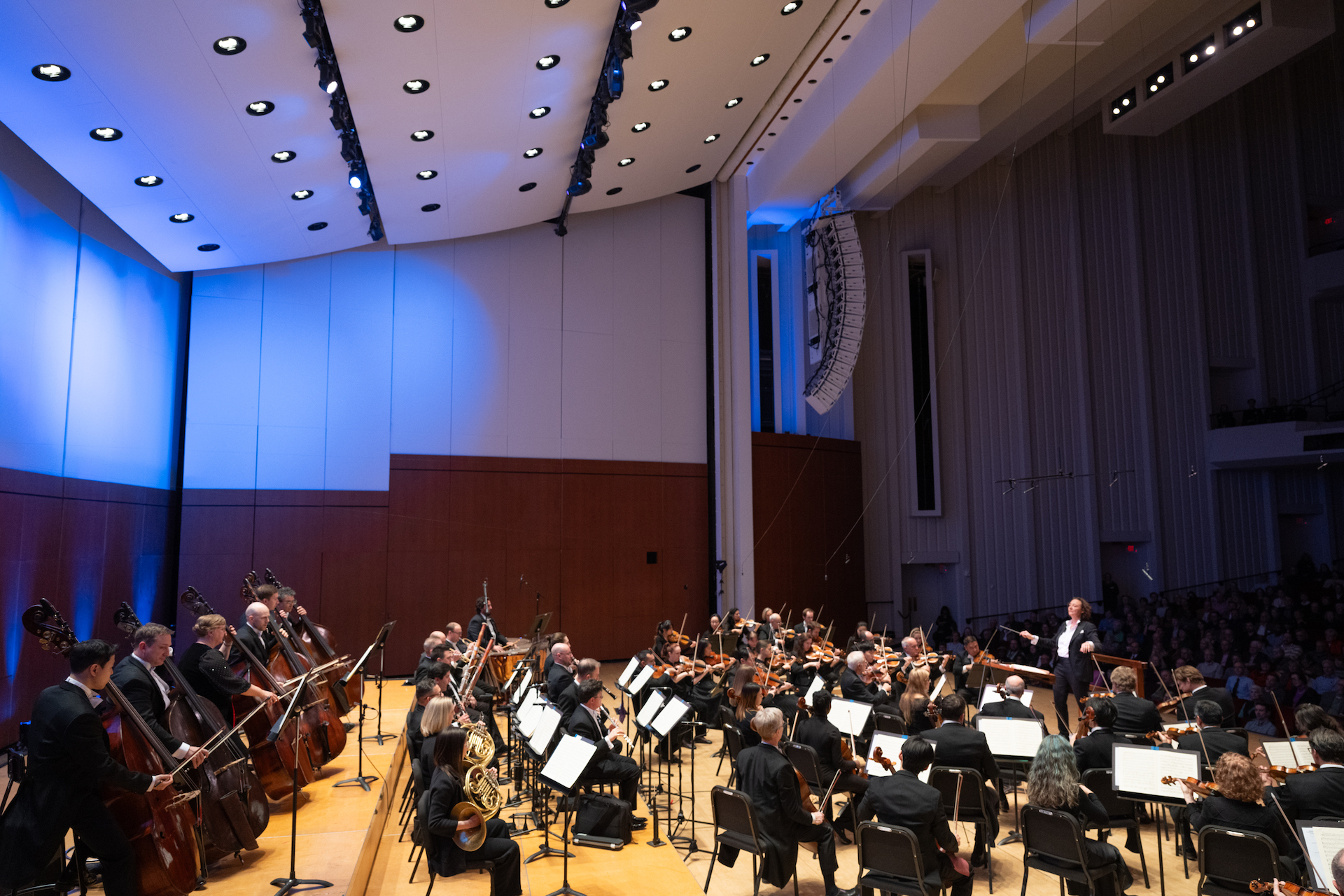
The Atlanta Symphony Orchestra launched its ambitious Beethoven Project on January 23 with the composer’s first and third symphonies led by conductor Nathalie Stutzmann. She will conduct eight of Beethoven’s nine symphonies this season — the ninth will kick off the 2025-26 season this fall.
The evening commenced with a video message from Stutzmann, who said difficult conditions in the recent snow and ice — unusual for Atlanta — had left the ASO with little time to rehearse. Perhaps because of that, there was a rawness in the performance, but it served the music well.
Most first outings from any artist in any medium are going to appear immature and rely heavily on their influences for style and inspiration.
This is especially evident in pairing Beethoven’s first and third symphonies together: The first lacks many of the hallmarks of the composer’s better known works and relies heavily on the influence of Joseph Hayden, his teacher, and Wolfgang Amadeus Mozart. As such, it is his third symphony (Eroica) which is generally regarded as the point at which his signature sound emerges.
Beethoven may have delivered stirring, gentler moments on “Für Elise” and “Moonlight Sonata” but with symphonies he composes at the top of his lungs. His most memorable symphonic moments — such as the opening salvo of the fifth or the anthemic “Ode to Joy” chorus in the ninth — are filled with passion and fury.
The first symphony has none of these hallmarks and instead focuses on the gentle good cheer that was so often apparent in Mozart’s work. With that in mind, it’s understandable why the ASO’s performance of the first symphony would lack the bombastic enunciations and stirring grandiosity one might expect.
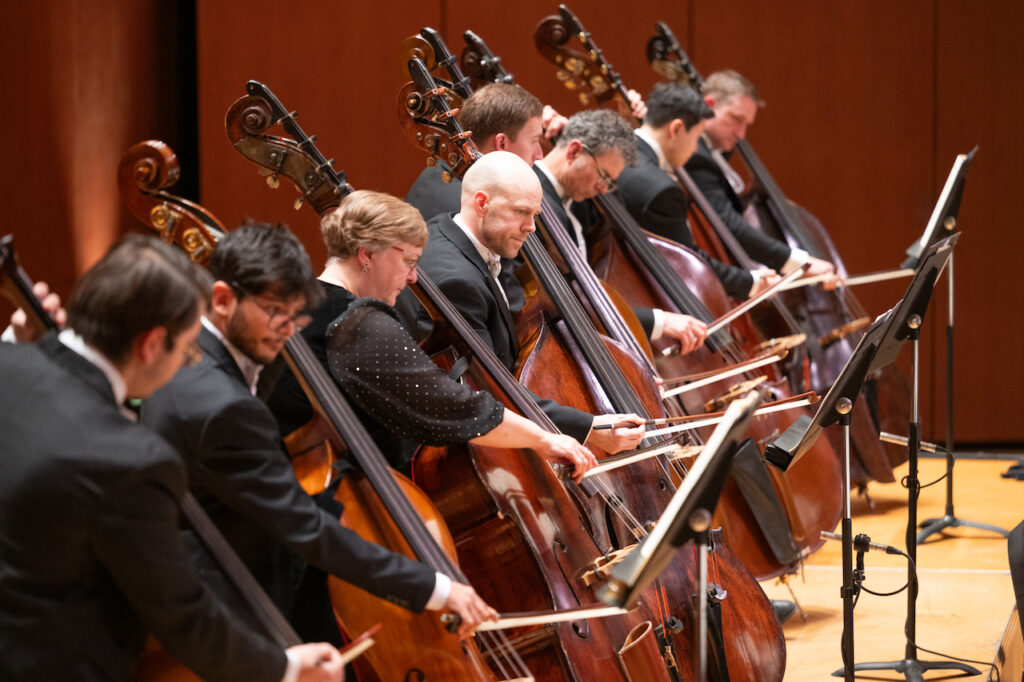
This marked difference in the nature of Beethoven’s first symphony played into one of the orchestra’s greatest strengths. The ASO has always had a penchant for accessibility with a smooth, eloquent tone that prioritizes balance among the strings and fully exploits its hall’s stellar acoustics. That capacity of the ASO works well in giving emotional life to soaring melodic phrases but also risks making darker and more aggressive passages seem melodramatic.

As such, when the ASO played Beethoven’s first with that signature smoothness, it succeeded as an appropriately constrained, listener-friendly interpretation. Whether that approach was a choice born out of the source material itself or an easy default in the face of limited rehearsal time is unknown, but what was undeniable is that the orchestra fit into the piece with a sense of snug familiarity. It may not have had all the arresting fervor of Beethoven’s signature sound, but his inaugural symphony came off well regardless.
The third symphony was born out of the political upheaval of the time and hopes that the French Revolution would lead to a more just society throughout Europe. Beethoven wrote the work filled with his admiration for Napoleon and the commander’s egalitarian values. He later repudiated Napoleon for naming himself the Emperor of France and dedicated the symphony to heroism as a general concept, dubbing it Eroica. The work is loud and brash and full of harsh stabs that evoke militaristic imagery as well as establishing Beethoven’s grand presence as a symphonic composer.
Given the nature of the third symphony, it worked out well that the ASO sounded a little off. Stuztmann’s video address was particularly relevant here: There was a subtle roughness around the edges throughout the performance, as though certain pieces of the sonic puzzle weren’t fitting together comfortably. The aforementioned balance among the strings wasn’t there and in its place was an ongoing sense of competition among the instruments. Time and again the sound overall straddled intentional embellishment and blatant mishap while never veering into any sort of derailment.
What was remarkable was that this delicate balancing act actually worked in the performance’s favor. Those rough edges gave the sound a street-fighting tenacity that fit well with its militaristic subject matter. Far from warranting a preemptive apology, the lack of rehearsal time worked to get the ASO out of its listener-friendly shell and into a place of raw emotion.
Stutzmann seemed awash in relief when she turned to face the audience after the third symphony’s conclusion and was met with a standing ovation and thundering applause. It was a remarkable night, one where playing it safe and barreling ahead in the face of long odds both paid off. It will be interesting to see what the subsequent symphonies bring out in the ASO’s multilayered nature.
::

Jordan Owen began writing about music professionally at the age of 16 in Oxford, Mississippi. A 2006 graduate of the Berklee College of Music, he is a professional guitarist, bandleader and composer. He is currently the lead guitarist for the jazz group Other Strangers, the power metal band Axis of Empires and the melodic death/thrash metal band Century Spawn.
STAY UP TO DATE ON ALL THINGS ArtsATL
Subscribe to our free weekly e-newsletter.

PLEASE SUPPORT ARTSATL
Your Gift Sustains the Coverage You Count On!
Related Posts