
Dept. of Ed. has declared book bans a ‘hoax,’ all investigations dropped
The U.S. Department of Education (DOE) announced in a press release Friday that its Office of Civil Rights (OCR) will no longer investigate book bans in schools and is dropping all pending investigations of book ban complaints within the office, calling the complaints a “hoax.”
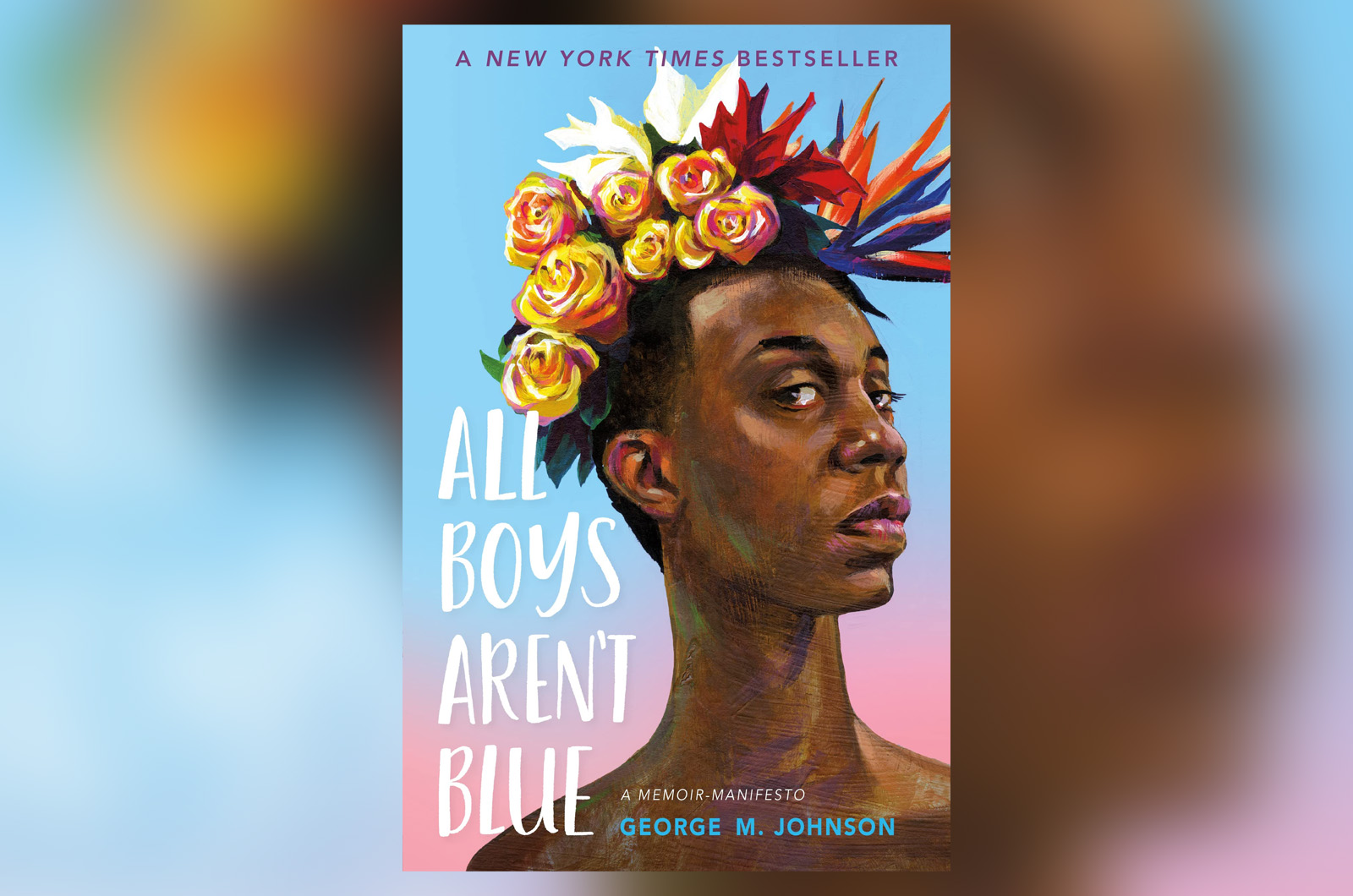
One of the 17 book ban complaints filed with the OCR was against Cobb County Schools, though it wasn’t clear at the time of writing whether that complaint was under active investigation. The Cobb County School Board has banned 34 books from its from libraries as of January, and district Superintendent Chris Ragsdale has repeatedly called the bans a matter of “good and evil.” Parents, teachers and students, however, have complained that reasons behind the bans boil down to homophobia and gender and racial politics.
The release also announced that the department would no longer enforce a 2023 resolution agreement with Forsyth County. In the first-of-its-kind resolution, the county agreed to restore banned books to school shelves and take steps to build support for vulnerable students. The Forsyth case was used as a model for complaints against other school districts disproportionately banning books about vulnerable groups.
The decision “sends a really chilling message to educators and to students and families across the country,” says Michael Tafelski, who leads the Southern Poverty Law Center’s Education Justice Team. He takes particular issue with the administration’s characterization of the censorship issue as a hoax. “These issues are very real,” he says, “and they are very much harming and impacting children and families across the country, across Atlanta, across Cobb County.”
Tafelski is careful to point out that the federal government’s refusal to enforce civil rights laws “doesn’t mean they don’t exist and doesn’t mean that people lose their rights.” Instead, he says, it puts “more pressure on attorneys outside of the federal government, like me, to bring lawsuits to challenge the civil rights violations that are happening.”
Tafelski expects the DOE’s policy change to have mixed effects, depending on local politics. Districts that have avoided book bans may be less impacted. However, “For school districts like Cobb County,” he says, “they are going to be emboldened by this.” He expects these districts to “feel more confident that they can ban more books, and you’ll see the rhetoric increase.”
Here is the complete text of the Department of Education’s press release:
U.S. Department of Education Ends Biden’s Book Ban Hoax
January 24, 2025
The U.S. Department of Education’s Office for Civil Rights (OCR) today announced that it has dismissed 11 complaints related to so-called “book bans.” The complaints alleged that local school districts’ removal of age-inappropriate, sexually explicit, or obscene materials from their school libraries created a hostile environment for students – a meritless claim premised upon a dubious legal theory. Effective Jan. 24, 2025, OCR has rescinded all department guidance issued under the theory that a school district’s removal of age-inappropriate books from its libraries may violate civil rights laws. OCR is also dismissing six additional pending allegations of book banning and will no longer employ a “book ban coordinator” to investigate local school districts and parents working to protect students from obscene content.
“By dismissing these complaints and eliminating the position and authorities of a so-called ‘book ban coordinator,’ the department is beginning the process of restoring the fundamental rights of parents to direct their children’s education,” said Acting Assistant Secretary for Civil Rights Craig Trainor. “The department adheres to the deeply rooted American principle that local control over public education best allows parents and teachers alike to assess the educational needs of their children and communities. Parents and school boards have broad discretion to fulfill that important responsibility. These decisions will no longer be second-guessed by the Office for Civil Rights at the U.S. Department of Education.”
On Jan. 20, 2025, incoming OCR leadership initiated a review of alleged “book banning” cases pending at the department. Attorneys quickly confirmed that books are not being “banned,” but that school districts, in consultation with parents and community stakeholders, have established commonsense processes by which to evaluate and remove age-inappropriate materials. Because this is a question of parental and community judgment, not civil rights, OCR has no role in these matters.
Background
In June 2023, then-President Biden announced that he would appoint a “book ban coordinator” within OCR. The coordinator’s responsibilities included developing guidance and training to deter schools from limiting student access to sexually graphic or racially divisive books by claiming that these efforts may contribute to a hostile environment that may violate students’ civil rights.
Because the prior Administration amplified this false narrative, OCR received 17 complaints alleging that school districts engaged in book banning.
Additionally, incoming Trump Administration OCR attorneys discovered that the first complaint to advance the book ban hoax was filed with OCR on Feb. 23, 2022, against Forsyth County School District in Georgia. The complainant alleged that the district violated Title IX and Title VI by removing eight books from the school library because they contained sexually explicit content. OCR’s regional Atlanta office sought to dismiss the complaint in full, concluding that the complainant’s allegations failed to state a violation of Title IX or Title VI.
Biden-Harris Administration-appointed OCR leadership in Washington, D.C., however, overruled the nonpartisan, career-employee determination that the complaint had no merit and extracted a resolution agreement from the district under threat of further federal intervention. This included requiring the district to post a statement in all of its middle and high schools that embraced Diversity, Equity, and Inclusion and encouraged students to make Title IX and Title VI complaints. The department will terminate the agreement and any obligations under it.
[emphasis in original document]
::

Rachel Wright has a Ph.D. from Georgia State University and an MA from the University College Dublin, both in creative writing. Her work has appeared in The Stinging Fly and elsewhere. She is currently at work on a novel.
STAY UP TO DATE ON ALL THINGS ArtsATL
Subscribe to our free weekly e-newsletter.

