Pride weekend marks a bittersweet goodbye for Adeem the Artist
Atlanta Pride is usually a launchpad for parades and parties, not bittersweet goodbyes. But this year’s festival will mark a significant farewell. On October 11, Adeem the Artist, the outspoken country singer-songwriter who’s spent the last decade reworking Southern stories through a queer lens, will take the stage for what they’ve announced will be their last show. “As far as right now, Atlanta Pride will be my final performance, and then Adeem the Artist is on hiatus,” they wrote in a recent social media post.
On the phone from their home base of Knoxville, Tennessee, (mid-day, juggling a candy shop run with their child), Adeem’s voice is brisk and candid. The hiatus, they explain, is a retreat from the constant expectations of being a public figure. “I never set out to be a celebrity of any kind,” they told ArtsATL. “I wanted to make music and meaningful art. But I just kind of feel like I’ve had to become a spokesman for a brand. I don’t want to do that anymore.”
That sentiment undergirds the whole announcement, a desire to stop shouting into the social-media whirlwind and to make space for repair. Over the past two years, they said, social platforms have turned disagreement into accusation and noise. “Anytime I speak on anything, I get criticized by a whole mess of people,” they said. “And every once in a while somebody’s right, and every once in a while somebody’s wrong. But usually we disagree about things, and there’s no space for any of that.” The decision to step back, they said, is both cultural and personal. “I don’t want to have more expectations put on me than the president does,” they said.
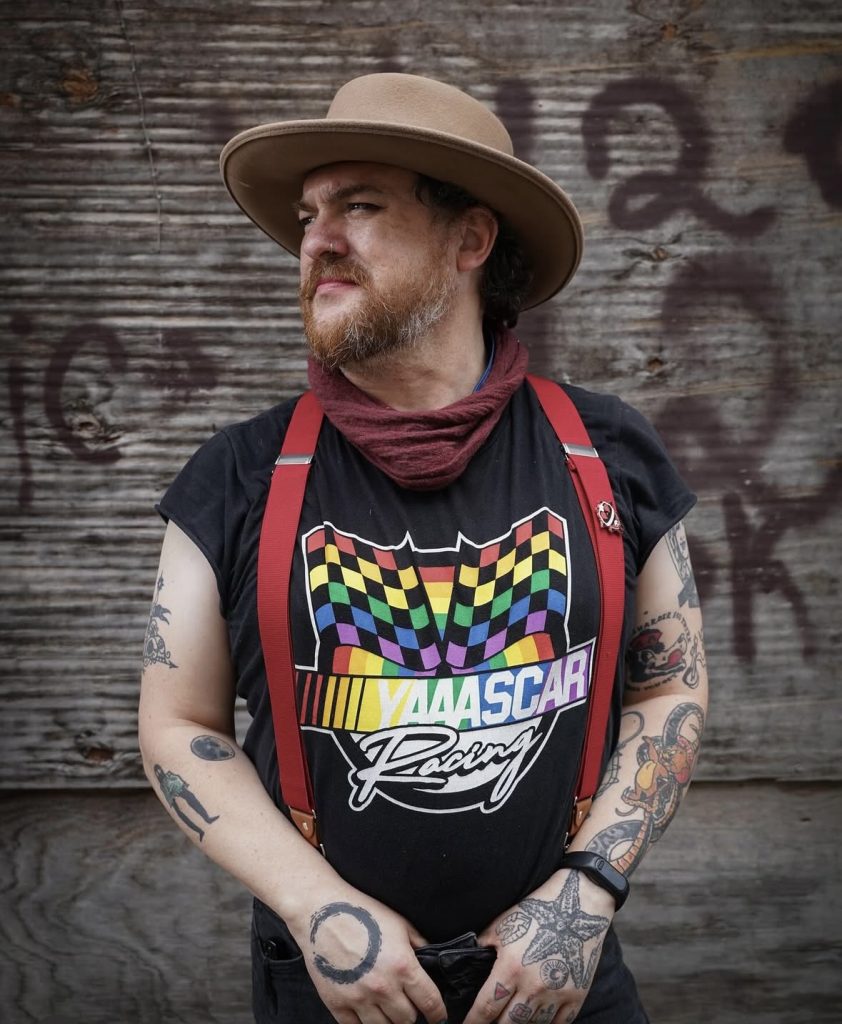
That sense of strain came to a head on the road last year. Adeem said they’d suffered a major mental-health episode while touring last summer and that the nonstop cycle of shows, social demands and controversy left no room to heal. Themes of strain and caretaking run through their most recent record, Anniversary, assembled from snapshots of life, marriage, family and struggles with mental illness. Adeem is married to Hannah Bingham, an artist based in Knoxville, and they have a 7-year-old child together.
Adeem described the hiatus as very real but also somewhat flexible: “I’ll take as much space as I can afford to take,” they said, acknowledging that music has been their primary income and that the “money dries up” if they step away too long. Still, the choice to quit social media feels absolute, a deliberate narrowing of the prominent role they’ve occupied in public discourse so they can return to being an artist first.
The tension of being Southern and being different dates back to Adeem’s childhood in Locust, North Carolina, a tiny town with just one stoplight. Adeem (born Kyle Bingham and now known professionally as Adeem Maria) describes a “redneck” upbringing of woods, scraped knees and long hair dyed blond; of being an outsider listening to metal and hip-hop even as country radio ruled the airwaves. Moving north to Syracuse, New York, with their family as a preteen complicated things: They worked hard to erase their accent in schools, and music became the language that made the most sense. “I wanted to erase my history of growing up in the South because it was embarrassing to me,” they said, speaking plainly about the shame and later reclamation that shaped both their identity and art.
Those Southern roots surface in surprising ways across Adeem’s songs, an affection for big, melodramatic country gestures (Think Garth Brooks, Reba McEntire, Johnny Cash and Loretta Lynn — some of Adeem’s biggest inspirations). As a nonbinary, queer artist in Americana and country circuits, Adeem has constantly had to carve space within genres that still tend to police boundaries. They spoke about being blacklisted at times by Americana circles, even as the community has started to champion progressive rhetoric. Their music, they said, is a project of inclusion: not flattening Southern identity or queer identity into slogans but allowing both to be messy and true. “One thing that’s really important to me is removing the barrier between being queer and being Southern,” they said.
For a performer who’s long navigated the often-hostile spaces between mainstream country and queer life, Atlanta Pride is more than just another gig. They’ve performed at Prides in other cities and even took a stage at the Grand Ole Opry on Stonewall Day, dedicating a song to Marsha P. Johnson, a moment they called “one of my most treasured things.” And Atlanta itself has always been an important part of their story. Adeem first played the city about 15 years ago at Eddie’s Attic and remembers the small network of friends and collaborators, including Eddie Owen, who helped them grow.
When asked what they would like to share with younger queer Southern people, Adeem spoke about the permission to be complex. “I wanted to be sophisticated and worldly and thoughtful and expansive,” Adeem said of the time when they sought to lose their accent and hide their Southern roots. “Now, part of the work is trying to uphold that you can be from the South and that just be true.” It is an insistence that identity need not be reductive.
When they play Atlanta Pride, it will be in the spirit of that insistence, a show that marks gratitude and exhaustion in equal measure. “I don’t want to live as Adeem the Artist anymore,” they said. “I just want to be someone who makes songs again.”
Where & when
Adeem the Artist performs at Atlanta Pride at 4:30 p.m. on Saturday, October 11, on the Coca-Cola Main Stage in Piedmont Park. atlantapride.org.
::

Andrew Alexander is an Atlanta-based writer.
STAY UP TO DATE ON ALL THINGS ArtsATL
Subscribe to our free weekly e-newsletter.

PLEASE SUPPORT ARTSATL
Your Gift Sustains the Coverage You Count On!
Related Posts