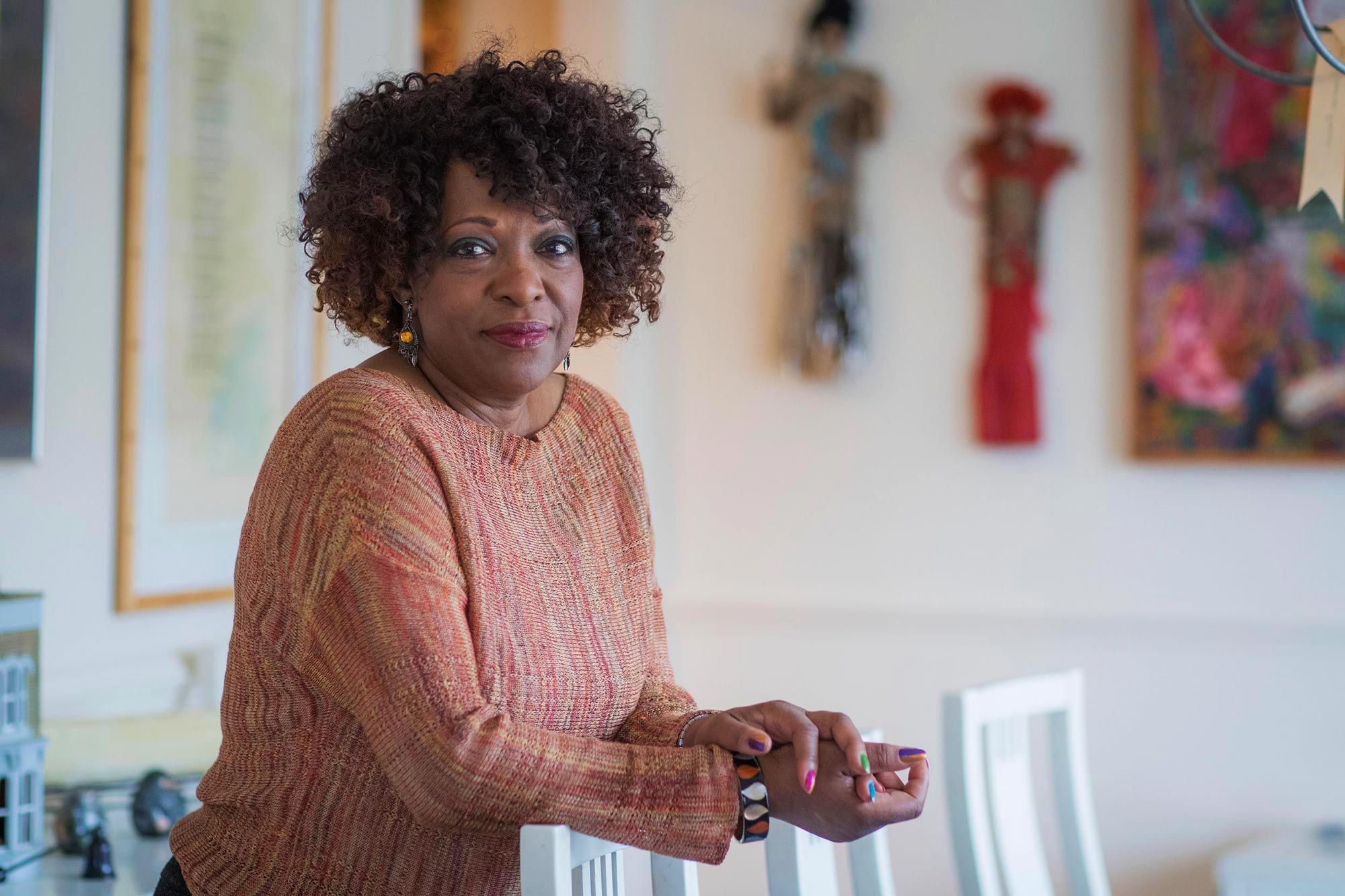
Poet Rita Dove honors Beethoven’s friend, Black violinist George Bridgetower
Dove was surprised to learn that Beethoven dedicated a sonata to the musician and that the work was renamed soon after its first performance. On January 17, she will read from her book, Sonata Mulattica, as part of an Atlanta performance of the well-known sonata to be played by pianist William Ransom and new-to-Atlanta violinist Hannah White.
::
It began as a mystery. Pulitzer Prize winner and former poet laureate of the United States Rita Dove was having a quiet evening at home watching television with her husband when they noticed something strange.
In a film about Beethoven in 1803 Vienna, the composer walks by a Black violinist. Dove looked at her husband — they’d heard of color blind casting, but really?
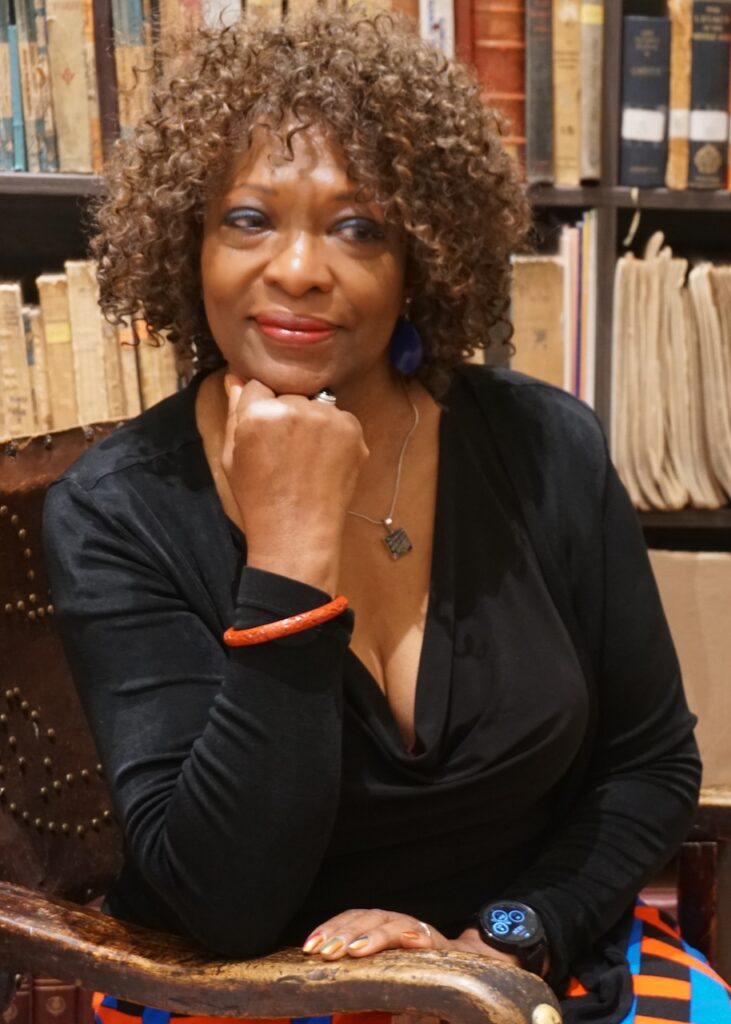
Dove had stumbled upon George Augustus Bridgetower, a mixed-race violinist who had 15 minutes of fame and then was written out of history. In 2009, after extensive research and exploration, Dove produced a book, Sonata Mulattica, a collection of poems telling Bridgetower’s story and her own imagined version of events.
Dove will read excerpts from Sonata Mulattica interspersed with a live performance of the sonata originally dedicated to Bridgetower. It’s part of the Emory Chamber Music Society’s 32nd season and will be performed by the festival’s director, pianist William Ransom, and African American violinist Hannah White, making her Atlanta debut. The event is free and will take place Friday, January 17, at Emory’s Schwartz Center for Performing Arts.
“There is something very satisfying about solving a mystery,” Dove said in a recent phone interview. She spent years uncovering traces of Bridgetower, eventually finding the most extensive records of him sprinkled through the diaries of Charlotte Papendiek, a dressmaker and lady-in-waiting to the wife of King George III. “The deeper I got into this story, the more surprised I was by what I found.”
What Dove discovered is that Bridgetower was a child prodigy violinist whose father, a self-proclaimed “African Prince,” toured him around Europe in the 1790s. At 23, Bridgetower sought out Beethoven, and the two had an immediate bond as outsiders to society. Beethoven dropped work on his Third Symphony to write a sonata for and dedicated to his newfound friend. (In a programming coincidence, the Atlanta Symphony Orchestra will perform Beethoven’s Third Symphony later this month.)
In May 1803, with Beethoven on the piano, the two men premiered the sonata to great acclaim, but, two weeks later, allegedly after fighting over a woman, Beethoven ripped up the dedication page. He renamed the piece the Kreutzer Sonata, having given it to his White violinist friend, Rodolphe Kreutzer, who, as Dove points out, declared it “unplayable.”
Dove’s book, Sonata Mulattica, (the sonata’s original title) is an extraordinary meditation on who Bridgetower was, his brief friendship with Beethoven and how the world might be different if the piece were known as the Bridgetower Sonata. It includes poems from Beethoven’s point of view, as he struggles with deafness and rejection by the woman for whom he wrote the Moonlight Sonata.
“Part of the solving or the resolution of the mystery was understanding the world they moved in,” says Dove, who explored far beyond these two men. She followed multiple threads of research, including accounts of London the year the Thames froze over and people created a city on ice. Sonata Mulattica is a kind of exquisite travelogue in history that includes narratives from the Prince of Wales, Haydn and even a chorus of 18th century barmaids.
Dove and Ransom first collaborated on Sonata Mulattica 10 years ago at Emory and went on perform it across the Southeast. But this upcoming performance will be different because they will experiment with interspersing text and music. “By the time you get to hearing the sonata, you’ll have some ideas” about the story behind it, says Dove. “It will be fun because we’re listening to each other: poem, music, poem, music.”
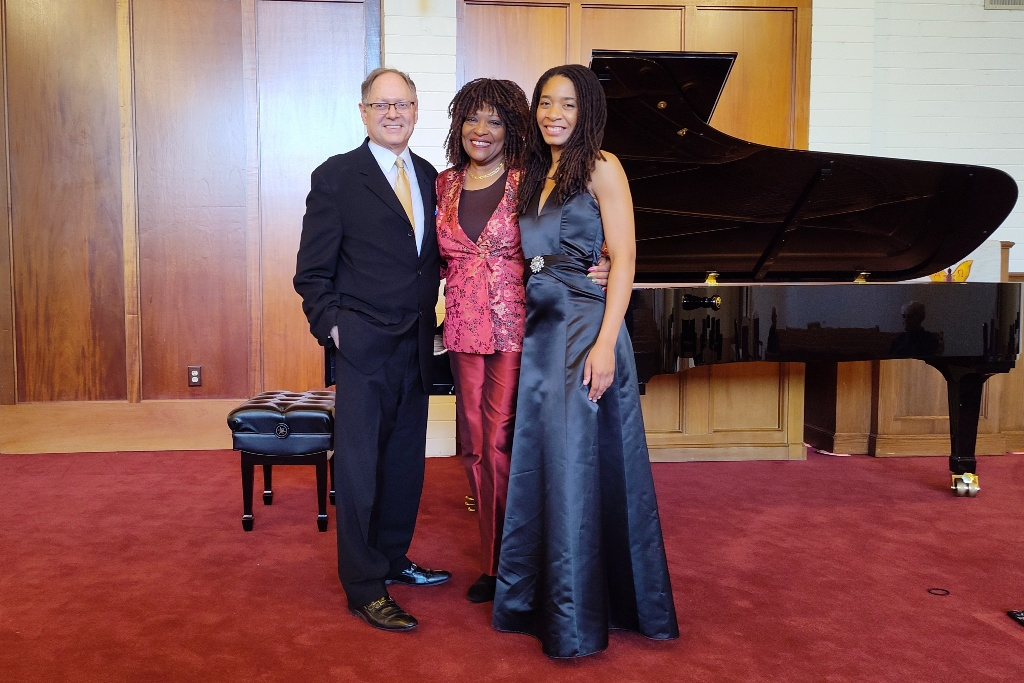
Ransom says the sonata itself is an extraordinary work. “It is often called a concerto for two instruments because it’s so virtuoso for each player. It is one of one of the most inventive, exciting and innovative pieces ever conceived.”
Dove is no stranger to musical collaborations. She worked with multi-Oscar and Grammy-winning composer John Williams to produce Seven for Luck, a song cycle for soprano and orchestra. She also collaborated with Grammy-winning composer Richard Danielpour to create A Standing Witness, a 75-minute cycle covering 50 years of American history as performed by mezzo-soprano Susan Graham.
“These collaborations have affected my own sensibilities as a poet,” says Dove. “I grew up playing the cello. But in collaboration with vocalists, I’ve begun to understand much more about the upper lines, the melody and how it goes across measures. Which corresponds to how a sentence can go two through two or three lines of poetry and keep it afloat.”
This performance will uplift the memory of a man cast aside by history. “It’s one of my goals to get the sonata renamed the Bridgetower Sonata,” Dove says, at least in common parlance. And perhaps the power of her extraordinary words, intermingled with this unparalleled piece of music, will conspire to do just that.
::

Alex Burger is an author, playwright, and screenwriter. His work includes South Africa’s most popular TV drama “Umlilo,” two sold-out plays in London and Johannesburg, and projects in Hollywood. He’s an advisor to the World bank, has worked in 64 countries, and grew up performing in a magic show cult.
STAY UP TO DATE ON ALL THINGS ArtsATL
Subscribe to our free weekly e-newsletter.

PLEASE SUPPORT ARTSATL
Your Gift Sustains the Coverage You Count On!
Related Posts