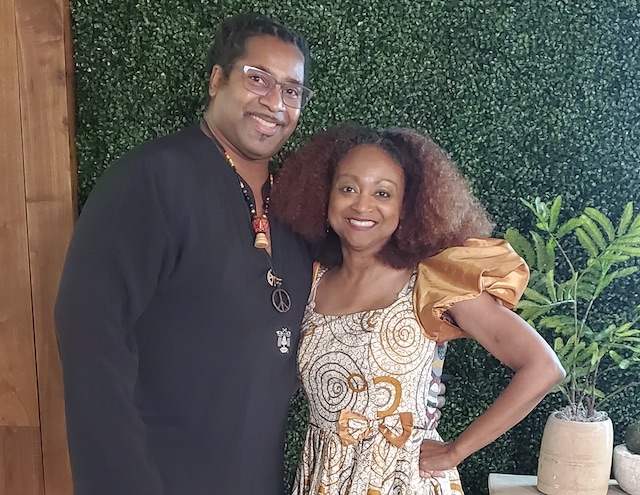
Partners in the Arts: Ballethnic Dance’s Nena Gilreath and Waverly T. Lucas
(Editor’s note: This is the first of a new monthly series that profiles couples with each partner working in the arts.)
Nena Gilreath and Waverly T. Lucas, co-founders of Ballethnic Dance Company, often break the ice at presentations by asking audience members: “How many of you would like to take your spouse to work?”
In a lot of rooms, said Gilreath, few people raise their hands.
During 33 years co-directing one of the few Black-led ballet companies in the United States, the married couple have had their share of conflicts. But because they are committed to Ballethnic’s mission, their very differences are what have made the company resilient.
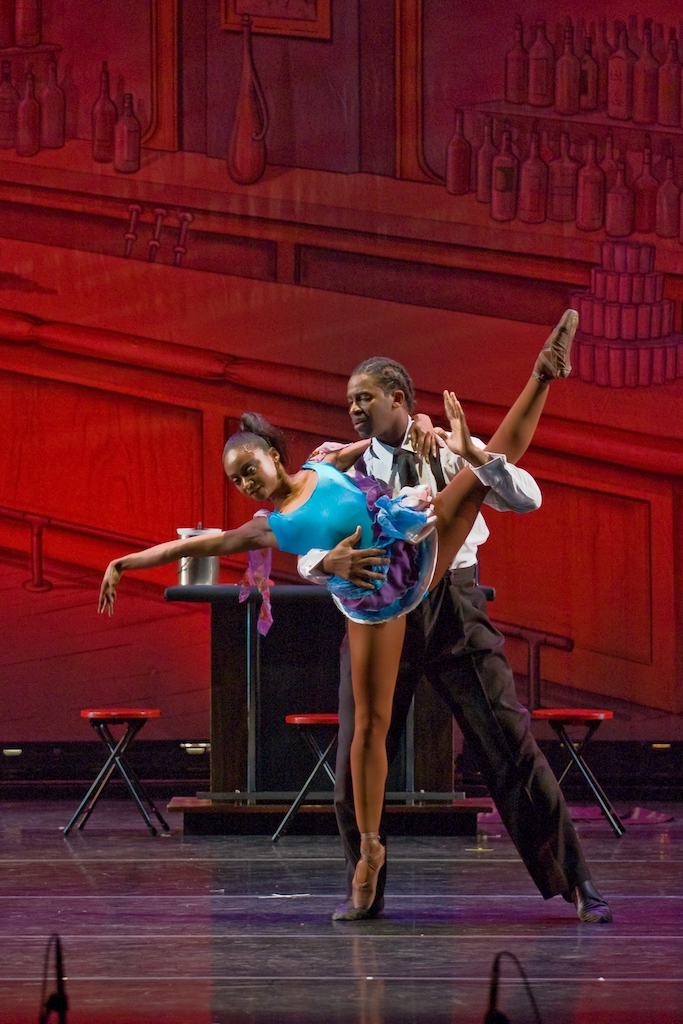
In an interview at their East Point headquarters, the co-directors recalled, with forthright honesty and plenty of laughter, some of the differences in the ways they’ve thought and worked and how those differences enabled them to survive crises that could have destroyed them.
The couple founded Ballethnic in 1990 in the spirit of their alma mater Dance Theatre of Harlem and with the cultural richness of Atlanta.
Like their mentor Arthur Mitchell (who co-founded Dance Theatre of Harlem with Karel Shook), Gilreath and Lucas have shown that Black dancers and dancers of other ethnicities could demonstrate excellence in ballet as well as anyone who’s primarily of European descent.
Both have sacrificed to create a safe space where classical dancers from all backgrounds can develop and create without the pressures of existing within predominantly White organizations.
Working on a relatively small budget, they’ve multitasked as artists, teachers, mentors and administrators. Both worked extra jobs during the company’s early years. Gilreath taught in local schools. Lucas often guested in a Nutcracker production run in his home city of Detroit. When he returned home, his paycheck went straight toward the payroll for dancers in Ballethnic’s own Urban Nutcracker, Lucas’ adaptation of the holiday classic set on Atlanta’s Sweet Auburn Avenue.
Ballethnic is celebrating the production’s 30th anniversary with performances in early December.
Gilreath and Lucas have always lived under their means to support the community they’ve helped to build. “Both our checks together would not have been the salary for one person,” Gilreath said. “People would say, ‘You could have a bigger house,’ but we just did not want that.”
Working together since their early 20s, they’ve had to set boundaries. They used to share one large office space, but arguments about choreography and partnering frequently erupted.
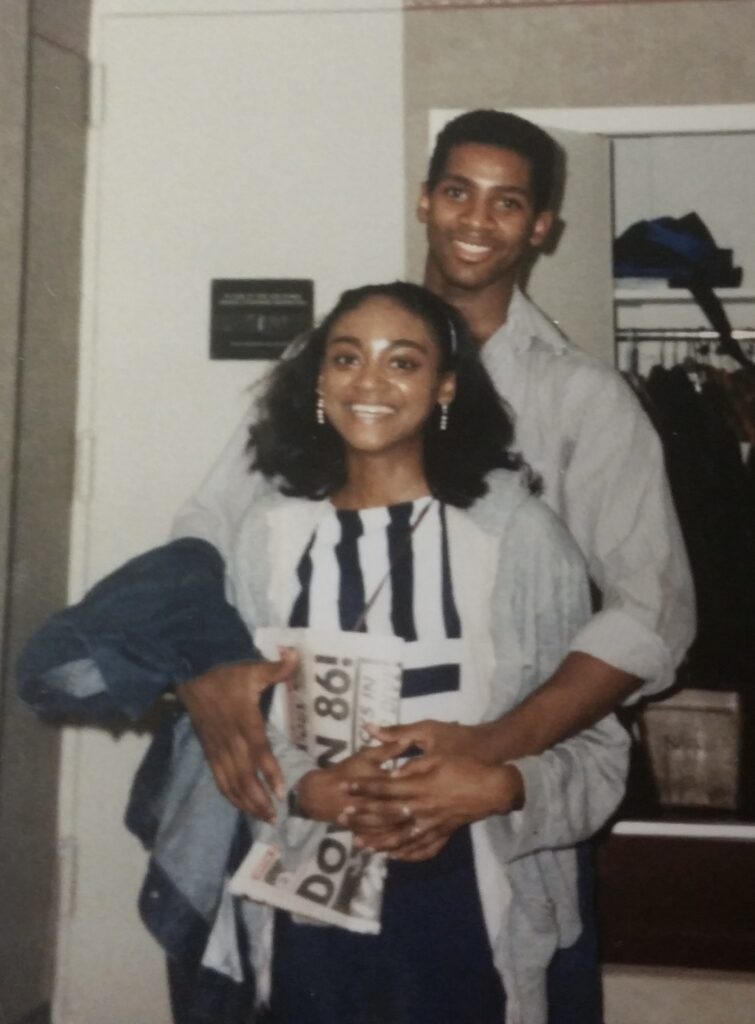
“If he tried to change a step and he was wrong,” Gilreath said, “then I was mad the rest of the day.” Their company administrator moved her desk between theirs and refereed.
As choreographer, Lucas generally prefers an exploratory creative process. Gilreath would rather have choreography set early on so she can then practice to a level of mastery. “I’m very structured,” she said, “whereas he has all these ebbs and flows.”
Lucas agreed. “She wants to put it in a bottle and label it,” he said. “At times, that’s a very good quality, but at times, it can be stifling to creativity.”
They’ve butted heads over finances, as Lucas’ artistic vision has often outsized the budget Gilreath manages. She maintains checklists and documents procedures for future replication. Lucas prefers embodied knowledge, which he passes on to others through teamwork and mentoring.
Most of their time and money has gone into the company, so they’ve taken few vacations, though work has taken them to Africa and most recently to London. Gilreath once told Lucas he’d have to cancel a trip he’d booked to Disney World because paperwork for the upcoming season wasn’t finished. Lucas got angry and went to the theme park anyway. “Oh that,” said Lucas ironically. “I didn’t even call that a vacation.”
Nonetheless, the two have struck a balance in their relationship and the way they run Ballethnic.
This balance was thrown off-kilter in 2015 when Lucas ruptured his Achilles tendon and suffered a postoperative infection that put him in an orthopedic boot for three years. The ordeal could have destroyed Gilreath and Lucas and the company they’d sacrificed so much to build.
The injury and infections ripped away Lucas’ identity as a strong dancer and representative of Ballethnic. “You realize that what you’ve done is easily erased,” said Lucas.
Gilreath carried the burden as caregiver and head of company and school. Both had always done substantial work for free. Suddenly, the company budget was paying people to do jobs Lucas had always done. Medical bills piled up.
“It was humbling,” said Gilreath. “It made us understand that we had to change, or we weren’t going to get out of this.”
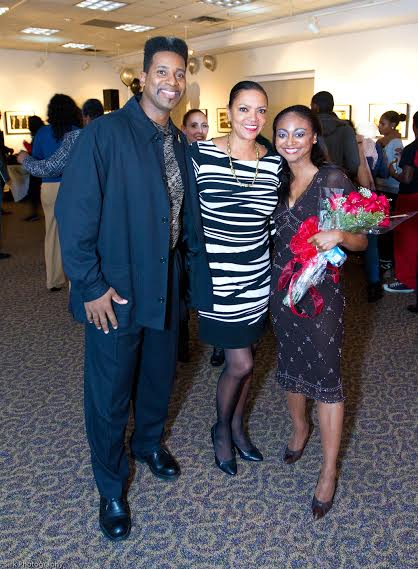
Fallout from Lucas’ injury pushed each of them to develop new skills and make new connections outside of Ballethnic while bolstering the organization’s internal strength.
Gilreath took a full-time position as facility and program supervisor at the East Athens Educational Dance Center. She began teaching part-time at the University of Georgia, which expanded her community of artists and researchers.
She started an “artistic pipeline” between Ballethnic, the university and the East Athens Dance Center. The resulting cross-pollination between young students, college dance majors and Ballethnic’s professionals renewed Gilreath’s passion for the company mission.
While the orthopedic boot left Lucas unable to dance, he adapted while choreographing the musical Memphis, a co-production of Theatrical Outfit and the Aurora Theatre. Past experience working with choreographer Agnes De Mille inspired him to research Black social dances of the musical’s 1950s era, which increased the production’s authenticity and relevance.
Lucas had long wanted to document Ballethnic’s unique fusion of classical pointe work and African dance. So he went back to school, earning a graduate degree in ethnochoreology at the University of Limerick in Ireland. He is now working with Dr. Shady Radical, an Atlanta-based writer, curator and archivist who specializes in the preservation of Black performance. Together they are archiving the company’s Urban Nutcracker for future generations.
With Gilreath in a full-time teaching position, the couple could have slipped away from the pressures of running Ballethnic, moving into a life of relative ease. But, in 2018, the dance world became focused on the Equity Project, an initiative to advance racial equity in the ballet field — the very mission that the couple had pursued selflessly for three decades. Twenty-one large-budget companies signed up. Gilreath and Lucas realized that if they didn’t ride this wave of change, their life work would be swept under the tide.

They joined a cohort within the International Association of Blacks in Dance, an Equity Project partner. “It’s being in the rooms where people could hear firsthand our story and not create their own version of what they think we’ve been doing,” said Gilreath.
Their decades of experience in many facets of running a Black ballet company have since added value to the national conversation, and Ballethnic has garnered recognition from Dance/USA, South Arts and Assemblée Internationale 2023.
The company has made such a mark on its local community that on September 18 the East Point City Council and Mayor Deana Holiday Ingraham approved a request to change the name of Ballethnic’s portion of Cheney Street to Ballethnic Way.
Lucas said people sometimes think the couple’s differences are a sign of weakness. On the contrary, he said — their different perspectives fortify both marriage and company and have given them strength to continue. “If you’ve only dealt with good times, then you haven’t been challenged,” Lucas said. “But if you want to know the value of something, you put it under the stress test.”
Have they ever pushed the work completely aside and focused on each other? Not really, Gilreath said, “because the whole mission has been about building something bigger than ourselves.”
::
Cynthia Bond Perry has covered dance for ArtsATL since the website was founded in 2009. One of the most respected dance writers in the Southeast, she also contributes to Dance Magazine, Dance International and The Atlanta Journal-Constitution. She has an MFA in narrative media writing from the University of Georgia.
STAY UP TO DATE ON ALL THINGS ArtsATL
Subscribe to our free weekly e-newsletter.

PLEASE SUPPORT ARTSATL
Your Gift Sustains the Coverage You Count On!
Related Posts