Out on Film celebrates diversity and defiance
The annual film festival returns with 11 days of screenings, presentations, filmmaker Q&As and special appearances.
::
“I’m Still Here,” the anthem from Stephen Sondheim’s musical Follies, could easily be the theme of this year’s Out On Film, the annual festival opening September 25. Its official one is Queer Propaganda, a casually brash reclaiming of the q-word and of the notion, perennially proclaimed by conservative politicos, that there is something they call “The Gay Agenda.”
Now in its 38th year, OOF has survived a fluid timeline of national moods, crises and advancements affecting the LGBTQ community. The AIDS crisis was at its height in the festival’s 1987 founding year, and some of the things people did in the privacy of their bedrooms were considered illegal in Georgia. OOF carried on when the military compromise of Don’t Ask Don’t Tell was enacted in 1994, then repealed in 2011. It was here when the Supreme Court affirmed marriage equality in the Obergefell v. Hodges ruling 10 years ago, and it’s still here as a vastly changed Supreme Court of the United States considers challenges to that same ruling. Now, as the transgender community and drag queens are serving their term as political targets, OOF is planning for its biggest year ever.
Executive Director Jim Farmer sums up the festival’s mood simply: “It’s defiance,” he says.
“Out On Film is important every year to tell our stories, to embrace new and veteran filmmakers and to provide a safe haven. This year is more important than ever because our community is under attack. Our rights are being taken away. People are literally trying to erase us. But we’re going to be very visible, very in-your-face and way. ‘We’re not going anywhere.’”
The festival includes 155 narrative documentaries, features and short films. “I’m proud that this year has such a diverse lineup,” says Farmer, who is also an ArtsATL editor-at-large. “It represents our entire community. Seventy-six percent of our films are by women, people of color, the transgender community and the nonbinary community. These are our people. We have to amplify their work and make sure their stories are told.”
Some of his favorites include Croatia’s narrative feature Beautiful Evening, Beautiful Day. “It’s such an important film,” he says. “There are moments that are incredibly erotic, and two, minutes later, oh my God, it’s really harrowing.” Also, as a “documentary geek,” he recommends festival opener I Was Born This Way (“I didn’t know Carl Bean’s story, his impact, his influence on today”), Night in West Texas (“I just bawled my eyes out”), The Librarians (“it’s a scary film”) and Sally! (“another powerful documentary about someone we should know more about”).
“I’m always really proud of our shorts program,” Farmer adds. Out On Film is the only LGBTQ festival whose short narrative films are eligible for Oscar consideration each year. (One entry I recommend this year is the absurdist French short Two People Exchanging Saliva.)
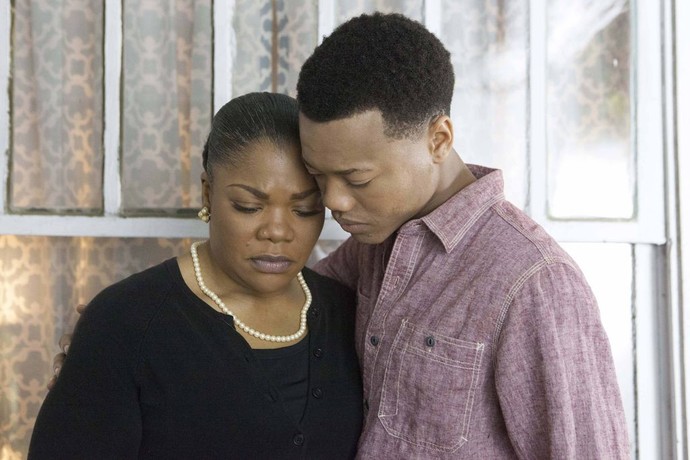
Continuing through Oct. 5, the 11-day festival comprises screenings, presentations, filmmaker Q&As and special appearances (by, among others, Oscar winner Mo’Nique, attending a screening of her 2014 film Blackbird, and actress/singer/entrepreneur Angelica Ross, accepting this year’s OOF Icon Award). All events take place at Midtown Art Cinema and Out Front Theatre Company. Full information: outonfilm.org.
Here are some brief appreciations of some of the films I was able to screen in advance.
Beautiful Evening, Beautiful Day. Croatia’s official entry for best international feature for the Academy Awards, this haunting drama alternates between rousingly hot and emotionally brutal. It’s the tale of four gay male friends, resistance heroes during WWII, now facing homophobic witch hunts from Yugoslavia’s 1950s communist government. With state censors watching their every move at the film company where all four work, they fight to maintain their friendship and love. Actors Dado Cosic and Djordje Galic play the main, committed couple with a no-holds-barred physicality. Emir Hadzihafizbegovic has the film’s biggest arc as the state-appointed watchdog who experiences a moral reckoning. Writer-director Ivona Juka puts her characters, and us, through a series of compromises, betrayals and acts of bravery that will stick with you for a long time.

Drive Back Home. In this cozy Canadian dramedy, Alan Cumming plays a closeted 1970s man in Toronto, whose arrest on morals charges leads to a long road trip back to his small hometown. He’s driven by his grumpy, taciturn brother Weldon (Charlie Creed-Miles). The best humor in writer-director Michael Clowater’s film comes from underscoring Canadians’ famed politeness, then upsetting that old cliché with well-timed bursts of rudeness. Often, the movie is too mild and old-fashioned for its own good (It feels that it could have been made in the ’70s, not just set then). Speaking of old-fashioned, it’s one of several OOF titles this year that feature characters contending with toxic family dynamics and upbringings (see also Outerlands, Plainclothes and Sandbag Dam).
Four Mothers. Inspired by Gianni Di Gregorio’s charming 2008 film Mid-August Lunch, director and co-writer Darren Thornton’s film relocates the action from Italy to Ireland and expands on the original’s implicit gayness. James McArdle plays Edward, a mid-career novelist turned hot commodity by renewed interest in an early YA book. But plans for an American book tour look tricky. He’s already caring for his mom, weakened by a stroke (and played by the great Fionnula Flanagan). Then his three BFFs dump their own mothers on him while they gallivant to Spain for Maspalomas Pride. Edward is also contending with his own romantic failings. The gentle comedy can sometimes feel a little claustrophobic, but your frustration with Edward is built into the film’s ultimate goal of emotional release. (It’s a good, warm-hug choice for OOF’s closing-night slot.)
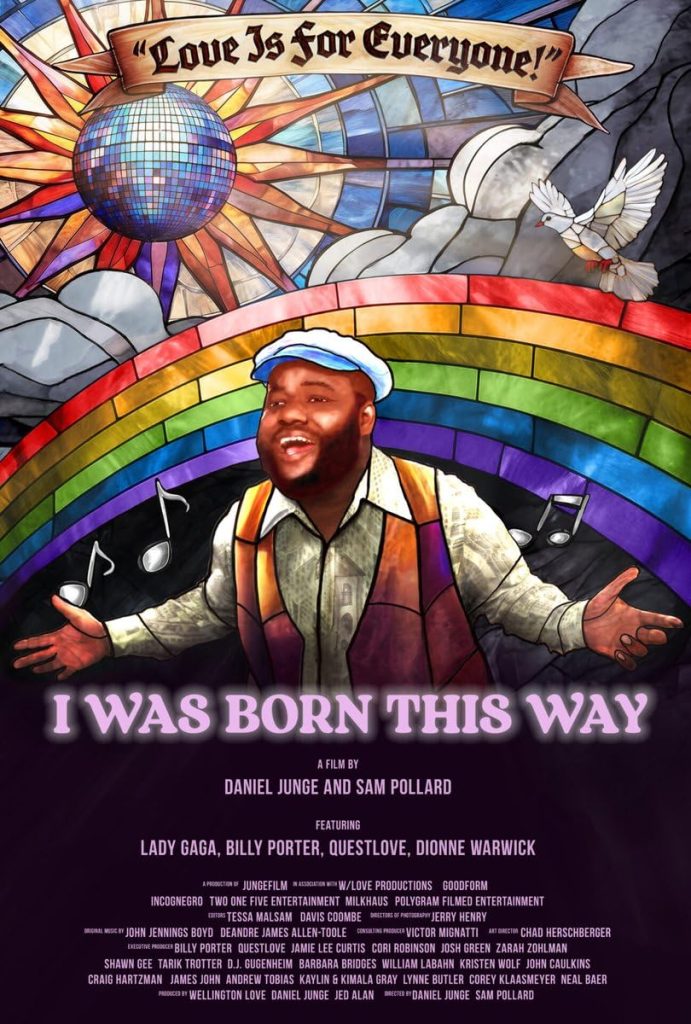
I Was Born This Way. A rousing opening-night film. In 1977, Motown released the “most revolutionary single since ‘What’s Going On,’” in the words of Questlove, one of the artists, including Lady Gaga and Dionne Warwick, interviewed here. That was the disco ditty of the title, sung by Carl Bean, and the first time a song declared it was OK to be out and proud. Daniel Junge and Sam Pollard’s film shows that after becoming an icon for that anthem, Bean became possibly even more important later as an advocate for the sick and dying in the early years of the AIDS crisis. He also founded Unity Fellowship Church, a house of worship that welcomed its LGBTQ congregation back into a spirituality that might have grown dormant and bruised. He was a hero accompanied by a deathless disco beat.
Just Kids. During the 2004 presidential campaign, fear of same-sex marriage was taken up as an easy political football for the re-election of George W. Bush. A similar playbook is being used now, with transgender youth as the ideological pawns. Informative and infuriating, the documentary focuses on three sets of teens and their supportive parents in Texas and South Carolina as their state Legislatures target and ban gender affirming care, regardless of medical facts. Dr. Elizabeth Mack, president of the American Academy of Pediatrics in South Carolina, laments onscreen that her ICU reliably fills with youths who attempted suicide every day following a session of hateful rhetoric at the state Capitol. Just Kids shows heroic, loving parents having to stand up to their children’s bullies — not other children but politicians. Director Gianna Toboni’s film does what important documentaries do: bear witness in real time to a drastically changing landscape.
That mission is also met by:
The Librarians. Anybody who thinks a librarian’s life must be cozy hasn’t been paying attention to the culture wars. Director Kim A. Snyder’s vital, scary film documents the national push, led by a small and mysteriously well-funded “grassroots” group calling themselves Moms for Liberty, to censor books they don’t like. Many of those books include LGBTQ themes; books about racial inequality are also in the bullseye. And so are the librarians, who face persecution and firing. (The film is a product of Independent Lens, the PBS series that began airing in 1999; films like this may be one of the reasons the current administration has defunded public media.)
Night in West Texas. The tale of a young Apache man named James Reyos who was framed for the murder of a closeted priest he’d barely met. His status as a gay Native American with a drinking problem made the job easy for law enforcement back in 1981. The film honors the dogged work of the Texas Tech Innocence Project in clearing the man’s name. It’s a routinely made documentary, but Deborah S. Esquenazi’s film offers the bittersweet satisfaction of seeing justice served, even if it’s 40 years overdue.
Night Stage. In this Brazilian drama, Gabriel Faryas plays a gay actor willing to backstab his straight roommate to land the lead role on a TV show. Meanwhile, he’s dating a closeted guy (Cirillo Luna) who’s running for mayor on a conservative platform. Both men get off on having sex where they risk getting caught. The movie wants to revive the old erotic thriller genre of the 1990s. It’s not as sexy or as daring as it thinks it is, but it’s a borderline-trashy, guilty pleasure.
Outerlands. In writer-director Elena Oxman’s San Francisco-set drama, Asia Kate Dillon plays the nonbinary Cass, a gig-economy serf balancing a restaurant job with part-time childcare duties. Drinking way too much to block out traumatic childhood memories, Cass ignores multiple red flags and agrees to look after a one-night stand’s 12-year-old kid (Ridley Asha Bateman). Then, they both get ghosted by the negligent mom. If the movie leans a little too hard, for my tastes, on the trauma narrative, it’s perked up by Lea DeLaria’s turn as a wise older soul who repeatedly extends a lifeline to Cass.
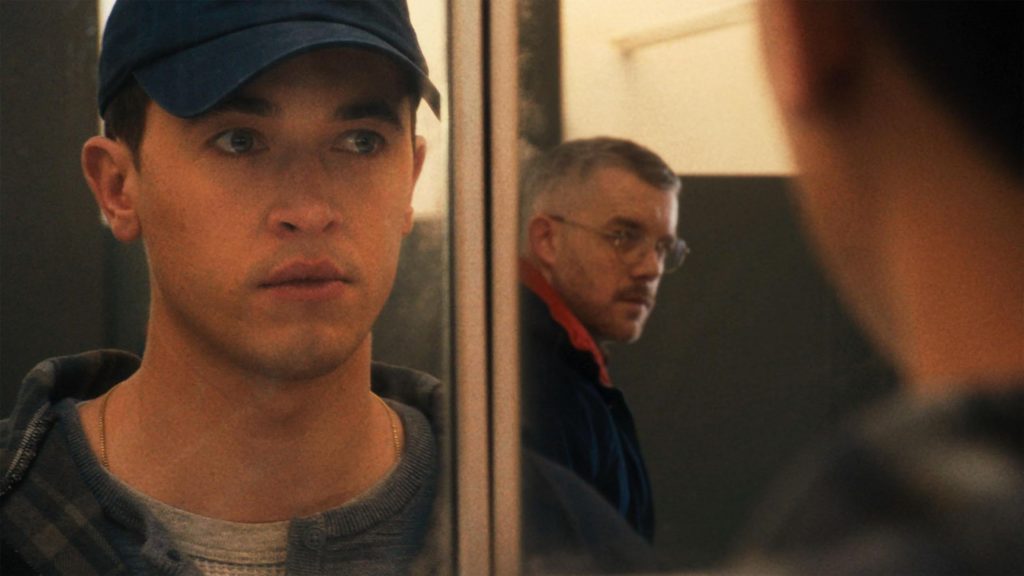
Plainclothes. Set in the 1990s, writer-director Carmen Emmi’s drama reminds us what a distant, closeted era that was — yet, scarily, not that long ago. Tom Blyth plays Lucas, an upper-state New York cop whose station house expends way too much of its resources conducting stings on men hooking up at the local shopping mall. Gay but hiding it from his colleagues and blue-collar family, Lucas rams up against his daily hypocrisy when he falls for middle-aged Andrew (Russell Tovey). Emmi overcomplicates his film with POV shots and grainy, VHS-style footage. The self-important shots distract from the solid character work delivered by Blyth and Tovey, whose character has his own huge conflicts. But the movie’s final moments deliver a real punch.
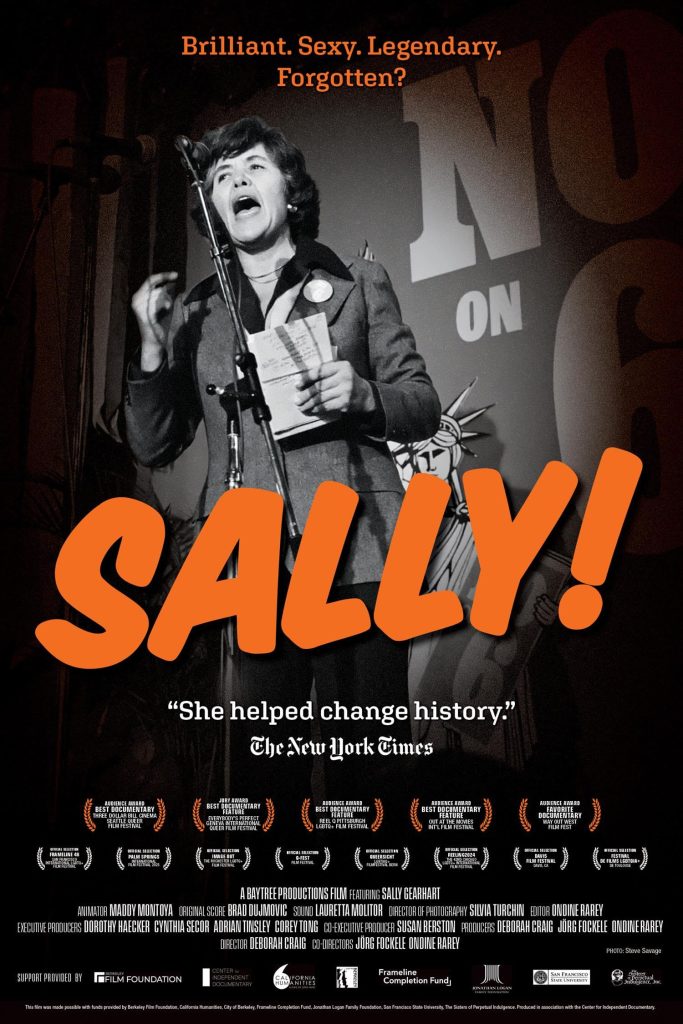
Sally! How come I never heard of loud, brilliant, raunchy Sally Gearhart? For one thing, she was written out of the Sean Penn-starring Harvey Milk biopic, though Deborah Craig’s lively documentary rectifies that bit of whitewashing. The “radical lesbian feminist lighthouse,” in the words of one of the film’s talking heads, Gearhart was a San Francisco icon and separatist whose strong views both inspired and divided some of her fiercest supporters and lovers. “God, I haven’t had a woman on her knees for me in a long time,” she cracks to the kneeling camera operator near the start of the film. It’s a good example of the bawdiness that was a flipside of her steely intellect, infused with a Virginia-raised fluency with the Bible, the tome her conservative opponents tried in vain to use against her. She’s exactly the sort of smart, hell-raising figure current leaders want stricken from the nation’s history books.
Sandbag Dam. Like several other features, this Croatian drama feels a bit old-fashioned … not that there’s anything wrong with that. Lav Novosel plays an 18-year-old in a small town whose status as a popular jock gets challenged by the return of a former neighbor, the slightly older Slaven (Andrija Zunac), who moved alone to Berlin three years earlier for reasons you can guess. Director Cejen Cernic’s film, written by Tomislav Zajec, is an earnest reminder of why so many “different” young people have to get out of the places they grew up.
We Are Pat. It sounds like a potential nightmare: A writers’ room full of transgender and nonbinary comics, who debate how to update, for today’s sensitive world, comedian Julia Sweeney’s “It’s Pat” character from Saturday Night Live in the 1990s. The good news? Director Ro Haber’s documentary is a fascinating reappraisal of the skit and its importance (for better and worse) as an accidental bit of nonbinary representation in its era. The movie also benefits from the fact that Sweeney is a good sport. Asked to be part of the film, she’s an open, smart and modest participant in its explorations.
::

Steve Murray is an award-winning journalist and playwright who has covered the arts as a reporter and critic for many years. Catch up to Steve’s monthly column here.
STAY UP TO DATE ON ALL THINGS ArtsATL
Subscribe to our free weekly e-newsletter.

PLEASE SUPPORT ARTSATL
Your Gift Sustains the Coverage You Count On!
Related Posts