In ‘A Book Arts Revolution,’ Cynthia Nourse Thompson curates a refined selection of Georgia women artists
Georgia Women to Watch: A Book Arts Revolution, organized by the Georgia Committee of the National Museum of Women in the Arts (GANMWA), recently debuted at Atlanta Contemporary Art Center. This exhibition presents the work of five women artists living in Georgia who work in the format of the book as art: Eliza Bentz of Savannah; Hannah Israel of Columbus; Cynthia Lollis of Decatur; Serena Perrone of Atlanta; and Eileen Wallace of Athens.
The exhibition and its theme are part of a larger national program organized by the National Museum of Women in the Arts (NMWA), which is known internationally for its large permanent collection of artists’ books. One of these artists will be selected to represent Georgia as part of the national Women to Watch 2027 exhibition from April through August at the museum in Washington, D.C., a highly competitive and prestigious honor.
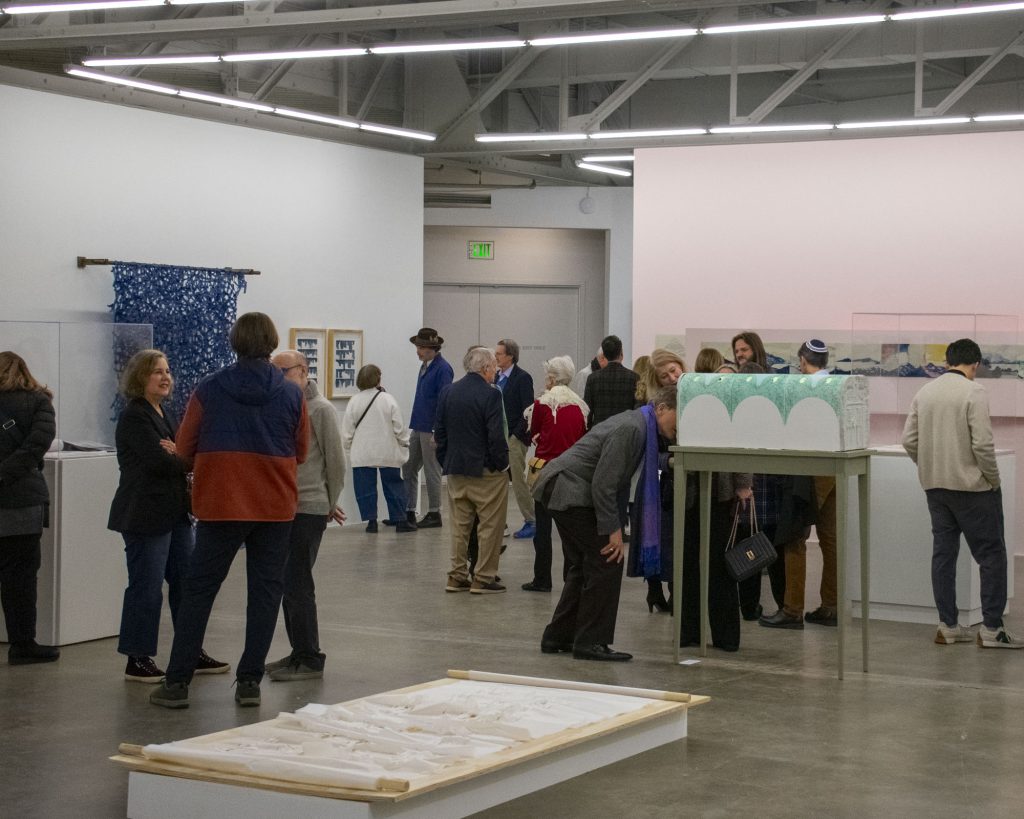
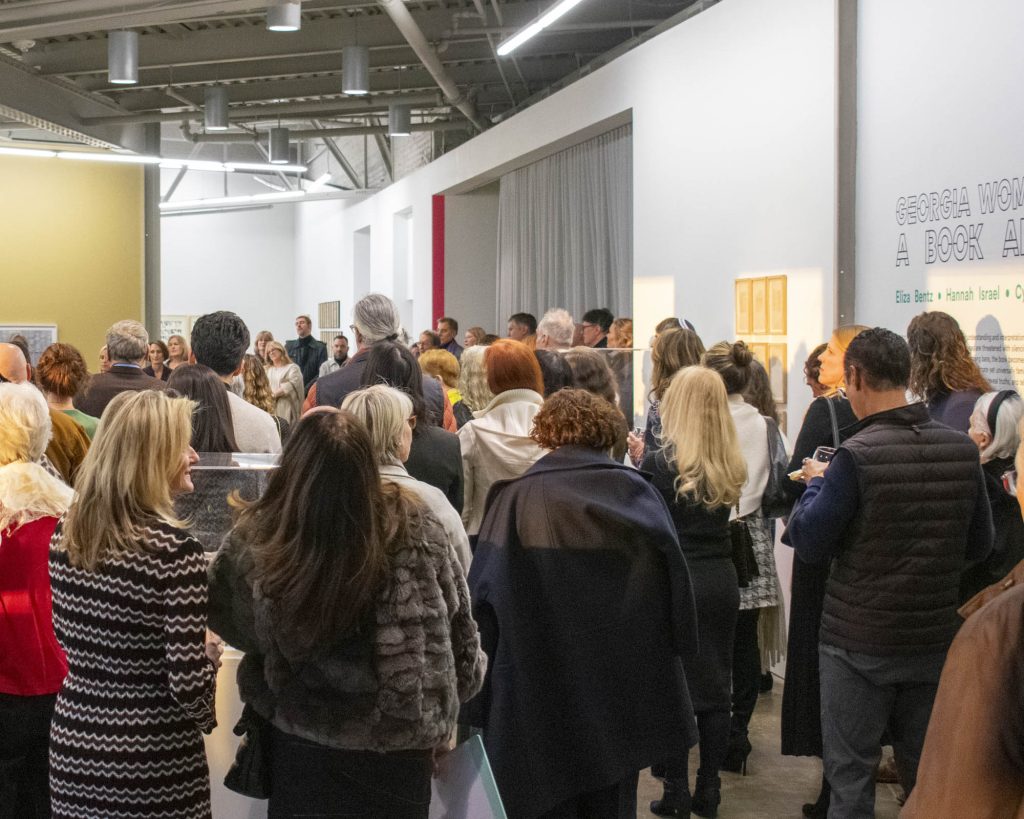
Overall, the exhibition is beautiful, and the artists presented are truly exceptional. But the mandate of this exhibition within the larger NMWA Women to Watch 2027 program presents a small hiccup.
GANMWA Consulting Curator Cynthia Nourse Thompson, associate professor and director of curatorial affairs at the Bernard A. Zuckerman Museum of Art at Kennesaw State University, has been handed a monumental task. Sourcing five artists whose practices fit cohesively in a small group exhibition of this scale is not easy. Here, Thompson’s pool of candidates is additionally limited by gender, geography and format. That she found five artists meeting these criteria — whose careers are also each worthy of both state and national recognition — is remarkable, to say the least. In tackling this challenge, Thompson is due immense credit. At the same time, the hyperspecificity of the exhibition’s parameters has created a show that is refined and academic to the point of verging on muted and inaccessible.
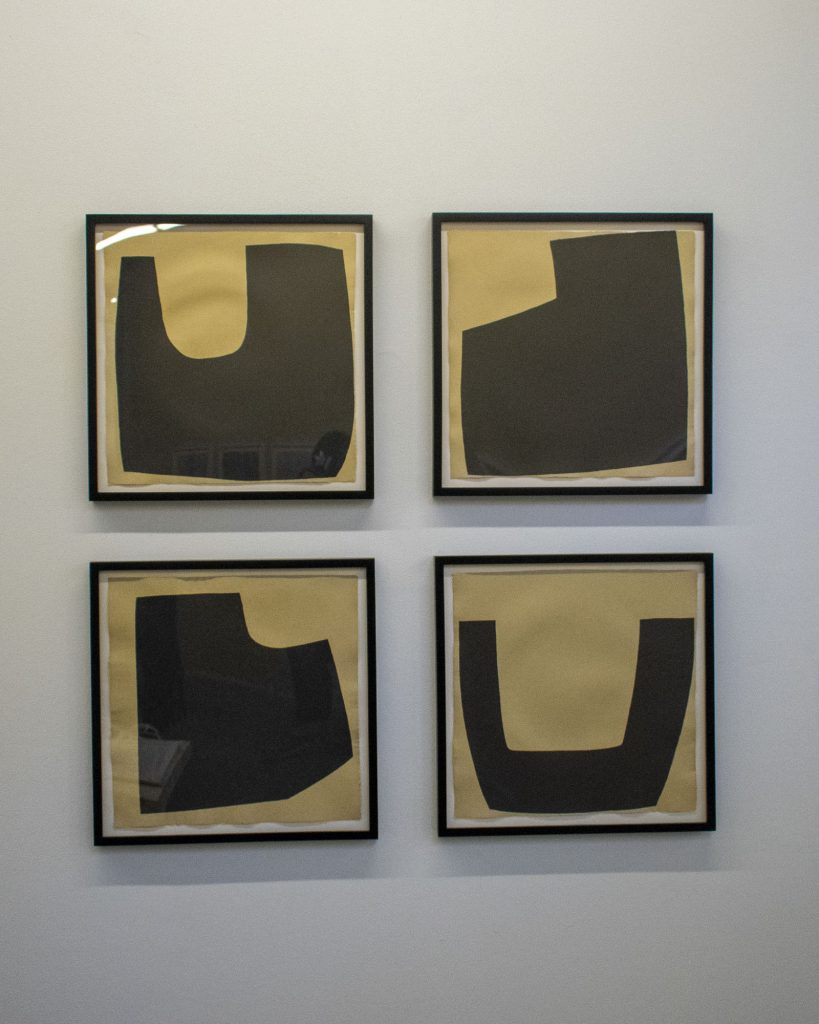
Wallace, for example, has presented a selection of abstracts in gray, black and tan. Her process is deeply technical, using letterpress printing materials in highly unusual and experimental ways. They are, by design, minimal, and their gravitas comes primarily from the innovation in Wallace’s process. As the subject matter for the accompanying artist talk and companion book they are riveting. As artifacts for visual consumption, they lack immediate impact.
Similar assessments can be made of the other artists: They are technically unimpeachable. They are innovative in their practice. They are academic and refined in their taste. In another group setting, any one of these works or artists would serve as a welcome moment of restraint. Here we lack the necessary contrast to establish these voices as contemplative and intellectual. Instead, the uniformity amplifies these qualities such that the exhibition becomes (pardon the pun) bookish.


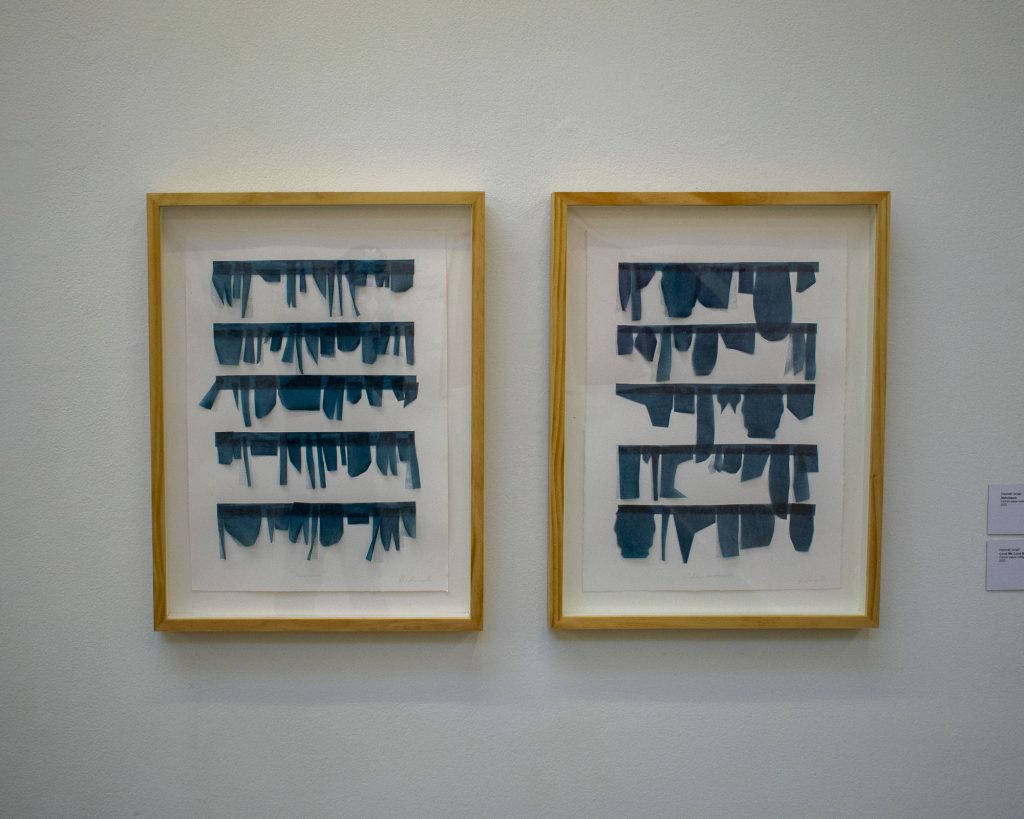
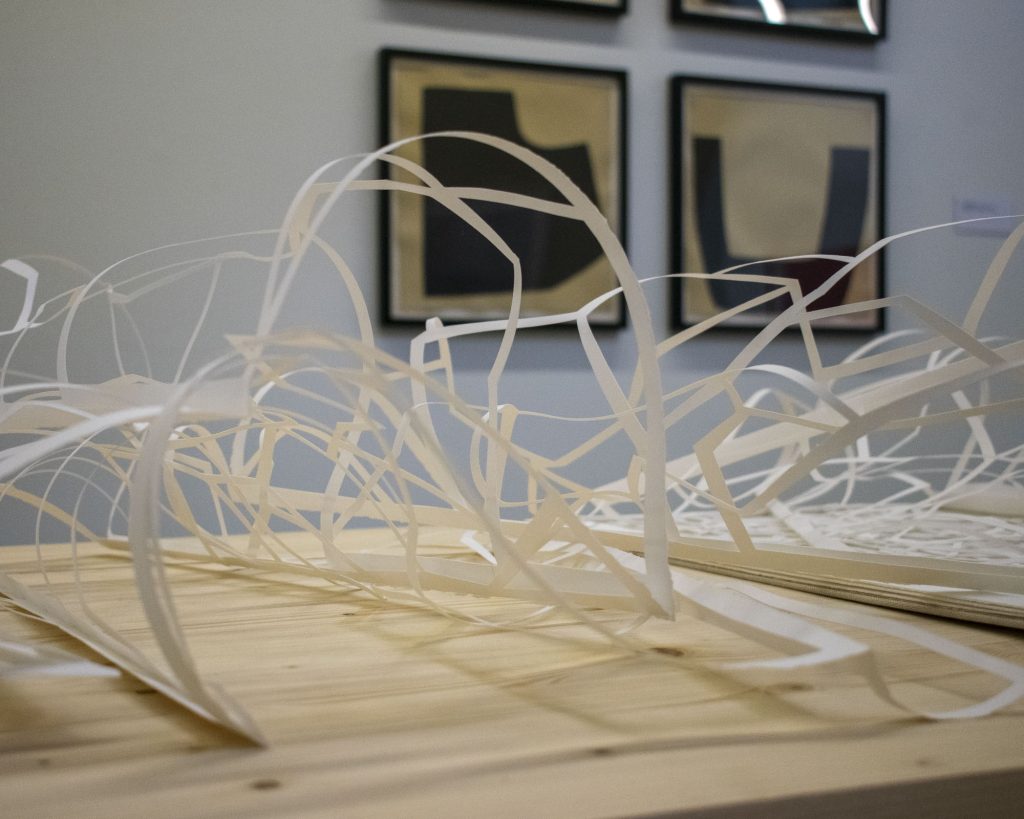
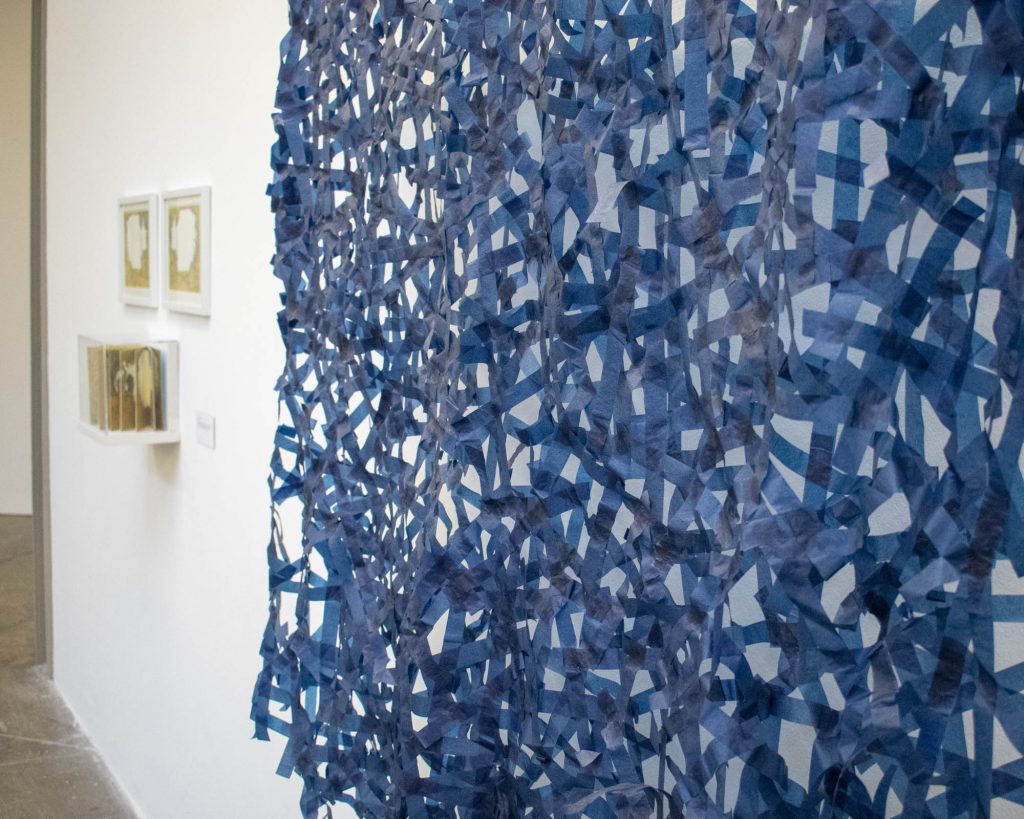

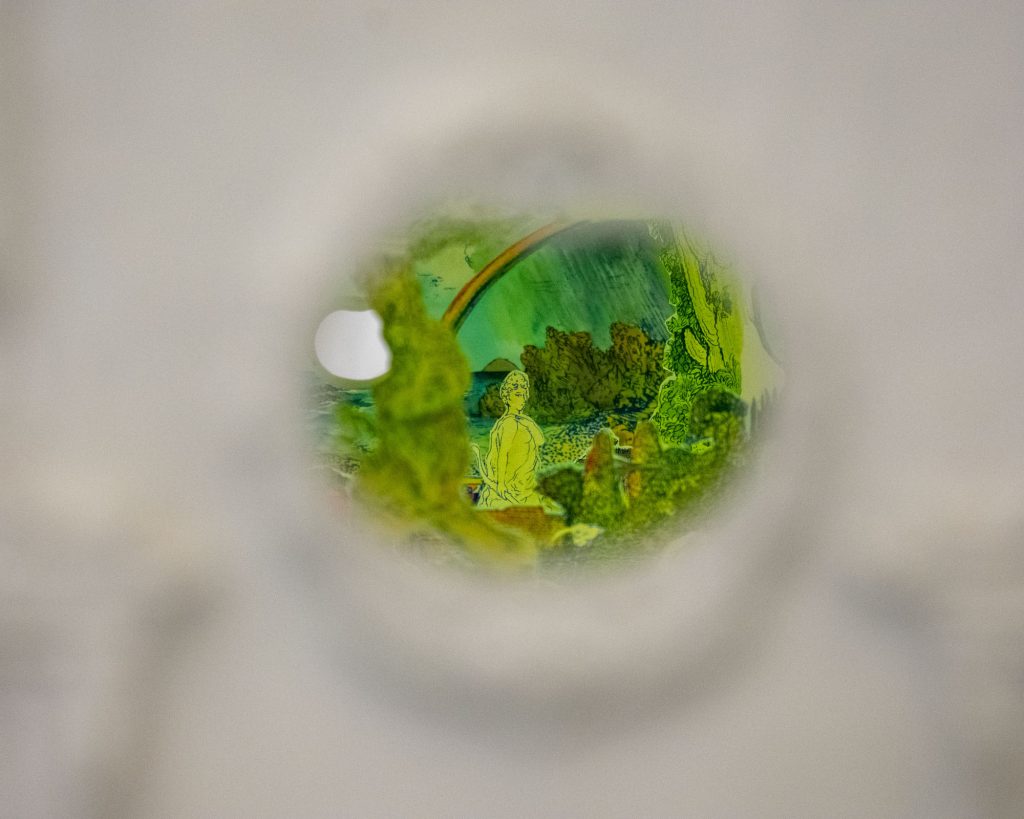
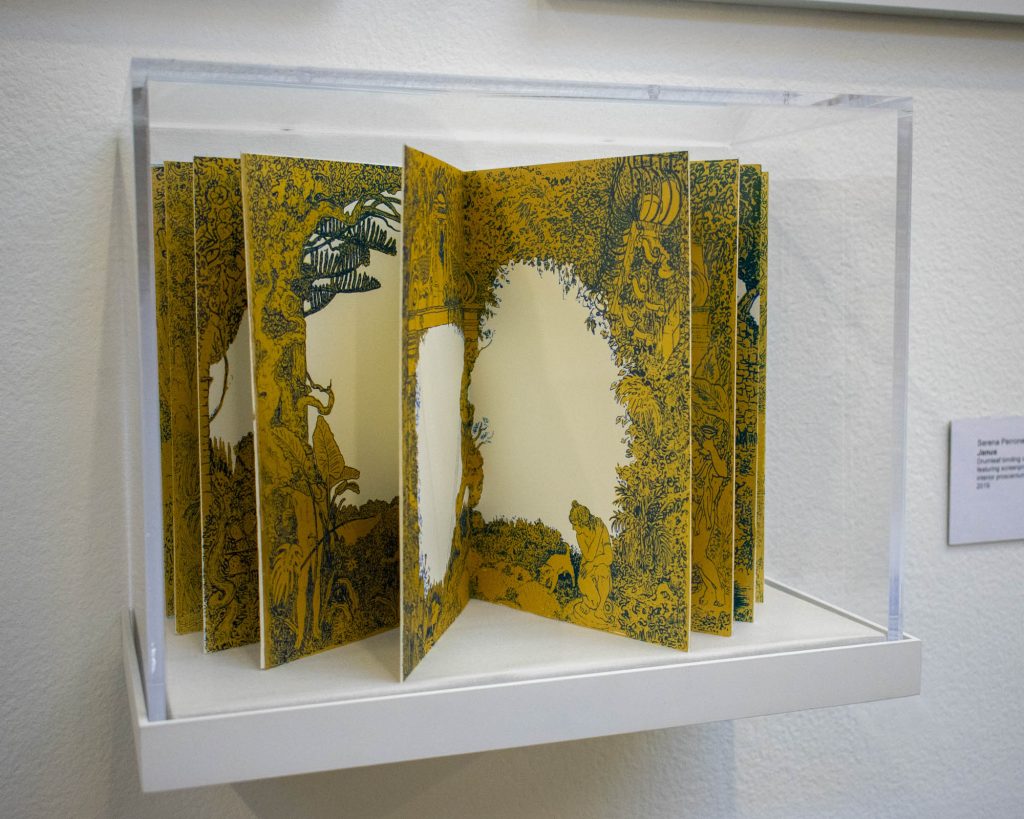
If there is an exception, it is Israel. Her sculptural treatments of highly delicate materials are arresting in their obvious fragility. For example, in Narcissus and Love Me Love Me, carbon paper hangs loosely from paper backing with such wispy airiness that it feels as though the viewer’s gaze itself might create a tear. In her Road Maps, tendrils of meticulously cut BFK Rives paper arc out of an open book and back down toward the display table, with just enough structural rigidity to remain suspended. Admittedly, Israel’s interpretation of “the book as art” is perhaps the most loose of any of the presenting artists, which re-inforces the impression that the quietness of this exhibition is largely due to the program’s mandate.
Ultimately, there are two critiques that cannot be explained by the exhibition’s restrictive parameters.
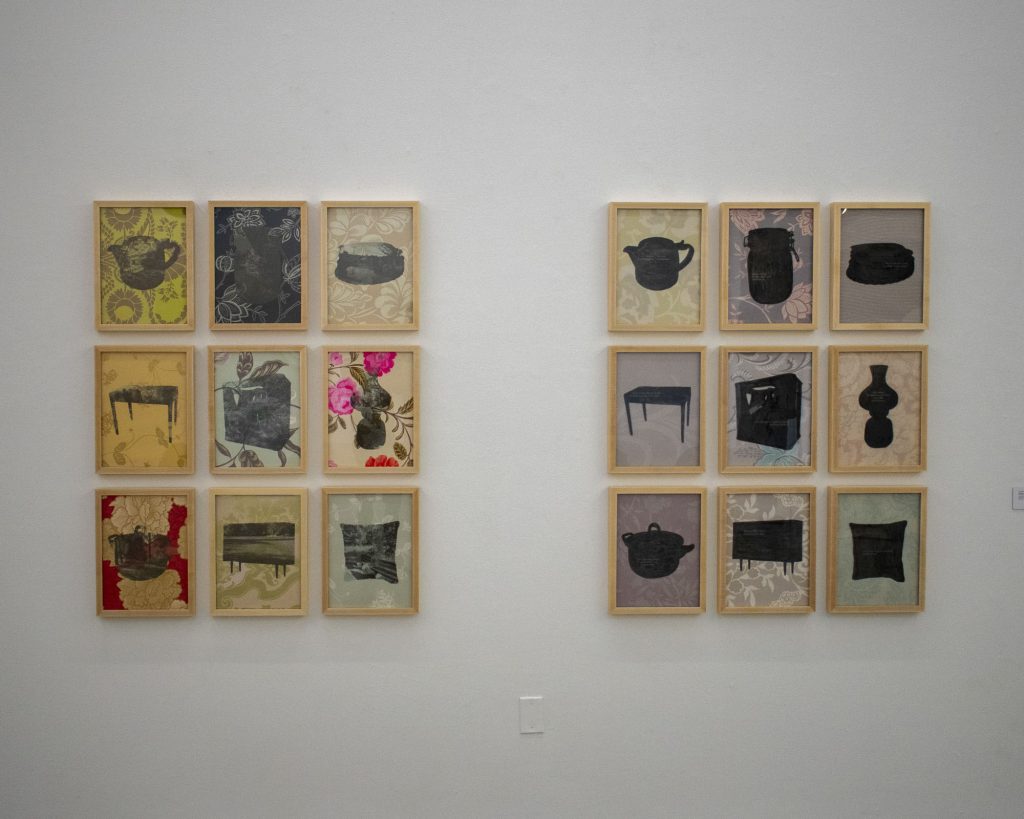
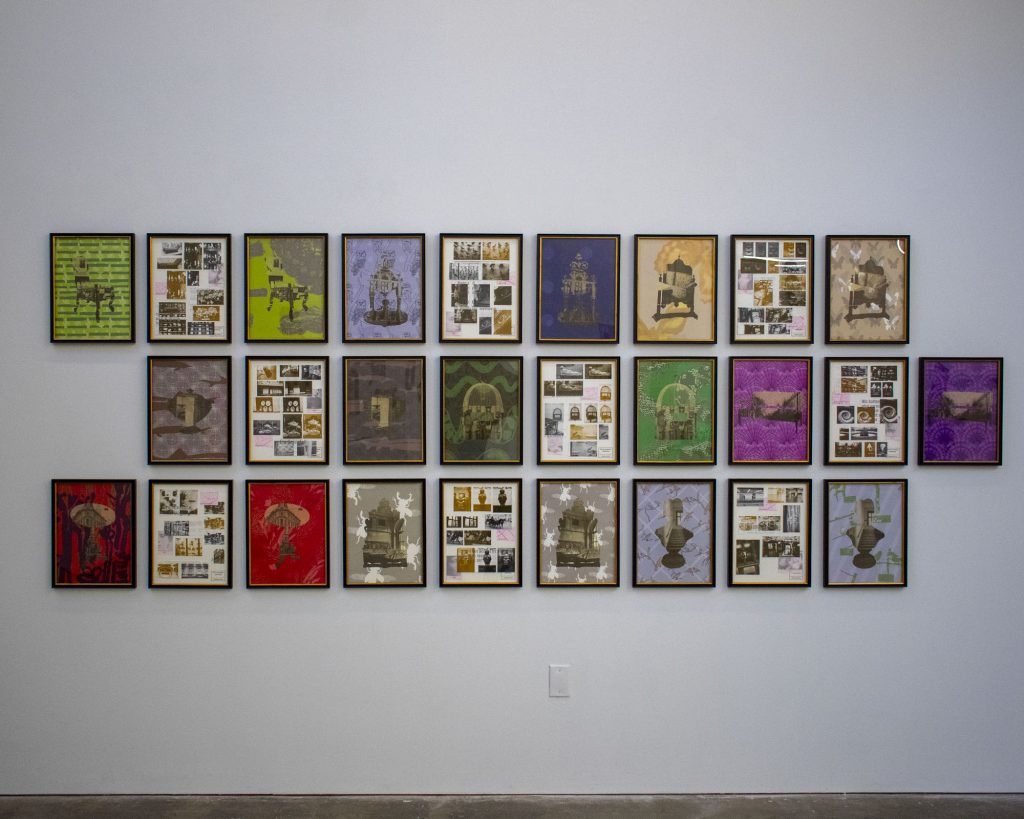
First, it lacks color. Although there are small pops, like the works of Lollis in collaboration with Daniela Deeg, they are not sufficiently saturated or numerous to overcome the predominance of white paper, white walls and white pedestals. The most significant reprieve comes from the reflection of the backing display on the works of Perrone, which is infrastructure constructed and provided by the host venue.
Second, there is an overrepresentation of Western artistic perspectives. Alternative cultural references could have disrupted the visual and material uniformity that ultimately renders the exhibition a bit quiet.
These particular issues are amplified by their proximity to the adjacent space, in which curator Karen Comer Lowe has constructed an exceptionally vibrant show of literary approaches to visual arts by women of color.
To be clear, Thompson has done a wonderful job curating an exceptional selection of works by five remarkable Georgia women artists who are each deserving of this honor and representing the state on the national stage at the NMWA’s Women to Watch 2027. The result, however, is an exhibition that is more appropriate for intellectual arts consumers than everyday museum goers. What it lacks in accessibility and flash, it makes up for in technicality and contemplation, ultimately presenting a profile of Georgian arts ready to add to a wider national conversation.
Georgia Women to Watch: A Book Arts Revolution is on view at Atlanta Contemporary Art Center until May 17.
::

Dr. Kevin M. Storer is a multidisciplinary computing researcher living, working and collecting art in Atlanta. His approach to art criticism and collecting prioritizes the discursive power of artistic practice over purely aesthetic qualities. This perspective is informed by his internationally-awarded scholarship on the complex relationships between people and the objects we create — especially as they shape our identities and social realities. Kevin earned his Ph.D. in informatics from the University of California, Irvine.
STAY UP TO DATE ON ALL THINGS ArtsATL
Subscribe to our free weekly e-newsletter.

PLEASE SUPPORT ARTSATL
Your Gift Sustains the Coverage You Count On!
Related Posts