Hanna Bulatova’s play at PushPush Arts is an exploration of Ukraine’s fight for sovereignty
The missiles struck at 8 in the morning. Then-24-year-old Ukrainian playwright Hanna Bulatova was throttled awake by the sound of them ripping through the sky. It reverberated in her chest like the bass of a nightclub speaker, she said. “Glassware broke throughout the house.”
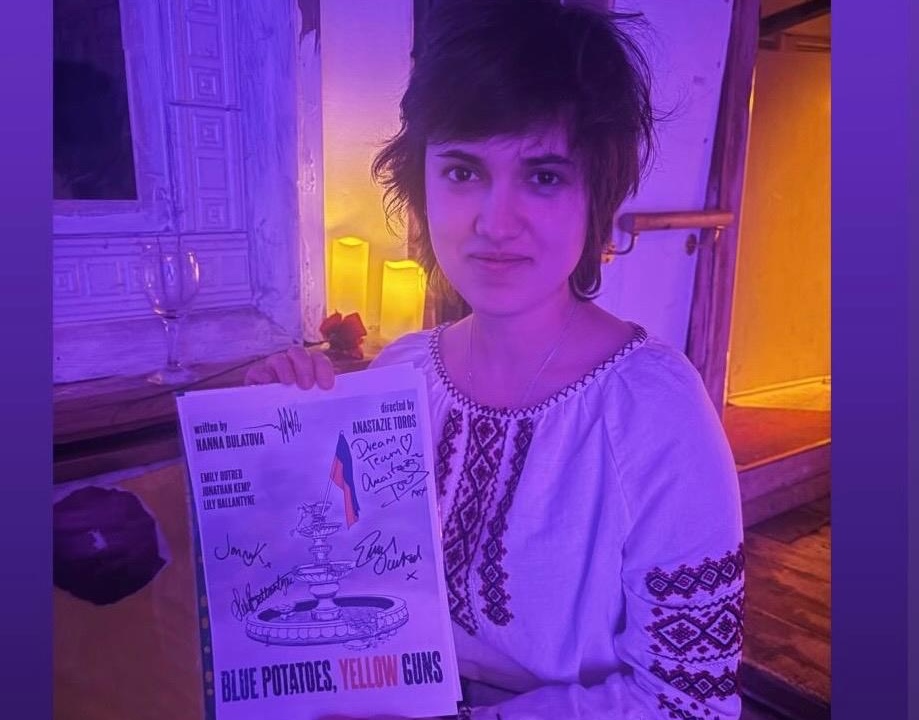
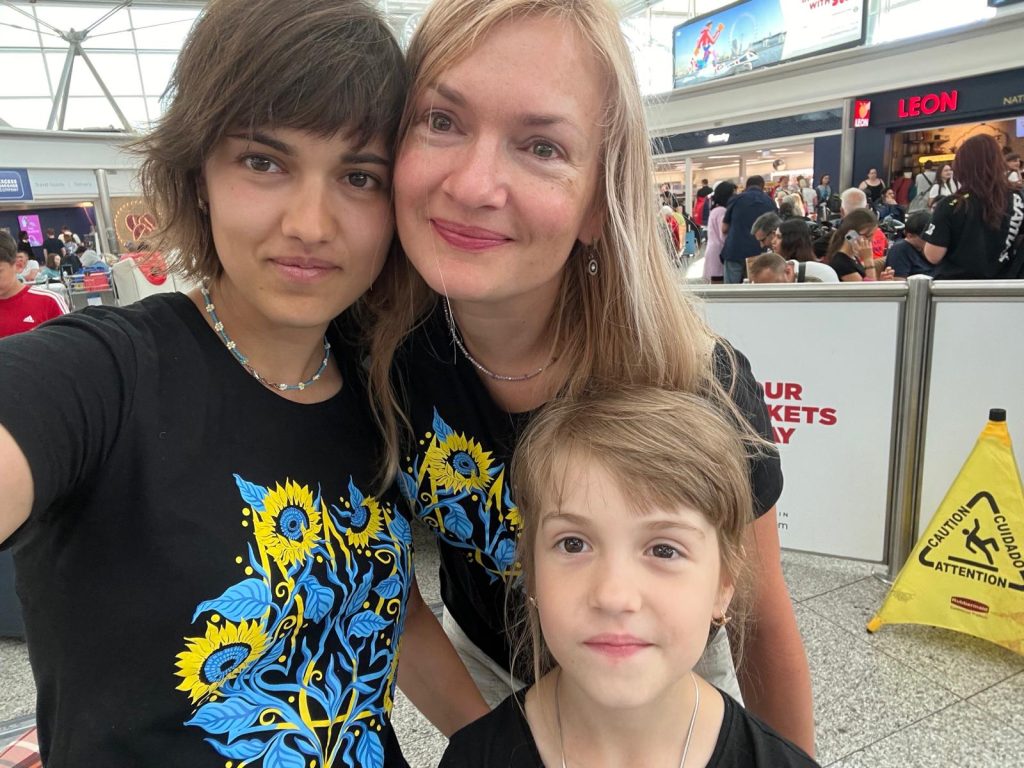
Bulatova — whose play, Blue Potatoes, Yellow Guns, opens July 10 as part of a dual play event at PushPush Arts — had been curled up with her 6-year-old sister. She swooped her sibling up and scurried her down the stairs into the basement, where they joined her mother and teenage brother. Her father was already away at war as an army mechanic.
A glass of homemade wine stashed in the basement calmed her shaking hands. Her brother tried to act cool.
“Why are you so afraid? It’s fine,” he said. “We’ve been through it before.”
But it was Bulatova’s first time.
A few days before the war began in February, nine months earlier, she’d been called on a last-minute contract job to the U.K. where she was working on television sets as a third assistant director. She’s worked on some big shows, including Ted Lasso and House of the Dragon.
Her mother thanks God she was away at the start of the war because Bulatova is “very hot-blooded and reckless,” she said. “… I would probably have joined a defense unit, and I don’t know if I would be alive right now,” she added.
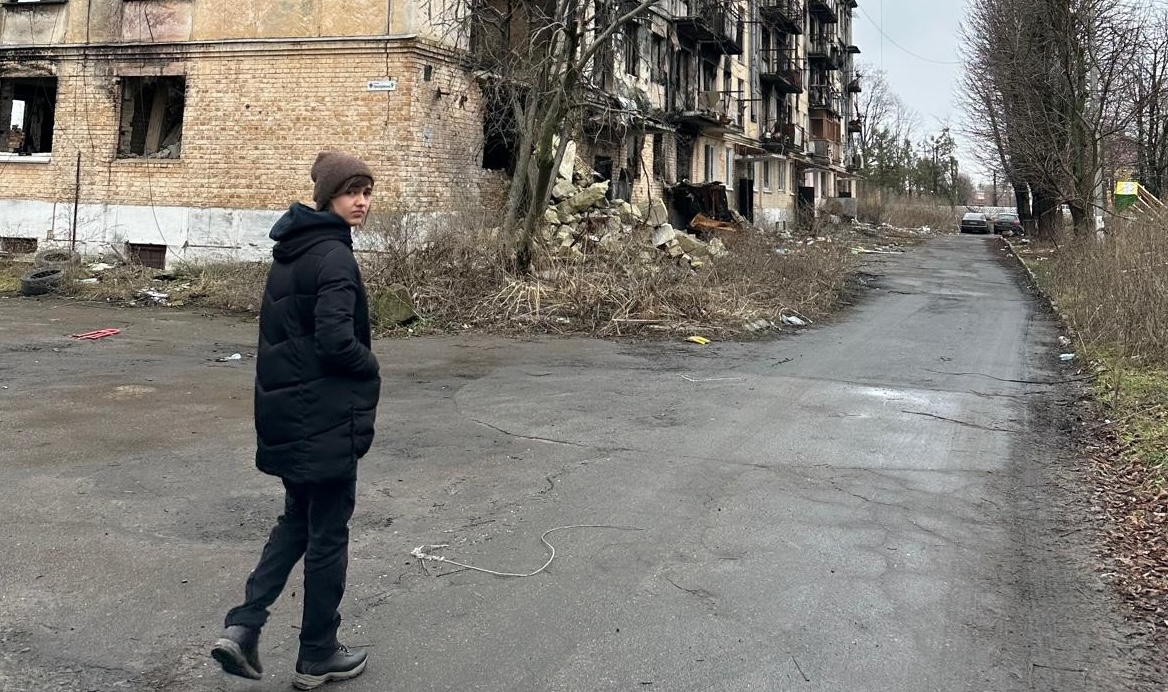
Instead, Bulatova wielded words to process her family’s experiences of the war. In 2024, while living in the United Kingdom, she sat staring out the window of her apartment at the barren winter trees, thinking of her family back home in Ukraine. Thinking of the basement and how her family was surviving one of the country’s coldest winters in recent history while suffering rolling blackouts from the war that sometimes knocked out the heat. Her sister and brother spent nights reading books with head torches. Her mother made doilies to keep calm. Her grandparents, who lived in a nearby flat without gas, cooked using a miniature camping stove.
Bulatova struggled in a different way. She struggled with the pain of distance and the strange sensation of living a fractured life. While working on set, her phone would vibrate in her pocket every time her home city of Odesa was under drone attack. Meanwhile, she listened to the director complain about a cappuccino that wasn’t frothy enough.
“I was split,” she said. “[It was a] constant zoom in, zoom out — this constant feeling of guilt. Can I be happy? Am I happy?”
This telescoping of her mind became the structural backbone for her play Blue Potatoes, Yellow Guns.
The play opens with the main character, a Ukrainian refugee named Nadya (Sergia Starr), on a date in America. As she tries to maintain conversation, her mind drifts to cities being bombed. She brings her mind back to the dinner table, but it soon departs again because the waitress looks just like her daughter Lyuba (Mikell Edwards).
The scene sets in motion a one-hour journey that darts back and forth through time and place as Nadya narrates mostly nonfictional stories from Bulatova’s family and their neighbors. There is the story of her great-grandparents, who survived the Holodomor (the Ukrainian famine); her grandmother, who was forced to work on a collective farm; and an unknown neighbor whose video went viral when she confronted the Russian tanks rolling through town. The Chernobyl explosion is referenced, as are the collapse of the Soviet Union and the opening of Ukraine’s first McDonald’s in 1997. In its entirety, the play offers a history lesson and contextualizes Ukraine’s longtime struggle for sovereignty.
All characters, numbering about 20, are played by only five actors, with a few primary characters appearing throughout. The play’s unique structure is what captured the attention of PushPush Arts Co-founder and Director Tim Habeger when he first read it.
“It’s just brilliant. It’s like a cubist painting,” he said. “It gets more and more clear as you go through it.”
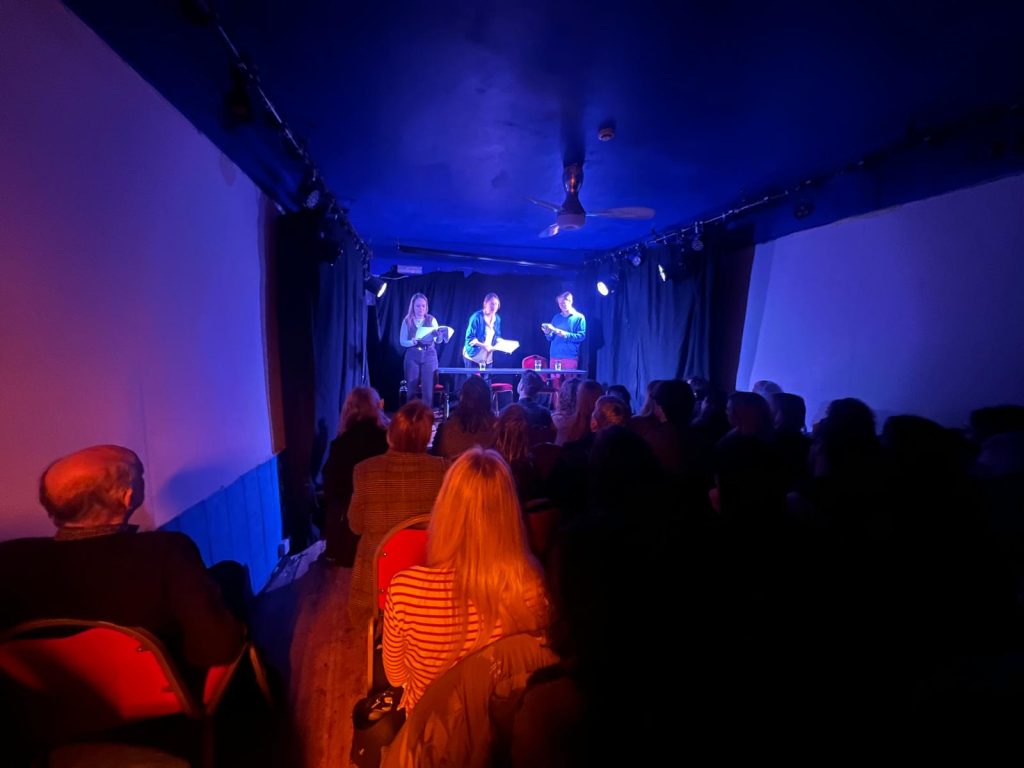
Habeger was sent the script by John Freedman, an American translator who curates the Worldwide Ukrainian Play Readings project through the Center for International Theatre Development. Habeger has been working with CITD since the early days of the Russian invasion. In 2022, at Atlanta’s Center for Puppetry Arts, he staged Survivor Syndrome, a show written by a Kyiv puppeteer about war.
This month’s dual play event — July 10 through July 13, with two preview nights July 8 and July 9 — at PushPush is a continuation of Habeger’s commitment to share Ukrainian stories. Bulatova’s work — which is world premiering at the event — will be paired with a second play, A Text for Theater, a taut 20-minute opener by Antonina Crimea, a playwright currently serving on the front lines in Donbas. It takes place in a foxhole and is narrated by an actor playing Antonina.
“Both pieces share the same common theme,” said Habeger. “How do we talk about this war, and how do we relate to it being so far from it?”
Bulatova, now 28, said she would love to attend the world premiere of her play in Atlanta but is currently in Ukraine. As she spoke with ArtsATL from her grandparents’ kitchen on June 25, she paused as Ukrainian air defense systems shot down drones over the Black Sea.
“I wouldn’t say that I have a sense of completion,” she said about her play. “I’m satisfied with what I’ve written. But I feel like it’s just the beginning.”
Where and When
A Text for Theater and Blue Potatoes, Yellow Guns are on stage July 8 through July 13 at PushPush Arts. Tickets range from $5 to $16.78.
3716 East Main St., College Park.
::

Danielle Charbonneau is a former arts and entertainment reporter for The Atlanta Journal-Constitution turned full-time freelancer. She covers a broad range of topics, ranging from art, theater and dance to film, travel and events. She holds both a bachelor’s in print journalism and a master’s in specialized journalism in the arts from the Annenberg School for Communication and Journalism at the University of Southern California.
STAY UP TO DATE ON ALL THINGS ArtsATL
Subscribe to our free weekly e-newsletter.

PLEASE SUPPORT ARTSATL
Your Gift Sustains the Coverage You Count On!
Related Posts