

Gucci Mane’s ‘Episodes: Diary of a Recovering Mad Man’ reveals the pain behind the persona
When hip-hop legends live long enough, there often comes a moment in their journey when the tough exterior and street-legend persona cracks open, and what pours out is not bravado or bling but vulnerability. In Episodes: Diary of a Recovering Mad Man, Atlanta-based artist Gucci Mane displays exactly that. He trades the imagery of a grandiose rock star lifestyle — “might don’t make it” — for the tremulous territory of the mind. It’s brave. It’s necessary. And for Black boys and men watching and listening, it matters more than any accolade, chart or reputation that precedes him.
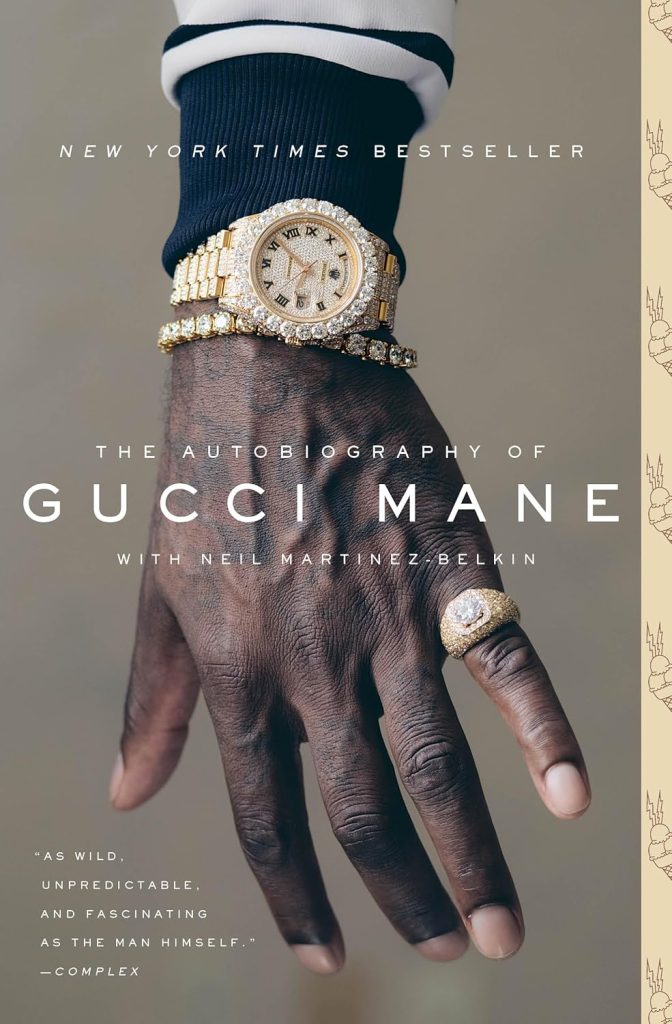
I’m a native of the West Side with a lot of love for East Atlanta. So I — along with the line of folks wrapped around the corner at a recent signing at A Cappella Books — was excited to read the book after being blown away by his 2019 debut memoir The Autobiography of Gucci Mane. That book gave us his rise from Bessemer, Alabama, where he was born on February 12, 1980; his hustle and grind after moving to Atlanta with his mother and brother at age 9; the guns and chart-topping, Grammy-nominated glory; and the prison years and recovery. Episodes rewrites that narrative from the perspective of overcoming mental distress.
In this book, the artist refuses to gloss over his swagger. Instead he pierces it, revealing what the young Radric Davis was never taught: that a Black boy dodging the rocks and gunshots of racists on the way to school may carry that war inside him long after the last bell rings.
He’s known by many names: Mr. Zone 6; La Flare; Big Guwop. But these days, he’s Radric Davis, mental health advocate and survivor.
“Sometimes you have to leave home to find yourself — or even save yourself.”
In the opening chapters, Davis takes us back to Bessemer — just 20 minutes outside of Birmingham, the town known for the terrorism of the Ku Klux Klan and one of the nation’s most dangerous cities — to a childhood when even going to school meant running, whether from rocks thrown by racist white peers, from bullets or from the constant tension of being Black in a hostile place. Even in the 1980s, he details, Blacks weren’t allowed to eat inside the popular diners where people gathered after cheering those same Black boys to a win on the football field. He connects those early days to the anxiety he felt long before “mental illness” was a term he’d learn. The Black boy with a dream and a love for reading and rhyming had to keep moving, keep hustling. And inside, his mind was never still.
Black men are 20% more likely to experience serious mental health problems yet far less likely to receive help. For many, mental health struggles stem from the same circumstances under which Davis grew up. These pages set the tone for one of the book’s through lines: that trauma begets coping by any means necessary. Drugs. Alcohol. Violence. “Pick your poison,” he writes. And while coping meant survival, that survival, and sometimes the music, was merely a mask for his mental and emotional turmoil.
“When the needle reached my skin, and I felt nothing, the defeat returned to my body.”
Chapter by chapter, Davis revisits his early mix tape days, explosive career moments, designer campaigns and his “trap house” anthems, and he asks readers to reconsider. He was diagnosed with paranoid schizophrenia and bipolar disorder in 2013, though he didn’t grab hold of it until years later, when he recognized himself in a friend and fellow artist who was in crisis and teetering on the edge of death.
Episodes details the many states of mania that he overlooked as just stunting, including the infamous ice cream cone tattooed on his face. That tattoo wasn’t about marketing, as his label tried to make it seem. It was frantic self-expression and a billboard for his chaos. Like the times he shaved his head because his condition was so bad that even his “hair hurts,” he writes, the tattoo was a cry for help. A string of such wild decisions were instances of mental health crises: the parties, the overspending, the impulsive social media tirades, the paranoia that crept in and told him that everyone was an enemy. And the betrayal he felt when so-called friends would accept money and jewelry, knowing that he wasn’t in his right mind.
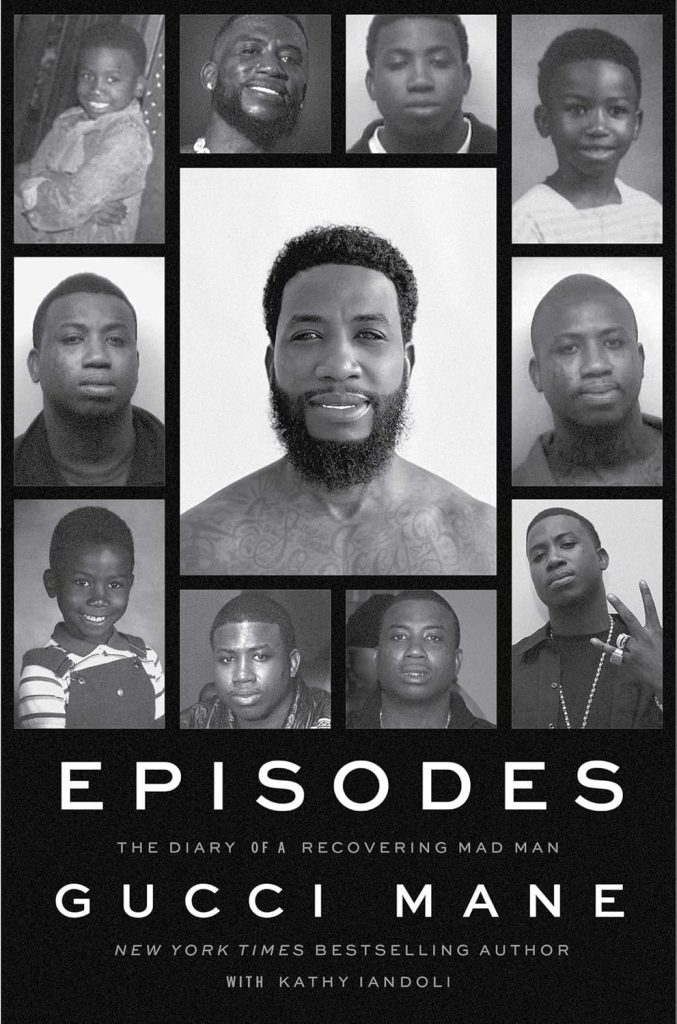
In many places, the book intersects with his first memoir. It tells much of the same story, but the interpretation changes. What was once celebrated is now examined and atoned for. And that’s revolutionary. When a figure like Gucci Mane talks openly about overdosing, hurting, being ordered to a psychiatric facility and being taunted by the voices in his head, it loosens the stigma in rooms where vulnerability is still left at the door.
“Sometimes the pain wins. I was just one of the lucky ones.”
Episodes also pays tribute to his fallen friends Bigg Scarr and Chant, both of whom were signed to his 1017 label, and others such as Rich Homie Quan. Their drug use to cope with untreated mental illness and their early deaths haunt him, he says. He even felt guilty for releasing songs like “Pillz” and “Wasted,” saying that he encouraged drug use. He sees their stories in his own as they were all hardened by the hustle, hiding their suffering and unaware of the resources available to them.
But Davis doesn’t preach or shame. He mourns. He refuses to throw away these people or their memory. He declares that we must remember their humanity first.
“Maybe it’ll save somebody’s life.”
In the final chapters, love enters. He found it in the patience of friends like Rocko, OJ Da Juiceman and his day-one producer Zaytoven and in the understanding of his wife Keyshia Ka’oir Davis. She learns to recognize when Davis was slipping into an episode by noticing insomnia, cold shoulder treatment, withdrawal and erratic texts with a period after every word. To help keep him from spiraling, she deletes Instagram or changes his passwords. She becomes his front line. He acknowledges he can’t heal alone. The couple detailed their experience in a recent viral interview on The Breakfast Club, a syndicated radio show based in New York City.
There’s something seismic in that public revelation coming from a Black man and rap icon. For too long, Black boys and men have had to play strong while being broken. For them, Davis’ story becomes a mirror and a blueprint to healing. He holds himself accountable, having reverence for his former self in order to let him go, he writes. And he invites those who’ve been taught not to cry, not to break and not to admit fear to see that survival isn’t just physical and that changing for the better isn’t weakness — rumors of a Gucci Mane clone started by his own mother be damned.
Rather than the moral failure that’s often ascribed to Black folks in crises, Episodes reframes mental illness as a public health issue intersecting with race, trauma, poverty and stereotypes of masculinity. It’s a book that demands we see the man who’s been incarcerated, addicted, homeless and even admittedly criminal as redeemable — as a wounded human worthy of help and hope.
What’s most moving is Davis’ genuine humility and remorse. He has gone from robbing people, popping pills and walking around with his swollen “lean belly” to a healthy diet, exercise, medicine and a family life he never imagined. It’s a beautiful journey to experience through his words.
For those wanting to feel safe enough to ask for help toward their own recovery, Episodes grants permission. For many people, the hardest thing they might ever do is say that they’re not OK. Perhaps Davis, better known as Gucci Mane, just made that a little easier.
::

Angela Oliver is a proud native of old Atlanta who grew up in the West End. A Western Kentucky University journalism and Black studies grad, daily news survivor and member of Delta Sigma Theta, she works in the grassroots nonprofit world while daydreaming about seeing her scripts come alive on the big screen.
Share On:
STAY UP TO DATE ON ALL THINGS ArtsATL
Subscribe to our free weekly e-newsletter.

