Every inch a universe: the astounding detail of Jiha Moon
With an accomplished artistic career spanning more than two decades, Jiha Moon has earned the respect of the art community thanks to the impeccable skill displayed in her ceramic works. Her new exhibition, Ten Moon, now on view at the Atlanta Contemporary Art Center, delivers this expected brilliance in spades.
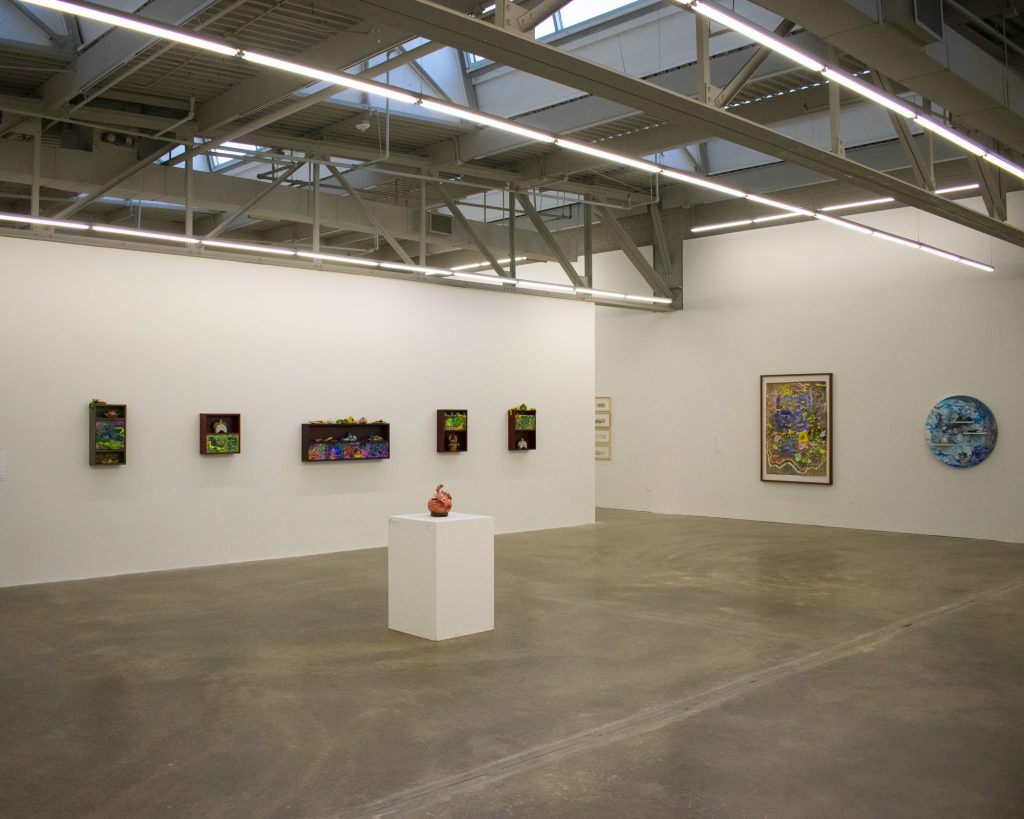
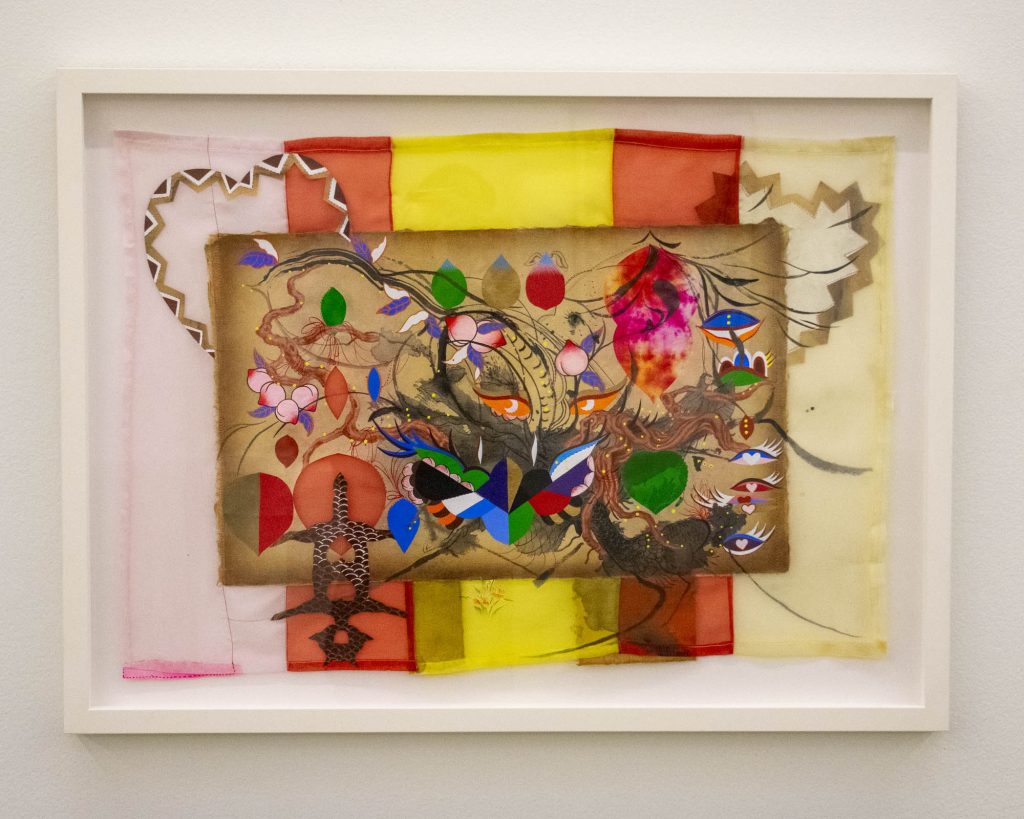
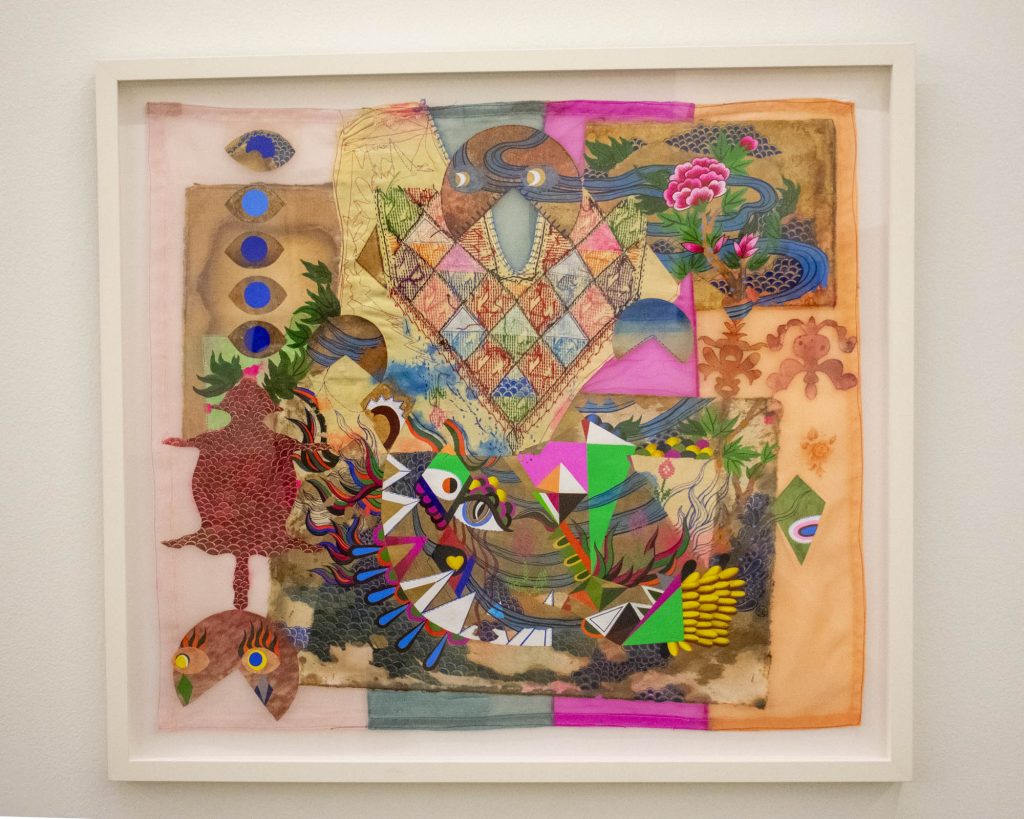
And yet, the most profound discovery in the gallery is not an affirmation of what Moon is known for but rather a powerful testament to the equally commanding presence of her painted and mixed-media wall pieces. Ultimately, Ten Moon reveals an artist whose command of two-dimensional art forms is as noteworthy as her recognized prowess in the three-dimensional.
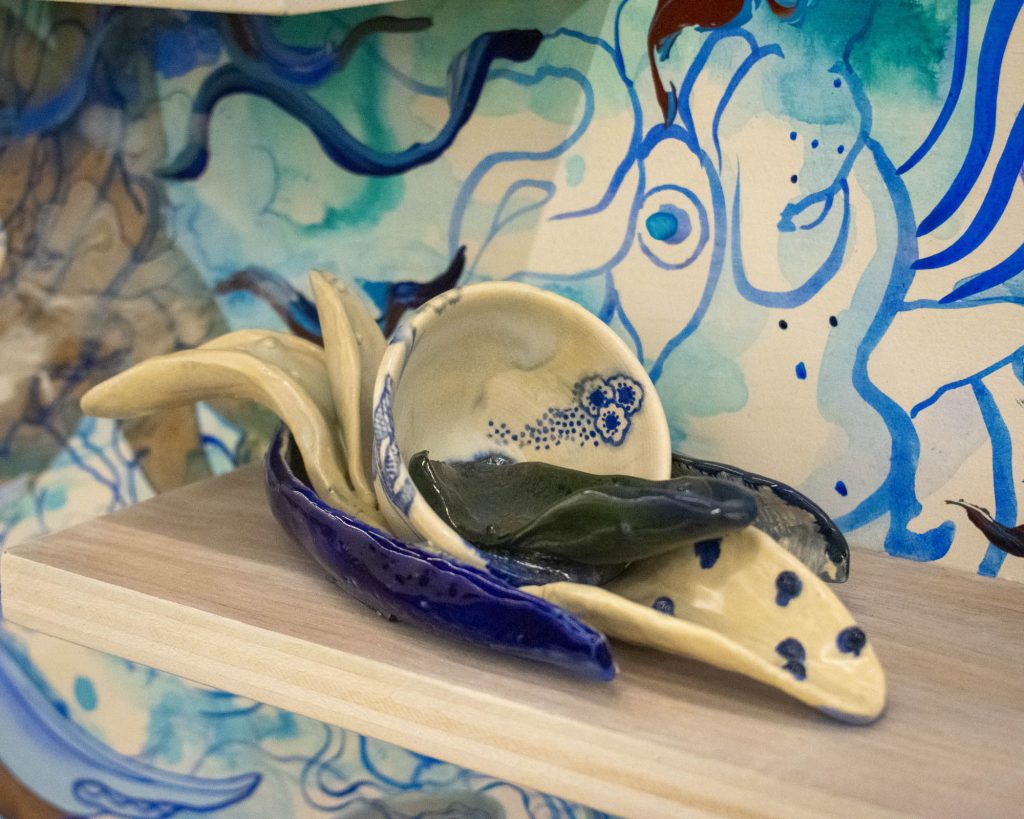
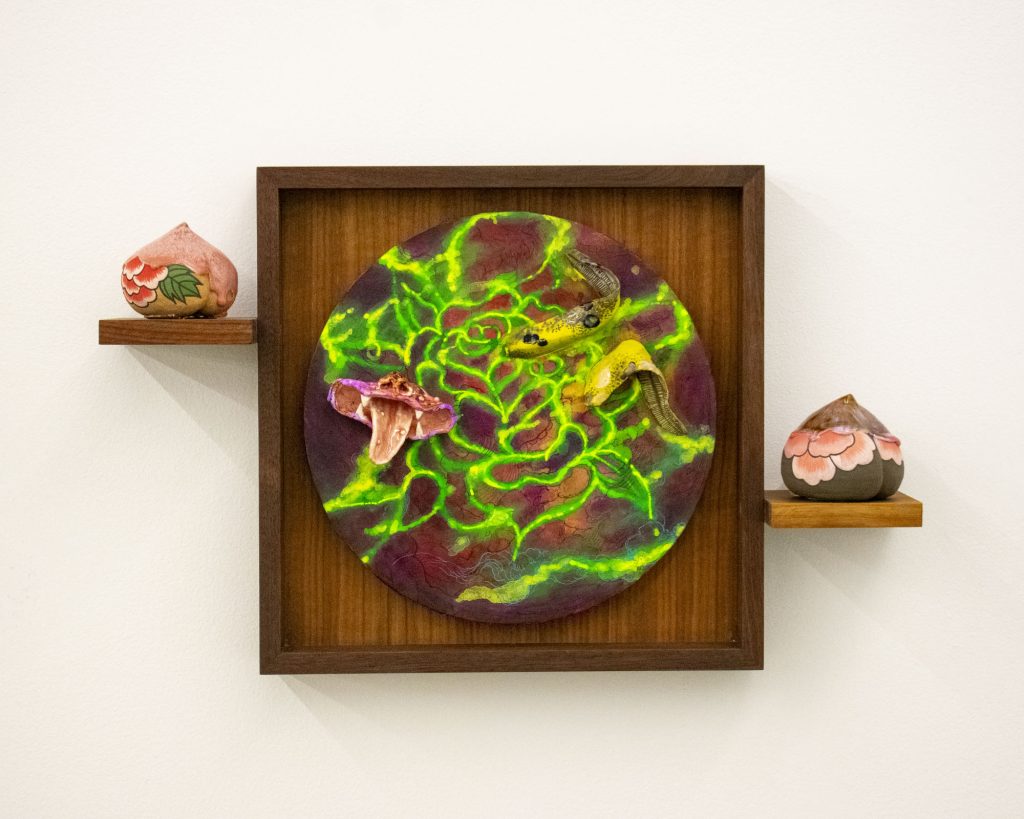
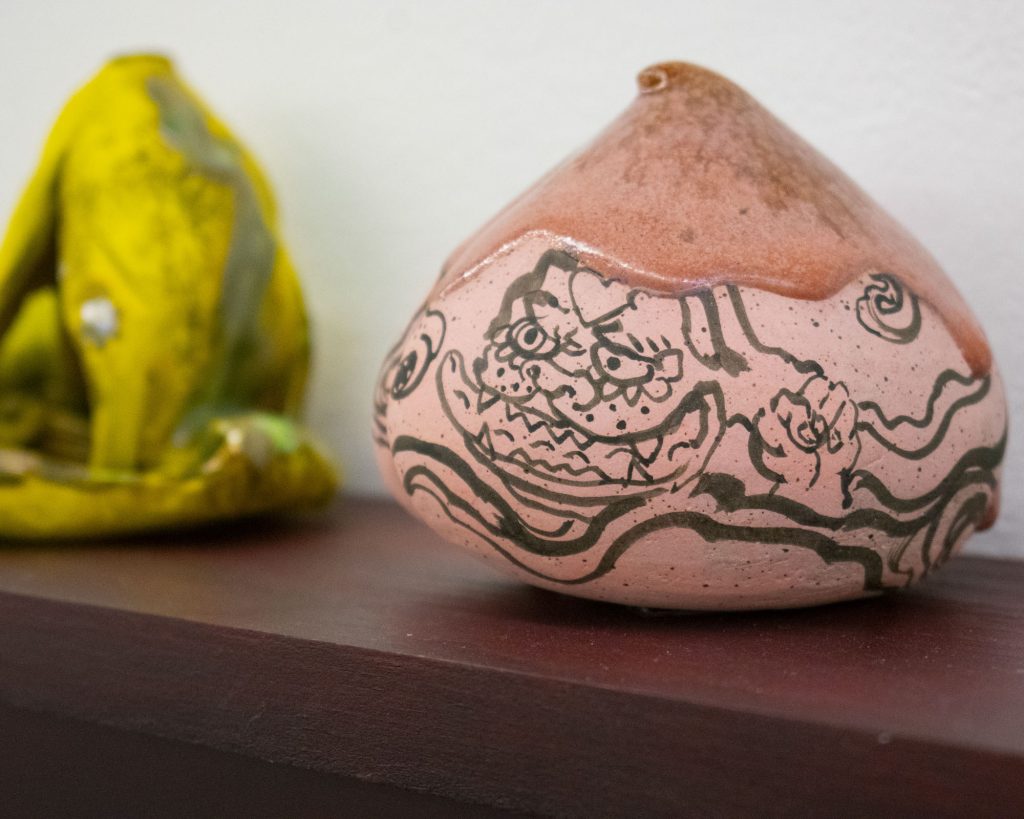
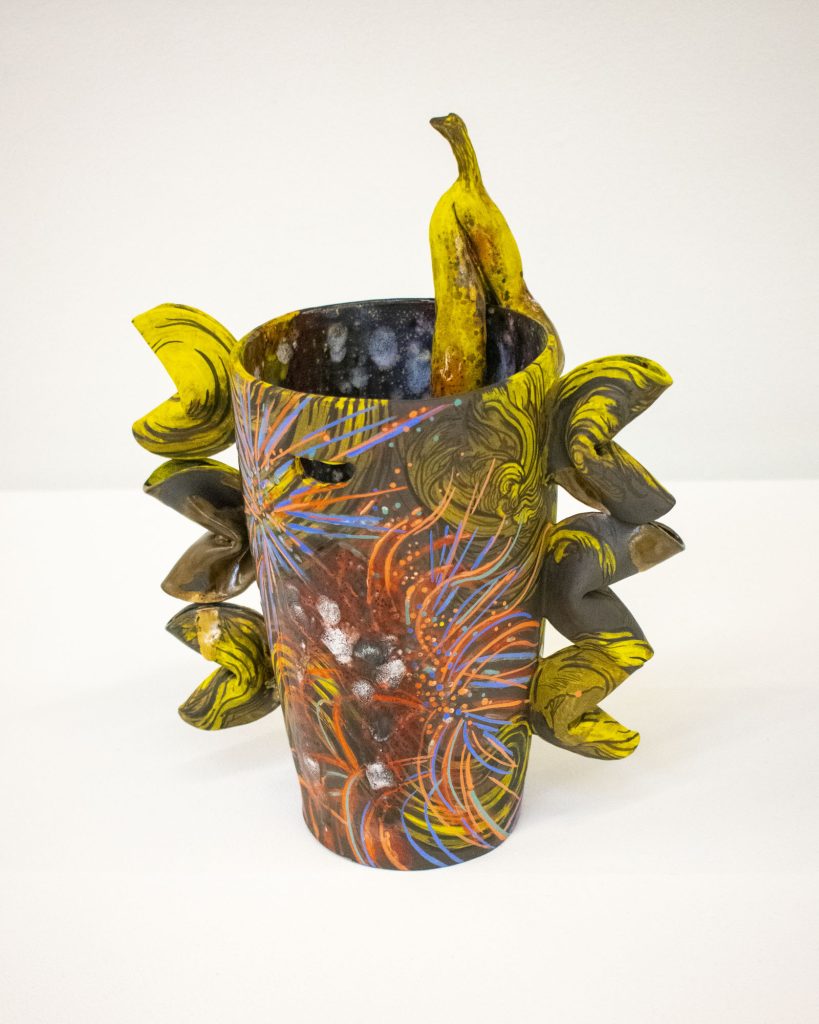
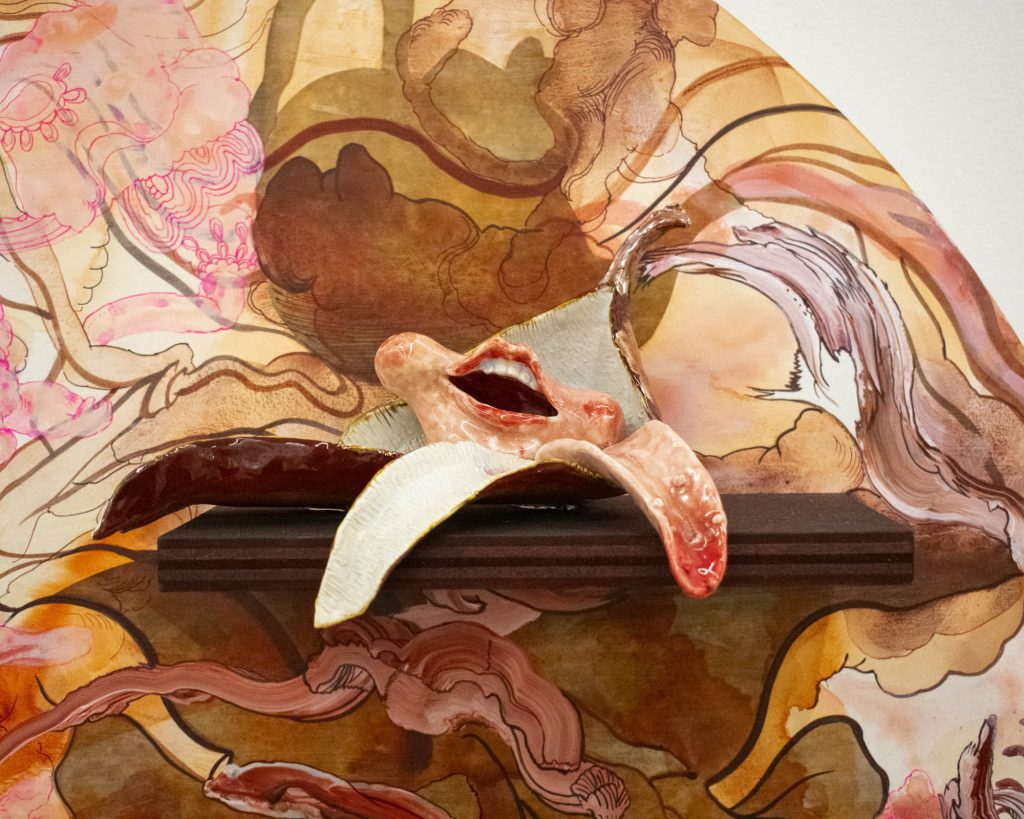
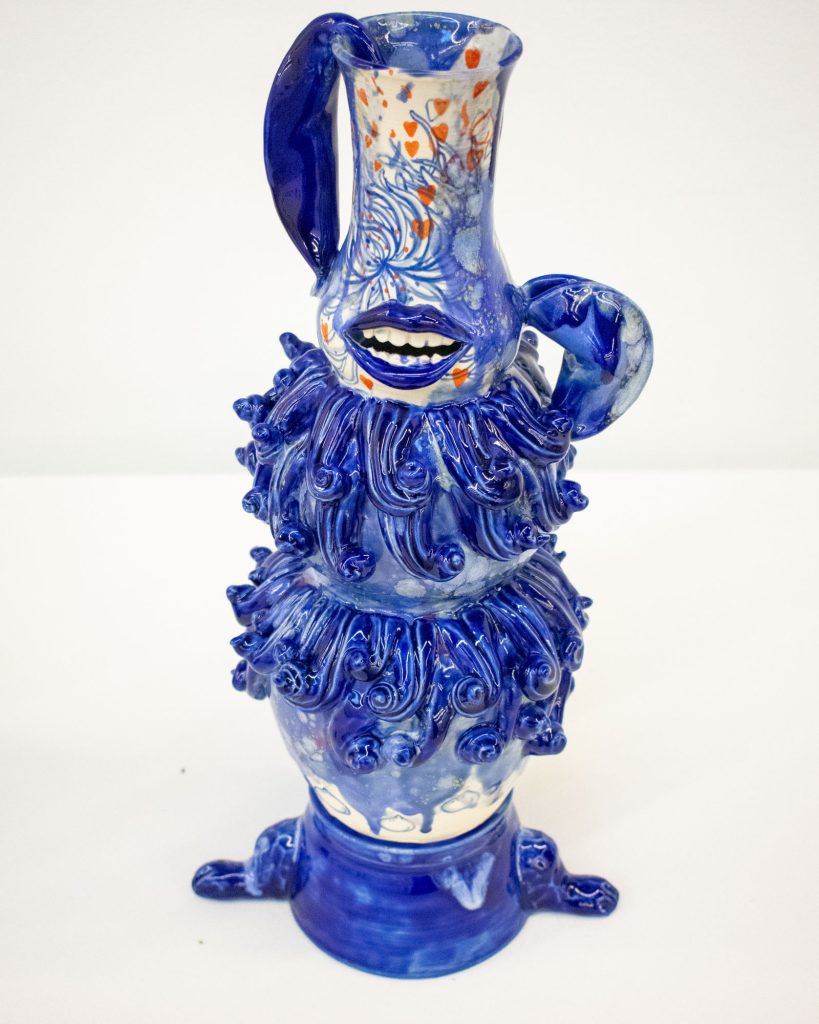
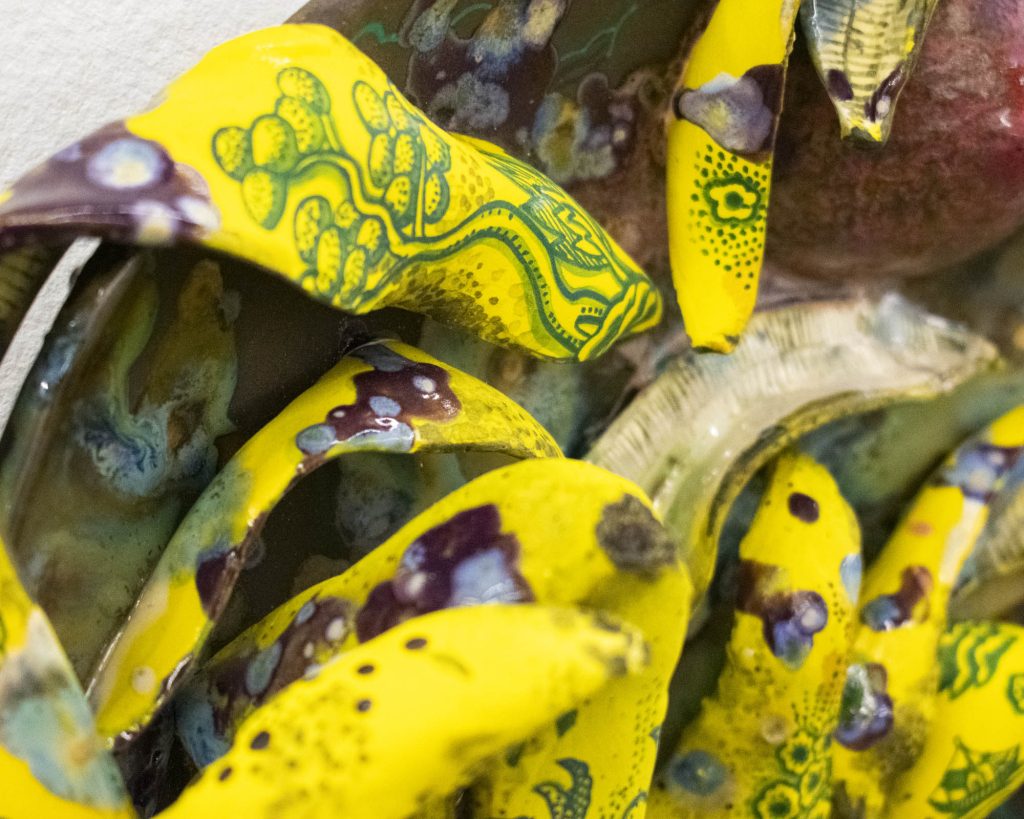
Moon’s ceramics — which offer recurring motifs of peaches, pot stickers, and bananas — are rendered with breathtaking precision. The freestanding works, while relatively few, are positively arresting, a fact which threatens to obscure the artist’s equally powerful works on the surrounding walls.
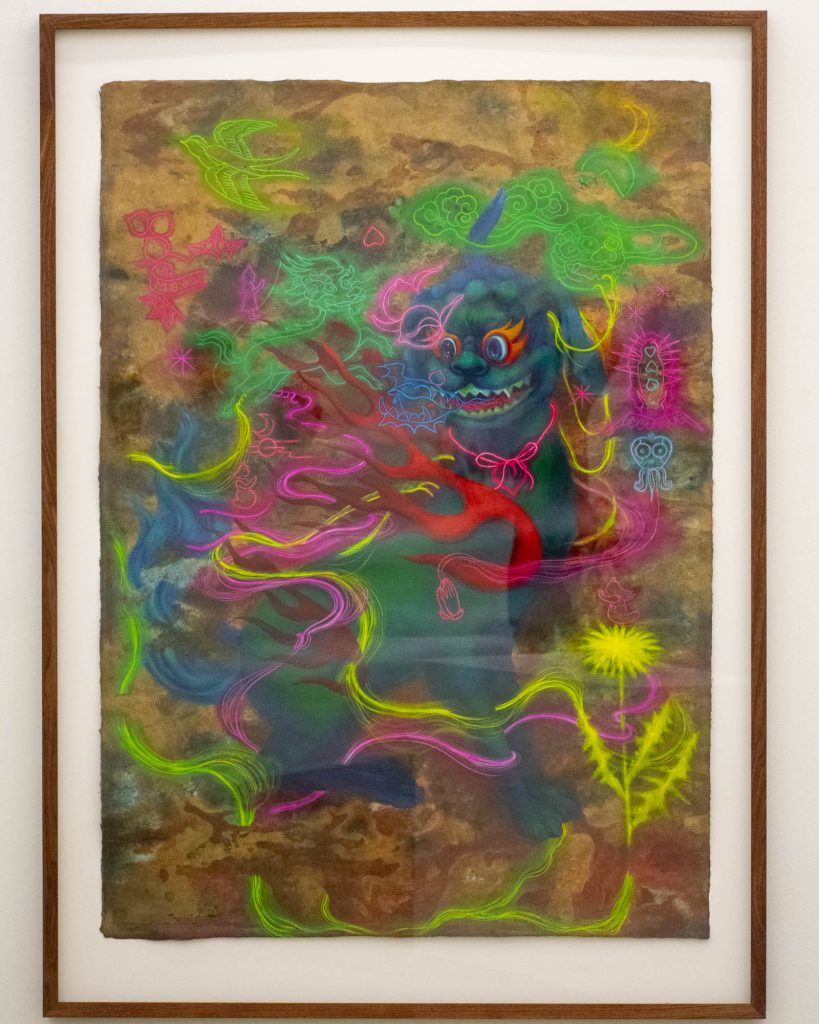
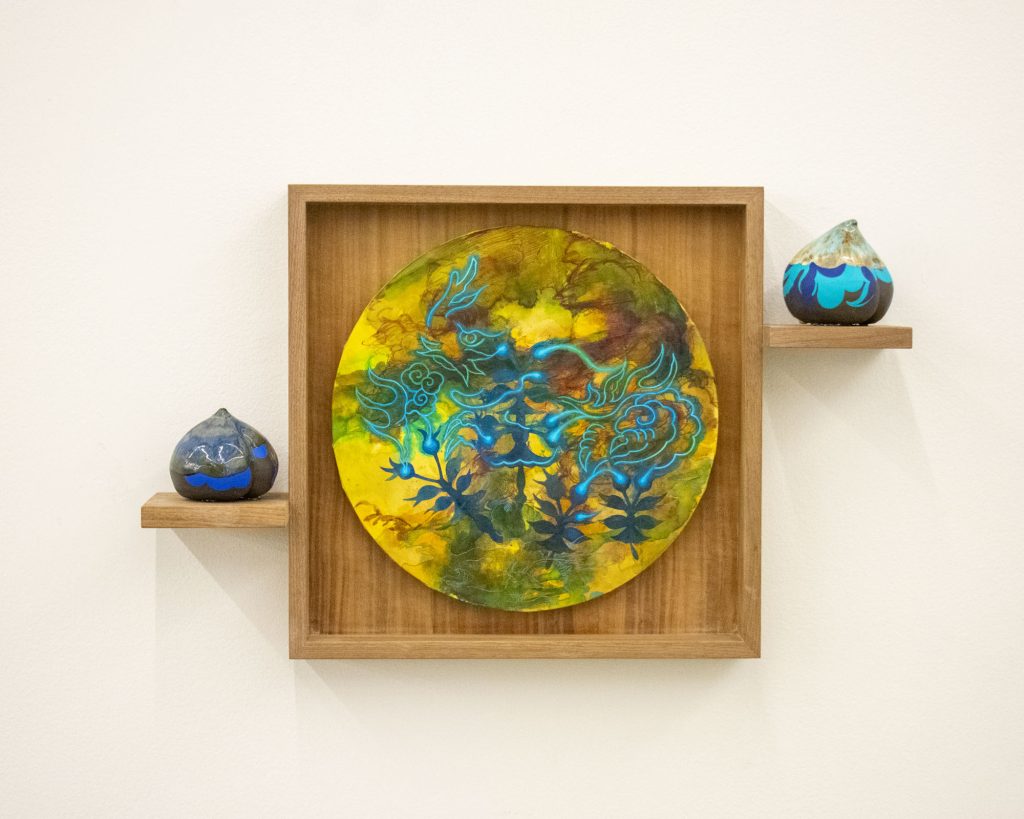
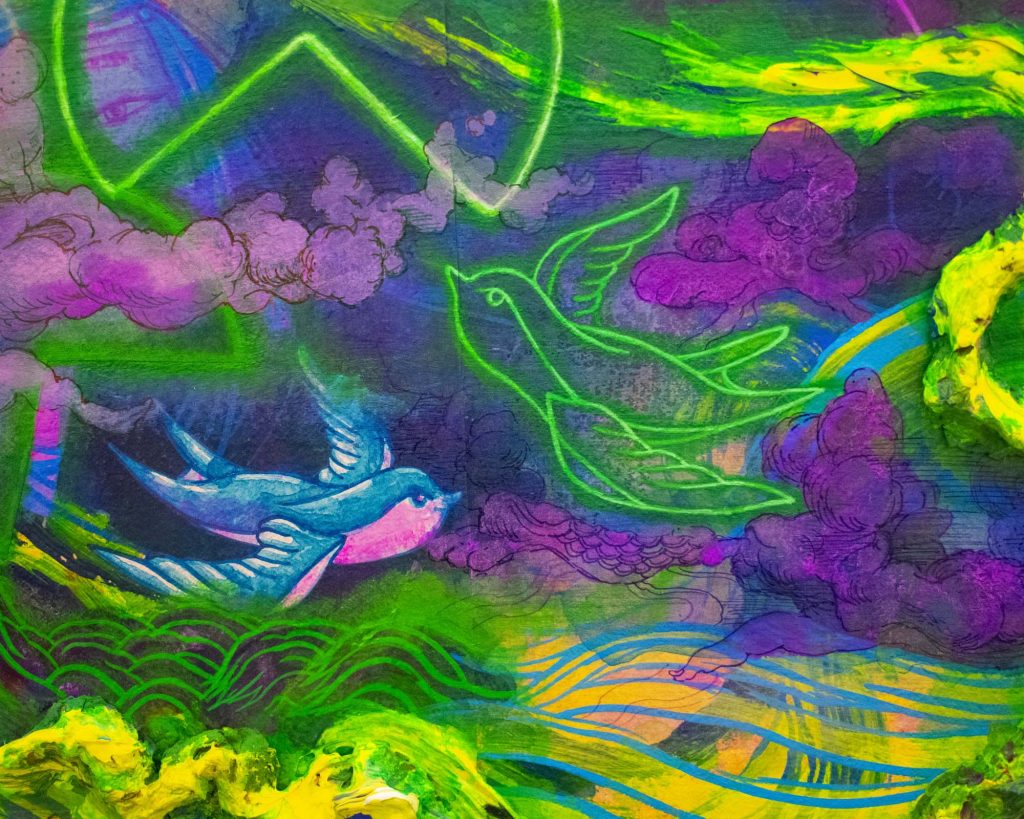
The confidence and vibrancy of Moon’s paintings are especially evident in Blue Haetae, a work depicting the legendary Korean lion-esque creature that is said to protect against fire disasters. The composition glows with electric outlines of symbols around the central figure, affecting a unique aesthetic fusion — uniting a sort of celestial energy, the urban illumination of neon lights and the graphic punch of a tattoo flash sheet. The entire piece is executed on hanji, a traditional Korean mulberry paper whose subtly ruffled and earthen texture provides the perfect grounding for Moon’s contemporary vision, anchoring its otherworldly aura with a tangible, material grit.
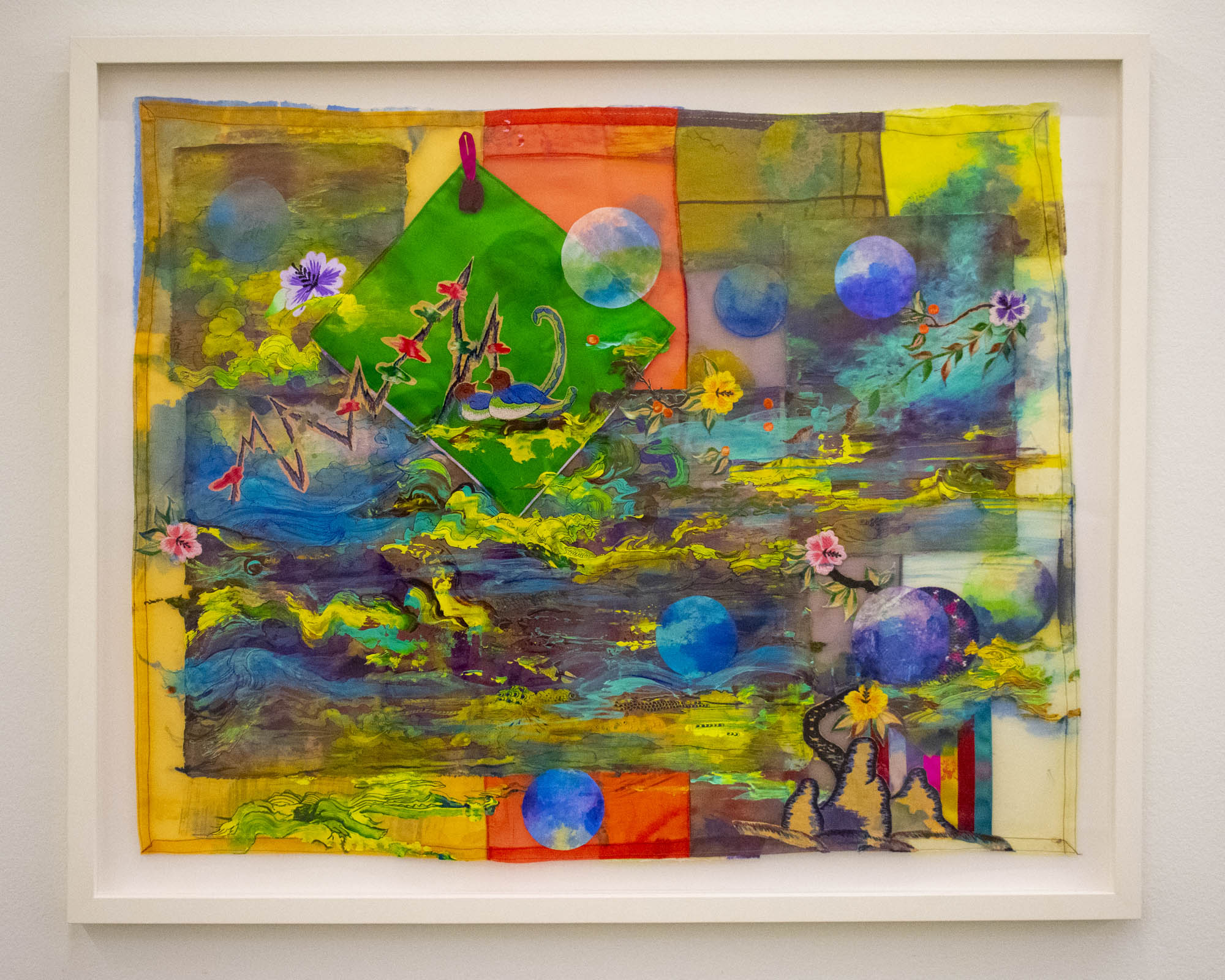
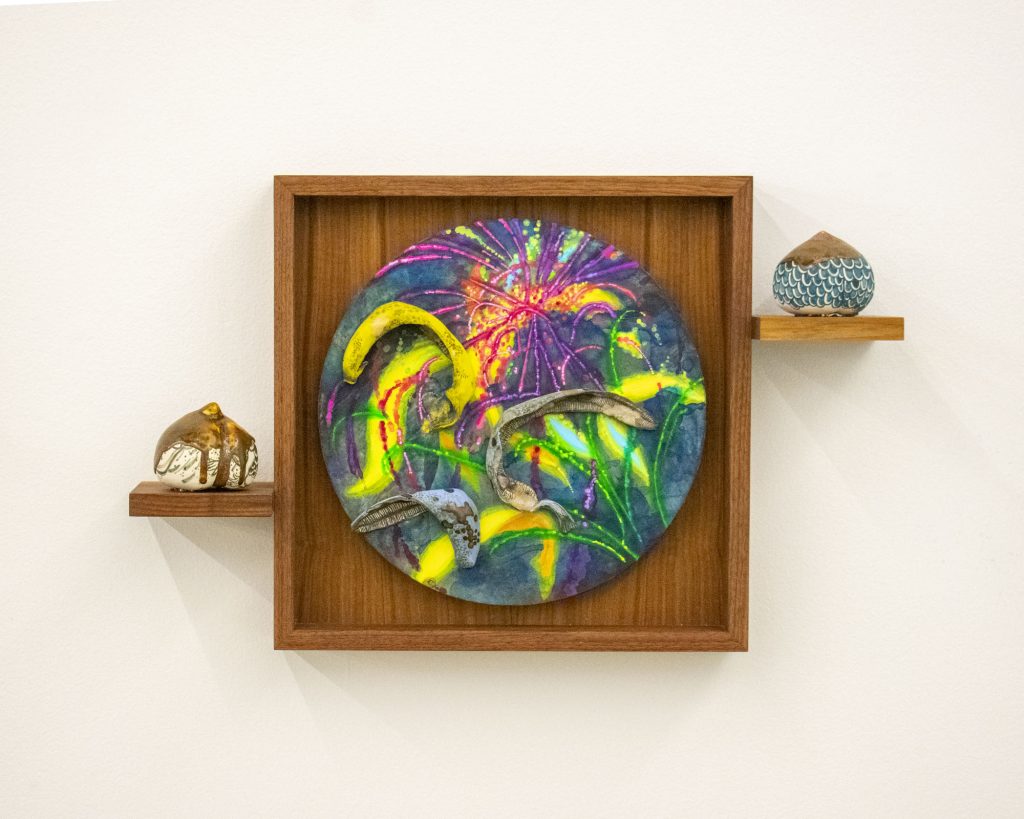
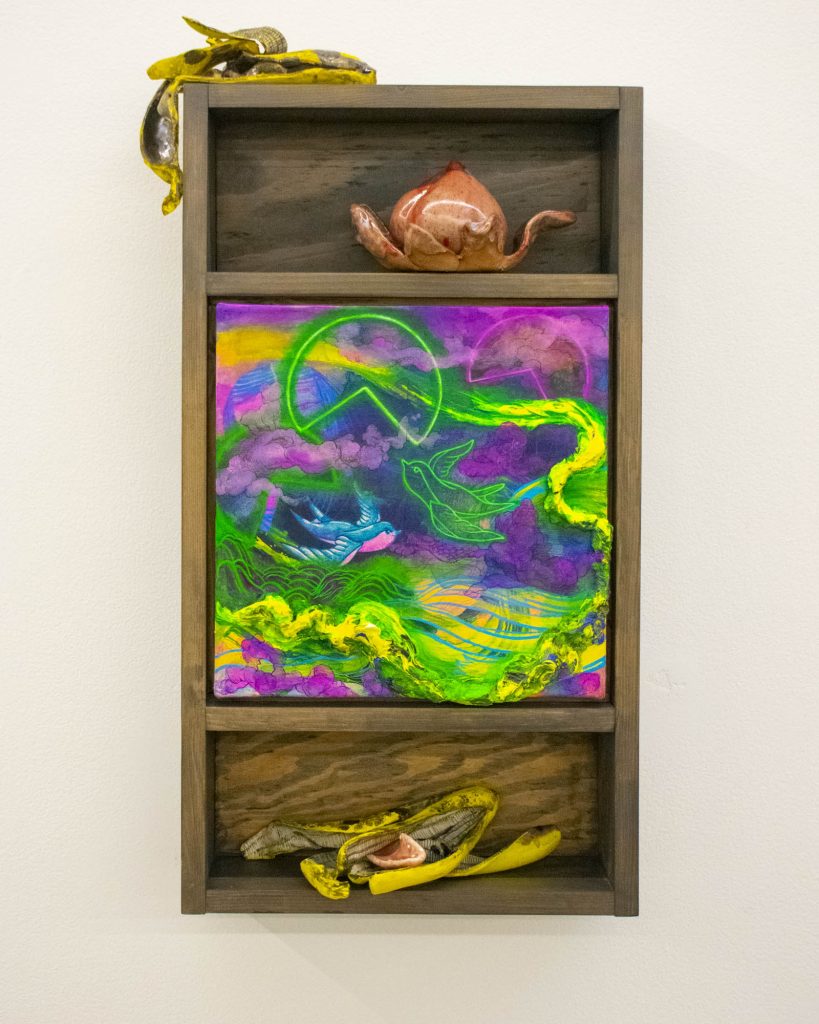
Upon closer inspection, the works reveal a staggering density of detail that permeates the entire exhibition. Moon ensures that every inch of a piece is an opportunity for discovery. Intricate miniature paintings can be found on any individual ceramic, which are each flawless sculptures in their own right. These meticulously rendered works are themselves frequently placed on shelves affixed onto larger painted worlds, creating nested realities where sculpture and painting are in constant dialogue. With Moon’s work, there is always more to see, and this lavish attention to detail transforms each work into a universe of its own. It would be impossible to take in every detail in a single visit.
Here, moments of pure artistic abandon are juxtaposed against the immaculate execution of her ceramics and the steady-handed line work of her paintings. The browning decay on a ceramic banana peel or the thick, globby applications of yellow paint on her shrine pieces showcase a willingness to move beyond rigid adherence to traditional prettiness.
The expertise that radiates throughout the exhibition reminds the viewer that this looseness is not an error but rather a gesture of playfulness — a sign of an artist so in command of her practice that she knows precisely when, and how, to let go.
Beyond remarkable aesthetics and excellent technique, what truly elevates the exhibition is the unique way Moon builds upon traditional Korean aesthetics to advance contemporary artistic discourse. While many artists reference their own backgrounds in their work, Moon has skillfully avoided the trap of allowing tradition to limit her vision. Korean visual language is treated as source material for an original, generative artistic practice in which tradition is an opportunity for creation, not a constraint. In doing so, she establishes a vocabulary that is entirely her own and that channels deep cultural roots into a unique aesthetic that is both fresh and evolving. Jiha Moon is an artist who understands that tradition is not a fixed point to be replicated but instead a living language of expansion.


It is difficult to find a meaningful criticism when even the show’s quieter moments would stand as highlights in almost any other exhibition. The show arrives at a significant moment for Atlanta Contemporary, serving as a powerful reminder of the caliber of artist it has long attracted. Notably, its success is also a curatorial one, a credit to both Youmi Efurd’s thoughtful installation and the ambitious vision of former Atlanta Contemporary Director Veronica (Kessenich) Hogan, who initially secured the exhibition. Ten Moon is a triumphant showcase, leaving one excited for the future of Jiha Moon’s continued artistic evolution and hopeful for the institution that has so brilliantly displayed her work.
Ten Moon by Jiha Moon is on view at Atlanta Contemporary until December 21, 2025.
::

Dr. Kevin M. Storer is a multidisciplinary computing researcher living, working and collecting art in Atlanta. His approach to art criticism and collecting prioritizes the discursive power of artistic practice over purely aesthetic qualities. This perspective is informed by his internationally-awarded scholarship on the complex relationships between people and the objects we create — especially as they shape our identities and social realities. Kevin earned his Ph.D. in informatics from the University of California, Irvine.
STAY UP TO DATE ON ALL THINGS ArtsATL
Subscribe to our free weekly e-newsletter.

PLEASE SUPPORT ARTSATL
Your Gift Sustains the Coverage You Count On!
Related Posts