

Cullum’s Notebook: Lessons in surrealism at Callanwolde
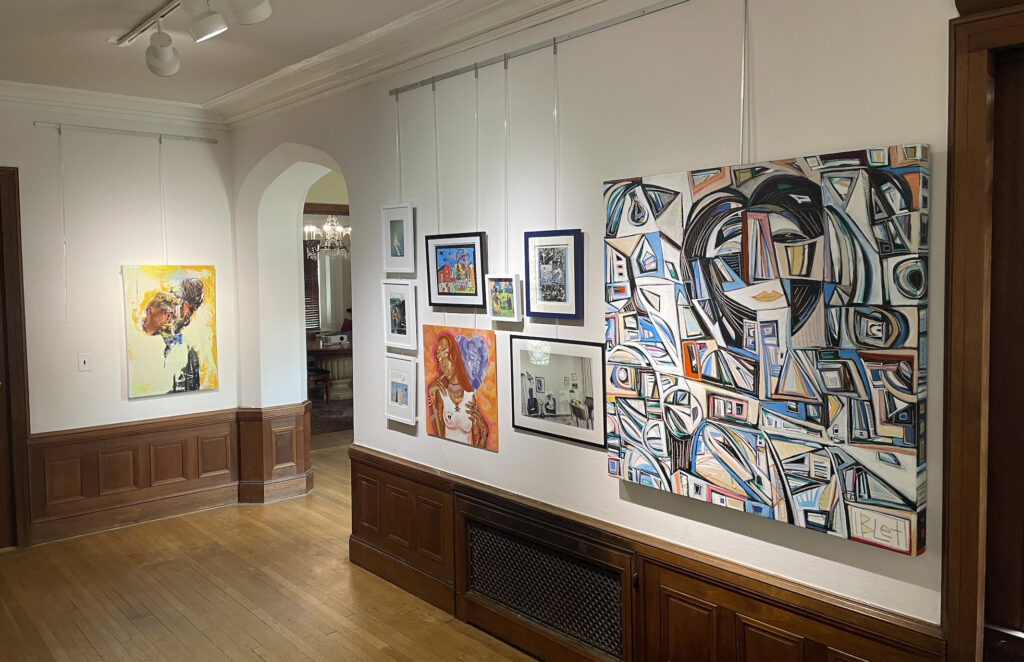
Echoes, at Callanwolde Fine Arts Center through September 26, honors the centenary of Andre Breton’s Surrealist Manifesto by setting out to demonstrate the global impact of the Surrealist impulse through an extraordinarily diverse array of work by a multigenerational selection of works by 30 artists, most of whom are based in metro Atlanta. The 12-page brochure accompanying the exhibition covers an intellectual territory more often associated with exhibition catalogues 20 times its size.
The unexpected juxtapositions this produces can be as disconcerting as the twists and turns of the original Surrealist art exhibitions a century or so ago. They arise because curator and gallery manager AP Faust has taken an unconventional but realistic approach to the impossible task of introducing the most recent interpretations of Surrealism to an audience that may know nearly nothing about the whole subject.
In the brochure, visitors are told first that this exhibition “seeks to showcase contemporary artworks that serve as an exploration of dreams, the subconscious, automatism and the irrational — themes central to Surrealist ideology.” The next pages contain instructions on how to create an exquisite corpse collaborative artwork or piece of Surrealist poetry. Then comes an illuminating exhibition statement created by combining the curator’s musings with extracts from the artist statements of 11 of the exhibiting artists, woven together by the curator according to the Surrealist principle of “a release of conscious control.”

The next pages, unexpectedly, contain a list of “100 Surrealists…who are not white men of European descent.” The list of non-European men and women from over two dozen countries contains names not usually associated with Surrealism as such, from mystic painter Hilma af Klint to politically inclined artists such as Shirin Neshat and Tania Bruguera and is meant “to expand the narrative to include those who were exploring Surrealist ideas around the world, both before and after the Manifesto was penned by Breton 100 years ago.”
The remaining four pages are devoted to a glossary of Surrealist terms and an “Art History Timeline: The Evolution of Surrealism” that begins with the pre-Surrealist movements of Symbolism and Art Nouveau and ends with post-Surrealist currents in contemporary art.
That is all the guidance readily visible in the exhibition, although a ring binder contains other pieces of information. There is no attempt to provide an explanation of the sometimes startlingly jarring effect of the assorted aesthetics presented next to one another on the walls and pedestals of the exhibition itself. However, anyone who has read the brochure composite “statement” is likely to remember curator Faust’s belief that “there is a synergy that occurs when the artists and the artworks share space with each other. By identifying commonalities and honoring the differences in each narrative, artists continue defining and adding to a movement whose fluidity and capacity to hold competing ideas has led to its continuing relevancy.”
By the time anyone who has begun with the exhibition catalog has reached the exhibition itself, whether the viewer thinks the experiment has succeeded or failed is almost beside the point. Any feelings of excitement or disappointment that arise are only a further extension of the great investigation of the process of thought, unconstrained by reason, that the 1924 Surrealist Manifesto called for. The viewer has become a constituent part of a complex process.

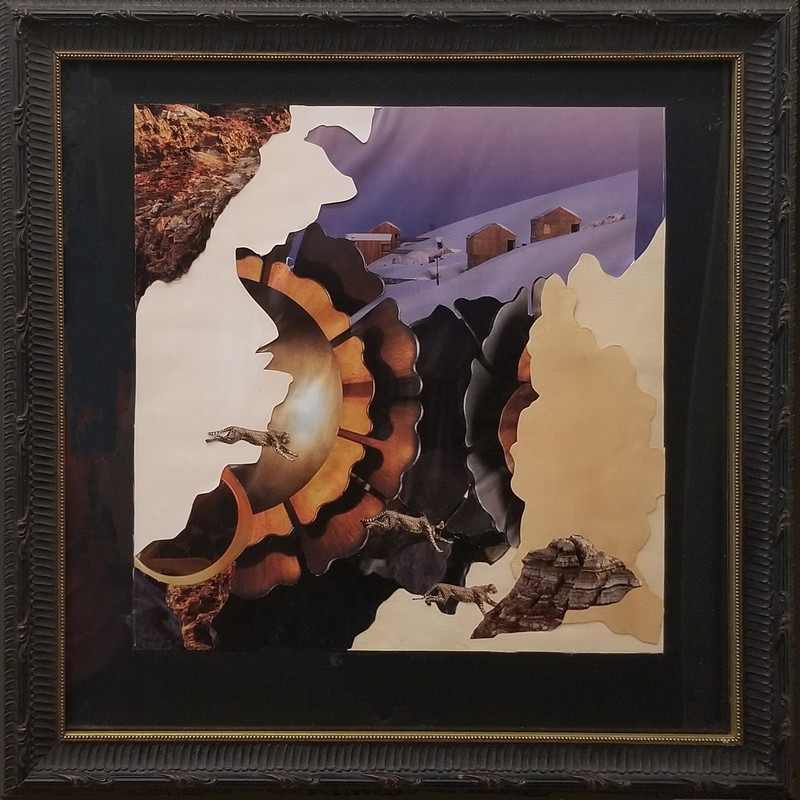
For this reason alone, it scarcely matters if a visitor (me, for example) finds the reasons for the inclusion of some works difficult to discern. Despite the analytical inclination of more than half the catalog, conscious discernment has nothing to do with anything. The rules are different here.
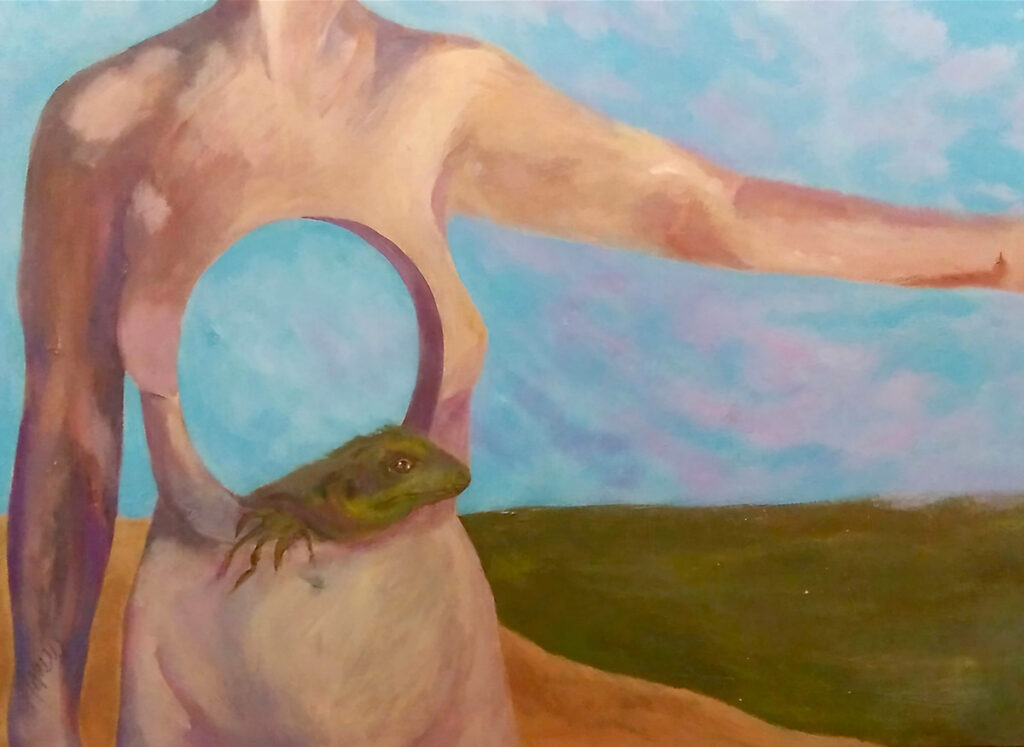
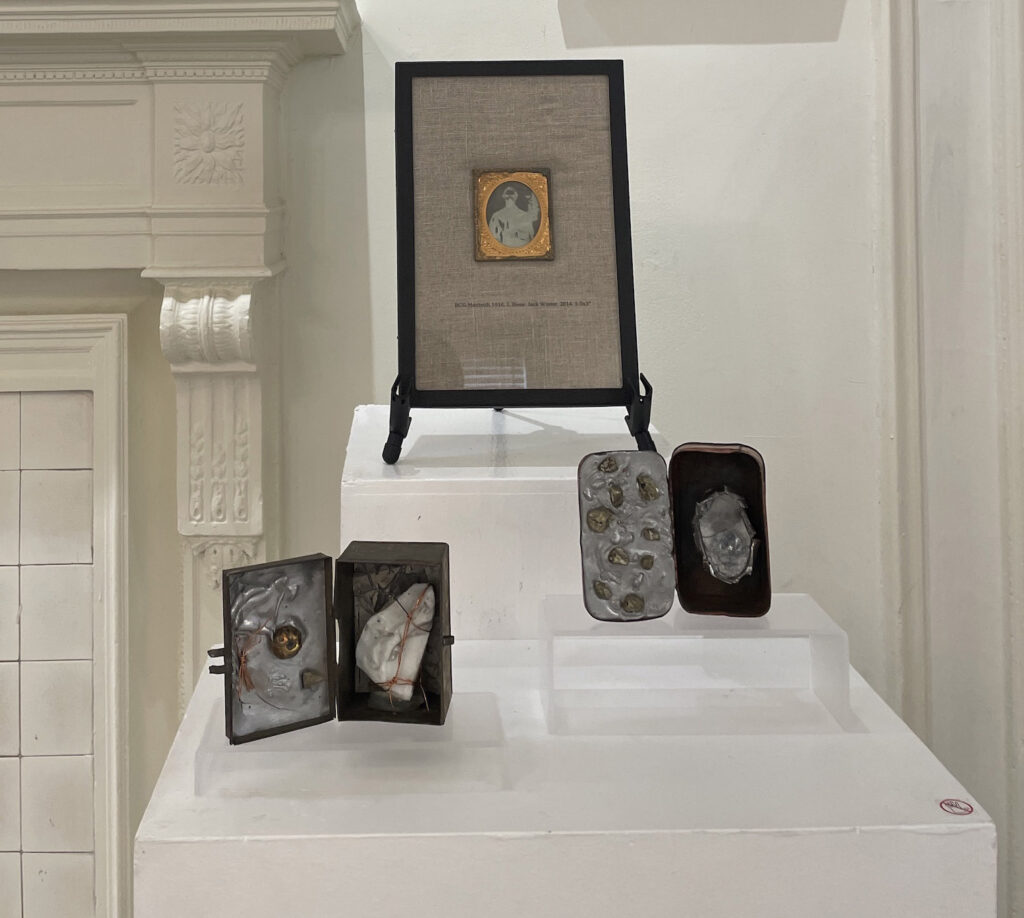
It is, if anything, a mark of authenticity that so few works demonstrate any obvious kinship with the classic visual documents of the Surrealist movement. The fragmented female torso of Lulu Aguero’s I’m Still Here has Surrealist antecedents, as do the poetically evocative relic boxes of Jean Hess’ Jack Winter, Arctic and Baby Moses. The same goes for the gigantic winged guardian figure in Tim Short’s Ebony III. Yet each of these stems from the artists’ own individual concerns, some of which have little to do with Surrealism. These larger contexts are omitted from this show, which deals only with their relationship with “dreams, the subconscious, automatism and the irrational.”
The multiple entanglements of conscious and subconscious layers in Echoes can only be deciphered through independent research or through the curator’s tour of the exhibition in the company of many of the artists, which is scheduled to take place on September 22.
::
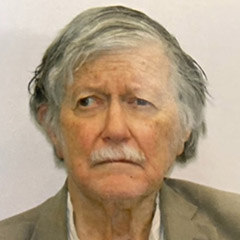
Dr. Jerry Cullum’s reviews and essays have appeared in Art Papers magazine, Raw Vision, Art in America, ARTnews, International Review of African American Art and many other popular and scholarly journals. In 2020, he was awarded the Rabkin Prize for his outstanding contributions to arts journalism.
STAY UP TO DATE ON ALL THINGS ArtsATL
Subscribe to our free weekly e-newsletter.

PLEASE SUPPORT ARTSATL
Your Gift Sustains the Coverage You Count On!
Related Posts

