
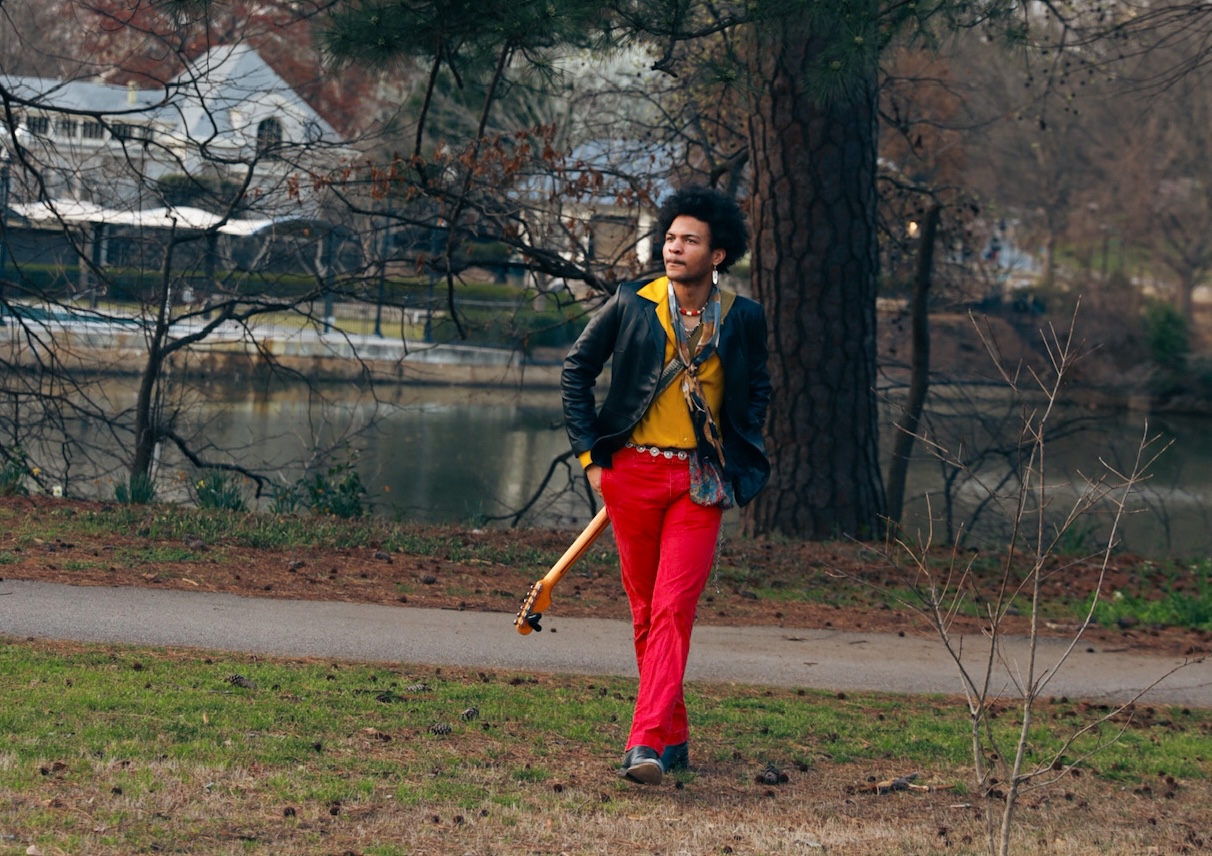
Blues-rock musician Buddy Red discusses his influences and playing the Atlanta Jazz Festival
“I look forward to the opportunity to be on any stage, whether it’s a Monday night at Northside Tavern or Saturday at one o’clock in the afternoon at the Atlanta Jazz Festival,” said musician Messiah Harris. “The stage is my home for a few minutes, and I know I’m gonna use that time wisely.”
Harris, the son of rapper-actor-record mogul T.I. and stepson of singer-songwriter-entrepreneur Tiny Harris, was first known for his participation on his family’s reality show “T.I. and Tiny: The Family Hustle.” He’s slated to play a homecoming set on Saturday, May 23, to open the 49th annual Atlanta Jazz Festival in Piedmont Park.
Performing as Buddy Red, the singer-songwriter, who was among ArtsATL’s Ones to Watch last year, is making his own mark in the entertainment industry. With a handful of digital singles and an EP in his current catalog, the 26-year-old artist is following his own route while introducing a whole new generation of fans to the music that inspires him.
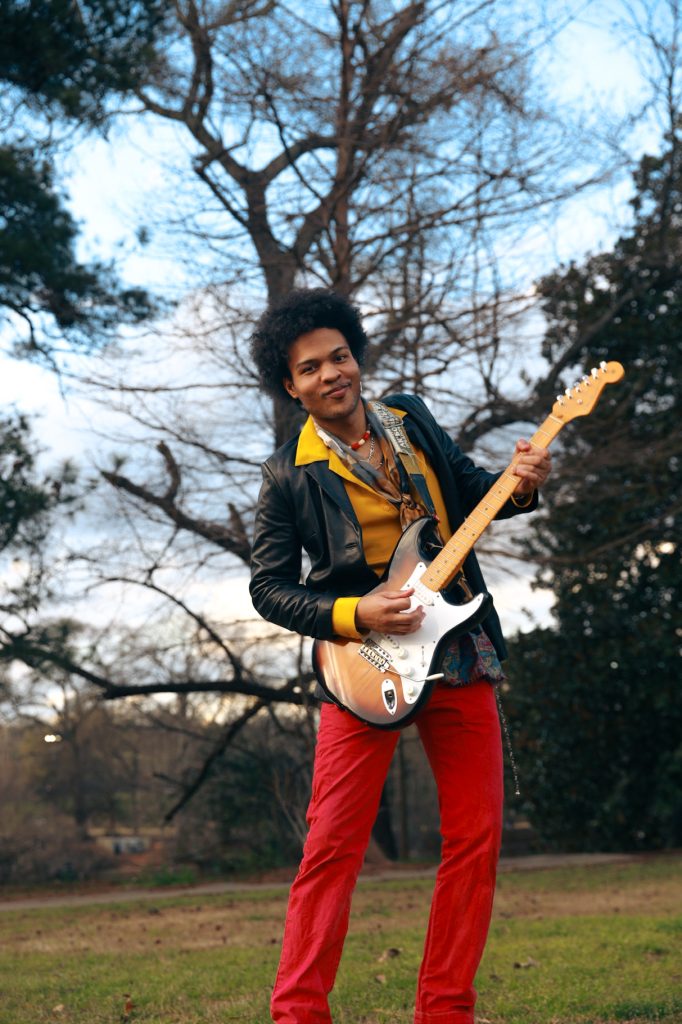
A blues-rocker raised in a home rooted in R&B and hip-hop is a definite anomaly, but Harris is acutely aware of avoiding the novelty factor.
“Growing up, I guess I realized that I was a little bit different than the rest of my family, a little peculiar,” the soft-spoken Harris laughed. “I found that I liked music that, let’s say, my parents weren’t exactly playing in the house. And, honestly, at first, I didn’t know what to think about it, either. My brothers and sisters, we grew up listening to rap and maybe a little pop. Rock and roll or punk or even house music was completely foreign to me at that point. So I knew I had to discover it all for myself.”
During a recent interview with ArtsATL, Harris said as a teenager, he would try to share some of the music he loved with his family, “but they didn’t quite know how to receive it.” He added he eventually “made peace with it, and now they’re all proud of me and my music.”
But he noted that certain members of his family have decidedly different ways of showing their support. “The ladies are all excited, but the guys are always so cool, they just kinda nod approvingly. The other day, Pops said, ‘You’re doin’ all right.’ And that’s big, coming from him.”
Harris explained that when he started playing the guitar near his 18th birthday, he “sort of called back a lot of things I’d been listening to and relating to as I was growing up.” Once he began taking guitar lessons, he fully delved into the music of Jimi Hendrix, Led Zeppelin, Pink Floyd, David Bowie and Iggy Pop.
“I was at the perfect age to be open to all that stuff. I’m 26 now, but when you’re in your late teens, early 20s, you’re so eager to put all the pieces together. I guess that’s how I got here, basically. I put the rock ‘n’ roll puzzle pieces together, and it became an amalgamation of who I was and who I wanted to be.”
Harris originally planned to make beats and be a producer.
But when he saw the 2018 Queen biopic Bohemian Rhapsody, his path was set. “It just changed everything. I didn’t even fully understand it, but I knew that’s what I wanted to do — play rock and roll.”
As a shy teenager living in the shadow of a famous father, Harris said he originally thought making beats would be a safe space to be anonymously creative. “I thought I could sort of hide behind the beats. But after I saw that movie, I realized being safe wasn’t going to get me what I thought I wanted out of life. Freddie Mercury didn’t go the safe way, and I realized that playing music doesn’t have to be safe. You have to just go and lay it all out there, no matter who approves or disapproves of what you want to do. Before I saw that movie, that mindset wasn’t even a consideration for me.”
More on ArtsATL: Buddy Red’s 11 Good Things
Harris immersed himself in music history and eagerly read books about a number of classic rock and jazz acts. “After all I learned about those people, I feel like every song I leave behind now is like a check mark on a map as I continue to grow. I’m passing my music on to the next generation, just like all the people that came before me.”
As he dug deeper into the history of rock music, he said he quickly became aware of the importance of the blues masters.
“Yeah, I think the blues really came in for me around the same time I discovered Pink Floyd,” he said. “I saw the connection of what they were doing and how somebody like David Gilmour was directly influenced by the blues. Then I studied the scales of what I’d hear on the records. From there, I went on to early Led Zeppelin. That’s when I really realized that rock ‘n’ roll and the blues have always gone hand in hand.”
Like many budding rock fans, Harris traced his favorite artists’ listening habits and began to dive into archival material from several influential blues greats, including Muddy Waters and Howlin’ Wolf.
“Man, when I heard Muddy for the first time,” he continued, “I didn’t care too much about Led Zeppelin anymore. I was finding the core of their influences, and the real blues guys seemed much more impactful to me. They could say so much, and they didn’t even have to yell and scream to get the message across.”
When the pandemic hit, Harris stopped taking guitar lessons and continued to explore more techniques on his own. “I was in school at Georgia State, and I just focused on school and the guitar. I think I was trying to bridge the gap between the old me that wanted to make beats, and the new me that just wanted to play the guitar. I was trying to make beats with my guitar when I really started working on songwriting.”
When journal entries became song concepts, his songwriting skills began to improve. “Writing a song is a very personal experience for me,” he explained. “Talking person-to-person can be difficult sometimes, but it’s been much easier for me to express things through music. The things I couldn’t say with my own voice, I found that I could say with music.”
As Harris’ musical prowess progressed, he began to develop a more stylized version of himself. “I knew I wanted to get a better handle on my stage presence,” he said. “After I did a few shows, I found that I’d rather be on stage than in the studio. To change someone’s perception of me in real time is a lot more exciting to me than spending hours in a studio.”
He began to expand his closet of Hendrix-inspired stage wear and honed his “Buddy Red” alter-ego. “I didn’t think my real name had a cool rock and roll ring to it,” he said. “I was determined to do something to separate myself from myself, if you know what I mean. I wanted to make my own name, literally.”
In tribute to his grandfather Buddy from his father’s side of the family, he added Red in honor of an uncle from his mother’s side. “I liked the way Buddy Red seemed to fit me. It just felt natural.”
Now that he’s settled on an image, he said he allows his music to do the rest of the work. Harris said he can usually win over a crowd “in the first 30 seconds of when I step onstage. Mainly, I have to win myself over, because it’s just fun to go out and play music for people. That positive energy reaches the crowd — and we can take it from there.”
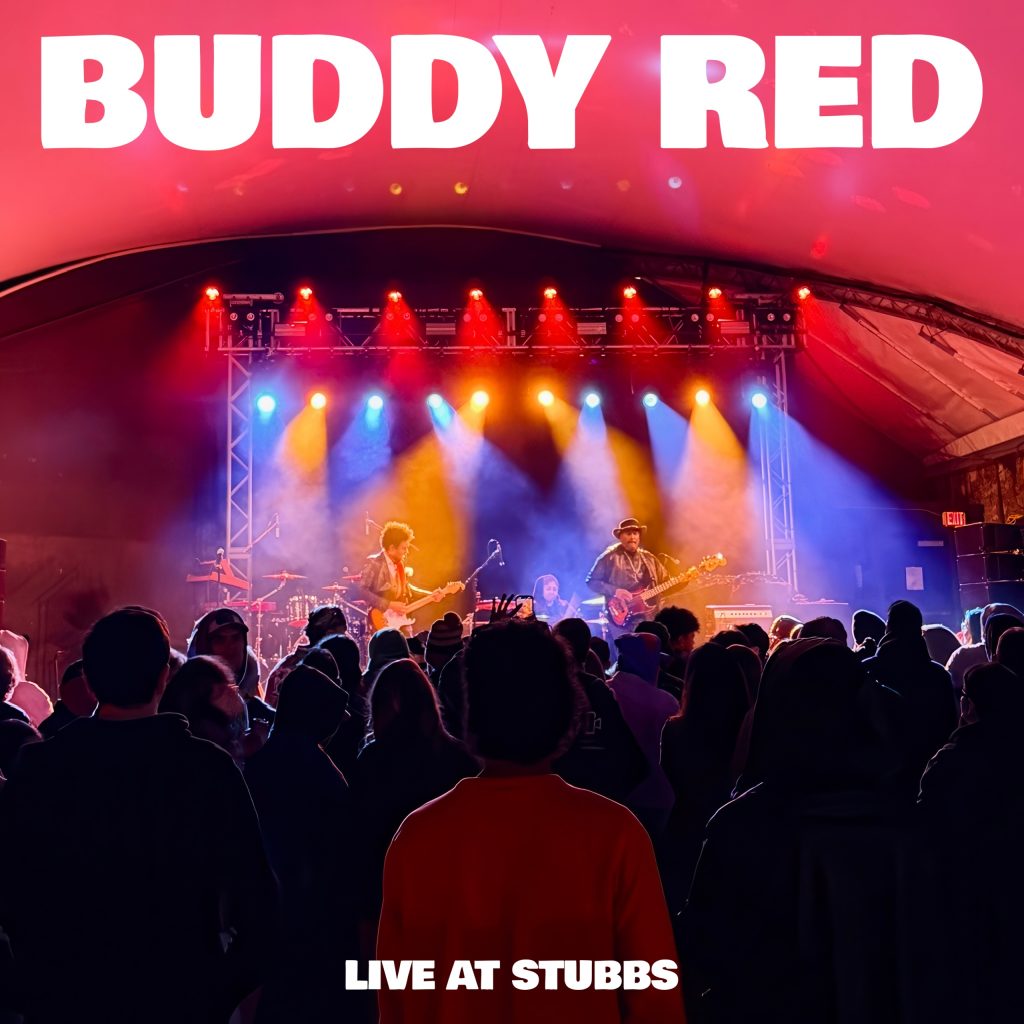
His recently released digital EP Live At Stubb’s — recorded in March in Austin, Texas, during South By Southwest — is a brief but powerful introduction to the kinetic excitement of a Buddy Red performance. The package includes “1958,” a wonderfully sly ode to guitarists of the past, a song recently featured on The Kelly Clarkson Show. Other tracks feature a blistering cover of The Stooges’ punk anthem “No Fun” and an emotive Stevie Ray Vaughan-style blues original called “When I Dream.”
“Stylistically, I know it’s all over the place, but that’s how my shows are,” he said. “All of my influences are laid out on the stage in a psychedelic jam. It’s like the wild lives of some of my favorite musicians I read about when I was a kid.”
Harris said the Buddy Red set that opens the 2026 Jazz Festival will feature the same kaleidoscopic approach. The show will be tailored for the big stage at Piedmont Park, with able support from frequent collaborators Dennis Stevenson (bass) and R’Jay Nichelle (drums).
“I think I’m ready for it. I used to get nervous thinking about playing on a stage like that, but now it’s just a treat,” he concluded. “For me, playing the Jazz Festival will be like having a really cool dessert.”
Where & when
Buddy Red kicks off the 2026 edition of the Atlanta Jazz Festival at 1 p.m. on Saturday, May 23. The 49Th annual Atlanta Jazz Festival runs from May 23 through May 25, 1 p.m. to 10 p.m. daily. Piedmont Park. Admission is free.
::
Lee Valentine Smith is an Atlanta-born artist, writer and musician. Currently a regular contributor to The Atlanta Journal-Constitution, his work has been syndicated internationally. He has appeared at Music Midtown, on CBS Radio and on Air America. He also served as art director, consultant and archivist for projects with ’80s hitmakers The Go-Go’s.
STAY UP TO DATE ON ALL THINGS ArtsATL
Subscribe to our free weekly e-newsletter.

