
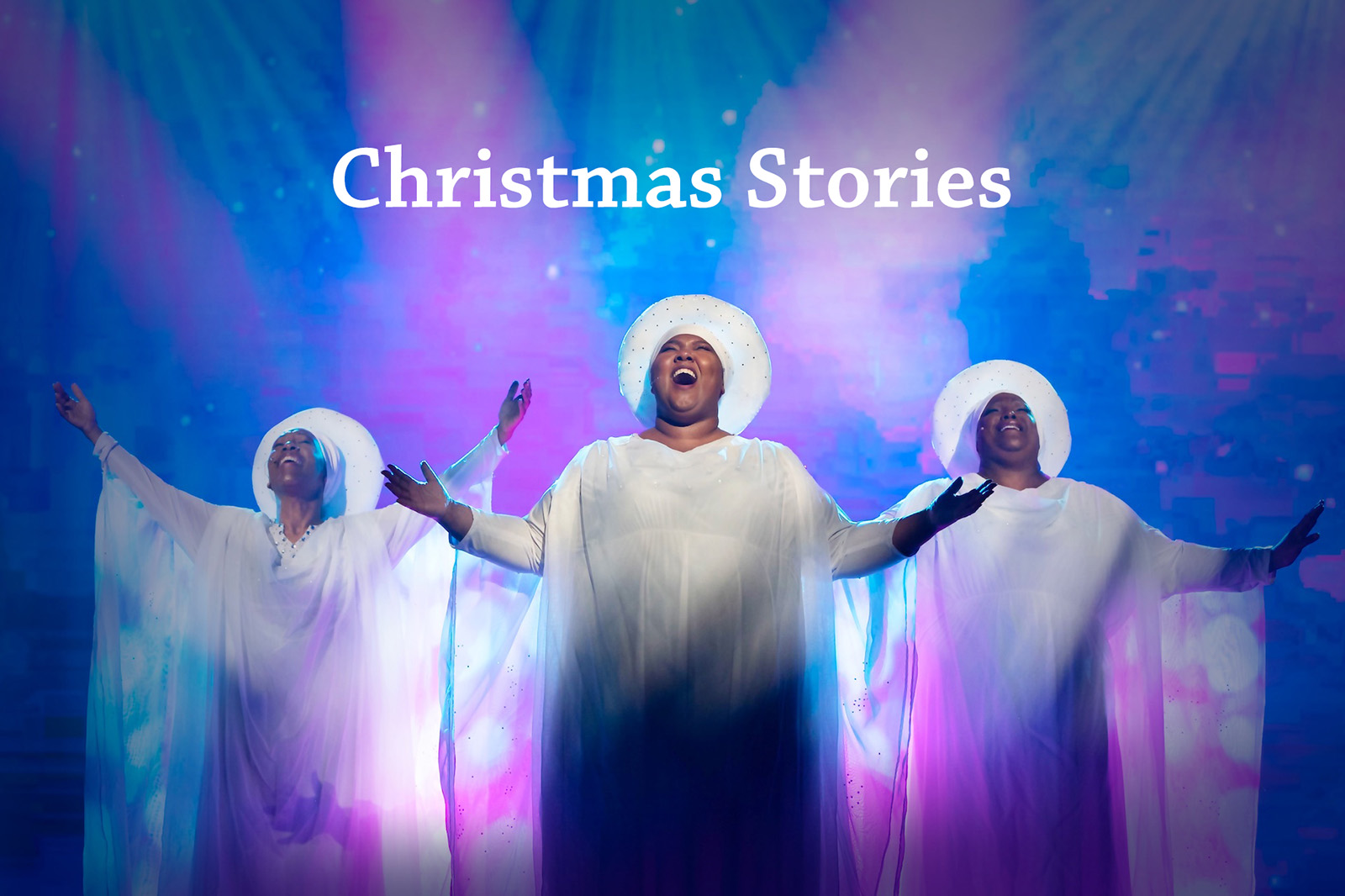
‘Black Nativity’ celebrates the Christmas story with music and dance
Adapted from poet Langston Hughes’ 1961 Off-Broadway production, ‘Black Nativity’ opens in a contemporary Black church and places the Christmas story in Africa, not the Middle East.
::
From A Christmas Carol to A Charlie Brown Christmas and A Wonderful Life, there’s an undeniable similarity among the traditional Christmas TV specials, stage plays and movies that show up year after year: Most of them were created for White audiences. But Black Nativity: A Gospel Christmas Musical Experience has for many years widened the scope of seasonal fare in Atlanta and across the country. Running December 12 to December 22 at Atlanta’s newly renovated Ferst Center for the Arts, the music and dance celebration re-imagines the Christmas story through the lens of Black culture.
Black Nativity is an adaptation of poet and playwright Langston Hughes’ stage production, which was first performed Off-Broadway in December 1961. The original title was Wasn’t That a Mighty Day? But before the opening, Hughes changed it to Black Nativity. The African American dancers Alvin Ailey and Carmen de Lavallade were originally cast as Joseph and Mary but withdrew a week before the show opened because they apparently objected to the new title’s racialization of a religious term.
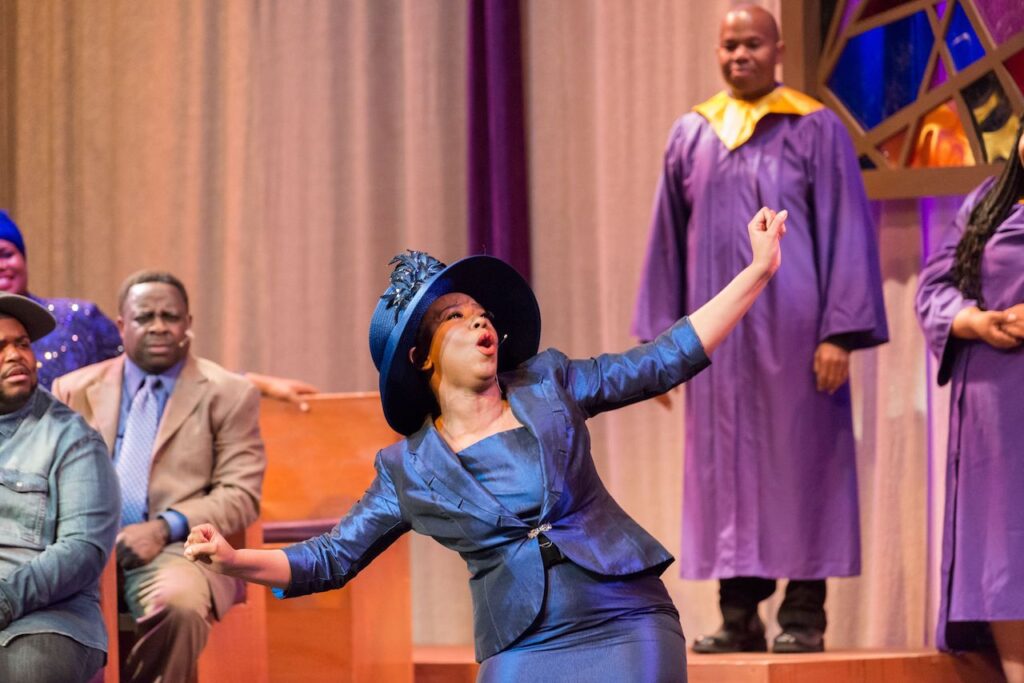
Now performed by different organizations nationwide, Black Nativity is a theatrical spectacle versatile enough to incorporate elements of contemporary Black music and artistry with traditional African motifs, plus a liberal allowance for individual creativity from one production to the next. It has been produced in Atlanta for many years by various production companies, among them True Colors Theatre Company.
“My company took the reins of producing Black Nativity about 13 years ago,” says Dominion Entertainment Group CEO Robert John Connor. “We’ve had the opportunity to continue the legacy of this holiday tradition in the Atlanta area.”
Returning performers this season include actor-singer Latrice Pace, winner of a Suzi Bass Award for her performance in The Color Purple at Actors’ Express, and gospel singer and Suzi Bass Award nominee Lawrence Flowers.
Black Nativity has been a passion of Connor’s since he performed in the play as a cast member in 1996 and 1997, when he was in his mid 20s. As his career moved from acting to directing, he saw potential for Black Nativity as an Atlanta institution. The production has become a central and ever-evolving staple of Dominion Entertainment’s repertoire, offering a cultural smorgasbord of Black artistry.
But its historical significance runs deeper.
“Historically, it incorporated a lot of hymns and spirituals,” explains Connor, a Morehouse College graduate. Now the show includes a broad spectrum of music, including gospel. It became important to the Black community, especially in the 1960s when Black culture was overlooked in the vast array of holiday entertainment. “During that Civil Rights era, Langston was trying to take our cultural artifacts — our dance, our song, our costumes, our regalia — and infuse that into the biblical story of the birth of Christ.” Now, 60 years later, Black Nativity has wide reaching appeal in performances across the country.
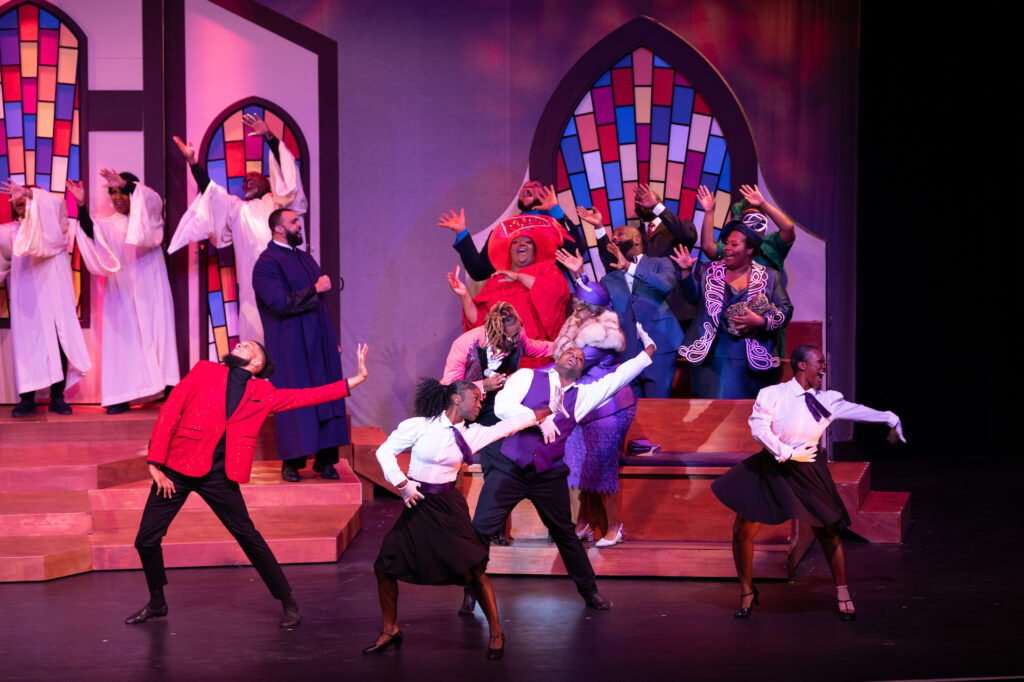
The production imbues the telling of the Christmas story with a wide array of Black cultural traditions that speak not only to Black audiences but to the universal human themes embodied in the nativity story.
The show opens in a modern day African-American church on Christmas Day and later takes audiences to Africa, not the Middle East, for Mary and Joseph’s story. “The actors are adorned in Africanized costumes, and there’s African dance,” says Connor. “It’s a really rich experience of acting, singing and dancing that ultimately leaves the audience member with a sense of hope. It’s from a Black perspective, but the story is universal.”
According to Connor, that universal appeal is confirmed when audience members of all ages, ethnicities, cultural backgrounds and even non-Christian faiths attend. “It’s sewn together so magically that by the end of the show, you go ‘wow! What just happened?’ The unique nature of the show is far more inviting than saying ‘this is for us.’”
::

Jordan Owen began writing about music professionally at the age of 16 in Oxford, Mississippi. A 2006 graduate of the Berklee College of Music, he is a professional guitarist, bandleader and composer. He is currently the lead guitarist for the jazz group Other Strangers, the power metal band Axis of Empires and the melodic death/thrash metal band Century Spawn.
STAY UP TO DATE ON ALL THINGS ArtsATL
Subscribe to our free weekly e-newsletter.

