Black abstraction embodies freedom in ‘Innervisions’ exhibit
With its chief characteristic being a breakaway from form, abstraction grants Black artists and Black viewers something they don’t always have in the material world – complete freedom.
“It’s about the freedom to be, and the freedom to interpret,” says Clarke Brown, special projects curator at the Clark Atlanta University Art Museum. And it’s a revelation of the abstraction of the Black experience itself.
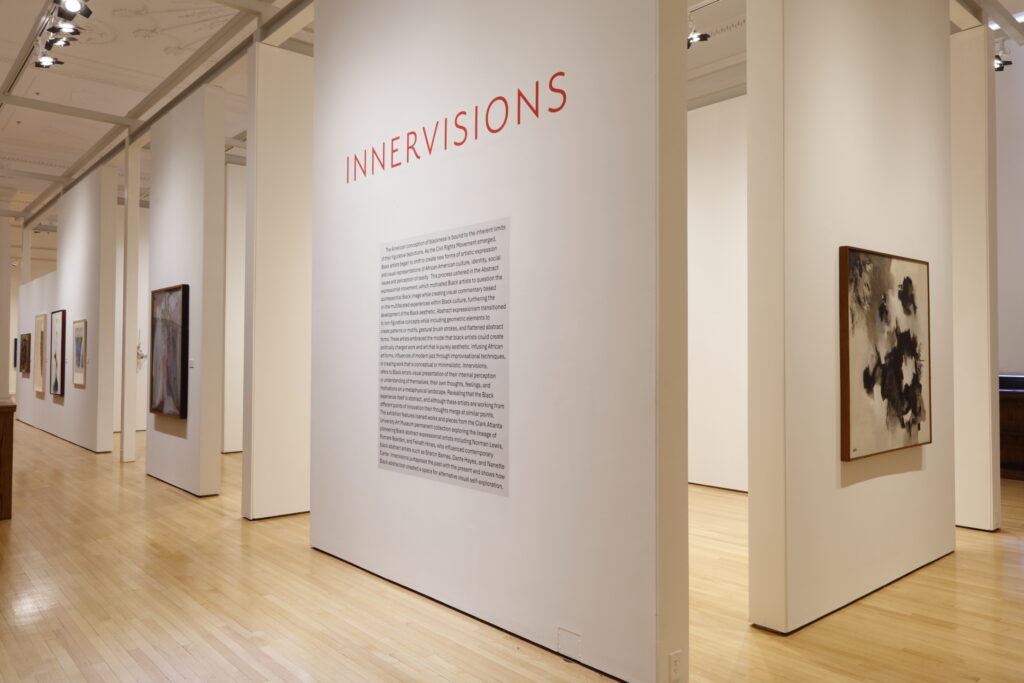
Innervisions, the art museum’s current exhibit, features paintings, sculptures, textiles and assemblages. Together, they tell the story of the Black abstract expressionist movement, which allows Black artists to broaden the ways that they’re represented, perceived and understood. (On Saturday, March 22, from noon to 1:30 p.m., there will be an artist talk with Freddie Styles and Etienne Jackson about their work and their relationship with Black abstraction.)
Brown, along with Jamele Wright, a multidisciplinary artist and professor at Clark Atlanta, co-curated Innervisions after Wright approached her with the idea. “Abstraction is problem solving. Abstraction is theorizing,” Wright says. “I absolutely love abstraction. I think it is the highest way of thinking.”
Abstract expressionist movements generally follow figurative movements, he said, noting the importance of the Black figure in art during the Black Lives Matter, Civil Rights and Black Arts movements.
“It was showing the Black body not being murdered, not being abused, not being neglected, not trauma ridden. It was actually showing them smiling and happy and joyous. This is where we had terms like ‘Black boy joy’ and ‘Black girl magic’ beginning to happen because we were starting to see this expression on the face,” Wright says. “But the abstraction is that Black boy joy. The abstraction is that Black girl magic — things that come from within.”
For years, Black abstraction was not highly regarded or even acknowledged by White-led institutions. Many of the artists were erased from conversations about the abstract expressionist canon. So for Wright, the exhibit is also a chance to pay homage to them and to the long-held culture of abstract expression in the African diaspora.
“I would argue that if you look at anything that comes from Africa, it is abstract,” he says. “The dances, the costumes for the rituals, the symbols we wear — we’ve been doing abstraction for centuries.” Through the exhibit, he says, he feels he is “grafting African Americans back into history.”
From 1942 to 1970, the Atlanta University Art Annuals provided a home for Black artists to exhibit their work; they were denied in other spaces. Elizabeth Catlett, Charles White, Jacob Lawrence, Samella Lewis, Henri Linton and many others participated in the art annuals. It was also a way for the university to purchase art for its collection, which has grown to more than 1,100 pieces.
That permanent collection can be seen in an alcove in the museum, with rotating works featured under the banner of Rediscovery.
The prestigious history of the art museum, and the staff’s duty to preserve it, is part of what wakes them up every morning, says Director Danille K. Taylor, who also teaches African American studies.
As they re-emerge from a period of reorganizing after the pandemic shutdown, Taylor and Brown say they are embracing the museum’s new identity and expanding its imprint with community outreach, participation in initiatives like Atlanta Art Week, placing pieces of the permanent collection in exhibits at institutions including the Metropolitan Museum of Art and offering more gallery programming, such as curator walk-throughs, where visitors can get a guided tour.
“We want people to know about the breadth and quality of our collection,” says Taylor. “We understand the importance of what happened here, and we have to be good stewards of that legacy.”
“Rediscovery is a reflection of the external experience of Black people, but abstraction is a reflection of our internal experiences, our inner thoughts and feelings,” Brown says.
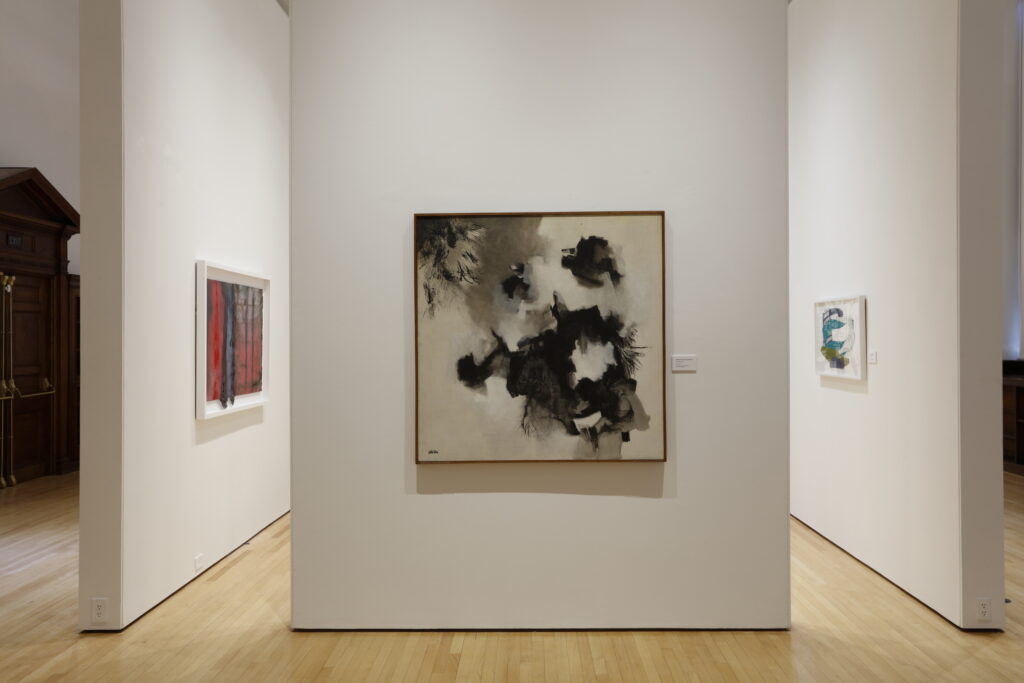
Beyond the Rediscovery alcove, works by contemporary artists fill the gallery. The existence of these works bespeaks the gravity of the art annuals and illustrates the change that the years can bring.
Arthur L. Britt’s Poverty Toy Chest anchors one corner. The rustic assemblage recalls the utilitarian nature of many early works of art, recreating a barn floor or a storage shed, full of timber and yard tools that perhaps reflect a hard days’ work and little time for leisure or play.
Specks of red burst through more muted colors in Sharon Barnes’ Freedom Fighters Put Red Peppers in their Collard Greens, a work on paper using acrylic, sumi ink, graphite powder, wood veneer, vegetable netting and string. This multimedia piece seems to uplift the powerful roles that everyday people have in driving monumental change. With a little spice in their sustenance, it suggests, they brave the frontlines of social and political movements to care for their families.
Tariku Shiferaw’s acrylic painting So Much Things to Say (Bob Marley) explores censorship and erasure in art, as it contrasts ideas of black and blue. And it could be a stunning examination of how beautiful surfaces can hide ugly realities.

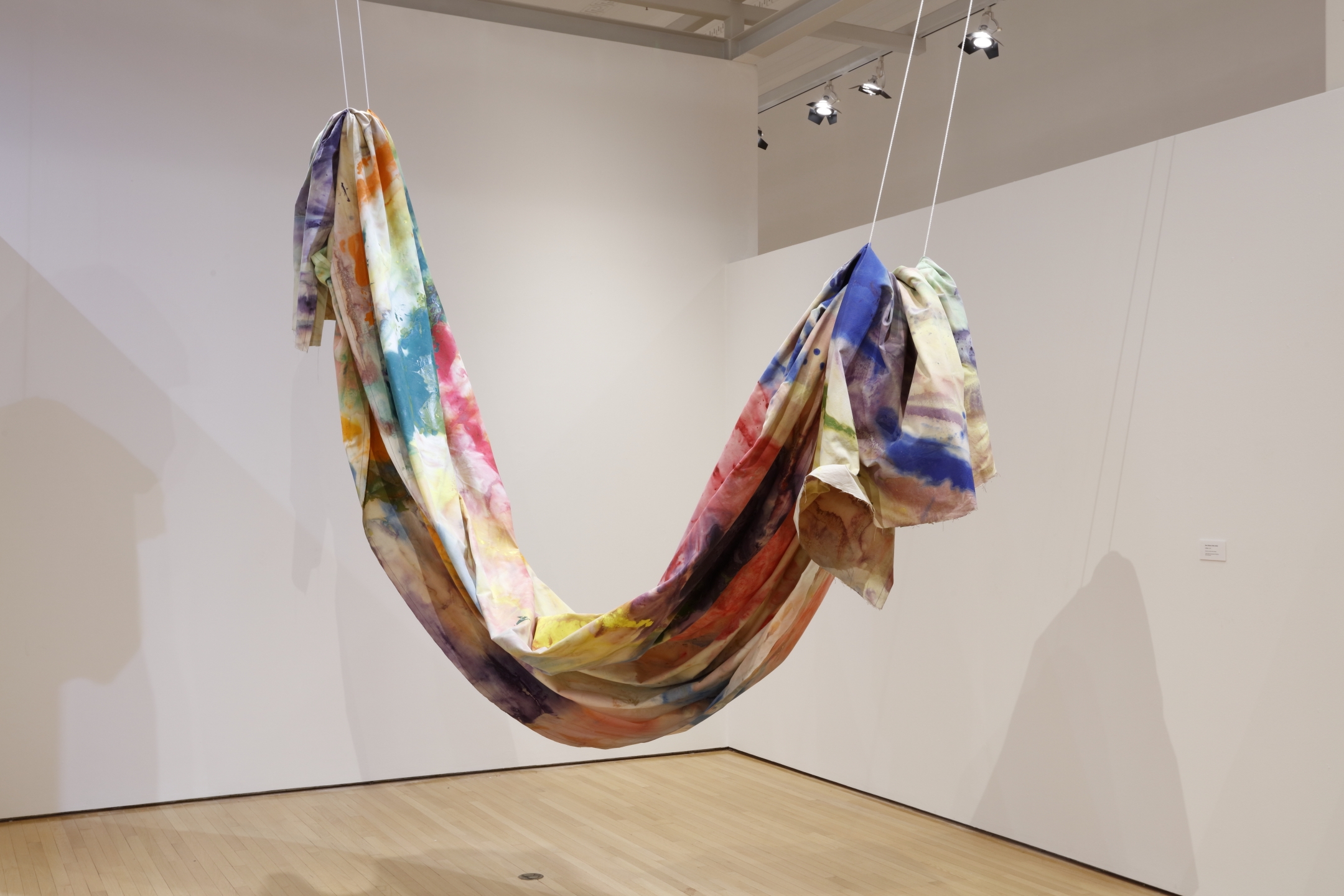
The exhibit finds whimsy in Sam Gilliam’s fabric pieces, vibrance in the colorful works by Ellsworth Ausby and includes works by David Driskell, Etienne Jackson and others.
Every time viewers see such works, Wright says, they have an opportunity to experience something new from different angles, to understand the work — and the world — differently. Abstraction helps viewers “break out of the idea of the figure and see themselves wholly.”
Wright acknowledges that viewing abstract art can be challenging compared to figurative art, but he encourages people to simply listen to themselves.
“When you stand in front of it, the story begins,” says Wright, who also has multiple hand-dyed canvas pieces in the exhibit. Abstract art asks questions of the viewer, if people are curious enough to sit with them, he says.
::

Angela Oliver is a proud native of old Atlanta who grew up in the West End. A Western Kentucky University journalism and Black studies grad, daily news survivor and member of Delta Sigma Theta, she works in the grassroots nonprofit world while daydreaming about seeing her scripts come alive on the big screen.
STAY UP TO DATE ON ALL THINGS ArtsATL
Subscribe to our free weekly e-newsletter.

PLEASE SUPPORT ARTSATL
Your Gift Sustains the Coverage You Count On!
Related Posts