A Century after her birth, celebrations continue for Georgia writer Flannery O’Connor
O’Connor’s literary legacy lives on with myriad celebrations, including a public exhibition of 69 new paintings in Milledgeville, an extended birthday party in Savannah and more.
::
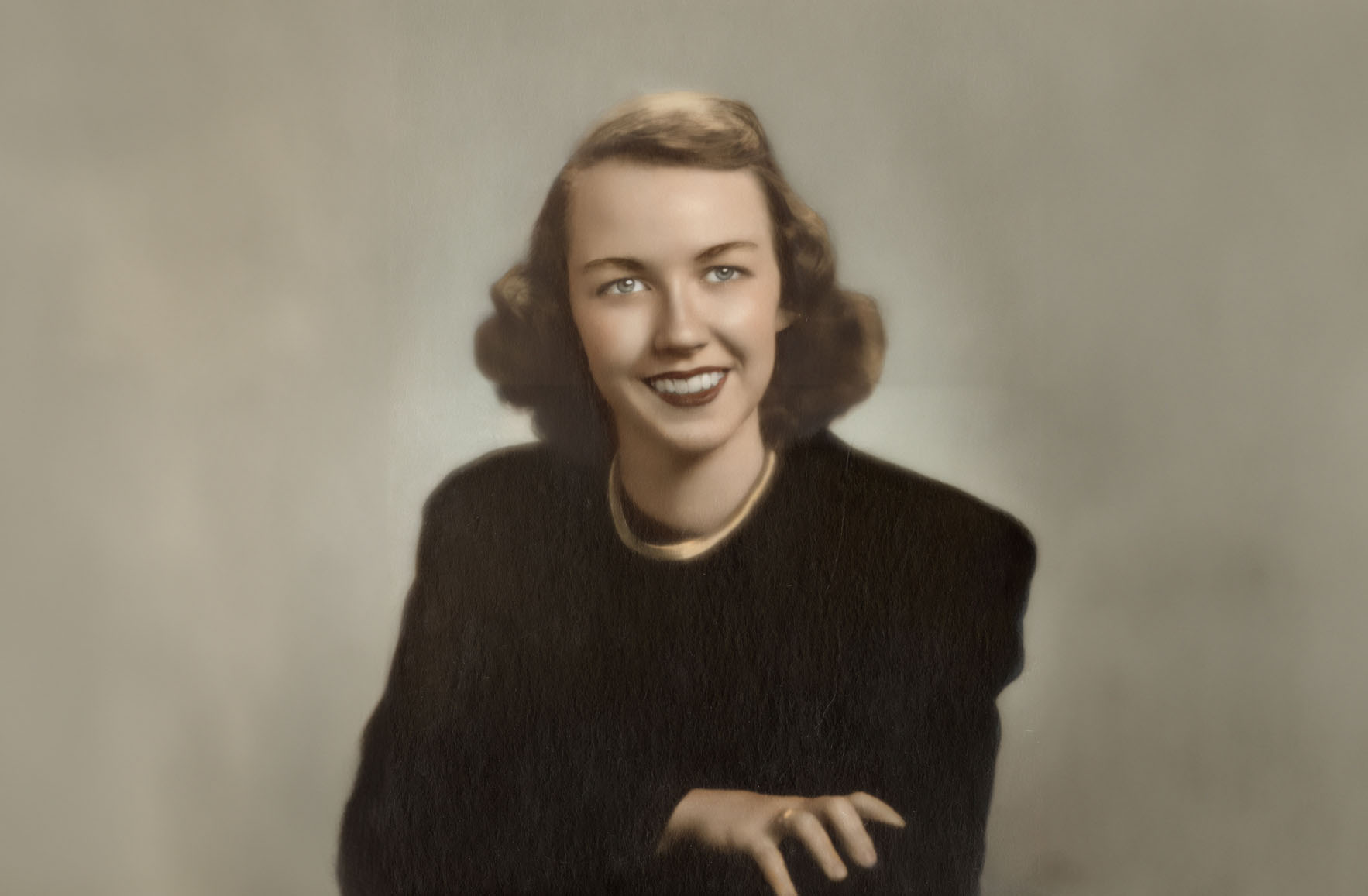
Flannery O’Connor, born on March 25, 1925, would have turned 100 this month. As an originator of the Southern Gothic genre, O’Connor has a long shadow among American writers, and, on her centennial birthday, her work is as relevant as ever. Across Georgia, O’Connor enthusiasts are planning a wide range of events that celebrate the centenary author’s influence across generations and forms, including live music, art shows and home tours.
O’Connor published her first short story in 1946. Over the next 22 years, she wrote 31 additional stories and two novels before dying of lupus at 39. Her sharp, distinctive voice and darkly humorous, often violent stories have cemented her place in the American literary canon.
O’Connor redoubled her efforts after her lupus diagnosis, determined to make the most of what she expected to be a short life. “Especially after she knew she was sick, she was very focused,” says Katie Simon, interim director at the Flannery O’Connor Institute for the Humanities at Georgia College & State University (GCSU) in Milledgeville. “She wanted to make an impact and be a great writer.”
O’Connor’s prose straddles the line between realism and the grotesque, darkness and absurdity, violence and revelation. She was at heart a Catholic writer, laser-focused on redeeming humanity from what she considered a corrupt present through her characteristic use of shock tactics. She’s known for her “freakish” Southern characters, whom she placed in precarious, often brutal situations as a means of jolting her readers into awareness.
“I think that Flannery is one of the most provocative authors out there,” says Janie Bragg, director of the Flannery O’Connor Childhood Home in Savannah. “It feels like, through her stories, Flannery is sort of reaching through the pages to grab us by the shoulders and wake us up. I think she’s trying to startle us, to surprise us, to make us uncomfortable, so that after we read the story, we can’t stop thinking about it.”
Though she published two novels, O’Connor is known today as a master of short stories, and her influence on the form has only grown since her 1964 death. “One of the ways we judge people, their lasting effect, is how they affect other artists and writers,” Simon says. “So, so many people claim her as an influence. They’re indebted to her.”
Indeed, you’d be hard-pressed to find a creative writing program in the country that doesn’t teach her fiction, and her book on craft, Mystery and Manners, is a mainstay. And, Simon points out, her reach extends beyond writers, with musical acts such as Bruce Springsteen, REM and Tom Waits listing her among their influences.
Savannah legacy
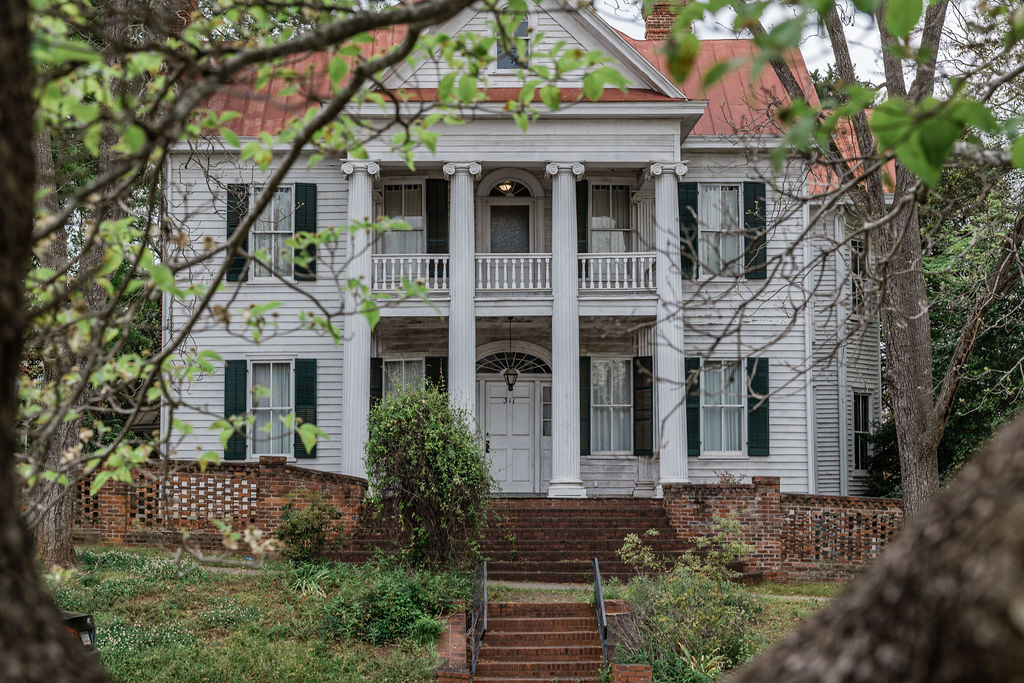
Bragg says the Flannery O’Connor Childhood Home Museum hosts a wide range of activities geared toward continuing and evolving the writer’s legacy, including providing tours of the Depression-era home and hosting authors for readings and book signings. The home also hosts the Peacock Guild, a yearlong workshop for writers working on projects for publication, which aims at “bringing artists into the home and supporting them and making it more of a community-oriented space.”
Sixty years after O’Connor’s death, Bragg says, the author is still a big draw. “We have people come from all over the world to visit Flannery’s childhood home,” she says. “People are really excited to be here and to celebrate their favorite author, to really be around other people who are like-minded and who they get to sort of geek out with.”
The museum celebrates O’Connor’s birthday annually but plans an extended slate of events for the centennial. Bragg expects O’Connor lovers from all over the world for the three-day extravaganza, which begins Friday, March 21, with a “centennial social” where O’Connor fans can mingle. Saturday’s events include specialty tours and a live performance by Colin Cutler and Hot Pepper Jam, who will play music from their O’Connor-inspired album Tarwater. The Friday and Saturday events are open to the public, but require registration for entry.
The museum’s annual birthday party takes place March 23, with a street fair on Lafayette Square featuring dozens of local authors, a Flannery O’Connor look-alike contest, street art, live music and birthday cake. “We’ve been doing it for a long time,” Bragg says. “That’s the event that people look forward to year after year.” The event is free and open to the public.
Milledgeville legacy
In Milledgeville, the Flannery O’Connor Institute for the Humanities, founded in 2020, is the powerhouse that keeps O’Connor’s archives and runs Andalusia Farm and the Cline mansion, two of O’Connor’s family homes. Beginning on March 24, the institute will hold a dozen birthday events at the university and throughout town.
According to Simon, the institute is “a hub for scholarly inquiry around all things Flannery O’Connor,” hosting events and publishing the Flannery O’Connor Review. GCSU’s special collections contain an embarrassment of riches for scholarly research, including multiple drafts of much of O’Connor’s work and her personal library, complete with marginalia.
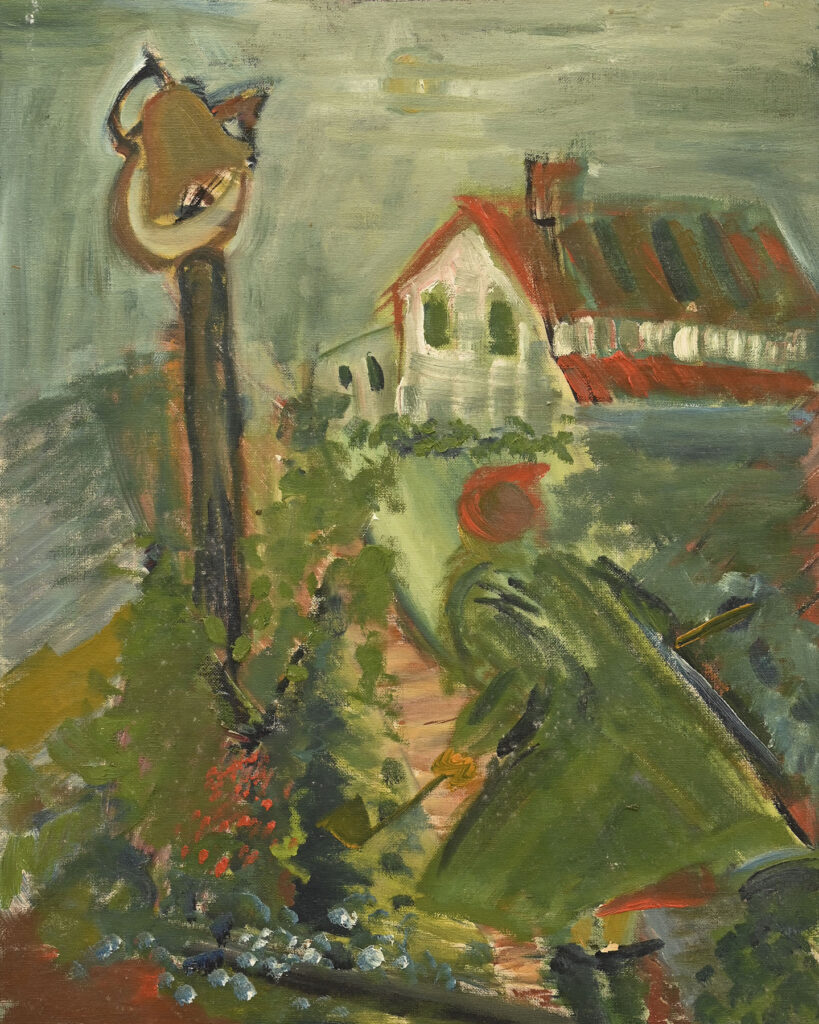
The Cline mansion, which belonged to O’Connor’s maternal relatives and was bequeathed to GCSU in 2023, is currently under renovation and not open to the public. Nevertheless, it has provided huge dividends for O’Connor scholarship. The writer painted all her life, and staff sorting through the mansion’s contents discovered an abundance of previously unseen artwork, which Simon calls a complement to O’Connor’s writing. The 69 newly-discovered paintings will make their public debut in a free exhibit on March 26 as part of the institute’s centennial birthday celebrations. “This is our big reveal,” Simon says.
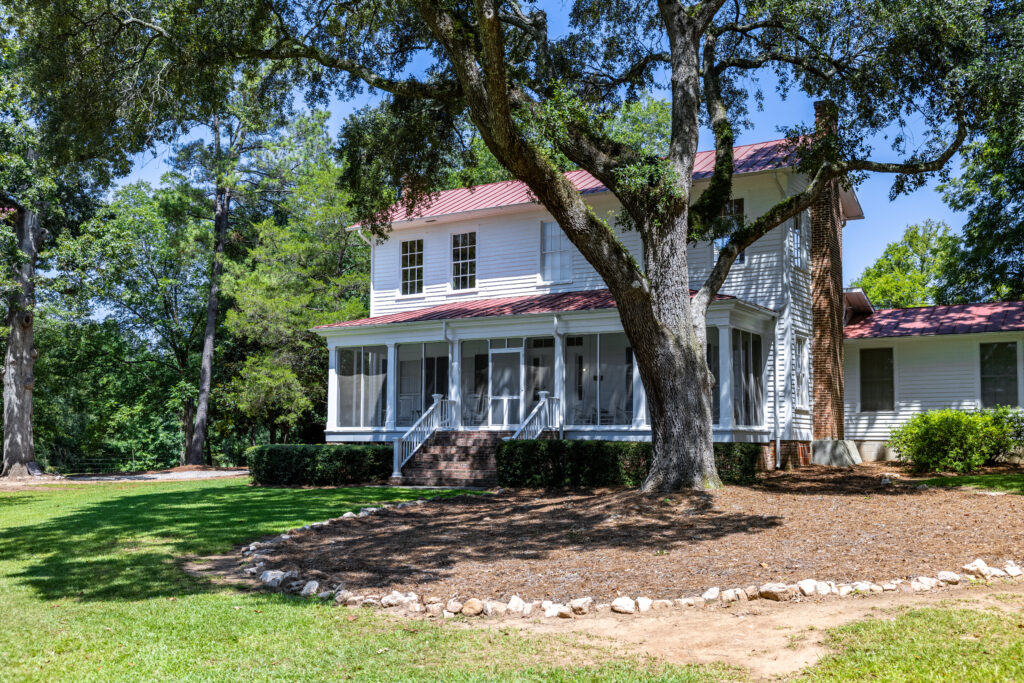
The institute’s crown jewel is Andalusia Farm, where O’Connor composed about half her work and lived the last 14 years of her life. Her mother, Regina Cline O’Connor, cared for Flannery, and, when she died, Regina left the house almost exactly as it was. As a result, Andalusia is nearly unchanged from O’Connor’s time there. “People come from Europe, they come from Japan to see this,” Simon says. “They make a pilgrimage.”
A slew of celebratory events will take place at Andalusia from March 24 to March 29, including free daily tours, a discussion with visual artists Ping Zhu and Panhandle Slim about their O’Connor-inspired work and a Shawn Mullins concert. The free Andalusia Music Festival will take place from 10 a.m. to 4 p.m. on March 29, featuring Colin Cutler and Hot Pepper Jam, Sally Jaye and Rob Sumowski, along with food trucks and birthday cake.
Other birthday celebrations
Middle Georgia State University will hold free, public events from March 24 to March 26 on its Macon, Dublin and Cochran campuses, including readings, talks, games and party favors.
Inside the Atlanta perimeter, artist Blair Hobbs’ “Birthday Cake for Flannery” exhibit of O’Connor-inspired art runs at Spalding Nix Fine Art until May 9. The exhibit features characters and other elements from many of the writer’s most celebrated works, including “Revelation,” “A Good Man Is Hard to Find” and “Good Country People.”
More from ArtsATL: 9 essential Atlanta arts events.
::

Rachel Wright has a Ph.D. from Georgia State University and an MA from the University College Dublin, both in creative writing. Her work has appeared in The Stinging Fly and elsewhere. She is currently at work on a novel.
STAY UP TO DATE ON ALL THINGS ArtsATL
Subscribe to our free weekly e-newsletter.

PLEASE SUPPORT ARTSATL
Your Gift Sustains the Coverage You Count On!
Related Posts