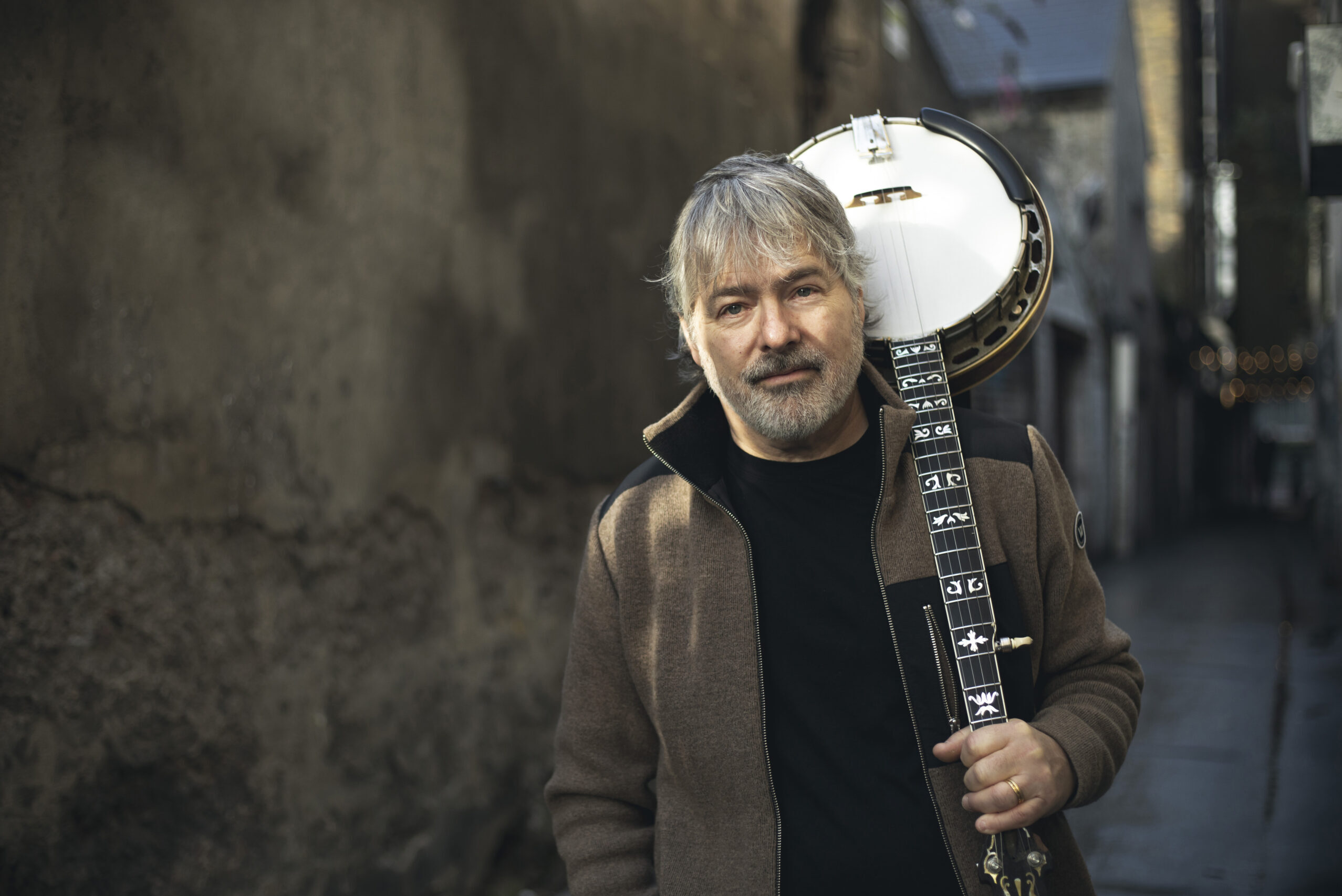
Banjo master Bela Fleck returns to Atlanta with a focus on his bluegrass roots
With a quiver of banjos metaphorically on his knee and a rejuvenated appreciation for the traditional bluegrass genre in which he first gained notoriety, 19-time Grammy winner Bela Fleck returns to Atlanta for a concert on Thursday, September 17, at the Rialto Center for the Arts at Georgia State University.
Long recognized as a groundbreaking innovator, Fleck has plumbed the depth and breadth of the banjo from its African origins to its capabilities within the realms of bluegrass, folk, jazz, fusion, orchestral and world music. In a career spanning six decades, Beck has conducted recording sessions, led bands and convened performance projects that have included luminaries such as Jerry Douglas, Sam Bush, Mark O’Connor, David Grisman, Edgar Meyer, Howard Levy, Chick Corea, Zakir Hussain, Earl Scruggs, Renee Fleming, Sierra Hull, Joshua Bell, Chris Thile, Abigail Washburn, Sarah Jarosz, Oumou Sangare, Toumani Diabate, the Nashville and Colorado symphonies, Brooklyn Rider and Dolly Parton — to name just a few.
This past spring marked the release of The Fiddle and the Drum, a collaboration between Fleck and five-time Grammy-winning soprano and Metropolitan Opera star Renée Fleming. A collection of fresh arrangements of traditional Appalachian bluegrass and folk songs old and new, The Fiddle and the Drum is a beautiful and poignant commemoration of America’s 250th anniversary.
In a Zoom interview with ArtsATL, Fleck said that while he hadn’t finalized a set list, the Rialto concert will include material representing different aspects of his musical interests and evolution but with an emphasis on bluegrass.
Bela Fleck: I don’t want to do the same songs we did when we were touring My Bluegrass Heart (2021), although there will be material from that album. We’ll do some earlier bluegrass songs from albums like Drive (1988) and The Bluegrass Sessions (1999). Hopefully, some Newgrass Revival stuff will make it into the show. And there’s a Flecktones tune or two with genuine bluegrass elements, which I probably would have recorded on a bluegrass record if I hadn’t recorded with the Flecktones. We’re a bluegrass band playing bluegrass-oriented music, but it’s my weird take on the category, with different kinds of harmonies and melodies — the kind of stuff I like to write.
ArtsATL: Were you always a bluegrass enthusiast or student of the genre?
BF: It’s a world that welcomed me as a young banjo player, and I got jobs playing in bluegrass bands. But honestly, I wasn’t all that much into traditional music in the beginning. I was excited about the banjo itself and the new things people like Tony Trischka and Bill Keith and Bobby Thompson were doing with it.
ArtsATL: So they helped pique your curiosity and creativity?
BF: The banjo seems to lend itself toward experimentation and exploration for some reason that I can’t explain. Then I joined a bluegrass band in Boston, unfortunately named Tasty Licks [laughs]. When we lost our lead singer, we got this guy from Nashville to move up, Pat Enright, who later joined the Nashville Bluegrass Band.
Pat was the first person I’d been around who was such a powerful musician, a wonderful singer and guitarist. He taught me how incredibly good old, smelly bluegrass could be. He just passed away last week.
I moved away from the traditional stuff quite a lot during the Flecktones era, but, when I got with Abigail [Washburn, his wife], I found myself more and more appreciating it because she loved it so much. She loved Hazel Dickens and Alice Gerrard — that real mountain stuff.
In fact, when I was a teenager, I played with Hazel Dickens. It was one of my first gigs, when she was doing Harlan County USA, the movie about the coal miners and the strike. I always liked that music, but now, as an older guy, I appreciate it more than ever.
ArtsATL: The Fiddle and the Drum is rooted in that type of music, which often carries a political or sociopolitical bent. Talk a bit about that aspect of your music in today’s charged environment.
BF: The record was not intended to be a political record or even an antiwar record. We recorded a demo maybe 15 years ago, and the songs that we recorded were just songs that we [Fleming and Fleck] both liked a lot. “The Fiddle and the Drum,” the [Vietnam War protest song] that Joni Mitchell wrote, is incredible and somehow not so well-known. That kind of got us there, combined with the others.
Because we are similar ages, Renee and I grew up through the Vietnam War, and war never seemed like a great idea to us. Regular people are being thrown around by the fates, by wealthy people at the top of the food chain, and the ones that suffer are just regular people. The Fiddle and the Drum is a regular people story.
That said, I don’t want to preach from the stage. The audience doesn’t get to do that back at me, so why should I get to do that? But, at some point, you have to make your stand. I was sad to walk away from playing at the Kennedy Center with the National Symphony Orchestra. It was an incredible opportunity but such a messy situation. Renee [Fleming], who was on the [Kennedy Center] board of directors, also walked away for her own reasons.
ArtsATL: Who will be in the band for the concert at the Rialto Theatre?
BF: This is a new My Bluegrass Heart lineup, which is only half true because three of the musicians were in the original: myself, Mark Schatz (bass) and Michael Cleveland (fiddle). Bryan Sutton, Sierra Hull and Justin Moses had other things on their schedules, so I put together a new group, which is turning out to be a lot of fun and leading me to do a lot of different material.
The mandolin player is Dominick Leslie, who people may have seen with Molly Tuttle over the last several years. The dobro player is Jeff Partin, who was in East Nash Grass for a while and also played with Rhonda Vincent. Jake Stargellon is a phenomenal guitarist who studied the Tony Rice firmament of bluegrass rhythm guitar, which I’m very connected with. Jake brings a jazzy personality to the mix while maintaining the rhythmic power that Tony had, which makes a bluegrass band really cook.
ArtsATL: What are you most looking forward to regarding the Atlanta concert?
BF: The hard part about having a different group is that my music is hard to play and takes a lot of rehearsal. Every time a personnel change happens, it’s challenging. But the reward is totally worth the effort. It’s really lovely to hear someone else play the music, especially since the people I get to play with are so good.
::

An Atlanta native, Doug DeLoach has been covering music, performing and static arts in his hometown and beyond for five decades. Doug is a regular contributor to Songlines, a world music magazine based in London, and his ruminations on arts and culture have appeared in publications such as Creative Loafing, Georgia Music, ArtsGeorgia, The Atlanta-Journal Constitution, High Performance and Art Papers.
STAY UP TO DATE ON ALL THINGS ArtsATL
Subscribe to our free weekly e-newsletter.

PLEASE SUPPORT ARTSATL
Your Gift Sustains the Coverage You Count On!
Related Posts